

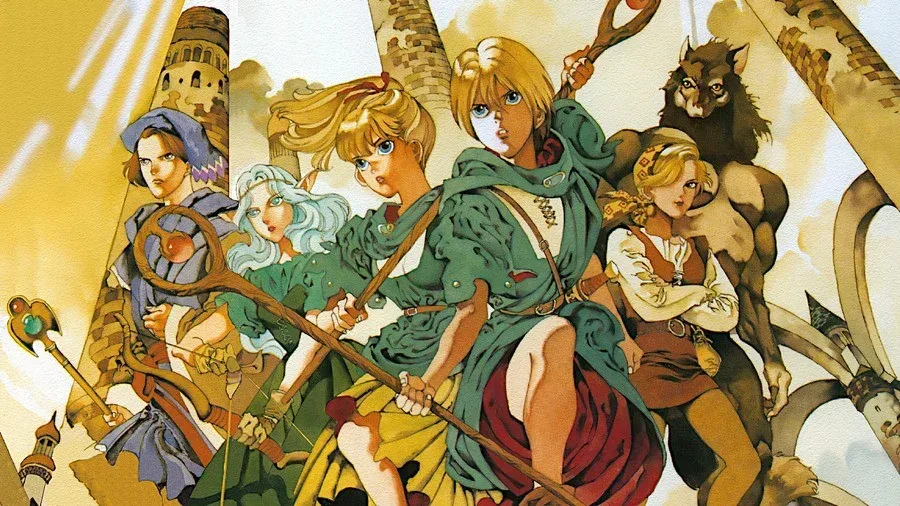
Ancient Magic: Bazoe! Mahou Sekai, a little-known role-playing game originally released for the Super Famicom in 1993, is receiving an official Nintendo Switch re-release in Japan. Publisher Mebius plans to launch the game on November 26, 2026, offering it as a digital download, a standard boxed edition, and a more elaborate limited package.
The announcement gives a second life to a title that has remained relatively obscure outside Japan for more than three decades. Developed and published in its original form by Hot-B, Ancient Magic arrived during an era overflowing with high-profile 16-bit RPGs. It did not receive an English localization at the time, which greatly limited its reach internationally despite its unusual setting, memorable visual identity, and an increasingly discussed late-game storyline.
A 1993 Super Famicom RPG finds a modern home
Ancient Magic: Bazoe! Mahou Sekai was released exclusively in Japan for Nintendo's Super Famicom. Its timing was difficult: the platform's library was already home to a vast number of major role-playing games, while the genre's most prominent releases had established exceptionally high expectations for presentation, design, and storytelling.
Embedded X/Twitter post
Hot-B itself was a recognizable but uneven name in the period. The company produced games across several genres, and Ancient Magic has long been regarded as a rougher production than the most polished RPGs of its generation. That roughness has not prevented the game from developing a cult reputation, however. Players who have spent time with it often point to its cast, worldbuilding, and willingness to take its narrative in unexpected directions.
For useful background on this topic, read Terminus Is Bringing a New Space-Horror FPS to 3DO Hardware.
Mebius is now bringing that original game to Switch in physical and downloadable forms. The announced Japanese pricing is 2,980 yen for the digital version and 4,400 yen for the regular physical release. A limited edition priced at 11,000 yen will also be available.
At present, the announcement concerns the Japanese release. No English-language localization, Western release, or international Switch availability has been announced.
Limited edition includes soundtrack and art collection
The limited edition is designed to emphasize Ancient Magic's artistic legacy. Alongside the standard game software, the package will include an original soundtrack containing the game's background music and a large-format Bazoo! Magical World Original Art Collection.
For another perspective on this story, read Obscure 1993 SNES RPG Ancient Magic: Bazoe! Mahou Sekai Heads to Switch in Japan.
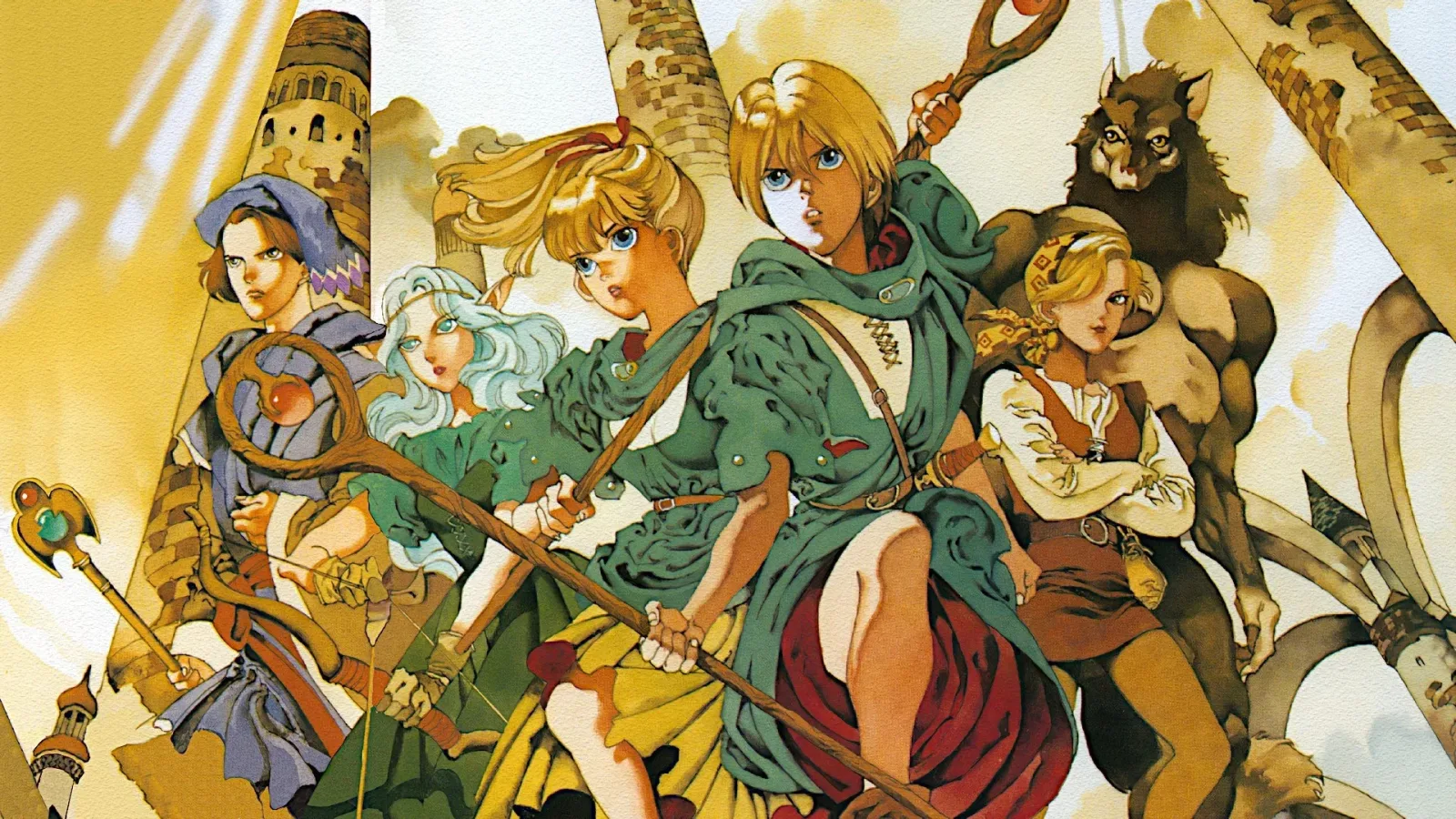
Its packaging will also feature original art by Akihiro Yamada, whose involvement is one of the most notable aspects of the game's history. Yamada handled character design for Ancient Magic, giving the title a visual personality that remains distinctive even among the densely populated Super Famicom RPG catalog.
For collectors, the art book may be the biggest attraction of the premium release. Original production art and character material from overlooked 16-bit games can be difficult to access, particularly for titles that never received substantial international promotion. A dedicated collection provides an opportunity to appreciate the illustrations independently of the limitations of the original hardware.
Akihiro Yamada's broader body of work
Yamada's career reaches well beyond Ancient Magic. His work is associated with the The Twelve Kingdoms anime and the Record of Lodoss War manga, while game fans may also know his contributions to titles including Castlevania: Dracula X, Kingdom Grand Prix, Mystic Ark, and Front Mission 3.
That pedigree adds historical interest to this reissue. While Ancient Magic is not remembered with the same immediate recognition as some of the other games connected to Yamada's name, its Switch revival offers a chance to revisit one of his earlier game-related projects. The limited-edition presentation in particular places its artwork front and center rather than treating it as a minor archival extra.
An RPG remembered for more than its rough edges
Ancient Magic's reputation has always been a complicated one. The game is frequently characterized as an ordinary or workmanlike RPG at first glance, and its original developer's inconsistent reputation has colored how it is discussed. But its admirers argue that it is worth persisting with because of the turns its plot takes later on.
An English fan translation produced by Aeon Genesis has helped make the game accessible to players who could not read Japanese. The group's assessment frames Ancient Magic as a fairly conventional Super Nintendo-era RPG with some surprising developments toward the conclusion. It also notes that the ending may not satisfy everyone, particularly given the ambitious directions taken by the story beforehand.
That combination--an initially familiar structure, a peculiar identity, and a divisive payoff--is often exactly what keeps a lesser-known retro RPG in conversation. Games that were once dismissed or overlooked can gain new appreciation when players approach them without the pressure of contemporary expectations. A title does not need to be a lost masterpiece to be historically worthwhile; sometimes its value lies in the ideas it attempted, the artists it brought together, or the unusual choices it made within a popular genre.
Ancient Magic also illustrates how localization shapes an RPG's legacy. During the Super Famicom and SNES era, many Japanese RPGs never left their home market. Some were passed over because of the substantial cost and time involved in translating text-heavy games, while others could not be prioritized in a market that already had a steady supply of major genre releases. As a result, games such as Ancient Magic became footnotes for many overseas players, regardless of whether they had qualities that might have found an audience.
A useful preservation release, even with open questions
The Switch release is significant simply because it formally returns Ancient Magic to commercial circulation. The game's original cartridge is a product of 1993, and official opportunities to buy and play it have been limited. A modern release can introduce it to Japanese players who missed it the first time, while also making its existence more visible to retro RPG fans elsewhere.
Several details remain unconfirmed. The announcement does not establish whether the new version will add quality-of-life features, visual options, save-state functionality, revised text, or other enhancements commonly associated with rereleases of older console games. It also does not indicate whether the release will include language support beyond Japanese.
Those unanswered questions will matter to prospective players. Some collectors may want a faithful presentation that preserves the original game as closely as possible, while others may hope for updates that make a sometimes awkward 1993 RPG easier to approach today. The digital edition may be the most straightforward route for Japanese Switch owners interested in trying the game, whereas the physical and limited editions are clearly positioned as collector-focused options.
There is also the matter of the title's fan-translation history. Fan projects have played an important role in preserving awareness of Japan-only games, but an official reissue does not automatically mean that fan-created English text will be incorporated. Until Mebius provides further information, players should not assume that this Switch version will offer an official English option.
Why the re-release matters
Not every retro revival needs to be a blockbuster rediscovery. There is value in giving a strange, imperfect, and visually notable game another chance--especially one that arrived in the shadow of the Super Famicom's better-known RPG giants. Ancient Magic: Bazoe! Mahou Sekai carries the appeal of an artifact from a particularly creative period in Japanese game development, one shaped by the genre's rapid growth and by artists whose work extended across games, manga, and animation.
For longtime collectors, Mebius's physical editions offer a new official way to own a game that was once confined to a 1993 Japanese cartridge release. For RPG historians, the launch creates a reason to revisit a title associated with Akihiro Yamada and Hot-B's more unusual output. And for players intrigued by overlooked stories, it may be an opportunity to see whether Ancient Magic's famously unconventional later developments justify its cult standing.
Ancient Magic: Bazoe! Mahou Sekai launches for Nintendo Switch in Japan on November 26, 2026. The release will be available digitally for 2,980 yen, physically for 4,400 yen, and in a limited edition for 11,000 yen that includes an original soundtrack and a substantial art collection.
Community
Discussion
Start the conversation.
No comments have been posted yet.