

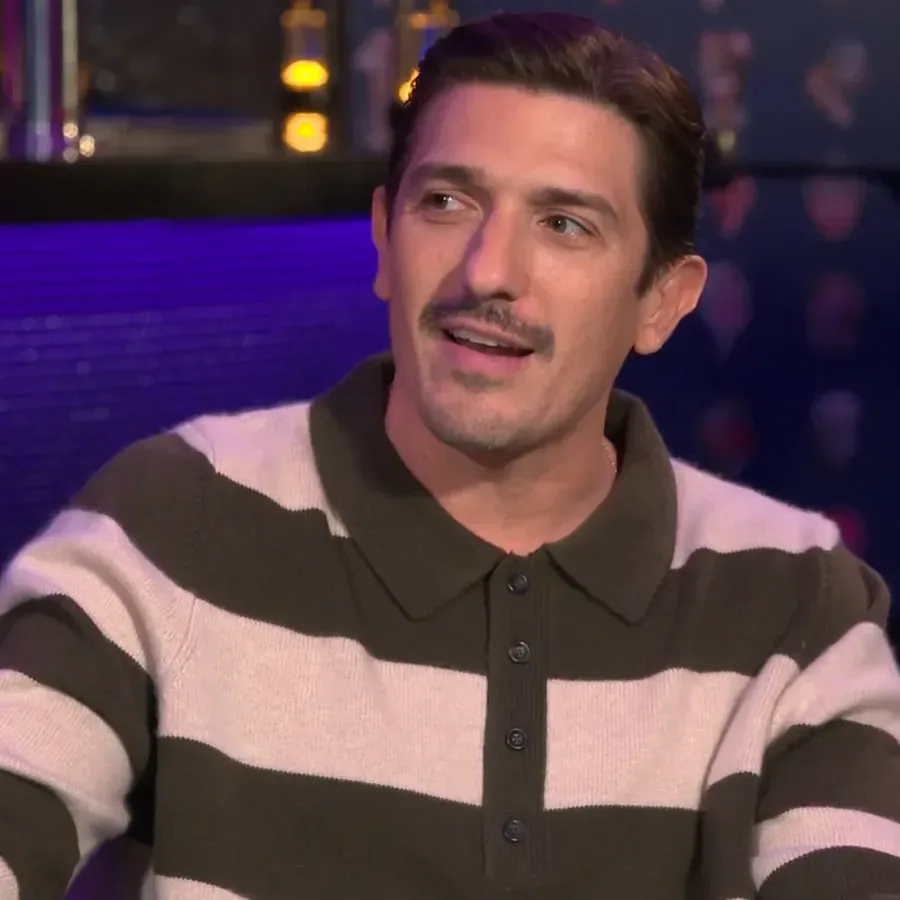
Andrew Schulz has addressed the viral Mortal Kombat II joke he made while promoting the upcoming Street Fighter movie at The Game Awards, framing the moment as an attempt to create a playful, pro-wrestling-style rivalry between two of fighting games' biggest names.
Schulz, who plays Dan Hibiki in Street Fighter, introduced the bit during the 2025 ceremony by suggesting the cast of the second Mortal Kombat film was in attendance. After asking the audience to welcome them, he revealed that they had not actually appeared at the event, then jokingly accused them of caring only about money before ending with an emphatic declaration of support for Street Fighter.
The moment spread quickly online. While some viewers treated it as broad comedy in the spirit of the games' long-running competitive fan cultures, others viewed it as an unnecessary jab at another fighting-game film production. The reaction grew large enough that Lewis Tan, who stars in the Mortal Kombat films, publicly pushed back and said Schulz was not the person who should be criticizing the series from that stage.
Embedded X/Twitter post
Now, ahead of Street Fighter's theatrical arrival, Schulz has said he hoped the joke would be understood as friendly promotion rather than a genuine attack.
For useful background on this topic, read GTA 6 Was Once Planned Alongside Red Dead Redemption 2, Rockstar Says.
A Wrestling "Work," Not a Real Feud
In a conversation alongside fellow Street Fighter performers Cody Rhodes and Eric Andre, Schulz characterized the awards-show segment with terminology familiar to wrestling fans. He said he believed everyone involved was effectively working together to create a story, comparing it to a "work": an angle performed for the audience rather than a real dispute between the people involved.
Rhodes, whose wrestling background made him an especially fitting voice in the exchange, humorously summarized the situation by saying Schulz had been "workin'" while the other side had been "shootin'" -- in other words, treating a staged bit as a genuine confrontation.
Schulz said he read what was on the teleprompter and expected the gag to help amplify attention around both properties. His central point was that a rivalry between Street Fighter and Mortal Kombat could be mutually beneficial, particularly at a moment when both franchises are represented by major Hollywood adaptations.
That idea is not difficult to understand from a promotional perspective. Fighting games have always thrived on direct comparisons, matchup debates, character loyalty, and arguments over which series is stronger. Fans have spent decades debating the differences between Street Fighter's footsie-heavy duels and Mortal Kombat's violent spectacle, its cinematic story mode, and its instantly recognizable Fatalities. A good-natured public rivalry can tap into that energy -- provided the people involved agree on the tone.
For Schulz, the intended comparison was less about declaring a winner than it was about recreating the momentum of "Barbenheimer," the fan-driven cultural phenomenon that surrounded the simultaneous theatrical releases of Barbie and Oppenheimer. Rather than one movie diminishing the other, their unusual pairing became a massive online event that helped both films dominate conversation.
"Rising tides lift all boats" was the principle Schulz invoked. He argued that mentioning Mortal Kombat II during a promotional appearance for Street Fighter had given the other movie more attention, not less.
Why the Joke Drew Such a Strong Response
The disconnect seems to have come down to context. Schulz's onstage wording was built around mock hostility, and that is a well-established comic device. However, the joke arrived amid intense scrutiny around game adaptations and alongside a fanbase that is deeply protective of its franchises and performers.
Both Mortal Kombat and Street Fighter carry complicated legacies beyond the controller. The games are foundational fighting-game institutions, but their live-action histories include cult favorites, divisive releases, reboots, and a long record of fans hoping Hollywood will finally capture each series' appeal in full. Because of that history, even a throwaway line can take on more weight than its speaker expects.
For some viewers, the implication that the Mortal Kombat II cast did not care about fans did not land as an obvious fictional rivalry. It sounded personal, especially when clips circulated separately from the broader setting and without the surrounding banter. Viral moments often become detached from their original cadence, leaving audiences to interpret a few sharp lines on their own.
Schulz's later remarks make clear that he was surprised by the scale of the backlash. When asked about the online debate, he joked that he had been waiting for a thank-you because he believed he had used Street Fighter's platform to promote another movie as well.
Andre and Rhodes continued to tease Schulz during the discussion, keeping the exchange light. But beneath the jokes, all three made their position clear: there is no actual animosity toward the Mortal Kombat franchise or the actors who appear in its films.
A Crossover Is the Real Dream
More notably, Schulz said the ultimate goal behind the Game Awards bit was to lay groundwork for a crossover of some kind. The concept was raised in the context of recent interest from Mortal Kombat co-creator Ed Boon in the possibility of a game crossover with Street Fighter.
That prospect remains only a wish rather than an announced project, and it would face obvious business, licensing, creative, and gameplay challenges. Still, it is easy to see why the idea excites fans. Street Fighter and Mortal Kombat are among the defining names in the genre, with lineups full of characters who have become icons well beyond gaming.
A clash between Ryu and Scorpion, Chun-Li and Kitana, Guile and Jax, or M. Bison and Shao Kahn would be an event in itself. Yet it would also require reconciling two very different tones. Street Fighter has often embraced colorful martial-arts melodrama and globe-spanning tournament adventure, while Mortal Kombat combines martial arts with fantasy realms, horror imagery, graphic violence, and a sprawling multiverse mythology.
Schulz did not limit the thought to games. Asked whether the trio would be interested in a crossover movie, he said that was essentially what he had hoped to start. Rhodes shared the enthusiasm, while Andre referenced Noob Saibot -- a character whose name is derived from Ed Boon's surname spelled backward -- before comparing the hypothetical project to the famous The Flintstones Meet the Jetsons crossover special.
The answer was unequivocal: they would be in.
The Street Fighter Cast Is Looking Beyond One Franchise
Interest in collaboration appears to extend beyond Schulz, Rhodes, and Andre. Other members of the Street Fighter cast have also expressed enthusiasm for joining forces with characters from other fighting-game worlds. Andrew Koji and Callina Liang specifically pointed to Marvel vs. Capcom when discussing dream crossover possibilities.
That makes sense for a property like Street Fighter, whose identity has been shaped partly by crossover history. Capcom's fighters have shared the screen with Marvel heroes, SNK characters, Tekken combatants, and rivals from across the company's own catalog. The franchise's audience is accustomed to imagining impossible matchups.
Movie crossovers are a different proposition, of course. They require shared rights, aligned studios, coordinated casting, and enough commercial confidence to justify a much larger undertaking. Street Fighter director Kitao Sakurai has emphasized that future films depend on how the first movie performs in theaters. That means any serious talk of Mortal Kombat, Marvel, or other fighting-game worlds crossing into this version of Street Fighter is purely aspirational for now.
Still, it is notable that the cast is not treating other game adaptations as enemies competing for a fixed piece of the audience. Instead, their comments suggest they see a broader opportunity: if one fighting-game movie succeeds, it may make the case for more ambitious projects across the genre.
Street Fighter Heads to Theaters
The immediate test comes with Street Fighter itself, which is scheduled to reach theaters on October 16, 2026. The film has the opportunity to introduce a new interpretation of Capcom's world while carrying the expectations that come with such an influential series.
For now, Schulz's Game Awards appearance remains a reminder that playful fan-service can become something much bigger once it enters the online conversation. His explanation does not erase the fact that some viewers and people connected to Mortal Kombat disliked the joke. But it does clarify the intended spirit behind it: Schulz was trying to manufacture a little theatrical rivalry, generate attention for both fighting-game movies, and perhaps nudge the industry toward a crossover fans have imagined for years.
Whether that ambition ever becomes a real game, a film, or simply another entertaining bit of fighting-game speculation remains unknown. But Schulz, Rhodes, and Andre have made their stance plain: when it comes to a Street Fighter and Mortal Kombat team-up, they are ready to enter the arena.
Community
Discussion
Start the conversation.
No comments have been posted yet.