

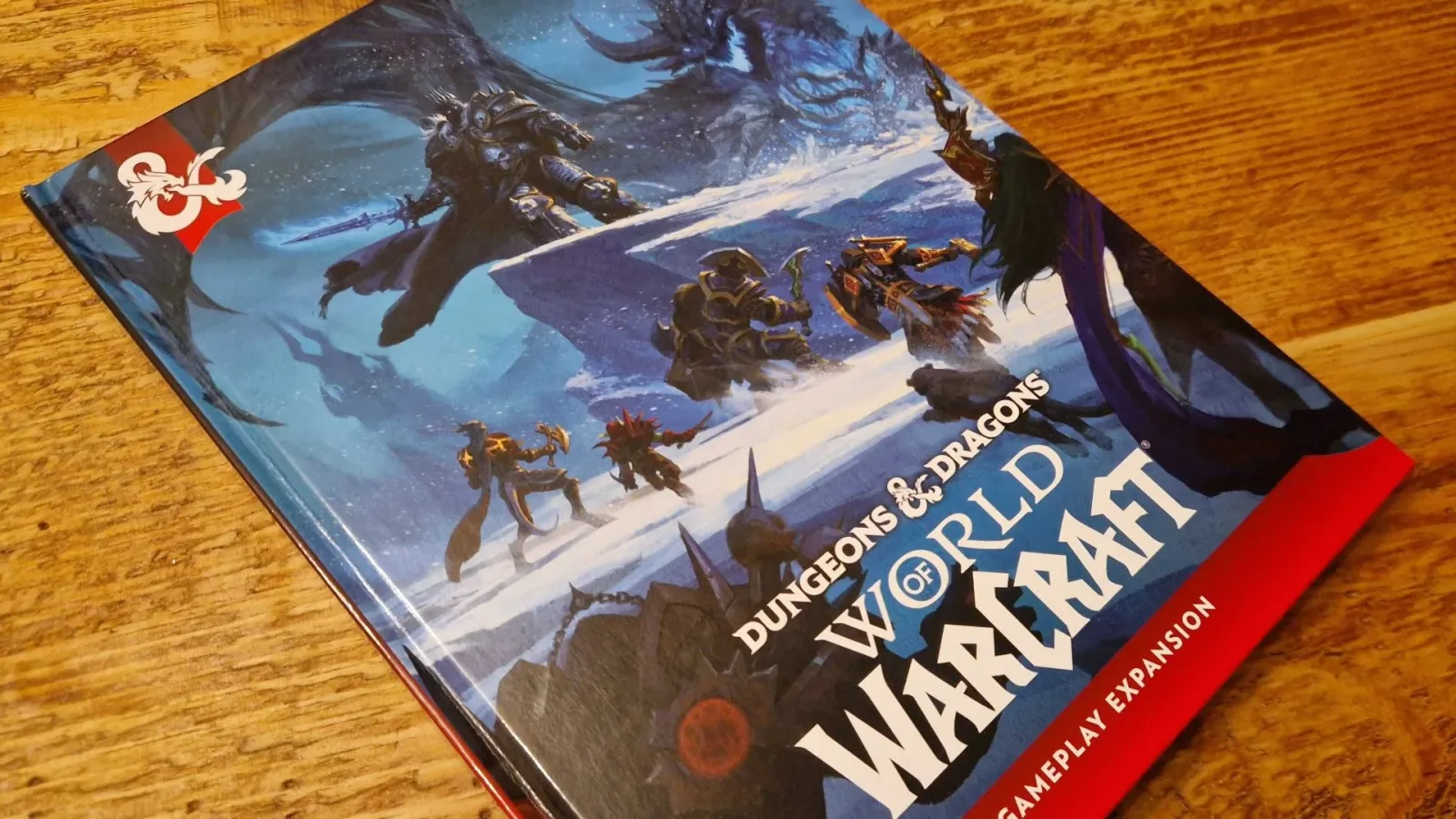
D&D World of Warcraft is shaping up as a significant test for Dungeons & Dragons crossovers. Bringing Azeroth into a tabletop role-playing game carries obvious appeal, but it also comes with a difficult creative challenge: World of Warcraft already has decades of familiar zones, raids, classes, villains, and player memories behind it. Simply repeating those elements without giving players new ways to engage with them would risk making the setting feel like a catalogue of references.
Early hands-on impressions suggest this expansion is aiming higher than that. The book combines a large worldbuilding section, 13 World of Warcraft-themed character options, and six dungeon adventures taken from different points in Azeroth's history. Its strongest material appears to be the content that lets players use tabletop freedom to approach famous places in unfamiliar ways. There are a few uneven class adaptations, particularly where the design stays close to existing D&D material, but the overall package looks built to serve both established D&D groups and WoW veterans who want to tell stories beyond the boundaries of the MMO.
The physical edition is currently available to pre-order for a November 17, 2026 release. Players with a Master Tier subscription on D&D Beyond can already access the digital book.
Azeroth Is Not Just Being Replayed
World of Warcraft and Dungeons & Dragons have always shared some broad genre foundations. Both feature fantasy adventurers, varied peoples and cultures, powerful magic, dragons, dangerous ruins, factional conflicts, and parties that depend on different combat roles. Yet those similarities do not automatically make a satisfying tabletop conversion. Azeroth is most familiar to people as a persistent digital world with a particular quest structure and carefully defined game systems. A tabletop campaign needs room for improvisation, detours, surprising player plans, and consequences that can diverge from established story beats.
For useful background on this topic, read Ghost Haunting demo Arrives on Steam Ahead of 2027 Launch.
The expansion's setting material appears conscious of that distinction. Its worldbuilding chapter covers Azeroth's continents and conflicts, providing the context a Dungeon Master needs to construct adventures in the setting rather than limiting groups to a guided tour of iconic locations. That is important for a property as large as World of Warcraft. The potential value of the book is not only that it supplies recognizable names, but that it gives players a framework to inhabit the world in their own campaigns.
For longtime WoW players, that should create an appealing alternative to revisiting old content in a fixed format. A group can return to a beloved dungeon, but use deception rather than brute force, shift the outcome of an encounter, negotiate with an unexpected character, or make a plan that simply could not exist within the MMO's usual encounter design. For D&D players unfamiliar with Warcraft lore, Azeroth also offers a fully realized fantasy setting with an enormous supply of conflicts to explore.
Thirteen Subclasses, With Hero Classes Leading the Way
The first major draw is the book's character material. D&D World of Warcraft introduces 13 options designed as subclasses for D&D's established core classes. This approach makes the expansion easier to integrate with current Fifth Edition play, as players are adapting familiar class structures rather than learning an entirely separate tabletop rules engine.
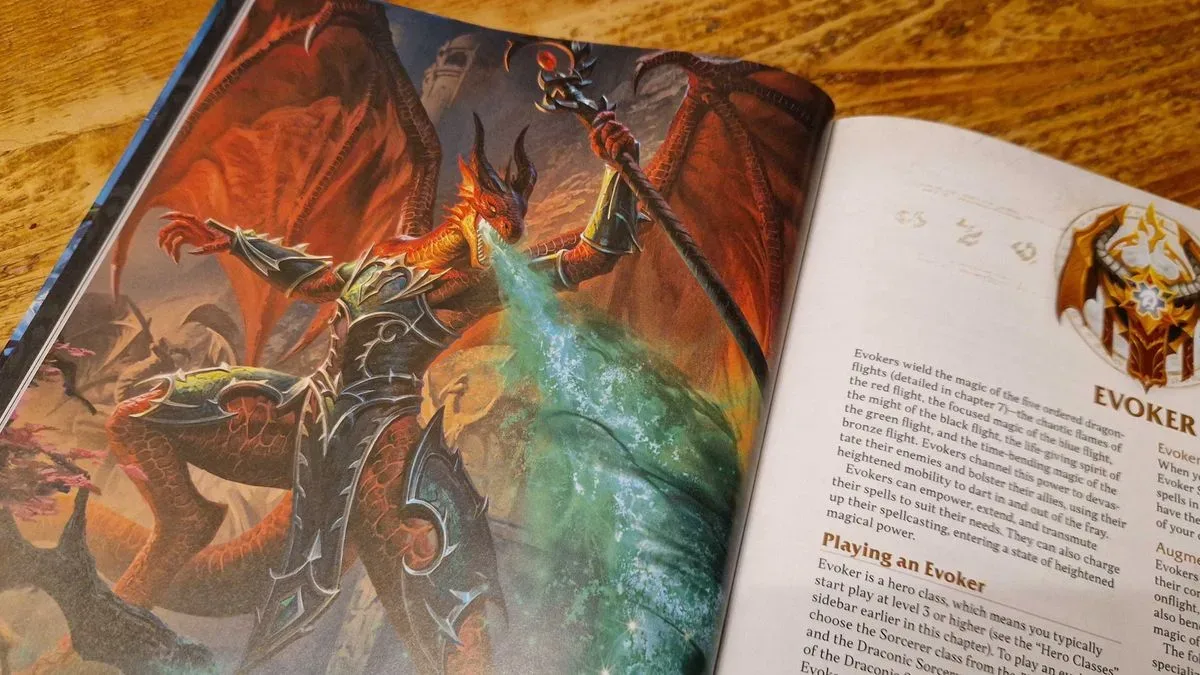
Some choices are variants or revisions of concepts D&D already supports. That can be useful for accessibility and balance, although it means not every option has the same impact. The book's most exciting additions seem to be its three Hero classes: the Death Knight, Demon Hunter, and Evoker.
Death Knights sound especially flavorful in the tabletop format. Their tools include Runeforging, spectral mounts capable of moving through enemies, and potent magic that can protect or empower allies. The result is a character style that embraces the dark, imposing fantasy associated with the class while still creating a clear party role beyond simple damage output.
Demon Hunters also appear to translate well. Their mechanics include Soul Fragments that can restore health while harming enemies, capturing the aggressive momentum expected of the class. They can also double-jump, a small but immediately recognizable movement feature that could create memorable moments in exploration and combat. Vertical spaces, hazards, and enemy positions all become more interesting when a character has unusual mobility.
These Hero options begin at level 3. That restriction fits their status within Warcraft lore, where such figures represent highly trained and exceptional combatants rather than ordinary adventurers. It also aligns neatly with the subclass structure of modern D&D, making them an option that becomes available once a campaign is underway instead of an extra complication at character creation.
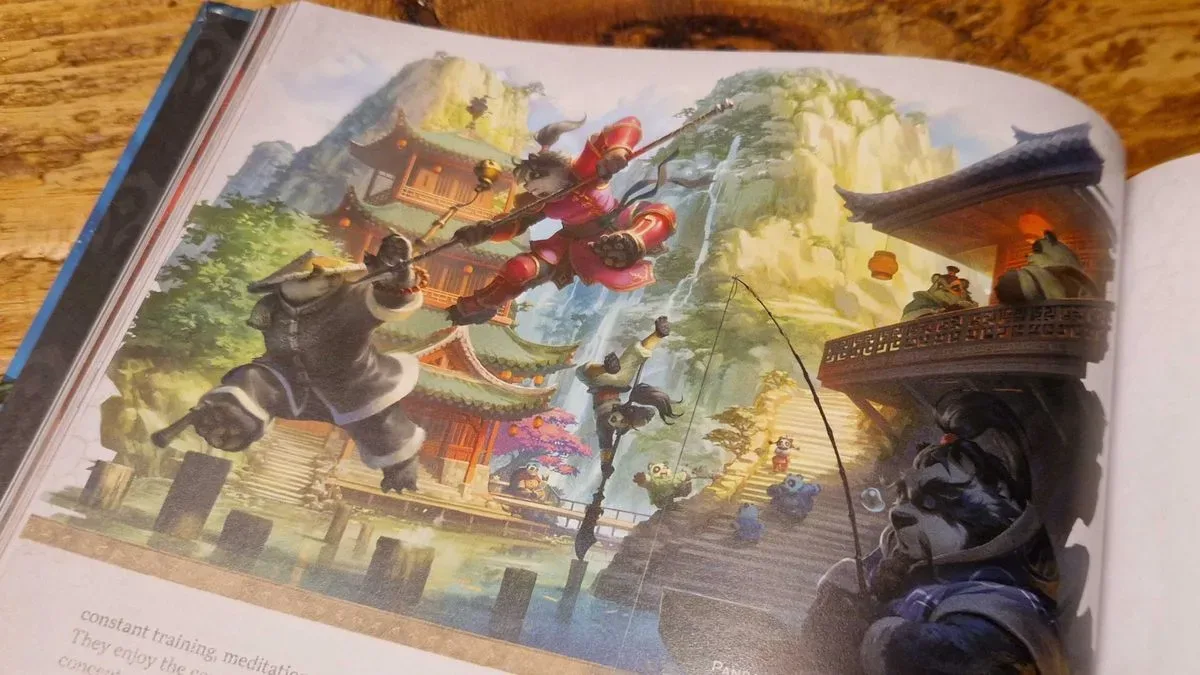
The remaining options vary more in how radically they change the experience. Hunters emphasize companions, Monks use Mystic Brews, and Druids receive beast forms with bespoke abilities. These mechanics help give the classes Warcraft-specific flavor, even when their broad fantasy identities have close D&D equivalents.
The Warrior is the clearest example of the book's less transformative side. Its new material centers on a limited collection of Battle Master maneuvers, making it feel more like an extension of the Fighter than a major reinvention. That does not necessarily make it a bad choice; many players may appreciate a familiar rules foundation. Still, players looking for entirely new gameplay concepts may find the Hero classes and more specialized options more compelling.
Six Dungeons Draw From Across WoW History
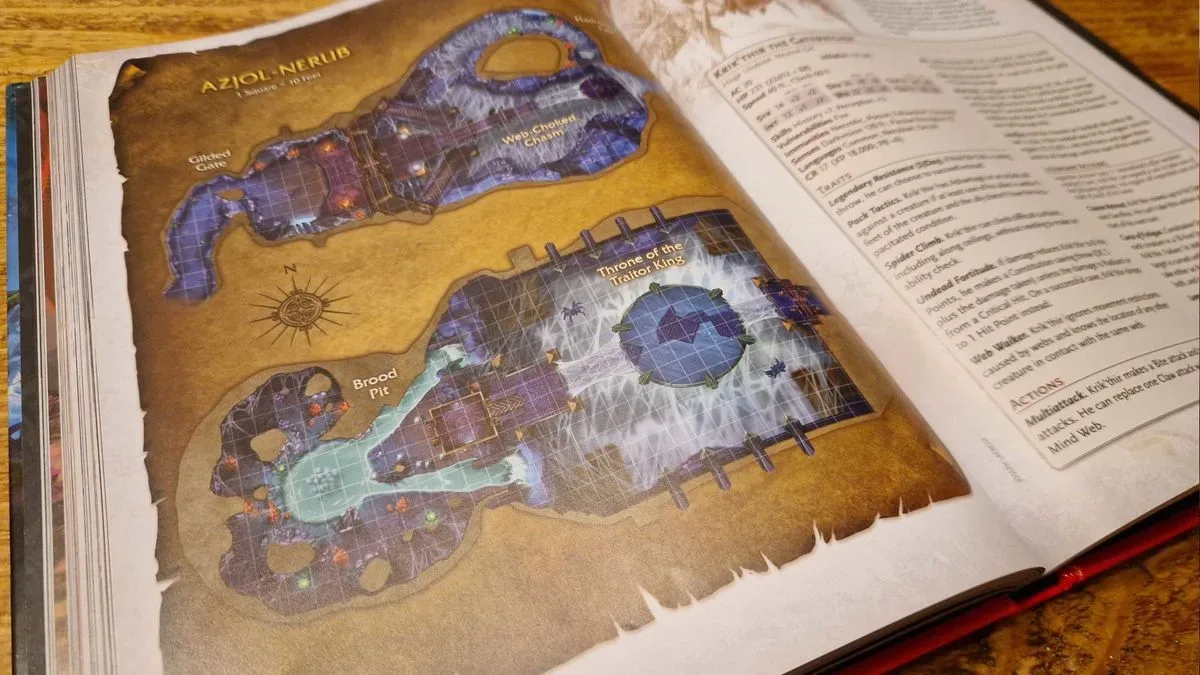
The back half of D&D World of Warcraft contains six adventures based on classic dungeons and raid content. The selection spans different eras of the game and includes Shadowfang Keep, Deadmines, Blackfathom Deeps, and Onyxia's Lair. Each adventure runs roughly six to eight pages, with encounters, plot hooks, boss material, and complications intended to give a party plenty to work through.
The most encouraging element is that these are not presented as rigid combat corridors. The adventures encourage Dungeon Masters to permit different solutions, whether a party relies on stealth, disguises, sabotage, negotiation, or an elaborate strategy that only makes sense because it came from the players at the table. That flexibility is arguably the core reason to bring Warcraft dungeons into D&D in the first place.
Deadmines, for example, includes the possibility of sabotaging the pirate ship Juggernaut. Blackfathom Deeps incorporates a desperate push through waves of enemies while ritual braziers guide the route to the final confrontation. These scenarios provide more than a sequence of standard battles: they give players objectives, pressure, and environmental complications that can change the tone of an encounter.
Random encounter tables also help prevent repeated runs from feeling predetermined. Combined with a Dungeon Master's ability to react to unusual player ideas, they give these familiar spaces a chance to become places of discovery again. A group may recognize the name of a dungeon or boss, but it will not necessarily face the same route, tactics, or outcome it remembers from the MMO.
Dungeon Masters Will Need to Fill in the Gaps
There is a notable caveat for groups new to tabletop role-playing. These adventures are not exhaustive, room-by-room manuals that tell a Dungeon Master precisely what to say or do at every turn. Like other releases built for the revised Fifth Edition, they provide strong broad structure but expect the DM to connect details, improvise responses, and flesh out scenes as needed.
That style will suit experienced Dungeon Masters who enjoy adapting material to their own groups. It can also be rewarding for anyone willing to prepare and make decisions in the moment. However, brand-new DMs may need extra time before play, particularly if they are hoping for a fully scripted introduction to running D&D.
The book is also an expansion rather than a self-contained starting point. Players will need either the free Basic Rules through D&D Beyond or a Player's Handbook. Dungeon Masters need both the Player's Handbook and Monster Manual to run the adventures, while the Dungeon Master's Guide is useful but less essential.
An Important First Step for D&D Crossovers
D&D World of Warcraft is the first Universes Beyond crossover for Dungeons & Dragons, putting extra attention on how it handles another major fictional universe. It will be followed in 2027 by a D&D Star Wars project, which promises stories about flying daring missions and battling the Empire as a covert Rebel team.
That makes Azeroth more than a one-off destination. It is an early indication of the balance D&D will try to strike with future crossover books: recognizable material for fans, mechanical additions for regular players, and enough open space for tabletop storytelling to remain genuinely player-driven.
On its early showing, D&D World of Warcraft has a few rough edges but appears to understand that balance. The best subclasses offer powerful new character fantasies, while the dungeon material recognizes that a tabletop visit to Azeroth should not be a simple recreation of a raid night. If its adventures make room for unexpected plans and its setting prompts groups to forge their own legends, this expansion could be a strong way to bring World of Warcraft's enduring world to the gaming table.
Community
Discussion
Start the conversation.
No comments have been posted yet.