

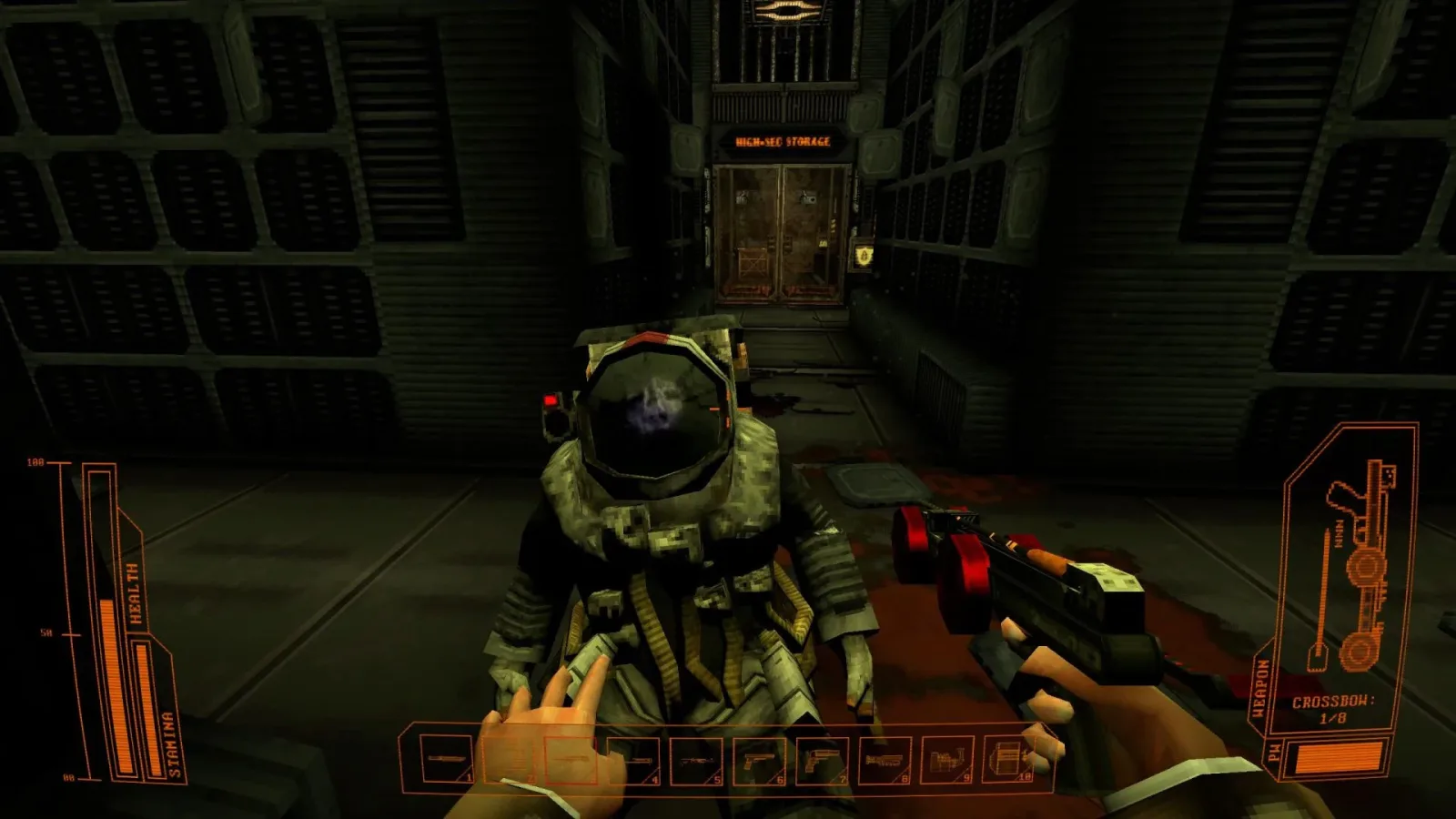
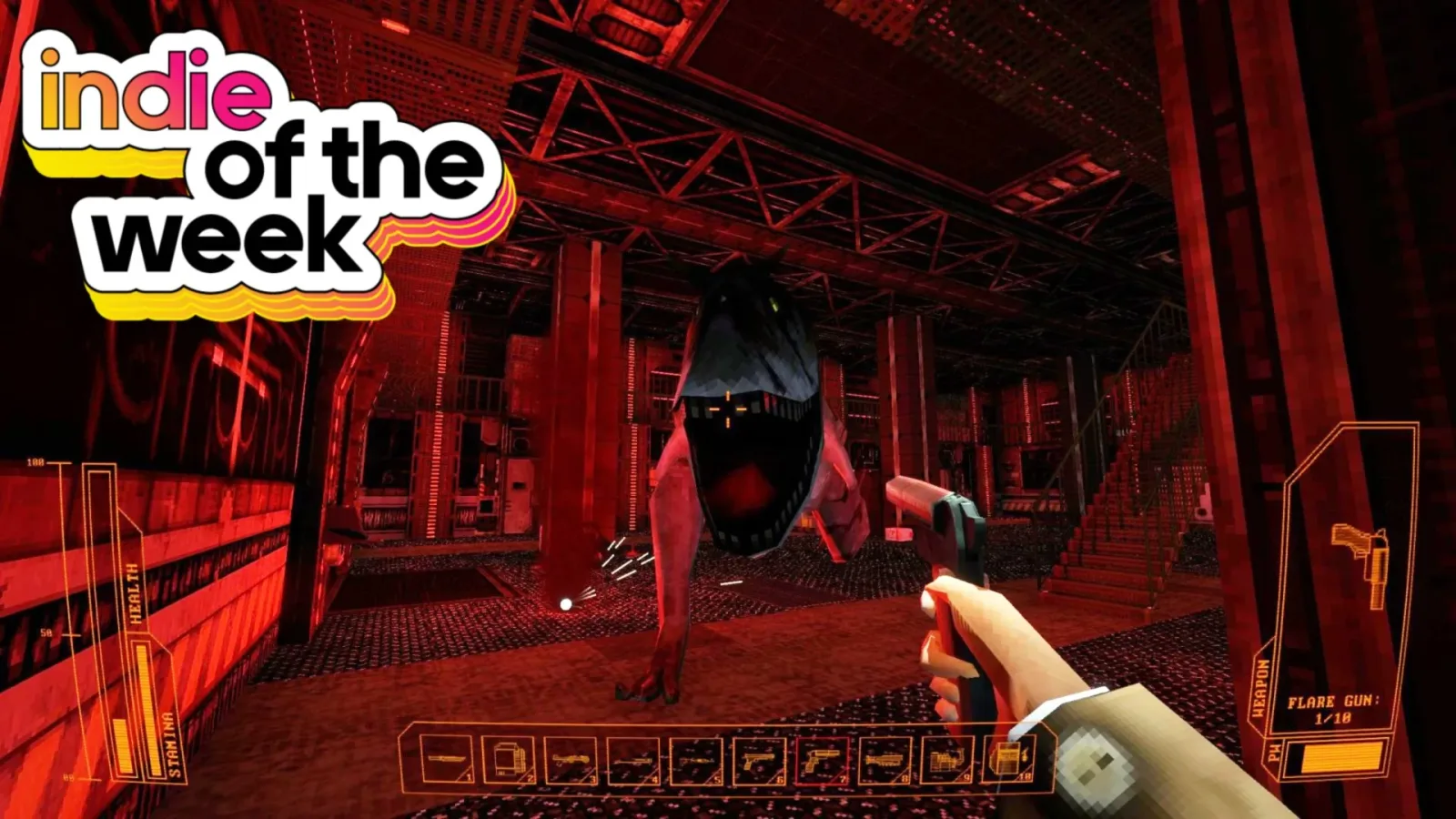
Athanasia has arrived in Steam Early Access with a wonderfully dangerous premise: enter a futuristic research complex in South America, uncover the fate of its missing staff, and somehow survive the dinosaur-like creatures now roaming its halls. That setup could easily become a straightforward monster shooter. Instead, developer Momentum Games has built a slower, more methodical first-person adventure focused on exploration, limited supplies, improvised solutions, and the kind of locked-door mystery that rewards players for paying attention.
The game is available now on PC through Steam, where its Early Access version contains roughly the first half of the intended campaign. There is already a substantial amount to play, with the current material estimated at around seven hours before accounting for deaths and reloads. The remaining three major sections are expected through updates over the next six months or so, making Athanasia one of those rare unfinished games that already has a clear, substantial identity.
A research facility built to get lost in
Players take the role of Carmen Flores, who enters the enormous metallic facility to investigate why its researchers disappeared and why dinosaurs have become its dominant inhabitants. The complex is not set in space, though its industrial corridors, terminals, elevators, sealed rooms, and expansive machinery can certainly evoke that kind of isolated science-fiction atmosphere.
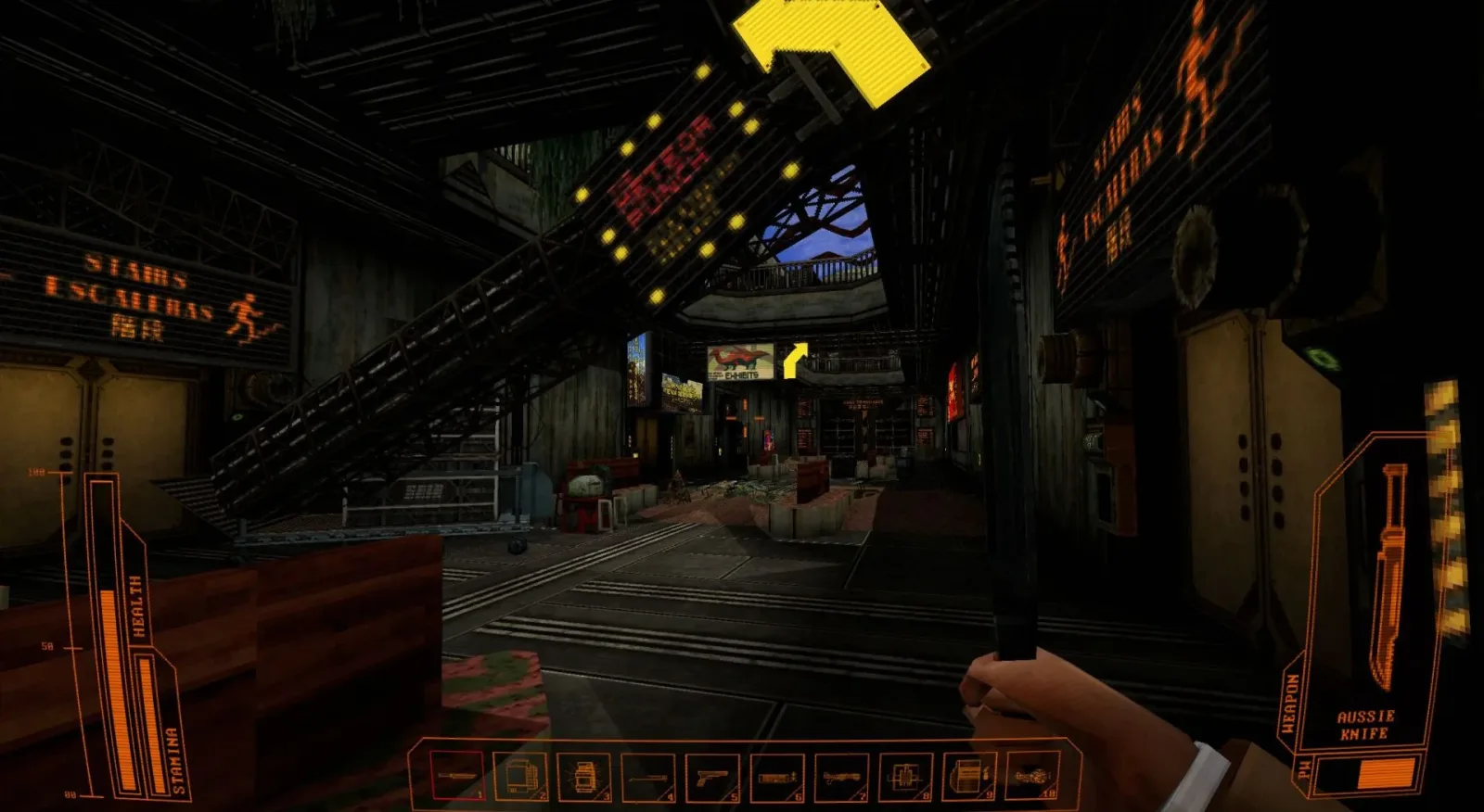
Its biggest strength is the scale and interconnected nature of its environments. Athanasia does not simply move the player from one linear encounter to the next. Each major zone is designed as a broad, multi-level location with shortcuts, hidden paths, locked security doors, access cards, and increasingly familiar routes. The early experience can feel intimidating because there are so many routes to consider, but that confusion gradually turns into mastery as players learn the building's layout.
For useful background on this topic, read Apocalypse Studios CEO Says AAA Early Access Releases Are Raising the Bar for Indies.
One particularly imposing area, encountered well into the available game, is structured around a huge collapsing interior hollow. Pipes, unstable walkways, and vertical routes wrap around that central space. Progress means locating keycards, restoring access to lifts, identifying safer routes, and deciding when it is worth confronting or avoiding the predators occupying the facility. That sense of place is crucial: the facility is not just a backdrop for dinosaur attacks, but the puzzle players are constantly trying to understand.
Athanasia does provide printable maps from in-world machines, but they do not display the player's current position. That limitation encourages old-fashioned spatial awareness rather than GPS-style navigation. Players will need to build a mental map of rooms, locked routes, possible ambush points, and the places where a newly acquired item could unlock a route they previously had to abandon.
Scarcity makes every weapon choice matter
Carmen can eventually carry a pistol, shotgun, crossbow, assorted science-fiction tools, medical supplies, ammunition, and other useful objects. But having access to a weapon is very different from being free to use it. Ammunition and energy are scarce enough that fighting head-on is usually a last resort, especially when a door might be concealing several fast-moving predators.
That pressure gives Athanasia its immersive-sim character. A problem can often be approached in several ways, and the best solution is rarely just to pull the trigger. Players can gather components for a toxin and introduce it into a room packed with creatures. They can search for the right keycards and slip around threats. They can try to incapacitate animals rather than kill them, or manipulate the environment into a deadly trap.
Some of the game's most memorable tactics sound improvised because they are. A bear trap, a gas canister, a carefully timed shot, and a little luck can be more valuable than wasting a box of shotgun shells. Other situations call for the crossbow, including bolts treated with a fungal substance capable of putting a creature to sleep. Less violent options exist, but Athanasia also gives players room to get inventive with explosives when stealth has collapsed and a pack is bearing down on them.
This is an important tonal distinction for a dinosaur survival game. The creatures are terrifying because they are dangerous and unpredictable within constrained spaces, not merely because they are targets to be cleared from an arena. A hallway becomes a problem to solve. A storage room becomes a potential trap site. A locked door may be a route to safety, a source of supplies, or an invitation to something worse.
Physics and clutter support player experimentation
Although Athanasia uses a deliberately retro visual style, its underlying systems are more flexible than that presentation might initially suggest. Objects have physics, allowing players to stack boxes to reach otherwise inaccessible paths or manipulate furniture and loose items around the facility. Not every physics interaction will be a carefully planned solution--sometimes knocking chairs around is simply amusing--but the system helps sell the idea that the environment is a physical place rather than a static collection of set pieces.
The level design supports that same philosophy. Secret passages, alternate routes, codes buried in emails, and terminal interactions all contribute to an investigative pace. The game makes room for players who want to thoroughly search offices and read through corporate communications, particularly when someone's forgotten password or security lapse becomes the key to progress. The familiar pleasure of discovering a code in a document and realizing where it should be entered remains central to the experience.
There is also satisfaction in realizing that a frustrating route has a hidden shortcut, or that a previously inaccessible area can now be opened with a newly found credential. Athanasia's locations appear designed to transform from bewildering labyrinths into spaces players can navigate with confidence. That progression is less about numerical character growth and more about knowledge: knowing the building, knowing its risks, and knowing which supplies are worth carrying.
An inventory designed around difficult sacrifices
Inventory management is another major source of tension. Carmen's carrying space is deliberately small and uses a grid arrangement, forcing players to rotate and organize items carefully. A full toolkit is appealing, but medical supplies, ammunition, weapons, key items, and bulky utility objects all compete for the same limited room.
That can lead to meaningful decisions. Is it smarter to carry several types of healing item, or leave room for a tool that can force open certain doors? Is that large gasoline container worth hauling across the facility because it might become useful in a future encounter? Should a weapon be kept for an emergency, even if it pushes out a piece of equipment needed for exploration?
Importantly, Athanasia attempts to avoid turning a questionable inventory decision into an unwinnable campaign. Essential tools can be found again in later areas if players made an unusual choice earlier. The game also avoids demanding excessive backtracking merely to recover from a discarded item. That is a sensible balance: the inventory still hurts in the way it should, but it does not appear to exist solely to punish experimentation.
Deliberate pacing, fixed saves, and Early Access rough edges
Athanasia's tension comes partly from its intentionally measured movement and interaction speeds. Running stamina is limited, and Carmen cannot simply sprint through every threat. Reloading is slow as well, which makes weapon use feel risky in exactly the right way. Every shot and every reload can become a nerve-racking commitment when enemies are close.
Saving is handled through stationary machines rather than unrestricted manual saves. That may frustrate players accustomed to saving constantly, but it also raises the stakes of exploration. When resources are short and the nearest save point is not nearby, reckless encounters become much less appealing. Careful planning is not merely role-playing; it is the most practical way to avoid losing progress.
As an Early Access release, however, Athanasia is not without technical and usability issues. The game is generally solid and can feel remarkably complete for a work still in development, but updates have occasionally solved one problem while introducing another. A reported issue currently causes sound to disappear after loading a save until the game is restarted, with a fix expected soon.
Some interaction choices could also use refinement. Switching between held items can be slower than ideal during an emergency, particularly when a player needs to quickly move from another tool to a prepared crossbow. The game currently has no skill trees or character statistics, either. That leaves Carmen's capabilities largely fixed, which fits the grounded survival tone, though some players may wish for modest build choices such as trading healing effectiveness for better sprint endurance.
A strong start for dinosaur-focused PC horror
Despite those caveats, Athanasia already stands out because its dinosaurs serve a broader design rather than replacing it. The game blends survival horror pressure with sprawling exploratory spaces, environmental manipulation, security puzzles, and player-driven problem solving. It can accommodate stealthy play, tranquilizer-focused tactics, traps, or more destructive responses when circumstances demand them.
For players who enjoy facilities full of hidden routes, cryptic terminals, limited ammo, and systems that allow messy plans to occasionally work, Athanasia is an exciting Early Access prospect. Its current campaign is only half complete, but the existing content offers a lengthy, tense, and surprisingly flexible journey through a deeply hostile research complex. At a price below $15, it is already an appealing entry point for PC players willing to accept the occasional rough edge while the rest of Carmen Flores' investigation takes shape.
Community
Discussion
Start the conversation.
No comments have been posted yet.