

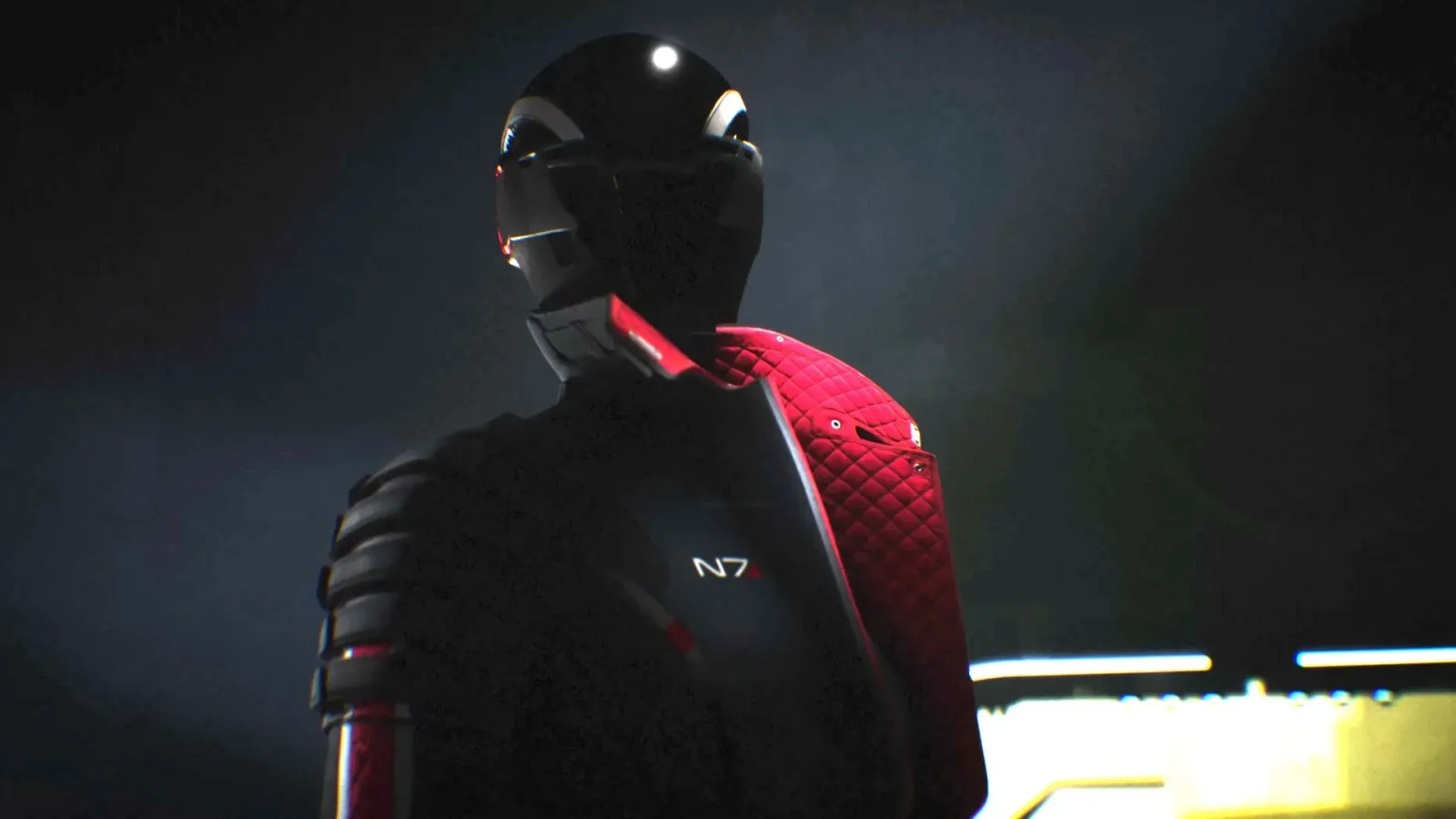
One of the more poignant reminders of what may have been for Mass Effect 5 has arrived in musical form. Acclaimed composer Austin Wintory, best known in games for his work on Journey, has released roughly 20 minutes of music created as an exploration of how BioWare's next trip through the Mass Effect Universe might have sounded.
Wintory says the proposed assignment represented a personal milestone unlike any other in his career. In comments accompanying the newly shared material, he described working on Mass Effect 5 as his "biggest dream project" and his "white whale," explaining that the series is his favorite franchise. He had been in serious conversations with BioWare and EA for the previous couple of years about potentially joining the project as its composer.
The release follows a painful period for fans and developers alike, with BioWare's apparent demise ending the prospect of the studio completing its planned Mass Effect return. An apparent trailer for the project also surfaced earlier, offering a glimpse of another unfinished game that will now remain a subject of speculation. Wintory's eight-track presentation adds a far more intimate perspective: not merely what the game might have looked like, but the sonic identity a major creative collaborator hoped to build for it.
A score built from Mass Effect's musical foundation
Wintory's material is not presented as a completed soundtrack, nor as music tied to known story scenes. He stresses that he had not yet been told narrative details about BioWare's plans when he wrote these early drafts. Instead, the suite is an imaginative exercise: an attempt to find a musical route into a world he already knew and loved, while leaving room for the eventual game's story and setting to shape the final direction.
For useful background on this topic, read Phantom Blade Zero review: A Dazzling Kungfupunk Action Epic.
That distinction matters. Fans should not take the music as confirmation of plot points, characters, locations, factions, or gameplay systems that may have appeared in Mass Effect 5. Its value lies elsewhere. These pieces offer a sense of the composer's creative instincts and the atmosphere he believed a new Mass Effect entry should pursue.
His central idea was to begin with the original game's musical language, particularly the influential work of composers Jack Wall and Sam Hulick, before expanding it. Wintory proposed deeper use of physical analog synthesizers alongside a more closely interwoven orchestra. It is an approach that reflects the franchise's signature contrast between futuristic technology and human-scale drama: cold, distant electronic textures meeting the emotional sweep of live instrumentation.
That balance has been fundamental to Mass Effect since the first game. The series has always used sound to make its science-fiction setting feel both immense and personal. Its galaxy is full of ancient machines, unknown worlds, military hardware, and existential threats, yet its most lasting moments often come from companionship, grief, determination, and hope. A score that combines analog synths with orchestra is well suited to that tension, suggesting a future that is vast and alien without losing its warmth.
Eight early pieces, including a galaxy-map interpretation
The 20-minute presentation contains eight tracks, with on-screen text offering insight into Wintory's thinking for each composition. The music moves through eerie electronic colors, dramatic orchestral statements, and the kind of suspended, searching mood that has long defined Mass Effect's best quiet moments. It is not hard to imagine the material accompanying starship travel, mysterious discoveries, looming danger, or the calm between difficult missions.
Perhaps most immediately recognizable in concept is Wintory's interpretation of music for the galaxy map. That function has a special place in the series' history. The galaxy map is more than a menu: it is a threshold between possibilities, a place where players choose their next destination while the scale of the setting settles in. Music for that moment needs to make navigation feel inviting, contemplative, and subtly charged with uncertainty.
Wintory's take on the idea naturally invites comparisons with the franchise's earlier galaxy-map themes, but it is not a simple exercise in imitation. His stated goal was to treat the original score as a starting point. The result, based on the released drafts, is music that recognizes Mass Effect's electronic heritage while searching for a distinct next step. It feels concerned with continuity, not repetition.
That is likely why the release has struck such a chord with the community. The music is not simply an alternate soundtrack from a well-known composer. It embodies the larger creative question surrounding a sequel that will not be completed: how could a new entry have honored the identity of the original trilogy while still moving forward?
Why Wintory's involvement felt like such a natural fit
Wintory's enthusiasm for Mass Effect comes through clearly, but the potential pairing also made artistic sense beyond fandom. His past work has often emphasized atmosphere, emotional clarity, and a strong sense of place. In Journey, his score became inseparable from the experience of crossing an unfamiliar world and forming a fleeting connection with another traveler. Mass Effect, while very different in structure and scale, likewise depends on music to establish the feeling of entering a vast unknown.
A Mass Effect score has to accomplish several tasks at once. It needs to sell the grandeur of space exploration, support the urgency of conflict, give intimate conversations emotional weight, and leave room for mystery. It also needs to acknowledge decades of musical memory, from the synthetic pulse of the first game to the more cinematic identity that developed through later entries. Wintory's proposed blend of analog electronics and orchestra suggests he understood those demands.
There is also something fitting about a composer approaching the material without early access to story specifics. In its initial stages, a game soundtrack can help establish the emotional vocabulary a project will later use. These pieces appear to have been designed as a conversation starter: music intended to explore possibilities and demonstrate a direction rather than lock a game into a finished thematic structure.
That makes the suite especially bittersweet. It is polished enough to reveal genuine potential, yet deliberately preliminary enough to underline how much remained undecided. Listeners are hearing an invitation into a creative process, not the endpoint of one.
A tribute to the people behind the series
Wintory closes his presentation with gratitude to BioWare, former studio general manager Casey Hudson, Wall, Hulick, and the many people who helped create the Mass Effect memories he treasures. He also thanked the people at BioWare and EA who gave him the confidence to imagine what his contribution to the universe could be.
That acknowledgement is important in the wider context of the project's end. Discussions around a cancelled or lost game can easily become focused on unrealized features, leaked footage, or fan theories. But behind every unfinished project are artists, programmers, designers, writers, producers, audio teams, and other staff whose work and livelihoods are affected. The disappointment around Mass Effect 5 is inseparable from the human cost of the studio's collapse.
Fans have nonetheless continued to express how much the series means to them. Nearly 200,000 people have signed a petition calling for Mass Effect to be saved following BioWare's demise, and both actors associated with Commander Shepard have supported the fan effort. Whether that energy leads anywhere remains uncertain, and there is no indication that Wintory's music will become part of a future Mass Effect production.
For now, the eight tracks stand on their own as a thoughtful tribute to one of gaming's most beloved science-fiction worlds. They do not provide answers about the game's cancelled story, its potential cast, or where its journey through the galaxy would have led. What they do provide is a compelling glimpse of an artistic possibility: a Mass Effect score grounded in the series' past, built with old-school synth textures and orchestral force, and shaped by someone who deeply wanted to help carry the franchise into its next era.
It is a moving listen for longtime fans, not because it replaces the game that will never arrive, but because it makes that imagined game feel briefly close enough to hear.
Community
Discussion
Start the conversation.
No comments have been posted yet.