

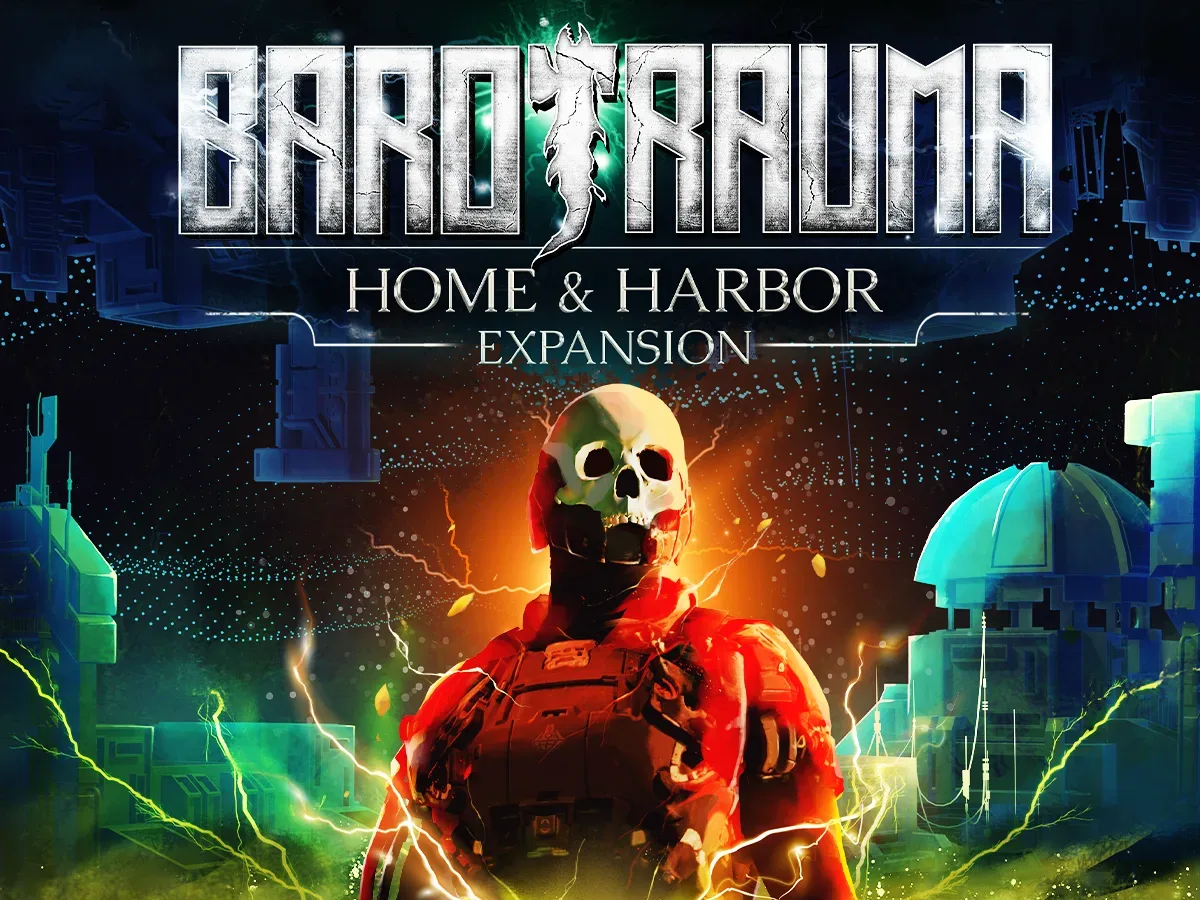
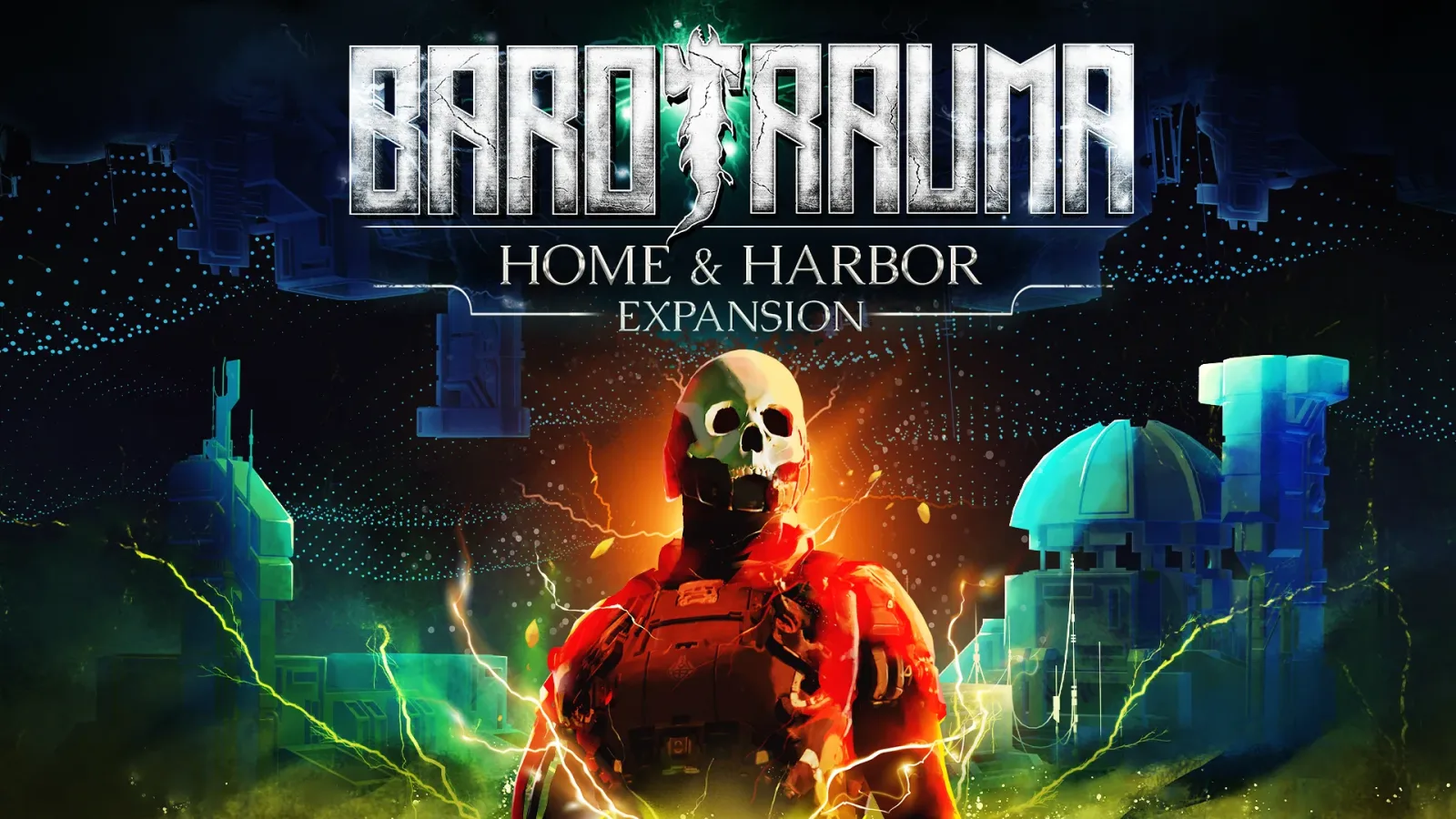
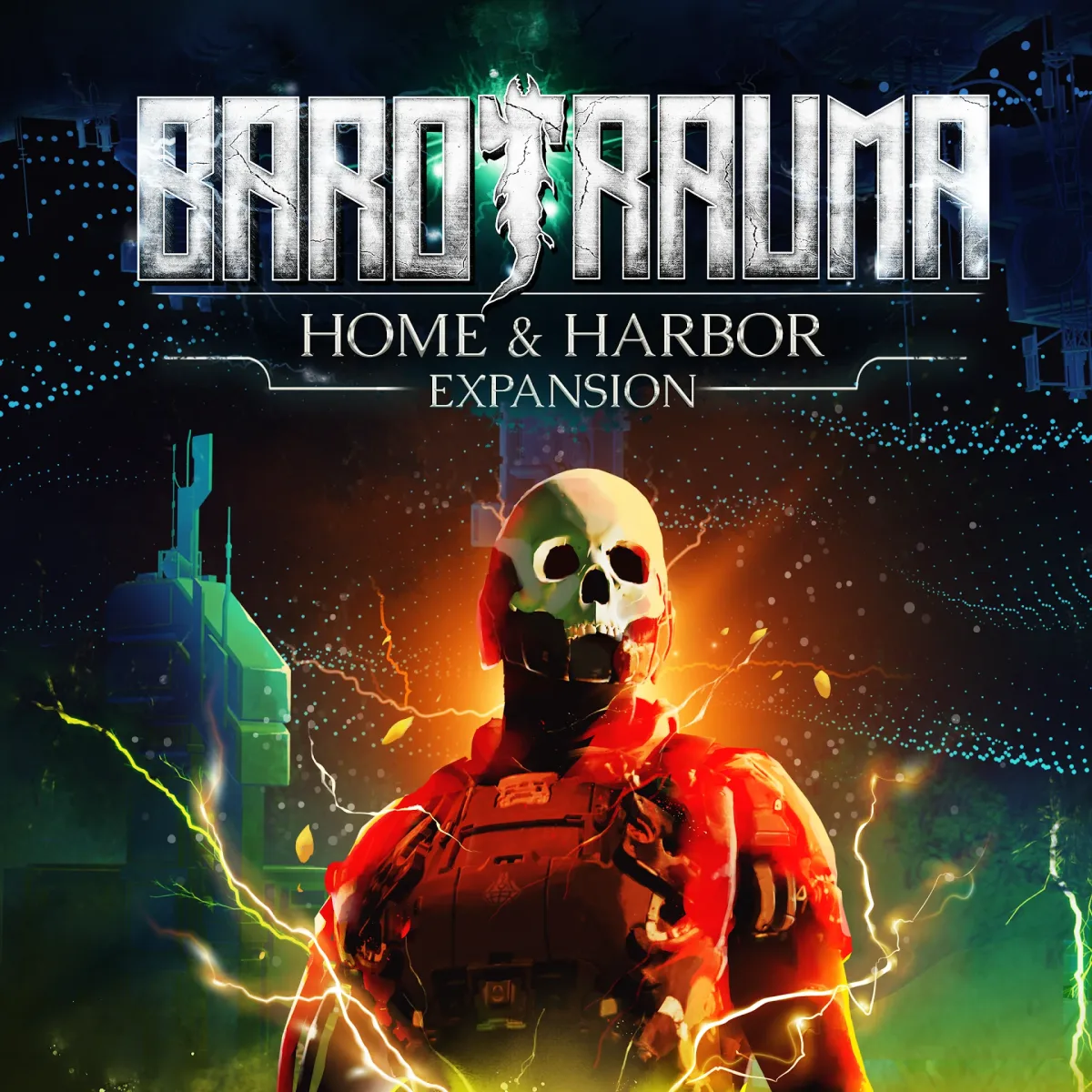
Barotrauma: Home & Harbor is due to launch on December 2, bringing a substantial new layer of settlement ownership, customization, and defense to the unforgiving world beneath Europa's ice. Ahead of that release, Daedalic Entertainment and developers FakeFish and Undertow Games have shared a third developer diary focused on one of the expansion's central additions: the Descendants, a mysterious technocratic faction with deep roots in Europa's past.
The new diary arrives on November 26 and offers a closer look at a group that has been absent from the known political landscape for a very long time. The Descendants were among Europa's original factions, but disappeared after contact with Earth was lost. Their return places players in the middle of a potentially volatile situation, while their technology, design, and methods introduce fresh narrative and mechanical possibilities to Barotrauma's submarine survival experience.
Home & Harbor is not solely about encountering a new group. Its headline feature is the addition of player-owned Outposts. These locations are intended to become persistent homes and operational centers that players can own, construct, alter, administer, and protect. That direction could make the expansion especially significant for crews looking for a stronger sense of permanence between dangerous expeditions through Europa's hostile ocean.
The Descendants emerge from Europa's lost history
Barotrauma's Europa is a place defined by isolation. Humanity's settlements endure beneath a frozen surface, separated from Earth and hemmed in by lethal waters, alien life, mechanical failure, and the competing priorities of the people who remain. In that environment, a faction vanishing from view is not merely a historical footnote. It creates questions about survival, secrecy, technological development, and what may have changed while nobody was watching.
For useful background on this topic, read Fangtopia Gets Free Creative Mode for Unlimited Hex Kingdom Building.
The Descendants are framed as one of the moon's original factions, making their reappearance particularly consequential. Rather than simply adding another organization to visit or trade with, Home & Harbor positions them as an active presence connected to the setting's past. Players will find themselves caught between interests as this long-missing faction returns to the wider picture.
That setup leaves room for the expansion to explore new lore while also presenting practical decisions for a crew. Barotrauma is at its strongest when its social and systemic pressures overlap: a submarine can be flooding, a monster can be at the hull, a reactor can be nearing disaster, and the crew can still be debating who gets access to a vital resource. A faction with unusual technology and its own agenda has the potential to add another source of pressure to those already tense voyages.
The Descendants are described as technocratic, an identity reflected in both their equipment and their approach to enhancement. Their arrival brings new story and gameplay material, along with new weapons and submarines. Taken together, those additions suggest that the faction will be felt beyond dialogue or a single narrative encounter, extending into the tools crews use and the vessels they command through the depths.
For another perspective on this story, read Barotrauma's Home & Harbor arrives Dec. 2 with outposts and the Descendants.
NASA-punk styling and power-hungry machinery
One of the clearest details from the developer diary is the visual language behind the Descendants. Their look is described as NASA-punk, a style that points toward rugged, functional, space-age industrial design rather than sleek science-fiction minimalism. It is an especially fitting direction for Barotrauma, where machines are not abstract conveniences. They are physical systems with wiring, compartments, repair needs, and the capacity to turn a routine journey into a catastrophe.
The faction's signature technology includes the Singularity Reactor, a new reactor built around a high-risk, high-reward proposition. It can provide the power needed to operate the Descendants' more demanding devices, but its presence also reinforces a core Barotrauma principle: greater capability tends to arrive with greater responsibility. Powerful equipment only matters if a crew can maintain it under pressure.
Reactors already occupy an important place in the game's moment-to-moment rhythm. They affect whether a submarine has the power to move, illuminate its corridors, operate its systems, and endure an emergency. A new reactor type with heightened risks could therefore influence more than a vessel's maximum output. It may change how crews organize their roles, how they prioritize repairs, and how much danger they are willing to accept for access to advanced equipment.
Home & Harbor's new technology is also tied to cybernetics. The Descendants use cybernetic enhancements on themselves and on their servant creatures. That detail gives the faction a distinct identity while hinting at an unsettling relationship between biological life and machinery. In Europa's ocean, where creatures are already a persistent threat, the idea of enhanced servants gives players another reason to consider what is moving outside the hull--and what it might be capable of doing once it reaches them.
The cybernetic angle also complements the Descendants' technocratic character. Their technology is not presented as a distant background element; it shapes their bodies, their creatures, their energy needs, and their wider role in the expansion. This makes their return feel like a systems-driven addition rather than a cosmetic new faction.
Outposts put a home base in players' hands
While the Descendants provide a major story and technology hook, player-owned Outposts form the other half of Home & Harbor's identity. Players will be able to own, build, customize, manage, and defend these spaces. In a game where crews frequently move from one dangerous assignment to the next, the ability to establish a personal harbor can give expeditions a more tangible destination.
An Outpost is likely to matter because it asks players to think beyond the immediate state of their submarine. A crew may need to consider what kind of home it wants to make, how it is arranged, what it requires to function, and what should be done when it comes under threat. Those are decisions that can strengthen the cooperative side of Barotrauma, since construction, management, and defense all naturally create opportunities for specialization and disagreement.
Customization is also an important part of the promise. Barotrauma's appeal has long come from the stories that emerge when people are placed in complicated machinery with limited information and imperfect coordination. Giving players a location they can shape means those stories can extend beyond a single vessel. An Outpost can become a practical base, but it can also become an expression of how a particular crew approaches life under Europa's ice: orderly and fortified, improvised and chaotic, or somewhere between those extremes.
Defense ensures that ownership is not simply decorative. Anything worth building may be worth protecting, and Europa is not known for allowing safe, uncomplicated routines. The expansion's focus on defending a player's home suggests that Home & Harbor will keep the series' usual sense of vulnerability even as it gives crews more control over their surroundings.
A larger set of choices for crews
The combination of Outposts and the Descendants gives Home & Harbor two different but connected forms of expansion. One is rooted in community, territory, and the long-term project of maintaining a home. The other is rooted in uncertainty, factional tension, unfamiliar machinery, and dangerous experimentation. Together, they could widen the range of decisions available to players while preserving the precarious atmosphere that defines Barotrauma.
For players interested in narrative, the returning faction opens a new thread tied directly to the history of contact being severed between Earth and Europa. For mechanically minded crews, the Singularity Reactor and the Descendants' energy-intensive devices introduce another set of tools to understand and potentially master. For builders and organizers, player-owned Outposts offer a fresh reason to plan, customize, and coordinate.
The new weapons and submarines associated with the expansion further round out that package. New vessels can alter how a crew distributes duties and responds to hazards, while new weaponry may affect how it handles encounters that cannot be avoided. No specific details about those tools have been outlined here, but their inclusion makes clear that Home & Harbor is intended to touch several major parts of the Barotrauma experience rather than focus exclusively on base management.
A free base-game update arrives alongside the diary
In addition to the upcoming expansion, a free update for all Barotrauma players launches today. The update adds further story and gameplay options to the base game, meaning the broader community will receive new material even without Home & Harbor. That is a useful distinction for returning players deciding how to re-enter the game: the free update expands the core experience, while the December 2 expansion adds the player-owned Outposts, the Descendants, and its related content.
With launch close, the third developer diary serves as a focused introduction to the identity of the Descendants. Their industrial NASA-punk presentation, cybernetic practices, servant creatures, and demanding power infrastructure all point to a faction designed to be memorable in both appearance and function. Their historical disappearance gives them narrative weight, while their technology promises to bring practical consequences to crews willing to engage with it.
Barotrauma: Home & Harbor launches December 2. For captains, engineers, medics, security officers, and the many crews whose plans rarely survive first contact with Europa's waters, the expansion's biggest question may be straightforward: what does it mean to finally have a place to call home when the ocean is still trying to take everything away?
Community
Discussion
Start the conversation.
No comments have been posted yet.