

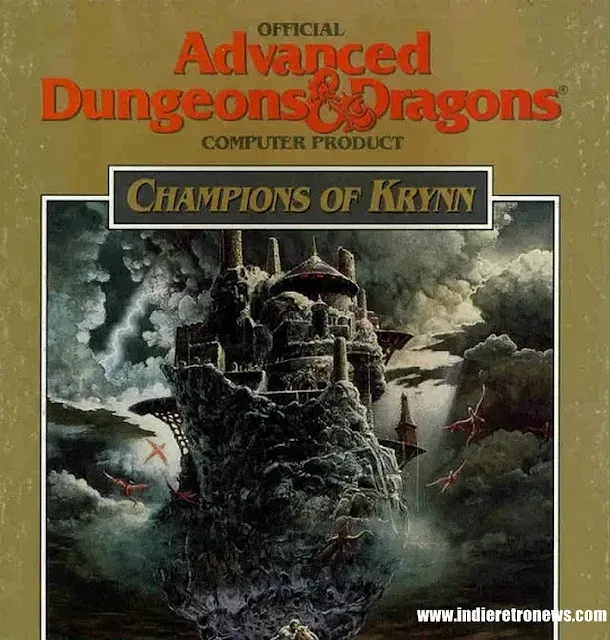
Champions of Krynn, the beloved Dungeons & Dragons Gold Box role-playing game set in the Dragonlance universe, has gained a substantial new lease on life for Amiga users. Developer mOoNsHaDo has released a reverse-engineered, bug-fixed version of the Amiga game designed to address compatibility and stability issues that have affected players using later Amiga configurations.
The project is particularly relevant to fans playing on machines with Kickstart 3.x, accelerated processors, expanded memory, or newer Amiga chipsets. Rather than treating the game as a simple archival curiosity, the updated executable aims to make the original port behave more comfortably in the kinds of Amiga environments enthusiasts use today. That includes an important quality-of-life improvement: the game can now multitask in the background while users continue working in Workbench applications.
For a game of this era, that may sound like a modest enhancement, but it represents a meaningful modernization. Classic Amiga titles were frequently built around assumptions about hardware speed, display behavior, and system resources that no longer hold true on upgraded machines. A game that was dependable on an original configuration can develop visual corruption, strange screen behavior, or crashes when run on much faster hardware. The new work on Champions of Krynn addresses several of those problems directly.
A Gold Box Adventure Returns to Krynn
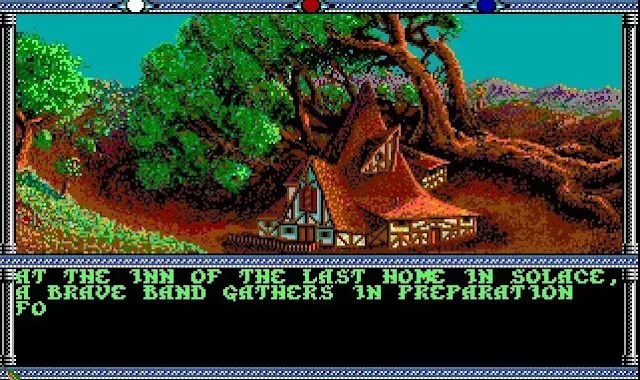
Released as part of SSI's celebrated Gold Box line of computer role-playing games, Champions of Krynn brought Advanced Dungeons & Dragons adventuring to the world of Dragonlance. Players create a party, explore towns and wilderness areas, delve into dangerous locations, manage spells and equipment, and fight tactical turn-based battles from the familiar first-person dungeon-crawling interface.
For useful background on this topic, read Beyond GTA 6: The Games Players Are Choosing Instead.
The game holds an important place in the broader history of computer RPGs. It was the first Gold Box game to use the Dragonlance setting rather than the Forgotten Realms, and it established the opening chapter of the Krynn-focused series that continued with Death Knights of Krynn and The Dark Queen of Krynn. Its blend of party management, grid-based exploration, rules-driven character progression, and strategic encounters remains a defining example of late-1980s D&D game design.
For Amiga players, however, revisiting that experience on non-standard hardware has not always been straightforward. The original software was made for the technical expectations of its day. As players moved to systems with faster CPUs, newer graphics hardware, more memory, and later versions of the operating system, some of the original assumptions embedded in the code began to cause trouble.
Built From Reverse Engineering Rather Than a Simple Patch
mOoNsHaDo's release is described as a from-scratch C port of the Amiga version. The work was produced by converting the game routine by routine from annotated 68000 assembly decompilation, with AI assistance used during the conversion process. That distinction matters because the project is not merely a small compatibility script layered over the original executable.
Reverse engineering old software at this level can reveal why a program behaves incorrectly under modernized conditions and make it possible to replace fragile behavior with code that preserves the game's intended operation. It is an intensive undertaking, especially for a title with the mix of engine logic, presentation routines, data handling, and platform-specific behavior found in a Gold Box RPG.
The stated goal is not to turn Champions of Krynn into a remake with redesigned systems or new content. Instead, it is to retain the classic Amiga experience while making it more dependable on machines that the original developers could not have anticipated. That focus should be welcome for preservation-minded players who want the authentic game rather than a heavily altered reinterpretation.
Fixing Display Corruption on Faster Amiga CPUs
Among the most significant corrections is a fix for a blitter race condition. On faster CPUs, this issue could leave bitplanes only partly drawn, resulting in damaged or incomplete visuals. It could also disrupt the colors used in LBM images, a format closely associated with Amiga-era graphics and artwork.
In practical terms, a race condition occurs when software operations happen out of the order or timing the program expects. Older games may rely on hardware completing a task before the CPU moves on. When a faster processor changes that timing, the game may attempt to use or display data before it is ready. The results can range from subtle graphical errors to spectacularly broken screens.
For a game like Champions of Krynn, visual reliability is more than cosmetic. The experience depends on illustrated locations, menus, combat information, character data, and readable interface feedback. Missing sections of a screen or incorrectly rendered colors can undermine the game's atmosphere and make important information difficult to interpret. The updated executable is intended to remove that particular source of visual instability.
Screenmode and Save-Related Problems Also Addressed
The release additionally tackles an IPrefs screenmode promotion issue. On affected setups, mismatched monitor views could lead to severe image stretching or repeated black-screen flashing. Such problems can be especially frustrating because they may occur before a player has even begun an adventure, making the game appear incompatible with a display setup when the underlying problem is the way its screen behavior is being promoted or interpreted.
Correcting that behavior should make the game less temperamental across differing monitor configurations. For retro-computing users, display setup is often one of the more complicated parts of running original software. Scalers, monitor modes, chipset differences, Workbench settings, and system preferences can all affect whether an older program opens cleanly. A targeted fix that prevents stretching and black flashes can therefore remove a major obstacle for returning players.
Another repair resolves black flashing connected to missing save games. Save handling is central to a lengthy party-based RPG, where progress can span many sessions and where a lost or unreadable campaign file can be devastating. While the reported correction concerns a display glitch rather than an assurance that every old save scenario will function perfectly, eliminating erratic behavior when save data is absent is still an important stability improvement.
The project also patches out-of-bounds memory reads that had caused seemingly random crashes. These kinds of faults can be difficult for players to diagnose, since they may emerge unpredictably and may look like a general failure of the game, the operating system, or the hardware. Addressing them should improve confidence during longer sessions, particularly on expanded machines that previously encountered problems even when using WHDLoad.
Why WHDLoad Was Not a Complete Answer
WHDLoad remains a key tool for Amiga preservation and play, allowing many older titles to be installed and run from hard drives or storage devices while working around various disk and system limitations. Yet it cannot automatically correct every defect contained in a game's original program logic. If software has timing assumptions, unsafe memory behavior, or display routines that react poorly to upgraded configurations, those underlying problems can still surface.
The reported fixes are notable because they target issues that continued to affect expanded systems even under WHDLoad. This gives the release a role beyond convenience. It can potentially help close the gap between simply getting an old game to launch and making it play reliably enough for a full campaign.
That is especially useful for an RPG with the scale of Champions of Krynn. Gold Box games reward patience, careful exploration, party planning, and continued character development. Players may spend a long time building a group that survives Krynn's threats. A crash after an extended dungeon expedition, or a display fault that obscures game information, can be much more disruptive in this genre than in a short arcade-style game.
Community Testing Remains Part of the Project
The updated executable is available now, but mOoNsHaDo has asked players to report any remaining issues by sending save files to marranosoft@gmail.com. Providing saves is a practical request for a project like this: a reproducible game state can make it far easier to identify the exact routines, conditions, or data combinations behind a bug.
Players who encounter problems should preserve the relevant save data where possible and make note of the Amiga configuration involved. Details such as Kickstart version, processor acceleration, chipset, screenmode, memory setup, and whether the game is being run through a particular installation method can all help isolate compatibility issues. The request for feedback suggests that the effort is intended to improve through real-world testing across the varied hardware landscape still used by Amiga enthusiasts.
A Valuable Preservation-Minded Upgrade
There is a growing appreciation for projects that do more than emulate old games. Emulation is vital, but reverse engineering and code-level compatibility work can preserve the behavior of historically important software in another way: by helping it remain usable on the hardware family it originally called home.
Champions of Krynn is exactly the sort of game that benefits from that attention. It is a major entry in the Gold Box catalog, a distinctive Dragonlance adaptation, and an RPG built for deliberate, lengthy play. The ability to run it with proper background multitasking, fewer display hazards, and fewer crashes on later Amiga systems makes revisiting Krynn more appealing for veterans and more approachable for curious newcomers.
The new release does not erase the game's vintage design, nor should it. Its tactical rules, methodical pacing, and interface conventions remain products of their era. What it does offer is a path to experience those qualities with fewer technical distractions. For Amiga and classic RPG fans, that is a meaningful achievement: a foundational adventure made more stable without losing the character that made it worth preserving.
Community
Discussion
Start the conversation.
No comments have been posted yet.