


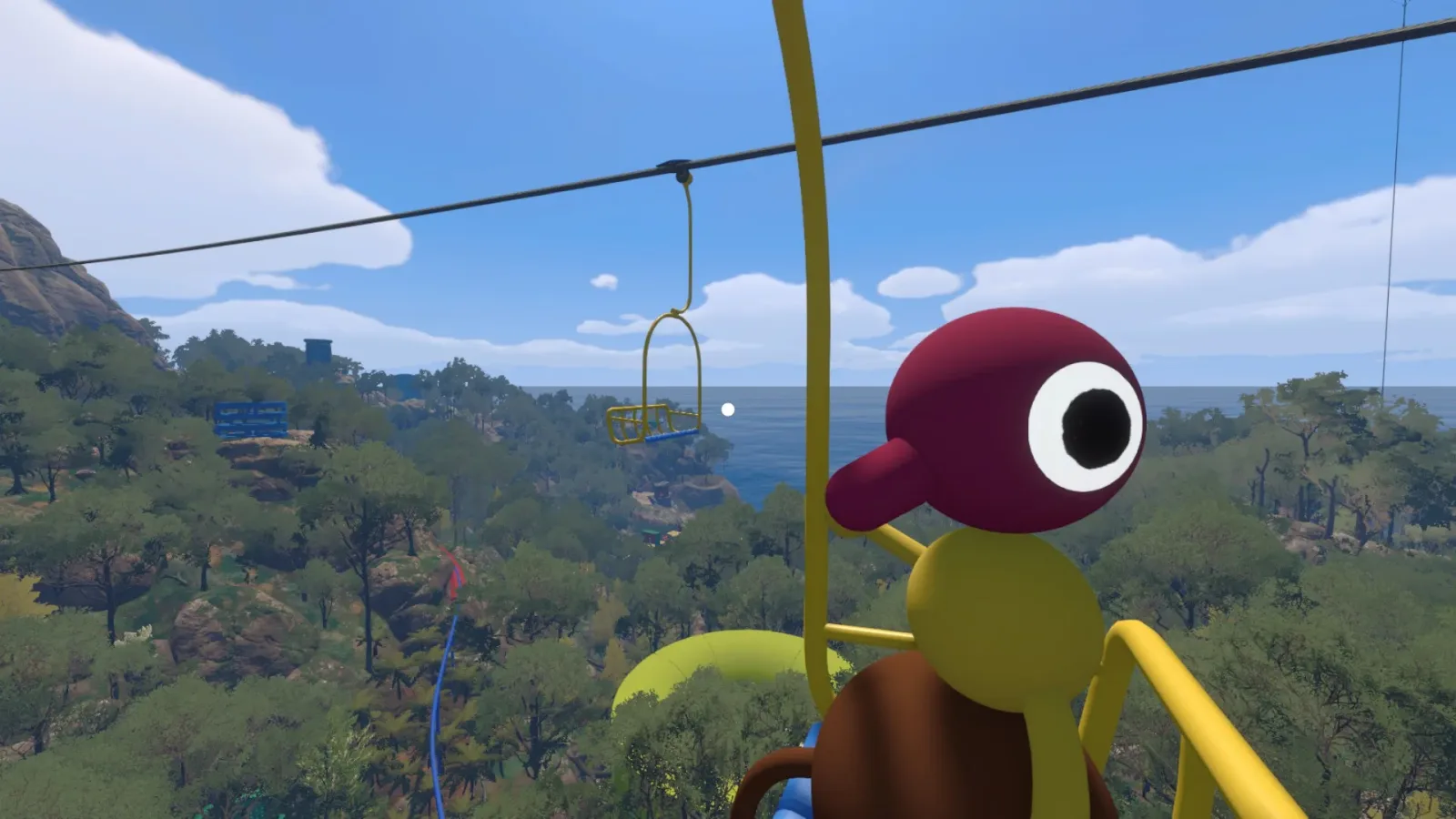
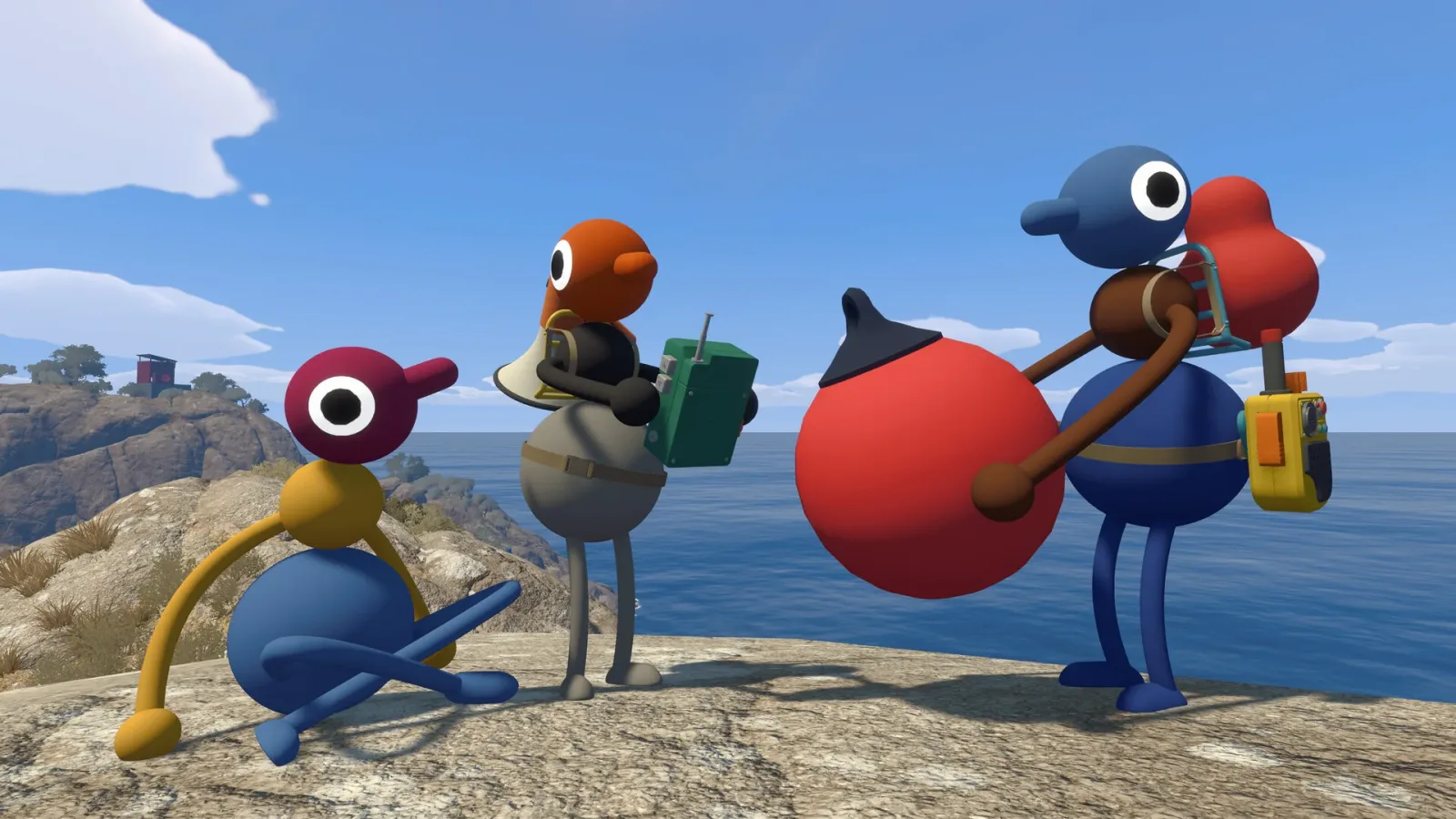
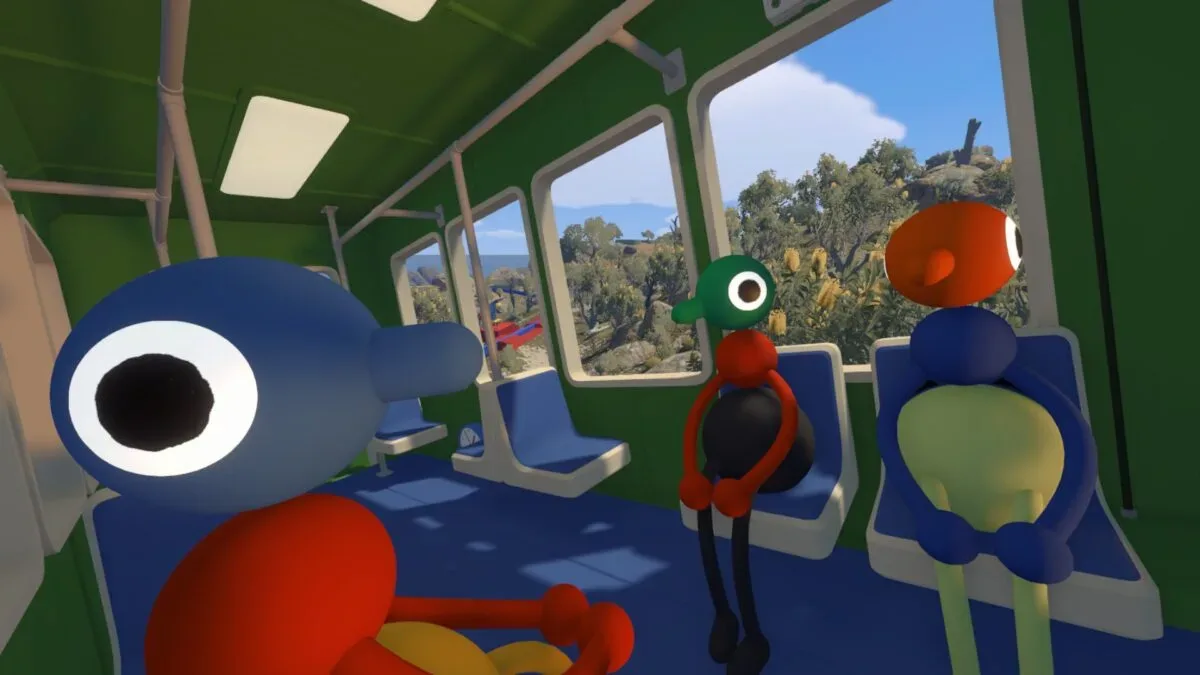
Big Walk, the widely praised multiplayer game from House House, has become the focus of a major debate over generative AI, disclosure practices, and what standards game awards should apply to developers. House House has said that generative AI was used in a narrowly limited coding context during the project, affecting "well under 0.1%" of the game's code. The studio also says AI was not used elsewhere in Big Walk's development.
That might sound like a small technical footnote, but the reaction has been anything but small. The information emerged after Big Walk's release and widespread acclaim, amid discussions among jurors for the 2027 Independent Games Festival. The timing has left players, critics, and fellow developers wrestling with two overlapping questions: whether any generative AI use should be accepted in game development, and whether players should have been told about it before deciding to buy or celebrate the game.
The conversation is particularly fraught because Big Walk is not being discussed as a marginal release. It has been viewed by many as a standout game of its year and a potential contender for the Seumas McNally Grand Prize, the Independent Games Festival's top honor. For fans who had associated House House with carefully made, human-centered work, the revelation has complicated their relationship with a game they admired.
What House House Said About AI Use
House House's position is that the AI involvement was confined to code and represented a tiny portion of the overall work. The studio said generative AI did not contribute to other parts of the game. That distinction matters to people who see a meaningful difference between using a chatbot or large language model to troubleshoot a programming problem and using image, voice, writing, or design-generation tools to replace artists and other creative workers.
For useful background on this topic, read World of Warcraft: Forever Cozy Sleeping Bag Guide: Every Quest Step.
But for critics of generative AI, the narrow scope does not eliminate the central concern. Their objection is not simply that AI content might appear visibly in a finished game. It is that the systems behind such tools are tied to concerns about uncredited training data, labor displacement, environmental costs, and the increasing normalization of automated systems throughout creative industries.
Others have stressed that the details still matter. In their view, a game whose creators used a coding tool for a limited technical task is not automatically equivalent to projects built around mass-produced AI assets or work that presents machine-generated material as a substitute for human craft. That does not make the choice acceptable to everyone, but it has informed the disagreement over whether Big Walk should be treated as a uniquely serious offender or as a warning sign about an industry-wide problem.
Why the Lack of Disclosure Has Become Central
For many people upset by the news, the most immediate issue is not only the reported amount of AI use. It is that the information was not available when audiences first encountered Big Walk on Steam or when its reputation was taking shape.
House House indicated that Steam does not ask developers to disclose code or chatbot use. That policy creates a notable gap between what consumers may want to know and what platform rules currently require studios to say. A developer could use AI assistance in programming while facing no direct prompt to describe it in a store listing, even as the presence of AI in other portions of a project may draw more attention.
That leaves buyers with limited ability to make an informed choice. Some players say they could potentially distinguish between limited AI-assisted coding and broader generative use if a studio clearly explained the circumstances. Others say their preferred standard is no AI involvement whatsoever. Both positions, however, rely on honest and sufficiently specific disclosure.
The problem becomes even more difficult as AI features are built into everyday software. Development engines, coding environments, graphic design tools, browsers, and customer-service systems increasingly incorporate generative features by default or place them prominently in workflows. A developer may have to actively avoid options presented as ordinary convenience tools, while players may have no clear way to learn whether those options were used.
The Big Walk discussion has therefore expanded beyond one studio: players are asking for the ability to decide what kinds of production practices they support before--not after--they have invested their money, time, and enthusiasm.
An IGF Eligibility Question With No Easy Answer
The disclosure reportedly became especially consequential during deliberations involving the 2027 Independent Games Festival. Jurors held extensive discussions over AI use in development and whether Big Walk should remain eligible for recognition. Some participants favored a strict rule that would exclude games involving generative AI without exception. Others believed the extremely limited use claimed by House House should be weighed when determining eligibility.
This is a difficult line for awards organizations to draw. Awards are not merely summaries of sales or popularity; they are endorsements. A nomination or prize can elevate a game, help a small studio reach new audiences, and signal what a community considers worth celebrating. For jurors who oppose generative AI on principle, honoring a game connected to it could undermine the standards they want the festival to establish.
On the other hand, an inflexible approach risks treating fundamentally different uses as identical. It could make no distinction between an isolated coding query and a project built using AI-generated art, dialogue, voices, marketing, or other material that would normally be made by people. Critics of a hard-line response also worry that focusing all attention on one beloved independent studio may allow much larger companies, which may have substantially more resources and greater influence over industry practices, to escape equivalent scrutiny.
There is no universally accepted answer yet. The public disagreement shows that the games industry has not settled on shared definitions for AI use, meaningful disclosure, or the threshold at which a project becomes ineligible for an award. Big Walk has simply made those unresolved questions impossible to ignore.
Tools, Platforms, and Responsibility
A key part of the debate concerns where responsibility should sit. Developers make choices, and critics argue that studios should establish firm internal rules against using generative AI. From that perspective, technical difficulty or common industry practice is not a sufficient defense. If an AI tool is considered harmful, then its widespread availability is precisely why developers and players need to draw clearer boundaries.
At the same time, the companies building the tools and operating the platforms hold considerable power. Game engines and creative applications can integrate AI functions into core workflows. Storefronts can choose what disclosures are requested or required. A platform such as Steam could potentially make coding-related AI use a standard reporting category, providing customers with information that currently may not be visible.
Pressure on engine makers is also part of the conversation. Developers can be placed in difficult positions when an engine offers limited support for a technical problem while AI-based assistance is readily available. That does not erase a studio's responsibility for its final choice, but it does highlight a structural issue: avoiding generative AI may require more effort when the software ecosystem treats it as normal.
Some have suggested that meaningful change will need more than social-media outrage. Developers talking directly to one another, communities explaining why they reject AI tools, consumers contacting studios respectfully, and industry groups setting specific policies could all have more lasting effects. Awards bodies, engine providers, and storefront operators may be especially important because their policies can shape behavior across thousands of projects.
A Complicated Legacy for a Celebrated Game
The immediate effect on Big Walk's reputation is likely to remain uneven. Some players may decide they no longer want to support the game. Others may continue to value the experience while feeling disappointed by the studio's choice and by the late disclosure. Still others may conclude that House House's stated level of use, while regrettable, does not outweigh the work and collaboration that went into the wider project.
That conflict is also reshaping how people think about year-end lists and awards. Calling a title a personal game of the year can mean "the game that mattered most to me," but it can also function as an honor bestowed on its creators. Those are not always the same thing. A player can still believe Big Walk was one of the strongest experiences they had while questioning whether it should receive a formal prize or prominent institutional endorsement.
For House House, the next steps will matter. The studio's statement has invited attention not just to what happened during Big Walk's production, but to what policies it adopts going forward. Players who feel let down are likely to look for clearer assurances on future projects, particularly if the studio expects trust to be rebuilt.
For the rest of the industry, the incident is a reminder that generative AI cannot be treated as an invisible back-end detail. Even limited use can affect how a game is received when audiences lack disclosure, and even a single game can force a broader reckoning with the practices embedded in modern creative tools. Big Walk's reported AI use may have been small by House House's account, but the questions it has raised are much larger--and they are not going away.
Community
Discussion
Start the conversation.
No comments have been posted yet.