

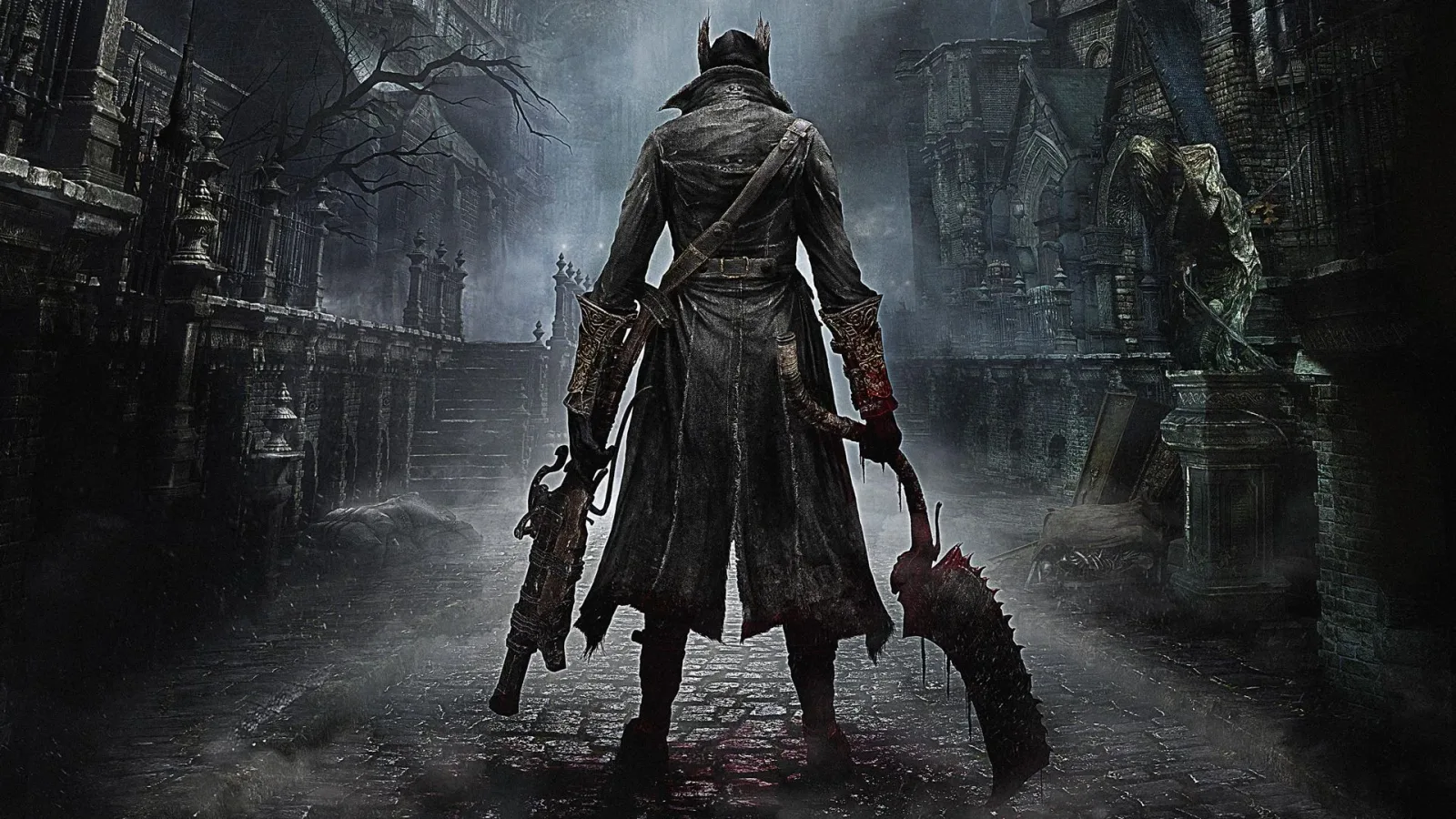
Bloodborne remains one of the most requested PlayStation revivals, but a former Sony Interactive Entertainment America president has suggested that the road to a sequel, remake, or other return to Yharnam may be far more complicated than fan demand alone would imply.
Speaking on The Trophy Room podcast, Shawn Layden discussed the broad difficulties involved in bringing older games back. Asked about the possibility of a new take on Bloodborne, he said the central obstacle appears to be the number of parties with a stake in the property. In his view, getting Sony, FromSoftware, and FromSoftware's parent company to agree on the necessary terms may be the largest challenge.
That is not a confirmation that Bloodborne 2 is in development, nor is it an announcement of a remake, remaster, or PC release. In fact, Layden's comments point in the opposite direction: even if there is enthusiasm for revisiting the 2015 action RPG, the practical business and rights questions around it may be difficult to resolve.
A beloved game with no modern follow-up
Bloodborne launched for PlayStation 4 in 2015 and quickly earned a singular place among modern action RPGs. Developed by FromSoftware in collaboration with Japan Studio, it took ideas familiar to players of the Souls series and reshaped them around faster combat, aggressive healing mechanics, gothic horror, and an increasingly surreal cosmic mystery.
For useful background on this topic, read Former Rockstar Technical Director Thinks AI Could Push GTA 6's PC Release Closer to Console Launch.
More than a decade later, the game's standing has only become more conspicuous. Fans regularly ask for a higher-frame-rate update, a PlayStation 5 remaster, a full remake in the style of Demon's Souls, a PC version, or an outright sequel. Yet none of those projects has been formally announced. Bloodborne remains tied to its original PlayStation 4 release, aside from its The Old Hunters expansion and routine backward-compatibility access on newer PlayStation hardware.
That silence has often seemed unusual given the continued popularity of FromSoftware and the commercial appeal of reviving prominent PlayStation properties. FromSoftware's profile has grown substantially since Bloodborne's release, particularly following the success of Elden Ring. At the same time, Sony has shown a willingness to revisit major catalog titles through remasters, remakes, PC editions, and new entries.
Layden's remarks offer one possible explanation for why Bloodborne has not followed that pattern.
"A lot of involved rights"
Layden framed the issue as one that goes beyond deciding whether an older game deserves a return. He said that bringing back legacy releases requires creators and publishers to consider whether they can make something that respects the original while also recapturing what made it special in the first place.
For Bloodborne, however, he indicated that the ownership and approval side is especially significant. He described the project as involving Sony, FromSoftware, and FromSoftware's parent company, with the need for every relevant party to sign off potentially creating the greatest obstacle.
"There's a lot of involved rights associated with it," Layden said, adding that securing agreement from all sides is "probably the biggest challenge."
The comments are notable because they do not reduce the situation to a single company refusing to act. Instead, they suggest a multi-party arrangement in which creative ambitions, publishing interests, ownership questions, licensing conditions, and commercial expectations could all need to be addressed before work could move forward.
Rights negotiations are rarely visible to players, but they can shape whether a project happens at all. A game can have a passionate audience and an obvious market opportunity while still being difficult to reissue or expand upon. Agreements made during original development may cover particular uses, platforms, studios, or distribution arrangements. Revisiting an older title can mean revisiting all of those details.
Why a remake would not necessarily be easier
For many fans, a remake has seemed like the most plausible route back to Yharnam. Demon's Souls received a high-profile PlayStation 5 remake, created by Bluepoint Games with Japan Studio, and its success established a clear precedent for rebuilding a FromSoftware-associated PlayStation classic for modern hardware.
But Layden's comments suggest that Bloodborne cannot automatically be treated as a straightforward repeat of that model. The appeal of a remake is obvious: new visuals, improved performance, refined loading times, and perhaps a chance to introduce the game to players who missed it the first time. Still, the business conditions behind any project matter as much as its technical potential.
There is also a creative question. Bloodborne is not cherished solely because of its art direction or boss roster. Its rhythm, atmosphere, online systems, and unusual weapon design all contribute to its identity. A remake would need to make decisions about what should remain untouched, what should be modernized, and how much reinterpretation players would accept.
Layden raised that broader concern as well, asking whether a return can both honor the original and recreate the phenomenon around it. That is a difficult standard for any revival, especially for a game whose reputation has grown through years of replaying, discussion, challenge runs, lore analysis, and anticipation.
Japan Studio's history adds context, not answers
Bloodborne was co-developed with Japan Studio, Sony's former internal organization that contributed to numerous PlayStation projects before it was reorganized and largely shuttered in 2020. That history is part of why fans have long speculated about the game's internal ownership structure and the practical realities of producing a follow-up.
However, the precise effect of Japan Studio's closure on Bloodborne is not publicly established by Layden's comments. It would be speculation to identify that change as the specific reason no sequel or remake has emerged. His statement was broader: the relevant rights involve multiple parties, and achieving consensus is difficult.
That distinction matters. Corporate restructurings can affect teams, institutional knowledge, and project planning, but they do not by themselves explain every legal or commercial question attached to a game. Without a formal announcement from the companies involved, there is no basis to say which individual agreement, stakeholder, or condition has prevented a Bloodborne revival.
No indication of a project in progress
Layden's appearance should not be read as a teaser. He did not announce negotiations, confirm active development, identify a studio, or provide a timetable. He also did not say that a Bloodborne 2, remake, remaster, or PC port will eventually happen.
Instead, the comments provide rare public acknowledgment that revisiting the game may require more coordination than outsiders assume. That may be frustrating for fans who have spent years waiting for even a technical update, but it is also a useful reminder that strong demand does not erase the complexity of collaborative game development and long-running intellectual-property arrangements.
A sequel could involve questions distinct from a remake. A new Bloodborne game would need a development partner, a creative direction, a budget, publishing plans, and agreement on who controls the resulting work. A remaster or PC edition may sound narrower, but it could still require approvals involving distribution, technology, assets, and branding. None of those paths should be assumed to be simple merely because the original remains popular.
Yharnam remains alive for players
Until something changes, Bloodborne's future remains unresolved. The game continues to be celebrated for its distinctive setting and for combat that rewards players for pushing forward rather than retreating. Its central ideas have kept it relevant even as FromSoftware has released other landmark games and the wider action-RPG genre has evolved around it.
For now, that enduring reputation is the closest thing Bloodborne has to momentum. There is no announced sequel, no confirmed remake, and no stated plan for a broader release. But Layden's explanation makes clear that the absence of movement may not come down to a lack of interest in the franchise. It may instead reflect the difficult work of aligning every organization that would need to approve Bloodborne's return.
That leaves fans in familiar territory: waiting, speculating cautiously, and revisiting the original hunt. Whether Yharnam ever opens its gates again in a new form remains unknown, but the desire for a return is not in doubt.
Community
Discussion
Start the conversation.
No comments have been posted yet.