

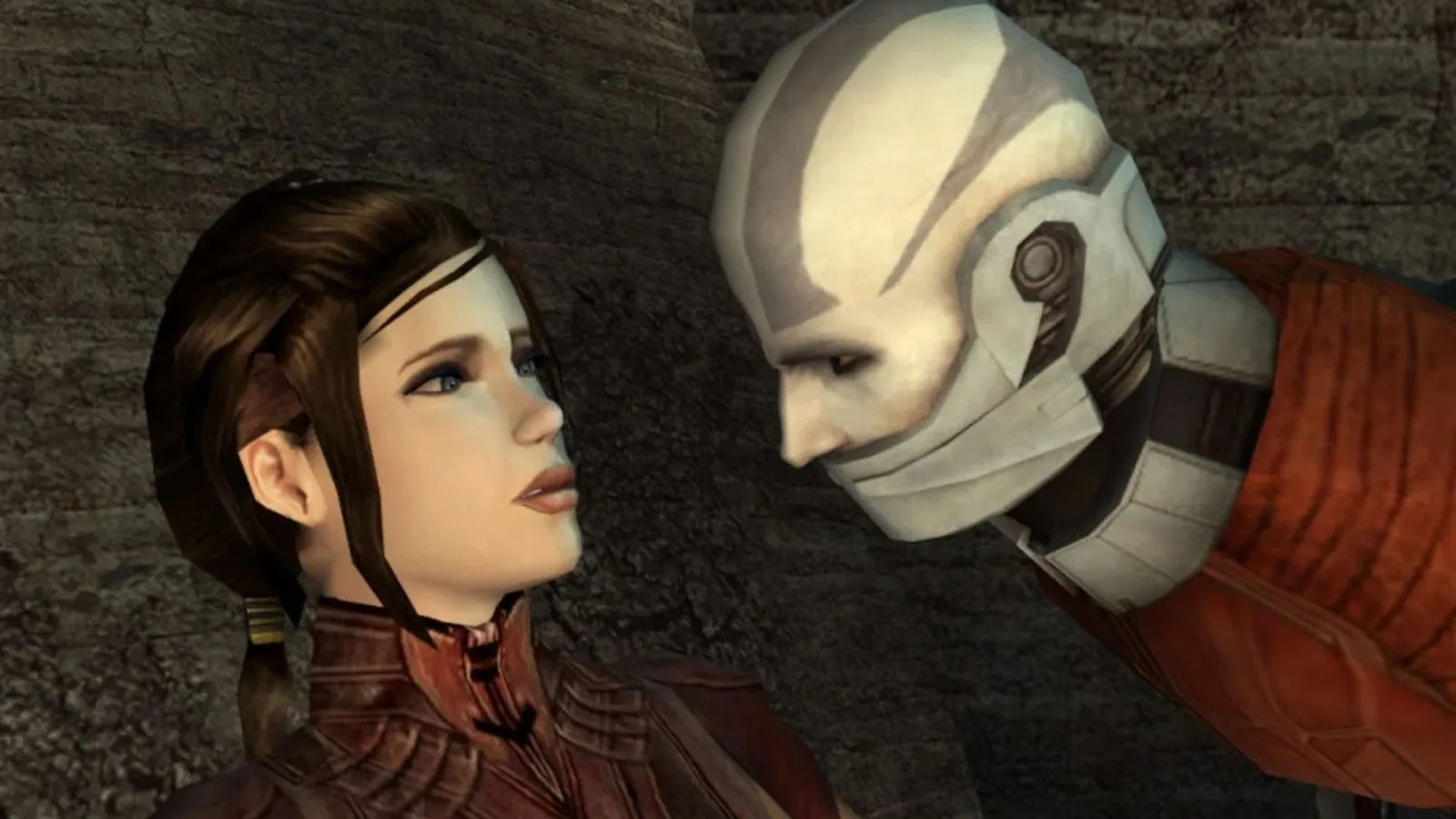
Star Wars: Fate of the Old Republic carries an enormous weight of expectation before fans have even seen much of the game. Positioned as a spiritual successor to Star Wars: Knights of the Old Republic, the project inevitably invites comparisons to one of the most widely admired role-playing games ever made. But director Casey Hudson does not view that legacy as an impossible burden. Instead, he has pointed to the experience inside Arcanaut Studios, where members of the team worked on the original Knights of the Old Republic, the Mass Effect trilogy, and other BioWare-era projects.
Speaking on The Fourth Curtain podcast, Hudson explained that returning to this kind of Star Wars RPG work would feel far more unusual if he had not been involved with the first Knights of the Old Republic. His point is not that a new game can simply reproduce what made the 2003 classic special. Rather, the developers have firsthand knowledge of the creative decisions, priorities, and sensibilities that shaped that earlier game. For a project with "spiritual successor" attached to it, that distinction could be crucial.
Very little has been formally revealed about Fate of the Old Republic itself, including its gameplay structure, story, target platforms, or release window. Hudson has said that further announcements are planned for next year. Until then, his comments offer one of the clearest indications of how the studio is approaching the challenge: not as an effort to wear the identity of an unrelated predecessor, but as an opportunity for veterans to revisit ideas that have long mattered to them.
A legacy the team knows firsthand
Knights of the Old Republic remains a landmark for both Star Wars games and console-style narrative RPGs. Its mix of party members, dialogue choices, exploration, combat, moral alignment, and a story set thousands of years before the Star Wars films gave it room to tell a distinctly different kind of galactic story. Players could engage with familiar concepts such as Jedi, Sith, the Republic, and the Force while meeting new characters and exploring an era that did not need to fit around the central film cast.
For useful background on this topic, read GTA 6 Guide Coverage Expands Across Vice City, Leonida and Chapter 1.
That reputation is precisely why a successor label brings risk. Fans do not just remember broad features such as branching conversations or companion relationships. They remember personal decisions, favorite party members, major story turns, and the feeling of discovering a Star Wars setting that felt expansive and self-contained. Nostalgia can make any follow-up difficult, particularly when the original has had more than two decades to become part of players' gaming histories.
Hudson acknowledged that the expectations are high, but said the team's background helps it understand the reasons behind the original development decisions. Arcanaut is not, in his framing, a studio trying to guess what another group might have intended. It includes people who participated in the development culture that produced Knights of the Old Republic and later helped make every Mass Effect game.
"We're not trying to fill someone else's shoes," Hudson said, while discussing the team's connection to the original game and its later RPG experience.
That does not remove the pressure entirely. A development team can understand its own history and still face the hard task of deciding what to retain, reinterpret, or leave behind. However, Hudson's comments suggest that Arcanaut sees continuity of creative understanding as more important than surface-level imitation. The goal is not necessarily to recreate a game from another era with modern visuals; it is to pursue a new RPG informed by people who understand why the classic worked for so many players.
Why a spiritual successor has room to be different
The description "spiritual successor" leaves Arcanaut considerable freedom, but it also creates questions that have not yet been answered. It indicates a connection in spirit, themes, or design philosophy rather than confirming a direct continuation of the original game's plot, characters, rules, or systems. That distinction matters especially in Star Wars, where the franchise's continuity has changed significantly since Knights of the Old Republic was released.
The old game's setting, characters, and events belong to an earlier Star Wars continuity. As a result, any newly told story will need to establish its own place within the modern franchise landscape. Hudson and Arcanaut have not detailed the narrative setting for Fate of the Old Republic, so it remains unknown whether the game will revisit recognizable locations, draw on ideas from the Old Republic era, or tell a story largely separate from the first game's specific material.
That uncertainty may ultimately be a strength. The original Knights of the Old Republic succeeded in part because it did not depend solely on repeating movie-era events. A new game does not need to recreate the exact plot structure, familiar twists, or individual companions of its predecessor to capture that same willingness to tell a consequential Star Wars story. In fact, attempting to directly replicate every beloved element could make it harder for a new RPG to develop its own identity.
The same applies to mechanics. The original game was built around Dungeons & Dragons 3.5-inspired systems, with real-time action presented through a queued, pause-friendly combat structure. Those mechanics were a major part of the game's identity, but they were also products of their time. Arcanaut has not said whether Fate of the Old Republic will use turn-based combat, real-time combat, tactical pausing, party control, dialogue checks, morality systems, or any other particular RPG framework.
There is no reason to assume the studio will revive the original ruleset exactly. A spiritual successor can preserve a commitment to player choice, party-driven storytelling, difficult decisions, and a galactic adventure without retaining every technical convention of a game released in 2003. The eventual reveal will need to show where Arcanaut has chosen continuity and where it has chosen reinvention.
Passion over prediction
Hudson's larger point is that trying to calculate every fan expectation may not be a productive creative strategy. He said the overriding consideration is the team's excitement about making something remarkable. Developers cannot fully know how to answer every form of audience pressure, nor can they precisely determine what every player wants from a new RPG before the game exists.
That is a practical observation for a project with this much history behind it. The audience for a new Old Republic-inspired game will not be a single bloc. Some players will want a tactical party RPG close to the original. Others may care most about dialogue choices and romance arcs associated with BioWare's later work. Some will be focused on Star Wars lore, while others may approach the project primarily as fans of Hudson's past games. Modern RPG audiences also bring expectations shaped by decades of design changes in accessibility, cinematic presentation, combat responsiveness, open-world structure, and the scale of player agency.
No game can satisfy every imagined version of Fate of the Old Republic. Hudson's stated approach is therefore centered on conviction: make a game the developers believe in and aim for something players will love, rather than treating nostalgia as a checklist. That philosophy is simple, but it is meaningful when tied to a team with direct experience on the games being invoked.
It is also worth remembering that Mass Effect grew out of many of the storytelling strengths associated with Knights of the Old Republic while becoming its own very different series. It shifted into a science-fiction setting outside Star Wars, established a new protagonist, altered the flow of exploration and combat, and built an identity around choices carried across a trilogy. That history demonstrates that the people involved are familiar not only with preserving RPG traditions, but with evolving them.
What fans should and should not expect right now
For now, the confirmed picture remains limited. Star Wars: Fate of the Old Republic is a spiritual successor to Knights of the Old Republic. Casey Hudson is directing it at Arcanaut Studios. The team includes developers with experience on the original game, the Mass Effect series, and other BioWare work. Hudson has also indicated that new announcements will arrive next year.
Beyond that, details should be treated carefully. There has been no announced release date, no confirmed platform list, no detailed breakdown of combat, and no full explanation of the game's narrative setting. There is also no basis yet to conclude that it will mechanically resemble the original in any particular way. The successor description establishes a creative relationship, not a promised feature list.
Still, the project's early premise is compelling. A new Star Wars RPG is being shaped by people who helped define one of the genre's most enduring Star Wars adventures and then carried lessons from it into another major RPG franchise. That does not guarantee that Fate of the Old Republic will meet every expectation attached to its name. Nothing could fully reproduce every player's memory of a formative game. But Hudson's comments make clear that Arcanaut is approaching the task from a position of lived experience rather than distant admiration.
For fans, the next announcements will be the real test. They will reveal whether the game's world, characters, choices, combat, and role-playing systems can translate that legacy into something new. Until then, Hudson's message is a measured one: the team respects the enormous shadow cast by Knights of the Old Republic, but it intends to create an RPG with its own purpose rather than chase an impossible imitation of the past.
Community
Discussion
Start the conversation.
No comments have been posted yet.