

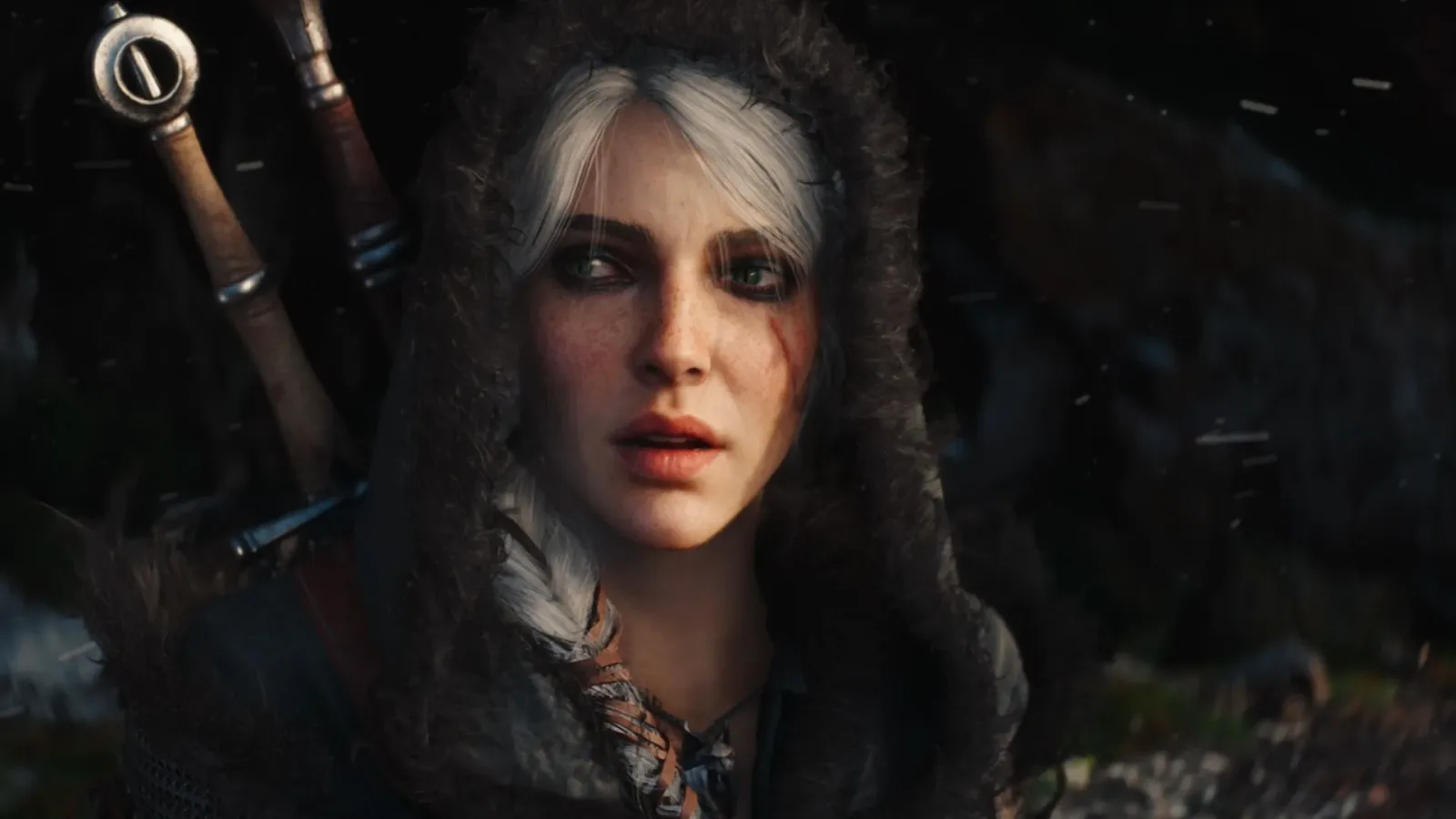
CD Projekt Red has expanded its development talent with three experienced designers previously associated with Warhorse Studios and the Kingdom Come: Deliverance series. The hires bring together specialists in quest design, open-world construction and gameplay systems at a studio already preparing major future RPG projects, including The Witcher 4 and Cyberpunk 2.
The trio consists of Karel Kolmann, Zdenek Glatz and Zbynek Zelinka. Each spent years at Warhorse and held senior or lead responsibilities during the development of the studio's historical role-playing games. Their moves do not reveal which internal CD Projekt Red projects they are assigned to, and there has been no official breakdown of their day-to-day work. Still, their publicly listed roles point to an investment in several of the disciplines that define large-scale RPG production.
For a company with ambitious plans across the worlds of The Witcher and Cyberpunk, experienced staff who have worked through the particular demands of reactive quests, expansive maps and interconnected gameplay can be especially valuable. The scale of modern role-playing games means that strong individual systems are not enough on their own; they must support one another across dozens or even hundreds of hours.
Karel Kolmann joined in 2025
Kolmann was the first of the three developers to make the move. His LinkedIn profile indicates that he joined CD Projekt Red in November 2025 as a senior quest designer. He had worked on both Kingdom Come: Deliverance games as a lead gameplay designer.
For useful background on this topic, read Overwatch Director Addresses Why Some Heroes Receive More Skins Than Others.
Quest design sits at the center of the kind of RPG experience CD Projekt Red is known for. It involves far more than placing objectives on a map. Designers must account for narrative context, character motivations, player choices, combat encounters, progression requirements and the many ways players may approach a situation. A seemingly contained side activity can require coordination between writers, cinematic teams, level designers, gameplay programmers, audio staff and quality assurance.
The Kingdom Come games are notable for pursuing grounded medieval simulation alongside their narrative ambitions. That approach creates its own design questions: how should quests react to time, location, player behavior, combat outcomes and the game's social systems? Kolmann's background could prove useful wherever CD Projekt Red is seeking to build more detailed interactions into future worlds, though no specific feature or assignment has been confirmed.
His arrival also reflects the long development cycles behind blockbuster RPGs. Senior designers can join a project at numerous stages, from early concepts and prototypes to content planning, iteration and the final push toward release. Without further information from CD Projekt Red, it would be premature to connect Kolmann to a particular game or subsystem.
Open-world experience arrives with Zdenek Glatz
Zdenek Glatz followed in May 2026, taking a senior open-world designer role at CD Projekt Red. Before that transition, Glatz served as lead level designer on Kingdom Come: Deliverance 2. He also contributed to the original game and its downloadable content.
Open-world design is one of the most complex areas of AAA RPG development. The task is not simply to create a large landmass. Teams need to shape routes, points of interest, environmental storytelling, exploration rewards, combat spaces, settlements and the practical rhythm of traveling through a world. The player should feel free to wander while still encountering meaningful structure and understandable direction.
That balancing act matters for both of CD Projekt Red's flagship settings. The fantasy regions of The Witcher depend on atmosphere, folklore, dangerous wilderness and the sense that small human stories are tucked away beyond the main road. The world of Cyberpunk, meanwhile, faces different challenges involving density, verticality, urban navigation and the presentation of a living futuristic city. Principles of open-world design can apply to both, but their final implementation has to suit dramatically different moods and player expectations.
Glatz's experience with levels as well as broader open-world work may be particularly relevant because those responsibilities overlap. A compelling open-world region needs places that look natural from afar and remain interesting once the player enters them. A town, forest, camp or ruin has to support navigation and gameplay while also communicating a history. The best spaces can guide players subtly without making the guidance feel artificial.
Zbynek Zelinka adds technical gameplay knowledge
The newest of the three arrivals is Zbynek Zelinka, who joined CD Projekt Red in October 2026 as a senior gameplay designer. Zelinka had been a lead technical designer at Warhorse Studios and had worked there for seven years and ten months.
Technical design is often an essential bridge between creative goals and the tools or systems needed to realize them. The exact scope varies from studio to studio, but the discipline frequently involves scripting, implementation workflows, prototyping and supporting content creators as they build encounters, quests or other interactive elements. At the scale of a modern RPG, reliable pipelines can have an enormous effect on how quickly teams can test ideas and how consistently those ideas function once they are spread across a huge game.
Gameplay design, in turn, touches the moment-to-moment experience: the feedback from player actions, the rules governing mechanics, the feel of combat or traversal, and the interactions that make a game world responsive. Moving from a lead technical role to a senior gameplay position suggests a skill set that can connect practical implementation with the player-facing side of design.
While Zelinka has spent less time at Warhorse than Kolmann and Glatz, his tenure still represents nearly eight years of work at the studio. Kolmann and Glatz each spent more than eight years there. Such extended experience at a single developer can give designers a deep familiarity with a project's technology, methods and evolving creative identity, while a move to another company offers the chance to apply those lessons in a new setting.
What the hires could mean for CD Projekt Red
There is no confirmation that all three developers are working on the same game, or that any one of them is attached directly to The Witcher 4 or Cyberpunk 2. CD Projekt Red operates multiple teams and projects, and public job titles do not provide a complete picture of internal assignments. The most accurate conclusion for now is that the studio has gained three developers with substantial RPG experience across complementary design fields.
That combination is notable. Quest design determines how players engage with stories and choices. Open-world design shapes the places where those stories occur. Gameplay and technical design determine whether the systems holding everything together are responsive, understandable and feasible to build at scale. These roles naturally intersect, particularly in games that aim to make player decisions feel meaningful.
Both series associated with CD Projekt Red carry exceptionally high expectations. The Witcher 3: Wild Hunt remains a landmark for many players because of its character-focused quests and richly realized regions, while Cyberpunk 2077 has become a major point of reference for futuristic open-world RPG storytelling. Any sequel is likely to be judged not only on its own ideas, but against the strengths and shortcomings audiences associate with prior entries.
Building projects of that size also requires more than assembling recognizable talent. Senior staff must work within established teams, technical constraints and a shared creative direction. New hires can bring valuable perspective, but major games are collaborative efforts involving a vast range of specialists. The effectiveness of these additions will only become clear when CD Projekt Red is ready to show more of its future releases.
A stronger pool of RPG specialists
The movement of Kolmann, Glatz and Zelinka highlights the continuing demand for experienced RPG developers. Studios creating large, systemic worlds need people who understand the challenges that emerge after the early pitch: branching content grows complicated, worlds need to remain readable, and every new mechanic must be tested against the rest of the game.
Warhorse's Kingdom Come: Deliverance work gave all three designers experience in a genre where immersion depends on the interaction between many parts. Historical setting, character progression, exploration, combat and quest outcomes all need to reinforce the same larger experience. That does not mean future CD Projekt Red games will resemble Kingdom Come; their settings and design priorities remain distinct. It does mean the company has added people accustomed to solving the kinds of problems that arise in ambitious RPG development.
For now, players will have to wait for concrete details on the projects these developers are helping to build. CD Projekt Red has not announced the specific contributions of Kolmann, Glatz or Zelinka, and it has not tied their appointments to a particular upcoming game. Their hiring nevertheless gives the studio additional depth in three areas that will be crucial to the next generation of its role-playing adventures: quests, worlds and gameplay systems.
Community
Discussion
Start the conversation.
No comments have been posted yet.