

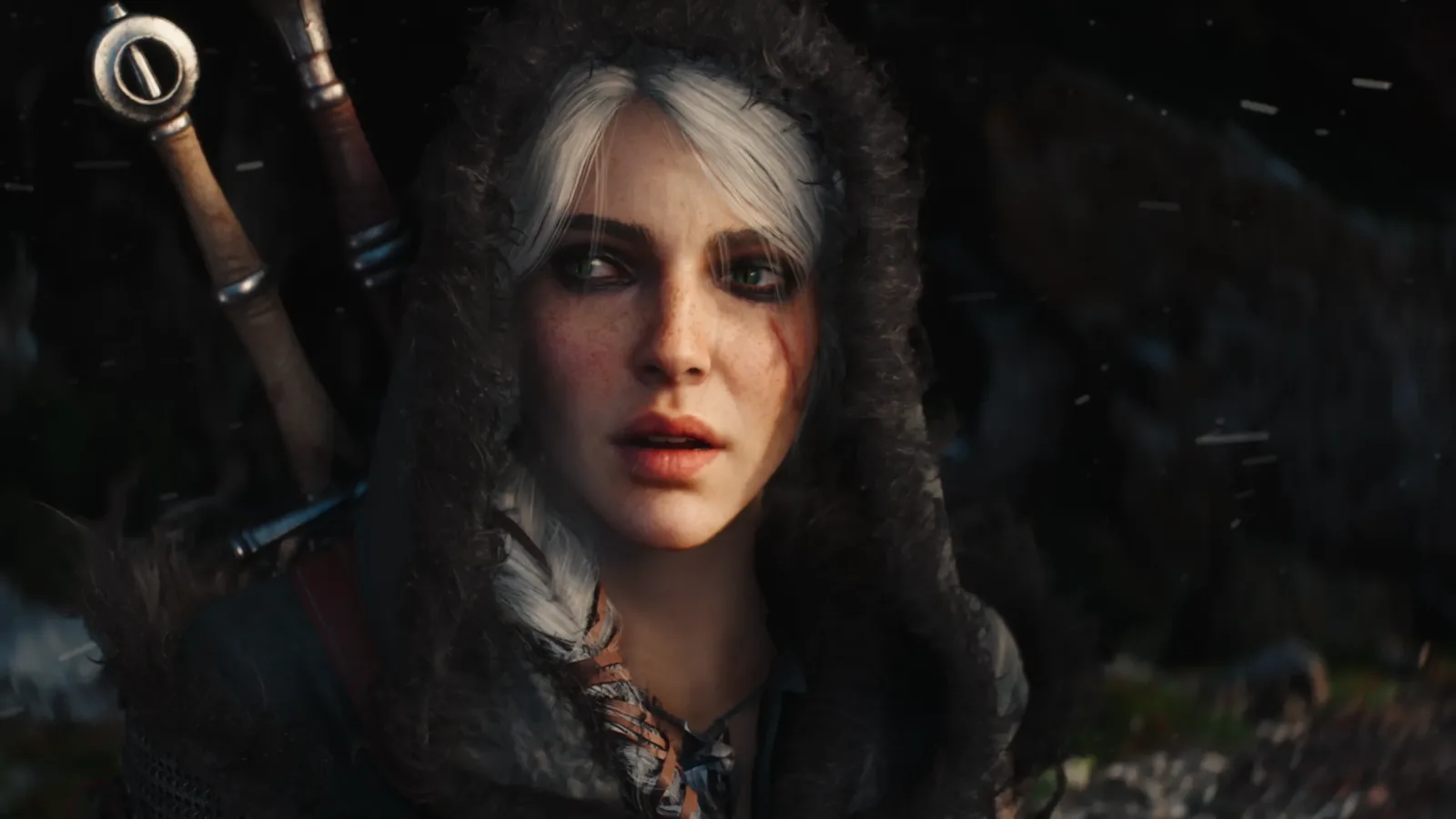
CD Projekt Red has addressed one of the biggest questions surrounding modern game production: how far the studio intends to go with artificial intelligence. During the company's latest earnings call, joint CEO Michal Nowakowski said the developer remains committed to making games predominantly with people, even as AI tools become more common across the wider games business.
For fans watching the development of The Witcher 4, the message is a significant one. CD Projekt Red is responsible for some of the industry's largest and most closely scrutinized role-playing games, and its next Witcher project is among the company's most anticipated upcoming releases. Nowakowski did not present AI as something the studio plans to ignore altogether, but he described it as a supporting tool rather than a replacement for the people building the game.
"AI is definitely becoming a thing in the games development as well," Nowakowski said. "We are still predominantly using people and this is our plan, to make games where we're not walking away from that."
His comments draw a line between using AI to assist with selected parts of production and using it as the foundation for an entire game. That distinction has become increasingly important as generative AI is discussed by publishers, technology companies, investors, developers, and players. While some companies frame the technology as a way to make teams more efficient, there are ongoing concerns about job displacement, creative ownership, training data, quality control, and whether work made with generative systems will diminish the personality of a finished game.
According to Nowakowski, CD Projekt Red's present approach is not to depend on AI for complete game creation. Instead, the technology may be useful in certain situations and could become more useful over time, but it is not set to replace the human-led work at the center of the studio's projects.
"AI, if anything, is a tool like many others that's helping in places that can maybe become more helpful in the future but we're not planning to rely on AI making complete games," Nowakowski said.
A Human-Led Approach for a Complex RPG
The Witcher games are especially relevant to this conversation because their appeal rests heavily on authored details. They are built around narrative choices, character relationships, worldbuilding, quests, performances, environmental storytelling, and the kind of hand-crafted moments players can discuss for years. A large RPG can involve enormous amounts of writing, art, animation, design, audio, testing, and production work, making it an obvious target for discussions about automation. It is also the type of game where audiences are likely to notice if material feels generic, inconsistent, or disconnected from the rest of the experience.
Nowakowski specifically referred to the complexity of games like CD Projekt Red's when discussing the question of complete AI-generated projects. He said he does not believe that path is the right one, including from an ethical standpoint.
"To be honest, especially with very complex games like ours, I don't even think this is the right or ethical path to follow," Nowakowski said.
That is not a promise that AI will be absent from every stage of development. Nowakowski's framing leaves room for AI-assisted processes, as long as the company continues to prioritize people and does not rely on the technology to make whole games. The exact applications were not detailed in the comments reported from the earnings call, so it remains unclear which specific workflows, if any, may be supported by AI during work on The Witcher 4.
That uncertainty is worth emphasizing. "AI" is often used as a broad term covering very different technologies, from tools that help organize or analyze data to generative systems capable of producing text, images, voices, code, or other assets. A statement that a studio may use AI as a tool does not, by itself, explain whether it is being used in internal experimentation, production support, prototyping, quality assurance, asset creation, or another part of the pipeline. CD Projekt Red's public position here is about its overall philosophy: human developers remain the primary creative force.
What CD Projekt Red Is--and Is Not--Promising
The wording from the joint CEO offers reassurance for players worried that generative material could take over the creative identity of the next Witcher game. It also avoids making a sweeping claim that every developer must follow the same route. Nowakowski said decisions about AI are for other companies to make themselves, rather than declaring that CD Projekt Red's policy should become an industry-wide standard.
"Whether this is true for the whole industry, I'm not the person to make those statements," he said. "I think everybody has to make those judgments on their own."
That position reflects a common executive response to the technology. Many leaders have said AI could streamline some development processes while stressing that it should not replace the people who make games. But broad statements about responsible or limited use can mean different things at different companies. For players, the practical question will continue to be how those policies are applied, how transparent studios are about their choices, and whether the final games retain a clear human creative voice.
For CD Projekt Red, the issue carries particular weight because the studio's output is judged not only on technical scale but also on the quality of its storytelling and its worlds. The next Witcher installment will inevitably face high expectations. Its predecessor, The Witcher 3: Wild Hunt, became a major benchmark for open-world fantasy RPGs, while the studio's work on Cyberpunk 2077 also demonstrated both the pressure surrounding ambitious releases and the long-term importance of post-launch support. In that context, the company's comments suggest it views people as essential to handling the creative and production challenges of a game as complex as The Witcher 4.
The Wider Debate Is Far From Settled
AI remains one of the most divisive subjects in games development. Supporters argue that carefully implemented tools can reduce repetitive work, improve iteration, and allow developers to spend more time on tasks that require judgment and creativity. Critics counter that generative systems can introduce legal and ethical problems, threaten jobs, use artists' and writers' work without adequate consent, and lead to cheaper-looking output if companies prioritize speed and cost-cutting over craft.
The concern is not limited to what appears in a finished game. Developers and players are also debating whether AI-assisted work should be disclosed, how training data should be sourced, and whether workers can meaningfully consent to tools introduced into their production pipelines. A studio can say that humans are still in charge while employees and audiences still ask what the technology is doing behind the scenes. Those questions are likely to become more prominent as tools evolve and as publishers look for ways to manage the growing costs of major projects.
Nowakowski's remarks do not settle that industry debate, nor do they set out a detailed public policy for every possible use of AI at CD Projekt Red. They do, however, establish a clear current boundary. The company does not plan to move away from human-led development, and it does not intend to rely on AI to make complete games.
For now, that is the main takeaway for Witcher fans: CD Projekt Red sees AI as one tool among many, not as the author of its next major RPG. The studio's final practices will ultimately be judged through the work it releases and the transparency it provides along the way. But based on Nowakowski's latest comments, the people making The Witcher 4 are expected to remain at the center of the process.
Community
Discussion
Start the conversation.
No comments have been posted yet.