

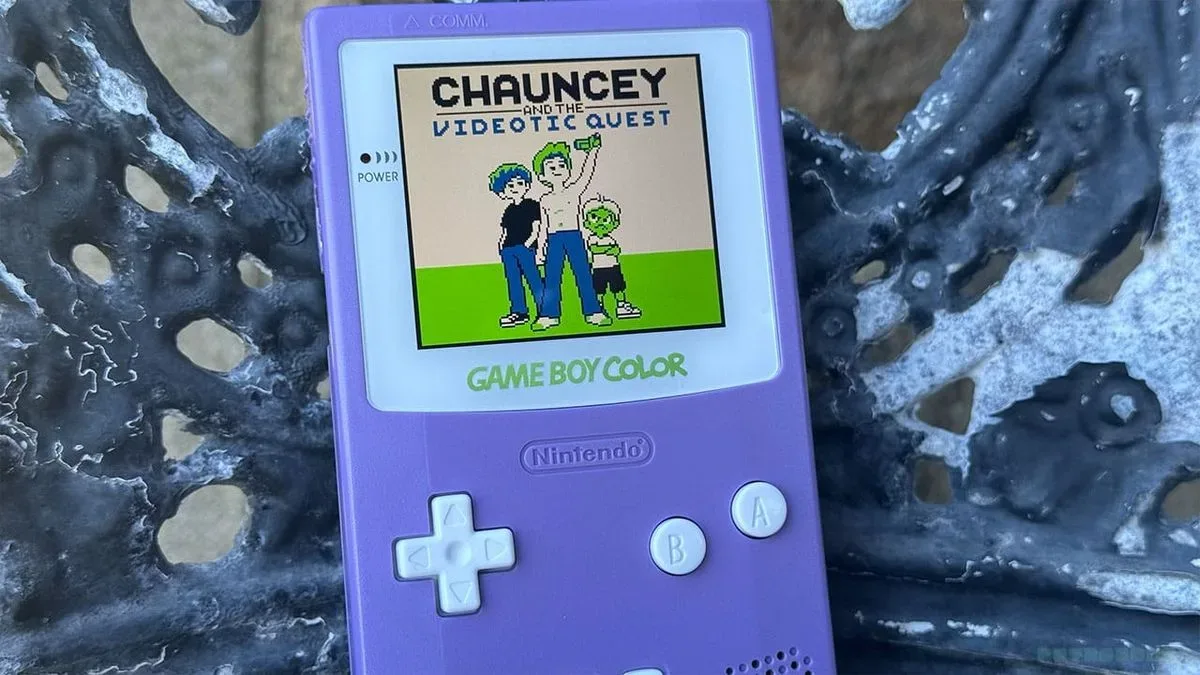
Chauncey and the Videotic Quest is a newly released Game Boy game that looks back at more than one kind of past. Built for Nintendo's original monochrome handheld and playable through a flashcart, Vorvy's small-scale adventure is steeped in the design language of the era that produced games such as The Legend of Zelda: Link's Awakening, early Pokémon, and Game Boy-era Super Mario. At the same time, its story is rooted in a much more personal kind of nostalgia: the bored, strange, funny, occasionally embarrassing experiences of teenagers spending time together before every spare moment was swallowed by feeds and notifications.
The result is not presented as a grand attempt to modernize Game Boy game design. Instead, it embraces the limits and character of the hardware while using them to tell an irreverent story about friendship. It is a game filled with personal references, deliberately juvenile humour, mundane family scenes and absurd set pieces. That blend gives Chauncey and the Videotic Quest an identity beyond its retro presentation. It may draw obvious inspiration from landmark Nintendo series, but its central appeal appears to be the feeling that players are being invited into somebody's old memories of hanging out with friends.
A Game Boy adventure made for a friend
The project began as a gift. Vorvy, also known as Sonny, was loaned a childhood Game Boy DMG by a friend of nearly two decades. The system was reportedly in rough shape: dirty, missing its front bezel and unable to power on. Rather than simply restore it, Vorvy gave the handheld a more extensive refurbishment, including an IPS display, with the intention of returning it as a surprise.
But the restoration became something larger. Vorvy decided that the renewed console needed a brand-new game made specifically for its owner to play. From that idea came Chauncey and the Videotic Quest, a game based around Sonny, his friend Chauncey, and Chauncey's brother Dew. While its characters and incidents are tied to real relationships and old in-jokes, the game was designed so people outside that friendship circle could still follow the comedy and enjoy the adventure.
For useful background on this topic, read Rooftops & Alleys Gets Cross-Platform Mods, Switch 2 Version and New DLC Packs.
That origin story matters because it explains the game's tone. This is not nostalgia manufactured solely from recognizable pixels, chiptunes and references. Its retro form is directly connected to a physical Game Boy that belonged to one of the people who inspired the game. The handheld was part of the friendship before the project existed, and the finished game became another expression of it.
There is something especially fitting about that approach on Game Boy. The system remains one of the most widely remembered portable consoles in gaming, not only for its library but for the social rituals that surrounded it. It was a machine passed around at school, brought on family trips, played under blankets, lent to friends and rediscovered years later in drawers and storage boxes. A new game about old friendships arriving on original Game Boy hardware naturally taps into that history.
Teenage memories, ridiculous incidents and adult humour
Although it uses an 8-bit handheld format associated with childhood, Chauncey and the Videotic Quest is aimed squarely at adults who can recognize the messy comedy of adolescence. Its setting recalls the 2010s, when teenagers could still spend whole afternoons making videos, roaming outdoors, playing games, building dens and inventing entertainment out of whatever was nearby.
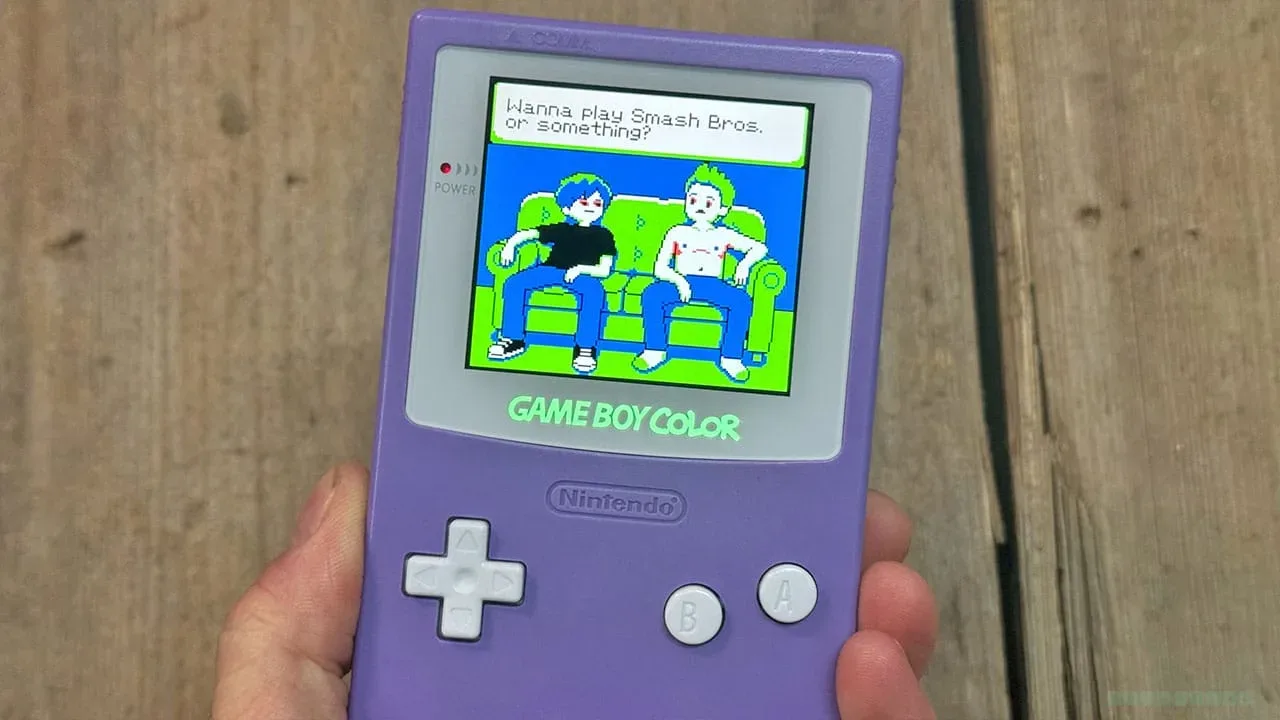
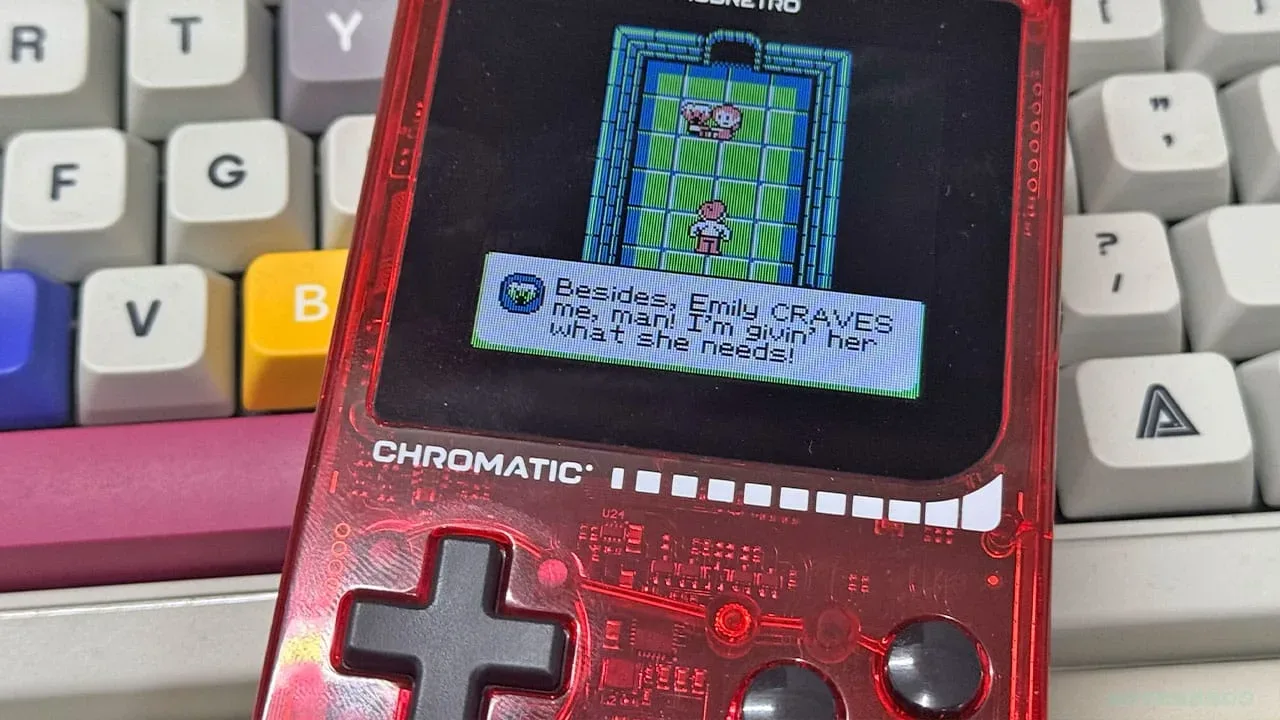
The game does not romanticize every detail. The humour is intentionally crude at times, and the scenarios lean into the kind of jokes friends repeat for years after they happen. Dew, for example, is repeatedly preoccupied with a girl connected to an awkward kissing incident. Other gags venture into darker or more uncomfortable territory. One moment involving Chauncey's wish for more traffic stands out as an example of the game's willingness to take a joke somewhere unexpectedly grim, while another scene has a mother writing a guitar song about having sepsis.
That kind of material will not suit every player, but it is part of the game's perspective. Chauncey and the Videotic Quest is not trying to imitate the clean, universally family-friendly tone of the Game Boy games that influenced it. It instead uses that familiar visual framework as a contrast for stories and conversations that feel like recollections from a particular group of friends.
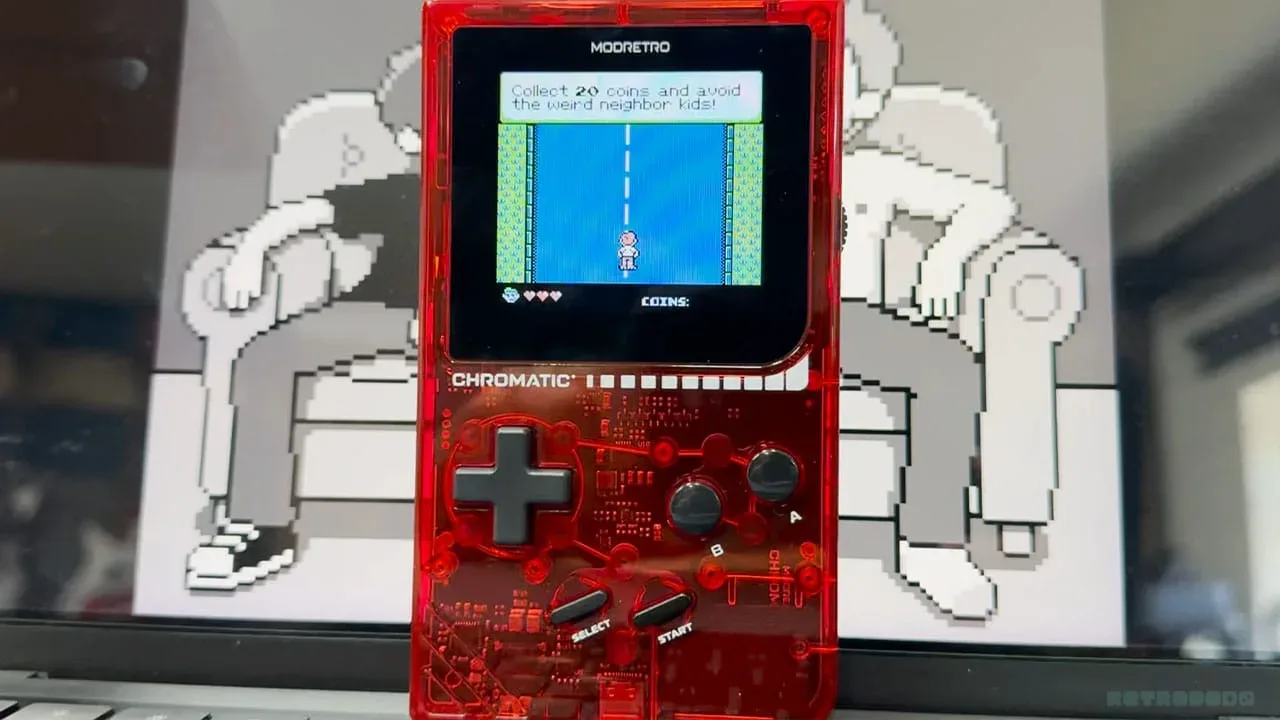
Its events range from the heroic to the deeply ordinary. Players can witness Chauncey's brother being dealt with using a fire extinguisher, take on a Spider-Man role, battle a friend at a Domino's location, rollerblade away from strange children and watch a father repair a table. The latter is an especially telling inclusion. A game based on childhood memories does not only remember the dramatic moments; it also remembers adults doing chores in the background and the odd details that become funny simply because friends were there to notice them.
Zelda, Mario and Pokémon influences in a compact quest
Vorvy's adventure clearly wears its Game Boy influences proudly. Its exploration, conversations and collection elements evoke the overlap between classic Zelda and Pokémon: moving through distinct areas, interacting with characters and pursuing objectives that gradually move the story ahead. The format gives its jokes and scenes a recognizable framework, allowing the player to go from one odd encounter to another without losing the sense of being on a quest.
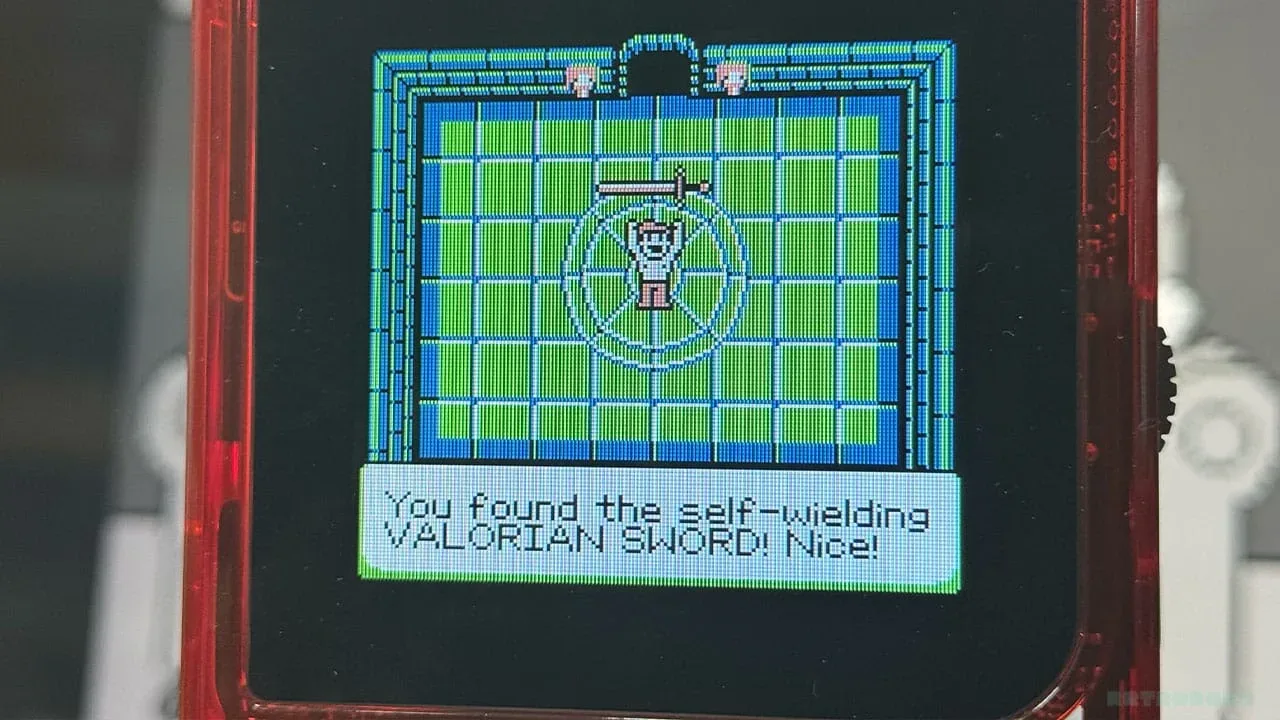
One dungeon includes the search for a sword and a confrontation with a fantasy creature, with a structure reminiscent of Link's Awakening. That is an apt reference point, as Nintendo's 1993 Game Boy classic showed how much adventure could be compressed onto the portable system. Chauncey and the Videotic Quest uses that same association to lend a playful sense of stakes to what is otherwise a highly personal and comic story.
There are also side-scrolling moments built around jumping, calling to mind Super Mario. Rather than restricting itself to one genre template, the game appears willing to shift its perspective and mechanics when a scene benefits from a different kind of challenge. That variety is useful in a shorter game, ensuring the journey is not just a sequence of dialogue-driven jokes or a single style of exploration.
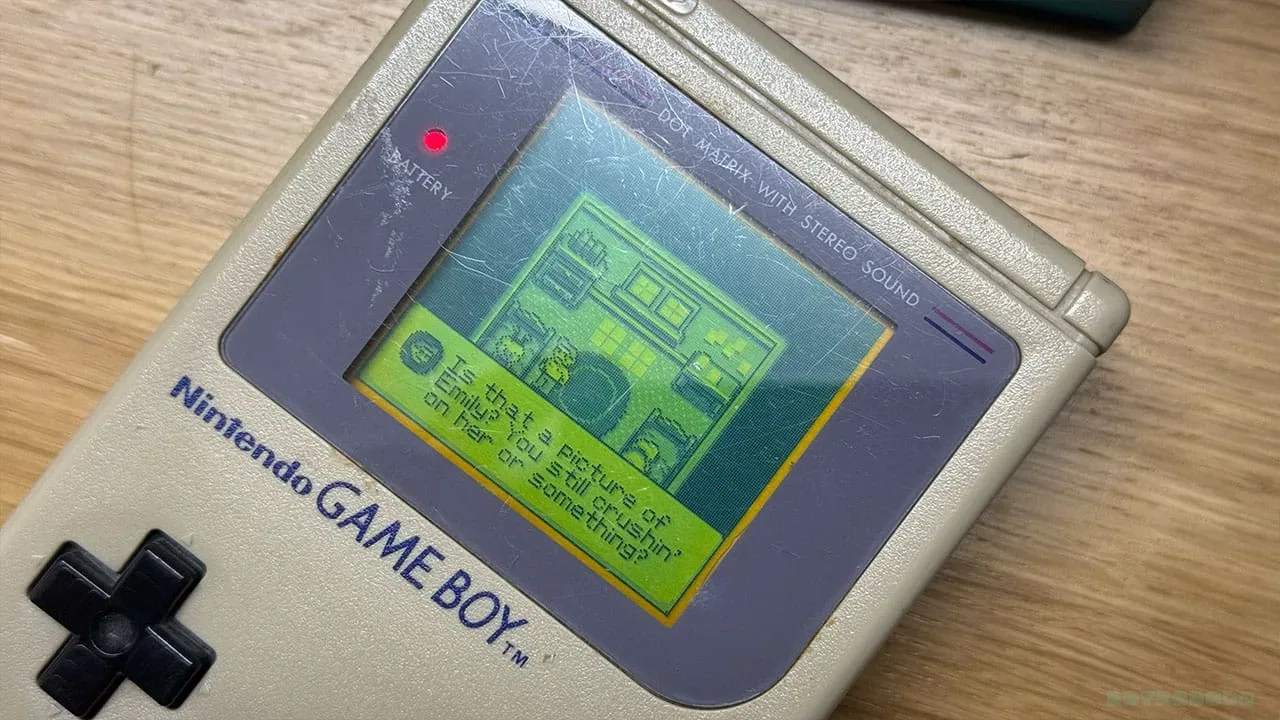
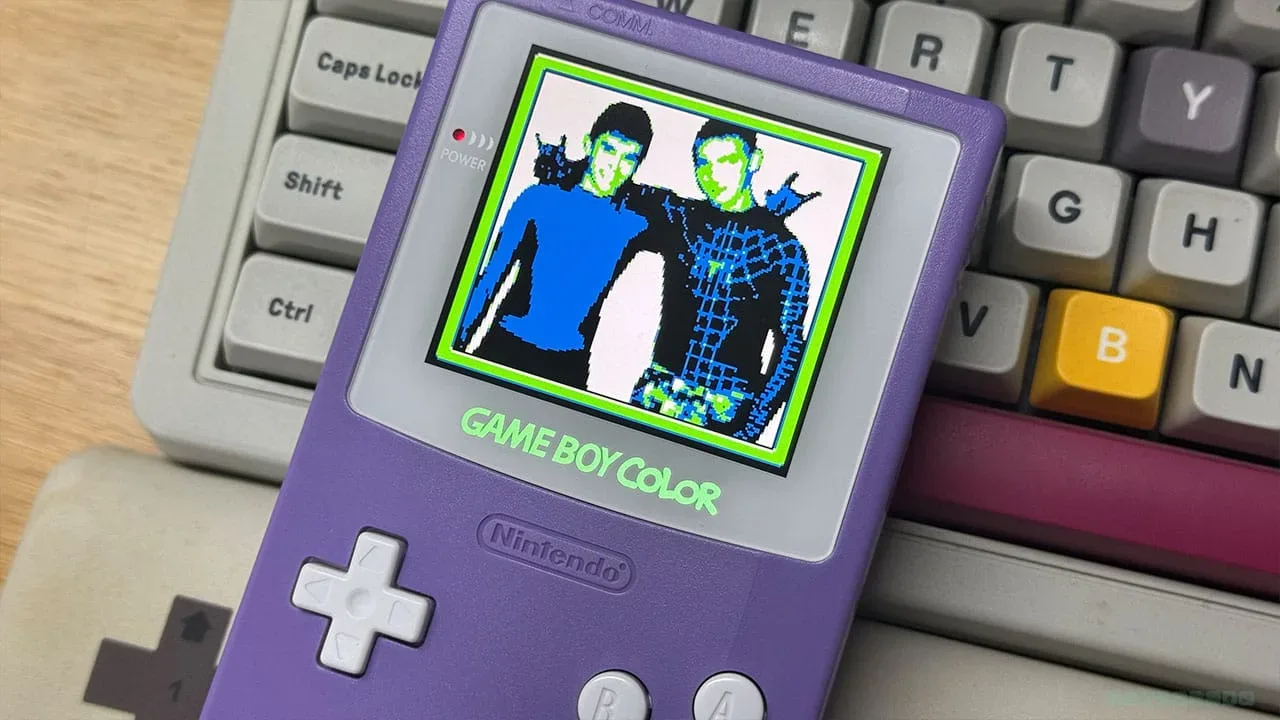
Another notable touch is the use of Game Boy Camera photographs. These images reinforce the project's DIY, memory-box quality. The Game Boy Camera was itself a strange and beloved accessory, remembered as much for its low-resolution images and surreal novelty as for practical photography. Incorporating that aesthetic into a contemporary Game Boy release makes the game feel less like a polished imitation of the past and more like an artifact that could have emerged from it.
Original hardware remains part of the appeal
New Game Boy releases occupy a distinctive space in modern gaming. They are not merely retro-styled games running on powerful current machines; they are software built around the restrictions and possibilities of decades-old hardware. For players with a working DMG or another compatible Game Boy setup, loading Chauncey and the Videotic Quest through a flashcart is part of the experience.
The game can also be played through emulators, making it accessible to people who do not have original hardware available. That flexibility is important for contemporary retro projects, especially when aging screens, batteries and cartridges can make physical use more complicated. Still, the Game Boy version is not incidental. The game's monochrome presentation, compact scenes, camera imagery and concise structure all gain additional context when experienced on the handheld that inspired them.
It is also a reminder that the Game Boy homebrew and independent development scene remains active long after the original hardware debuted in 1989. Developers continue to make games for the platform for many reasons: affection for its limitations, interest in learning its technology, appreciation for its visual style, or a desire to create something tangible for collectors and fellow enthusiasts. In this case, the motivation was even more intimate: turning the restoration of a friend's old console into a playable tribute to their shared history.
A short adventure with a personal point of view
Chauncey and the Videotic Quest is not positioned as an enormous role-playing game or a lengthy replacement for the classic series that inspired it. Its strength is in its compactness and personality. The quest uses familiar handheld adventure conventions as a route through stories that feel specific to Sonny, Chauncey, Dew and their circle, while still leaving room for players to recognize fragments of their own teenage years.
For anyone who remembers afternoons spent alternating between video games, outdoor mischief, music, films and whatever strange plan a friend suggested next, the game's appeal is easy to understand. It captures the way ordinary hangouts can become legendary in hindsight, not because every moment was profound, but because the people involved gave those moments meaning.
Chauncey and the Videotic Quest is available to download for $3.99, with an option for players to contribute more in support of Vorvy's future work. It offers a small but unusually heartfelt reason to return to a Game Boy, whether through a flashcart on original hardware or an emulator. More importantly, it shows that new retro games can do more than recreate old mechanics. They can preserve the humour, affection and chaos of the memories attached to them.
Community
Discussion
Start the conversation.
No comments have been posted yet.