

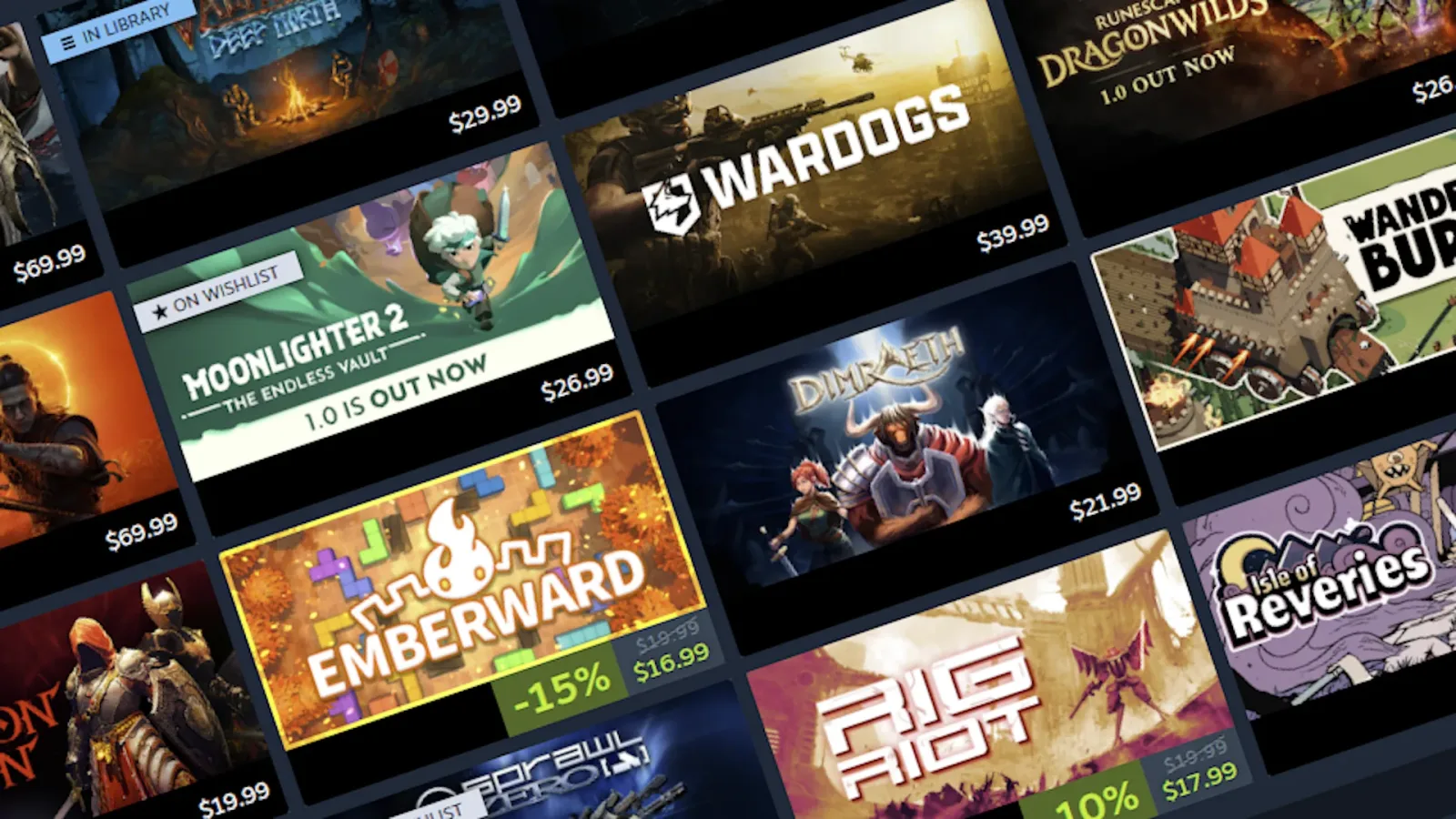
Steam Next Fest has become one of the most important recurring events on the PC calendar for small studios. It gives players a reason to browse demos, try projects outside their usual habits, and add promising games to their wishlists ahead of release. For developers, it can be an early chance to turn months or years of work into visibility, feedback, press interest, and a community.
But former Valve writer and designer Chet Faliszek believes the event's scale is now exposing a deeper issue. Speaking in a recent YouTube video, Faliszek described the current Steam Next Fest lineup as being crowded by "slop and AI crap," alongside an enormous overall volume of games. He put the total at more than 8,000 titles, a figure that illustrates just how difficult it can be for any one demo to stand out.
Faliszek is best known for work associated with Valve games including Half-Life, Portal, and Left 4 Dead. His concern is not simply that players have too many choices. Storefront recommendation systems, search tools, social media, and word of mouth can all help consumers locate games that appeal to them. Instead, he is focused on what happens to independent creators who need an audience before those systems can begin to work in their favor.
An event built for discovery faces a discovery crisis
Steam Next Fest was once easier to view as a major starting point for a new project's public campaign. A studio could reveal a game, launch a demo, and potentially receive at least some early attention from interested players and media. That attention might produce feedback, wishlists, community discussion, and a base from which the team could continue building momentum.
For useful background on this topic, read Heroes Never Die Brings Survivor-Style Hordes to Fantasy Strategy in 2027.
Faliszek argued that this path has become substantially more complicated. When thousands upon thousands of demos arrive at once, being present is no longer a meaningful differentiator. A developer may now need an established community and a promotional push before Next Fest begins just to ensure that their appearance in the event gets noticed. In that environment, the festival itself risks becoming less of an introduction and more of a destination that only works best for games that have already found an audience.
That distinction matters for teams with limited budgets. Larger publishers can often finance trailers, events, influencer outreach, paid advertising, and dedicated community management. A small developer may have none of those advantages. For such teams, a platform-wide demo celebration can be valuable precisely because it creates a shared moment when players are actively looking for something new. If the signal is buried under sheer quantity, the opportunity is diminished.
"What do I worry about? Well, it's indies finding players," Faliszek said.
The problem is not limited to games made with generative AI tools. Faliszek also pointed to the broader spread of derivative projects and clone-like releases. AI can make rapid production easier in some cases, but low-effort imitation, opportunistic trend chasing, and games built around familiar ideas are longstanding parts of the wider games business. His warning is that PC is increasingly vulnerable to the same kind of market dynamics that have long shaped mobile storefronts.
The fear is a PC market driven by acquisition rather than design
Faliszek contrasted today's conditions with an earlier ideal of Steam: a store where strong games could rise over time because players recognized their quality. That vision was never completely frictionless, and success on Steam has always involved timing, marketing, visibility, reviews, and luck. Still, the belief that a distinctive game could earn its audience through its own strengths has been central to the platform's appeal for developers.
Steam Greenlight, Valve's now-retired community voting program, was part of that history. It had its own limitations and controversies, but it represented an attempt to put some community attention behind games seeking a place on Steam. The storefront has changed dramatically since then, with a far larger catalog, more sophisticated recommendation systems, and a much more competitive release schedule.
Faliszek's central concern is that the basis for success could shift further away from game design and toward the machinery of user acquisition. In mobile gaming, developers and publishers frequently compete on their ability to buy ads, optimize onboarding, retain players, and monetize the people they bring into a game. A project does not necessarily need to win attention because it is the most inventive or polished experience in its genre; it may win because its operator can acquire users efficiently and keep them spending or engaged.
That is the future Faliszek fears for PC. He described the possibility as a move away from a meritocracy of design and toward a meritocracy of user acquisition. If a game's visibility depends overwhelmingly on marketing reach, existing audience size, or the ability to outspend competitors, the route into the market gets much narrower for newcomers.
"This is the thing that I'm worried about more than anything on Steam," Faliszek said.
AI is part of the volume problem, not the whole problem
It is easy to frame this discussion solely as an argument about AI, but Faliszek's comments point to a wider concern about volume and incentives. Generative AI has intensified debate because it may lower the cost and time needed to create certain art, text, audio, and other game assets. Critics worry that these tools can enable a flood of minimally differentiated products, create uncertainty around training data and rights, and make it harder for players to judge what they are seeing.
At the same time, not every game that uses AI is automatically low effort, and an AI disclosure by itself does not tell players everything about a game's quality or development process. The more immediate issue raised here is that thousands of competing releases, regardless of their methods, make attention scarce. When that volume includes projects designed primarily to imitate popular games or capitalize on search trends, the burden on original work becomes even heavier.
Faliszek referenced the kind of copycat behavior seen in mobile markets, where a successful premise can quickly produce numerous close imitators. The same tendency can be observed across digital entertainment more broadly: a breakout concept creates a race to reproduce recognizable elements before the trend passes. On a PC storefront as vast as Steam, those releases can occupy search results, recommendation spaces, genre pages, and player attention even when they do not become major hits.
For players, the effect can be fatigue. Browsing becomes harder when store pages are filled with similar names, screenshots, tags, or concepts. For developers, the stakes are harsher. A genuinely original game may have just a brief window to persuade people to click, download a demo, or add it to a wishlist. Losing that moment can have consequences that last through launch.
What Steam Next Fest still offers developers
Despite the criticism, Steam Next Fest remains a significant opportunity. Players continue to use it to experiment with games they might otherwise miss, and demos can still generate useful player feedback. A strong demo can help a team identify balancing problems, technical issues, onboarding weaknesses, or features that resonate most strongly. Livestreams, creator coverage, community discussions, and wishlist activity can all emerge from the event.
The difference is that developers may need to treat participation as one element of a broader campaign rather than a self-contained promotional breakthrough. Building a community in advance, sharing development updates, preparing clear store-page messaging, contacting creators, and ensuring the demo communicates its appeal quickly may all be more important in an overcrowded festival.
That reality does not mean independent developers have no path forward. It does mean the platform's systems and event structures matter more than ever. Discovery tools that surface genuinely relevant projects, clearer ways for players to filter demos, stronger curation options, and features that reward sustained interest could all help reduce the effects of overwhelming volume. So could players making deliberate use of wishlists, reviews, demos, and recommendations to support the games they value.
A warning about the value of attention
Faliszek's comments arrive at a moment when Steam's openness remains both a strength and a challenge. A comparatively accessible route to market has allowed an extraordinary range of games to find players on PC, from ambitious independent hits to strange experiments that might never have survived a traditional publishing model. The same openness, however, makes it difficult to prevent a rapidly growing catalog from becoming difficult to navigate.
Next Fest's more than 8,000 games are evidence of a healthy desire to make games, but they are also evidence that attention has become one of the industry's scarcest resources. AI-generated material and copycat releases may worsen that pressure, yet the larger question is whether distinctive projects can still get a fair chance to be seen before marketing scale decides the outcome.
For Faliszek, that is the key risk. If PC gaming increasingly follows the mobile model, developers may be pushed to compete less on ideas and craftsmanship and more on their ability to manufacture visibility. Steam Next Fest is meant to celebrate upcoming games. Its growing scale may now be testing whether the event can continue to help the smallest and most original of those games reach the players looking for them.
Community
Discussion
Start the conversation.
No comments have been posted yet.