

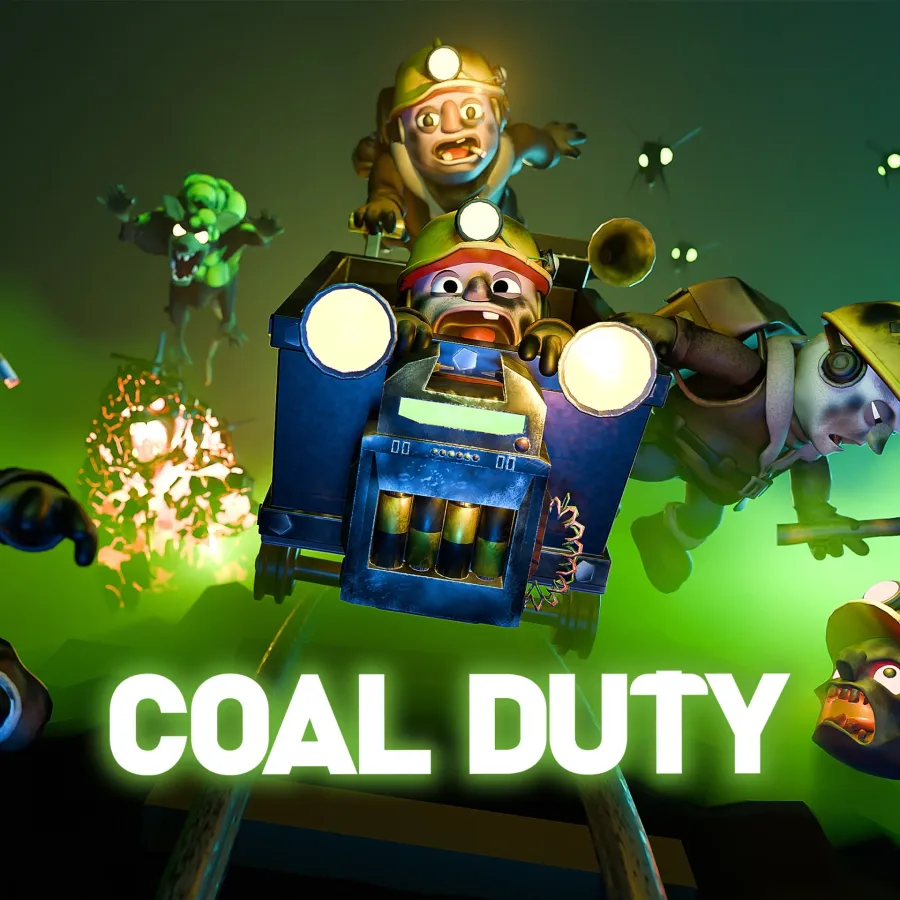
Coal Duty, the upcoming co-op extraction horror-comedy from Corecrew Games, is preparing to send crews into its dangerous underground workplaces with a free Steam demo on October 8. Designed for one to five players, the game puts miners under pressure to collect coal, satisfy a state-imposed quota, survive the tunnels, and determine whether official delivery is really the most profitable use for their haul.
The demo arrives shortly before Steam Next Fest and will remain available throughout the event, which runs from October 19 through October 26. It offers a meaningful early look at the game rather than a single short tutorial: players will be able to complete a full sequence of six trips into the Medium mine floor, enough work to tackle two separate quotas while becoming acquainted with its hub, its hazards, and its early creature lineup.
Coal Duty's premise combines the familiar tension of extraction games with an intentionally grimy workplace-comedy angle. Every shift begins with an obligation. The crew has a coal quota to fulfill, and getting enough material safely back to the surface is the basic requirement. Yet the deeper a group ventures, the greater the possible return becomes. That added value comes with a serious cost, as darkness, hostile creatures, and the mine's unpredictable dangers make every extra push below ground a potentially disastrous gamble.
Talking Can Keep a Crew Together -- or Get It Killed
One of Coal Duty's central systems is proximity voice chat. Players cannot simply communicate with everyone in the session from anywhere in the mine. Instead, they need to remain physically close enough to be heard. In the confined, dimly lit tunnels, that limitation could make an ordinary work plan quickly fall apart. A teammate who wanders down another branch may be out of earshot before the rest of the group even realizes it.
For useful background on this topic, read Resident Evil Film Sends RE2 and RE4 Remake Sales Climbing on PS5.
There is an even worse implication: the creatures underground can hear nearby players too. Calling for help, warning friends about a threat, arguing over a cart full of coal, or celebrating a successful find may all create risk. The feature should give each expedition a more immediate social dimension, especially for full crews trying to coordinate tasks in an environment where silence can be useful but isolation can be fatal.
That setup creates room for the comedy in Coal Duty's horror-comedy description. Proximity chat frequently turns cooperative games into spaces for panic, mixed messages, and unfortunate timing. Here, a desperate warning might alert the very creature the team is attempting to avoid. A miner separated from the rest of the party may have to choose between shouting loudly enough to find help and staying quiet enough to remain unnoticed. With a solo option also available, lone players will face the same hostile conditions without the benefit--or complications--of a nearby crew.
Quota Work, Extraction Risk, and the Value of Unreported Coal
At the center of the game is a question that goes beyond merely gathering resources: how much does the crew hand over, and how much do they risk hiding? Coal delivered through the official process earns tickets, described as the only currency recognized by the state. Those tickets are an important part of the game's between-shift economy and progression. Fulfilling the quota therefore has a direct purpose, not merely a score to chase.
For another perspective on this story, read Coal Duty's Free Steam Demo Digs Into Proximity-Chat Horror on October 8.
But Coal Duty also presents the possibility of keeping hauls unreported. Material that never enters the official records is not subject to the same rules, leaving it as a private matter between the miners and the dark tunnels from which it came. This gives the extraction loop a distinctly uneasy economic layer. A group can do the safe, sanctioned job; it can try to improve its position with contraband; or it can get caught between ambition and survival while attempting to do both.
The result is likely to make the mine's depth meaningful in more than one way. Going farther down should offer richer hauls, but it also increases the chance of encounters that can derail the shift. A team that has already met its quota may have a strong reason to leave immediately. Another group may decide that a barely successful run is not enough, especially if an opportunity to take unreported resources has appeared. Coal Duty frames that decision as the kind of practical calculation workers might make under a deeply oppressive system--only with monsters in the walls and tunnels.
A Persistent Hub Between Shifts
Not every decision happens underground. Between mine runs, players return to a persistent hub that acts as the game's social and operational base. The location includes barracks, a workshop, a tavern, and a smuggler working from a restricted area. These spaces establish a broader world around the shifts, giving the miners somewhere to regroup after surviving an expedition and somewhere to consider what comes next.
The barracks and workshop suggest the practical routine of life around the mine, while the tavern provides a natural setting for crews to decompress or make plans. The restricted-area smuggler is especially notable given the game's interest in unreported hauls. It points to an underground economy existing alongside the officially recognized ticket system, with opportunities that may help a crew but could also pull it deeper into the mine's larger problems.
Escape is a major thread running through the hub experience. Coal Duty includes multiple ways out, and the hub is where players can begin putting those plans together. That means the long-term objective appears to be bigger than becoming the mine's most productive workforce. The game is about enduring shifts, building resources, navigating the unofficial side of the operation, and eventually finding a path beyond the job itself.
What the Steam Demo Includes
The October 8 demo focuses on the Medium mine floor. Its six available trips form one full run, offering enough time for players to take on two quotas. That scope should let groups experience the rhythm of preparing in the hub, descending for a shift, handling the risks of coal collection, and returning with the consequences of their choices.
Players will also get a first look at the creature roster and the persistent hub. The demo is therefore positioned as an introduction to the game's core pillars: cooperative extraction, restricted communication, escalating danger, official and unofficial coal handling, and the downtime systems surrounding the mine. For players curious about how its horror and comedy tones coexist, the playable build should offer a clearer answer than a trailer alone can provide.
Several significant elements will not be part of the demo. The Easy and Hard mine floors are being held back for Early Access, alongside more creatures, the escape machine, and the game's multiple endings. The absence of those features means the demo will not reveal every route or outcome planned for Coal Duty, but it will establish the basic pressure of a crew attempting to survive and profit from the Medium floor.
Steam Next Fest Timing and the Road to Early Access
Launching before Steam Next Fest gives Coal Duty an opportunity to build momentum in advance of the festival's October 19-26 window. Players who try the demo at launch can return during the event, while newcomers will have the same chance to test its co-op systems and mine runs during one of Steam's major demo-focused periods.
The timing also fits the game's multiplayer nature. Extraction games often reveal their strengths when players have time to learn a map, develop a routine, and discover exactly how quickly a sensible plan can collapse. Coal Duty's six-trip demo structure may give groups enough room to start forming habits--such as who carries what, who stays close for communication, and when a quota is sufficient--before the mine challenges those habits.
Corecrew Games has said that Early Access information will follow. Until then, the announced demo provides the clearest view of what the team is building: a co-op descent into a hostile industrial underworld where productivity is mandatory, greed is tempting, conversation is dangerous, and getting out may matter more than ever meeting the quota.
For players looking for a Steam Next Fest demo with a more social form of horror, Coal Duty's premise has a strong hook. It is not just about avoiding creatures or stuffing a cart with loot. It is about hearing a friend panic somewhere nearby, realizing that whatever heard them may now be coming closer, and deciding whether the coal still sitting deeper in the tunnel is worth one more trip.




Community
Discussion
Start the conversation.
No comments have been posted yet.