

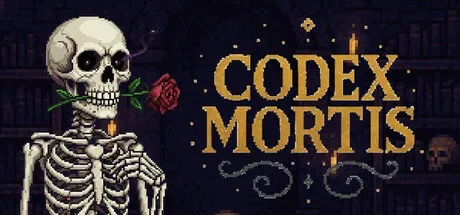
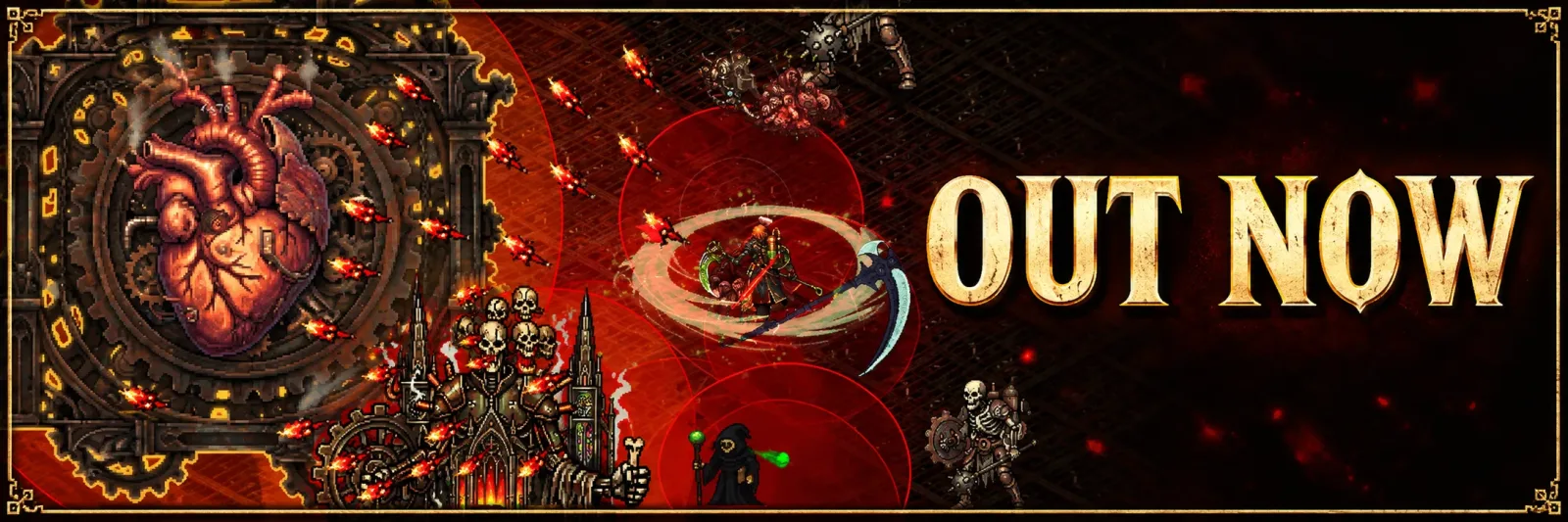
CODEX MORTIS has launched its 1.0 version on September 24, 2026, bringing the isometric survivors-like deckbuilder out of Steam Early Access. Developed by GROLAF and published by CRUNCHFEST, the dark fantasy bullet-hell roguelite arrives with a substantial expansion to its spells, characters, co-op options and late-game content.
The full release is available through Steam for Windows and native Linux, with Steam Deck Verified status. It is priced at $3.99. Version 1.0 introduces online co-op for groups of up to four players, while retaining local multiplayer and solo play. It also raises the number of available spells to 200, expands the playable hero selection to 31, and doubles the game's magical schools from five to 10.
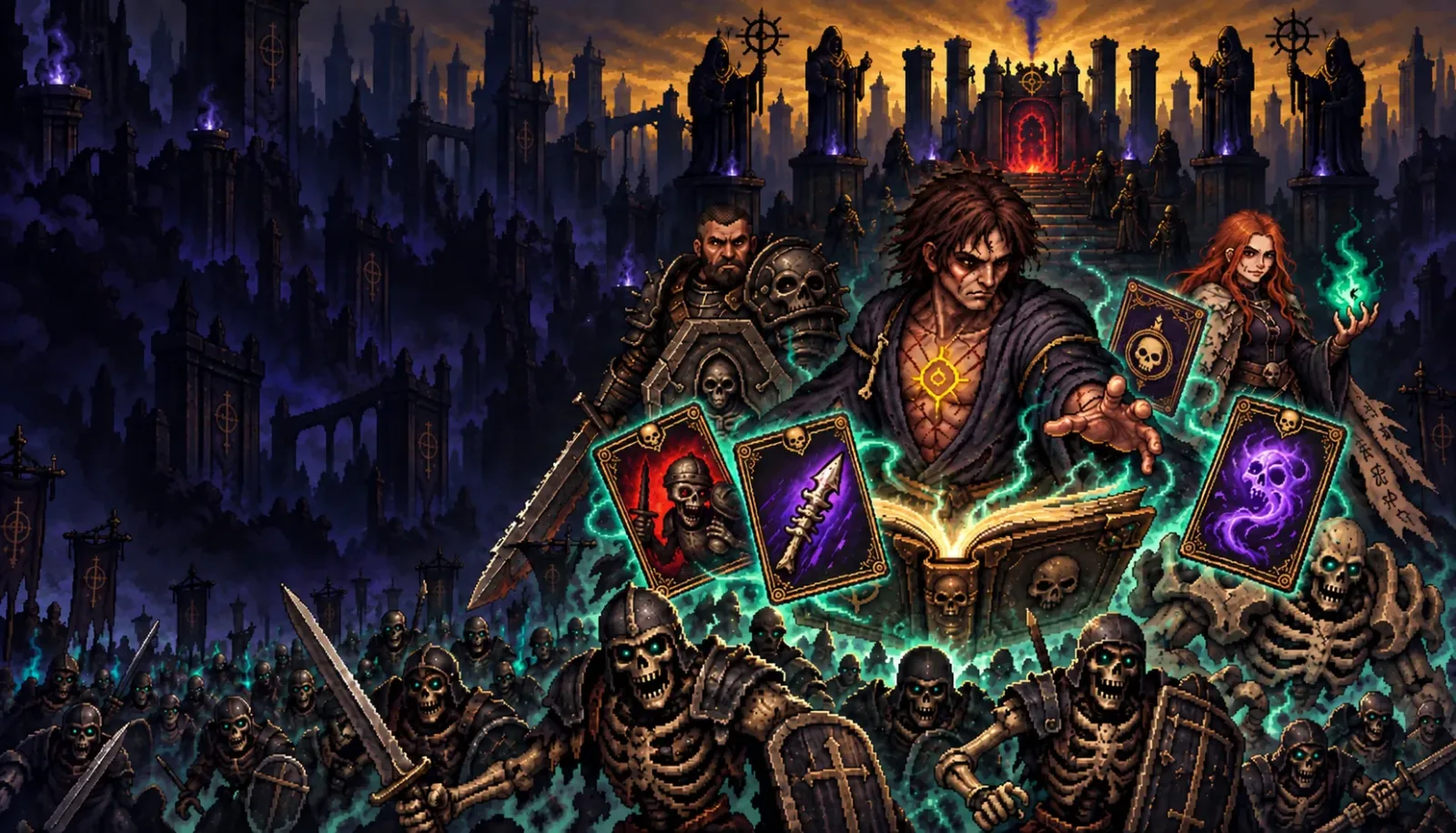
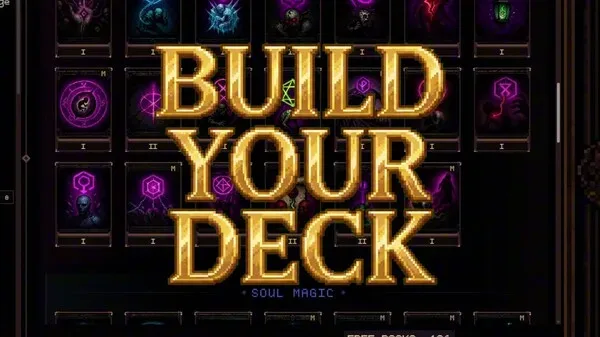
At its core, CODEX MORTIS combines the escalating enemy pressure and projectile-heavy combat associated with survivors-like games with deckbuilding decisions. Players begin runs by creating a deck, then fight through hostile encounters while developing spell combinations designed to overwhelm large packs of enemies. The full release builds further on that premise by giving players considerably more routes through its dark-magic systems.
Five new schools of dark magic join the deckbuilding pool
The centerpiece of the 1.0 update is the arrival of five additional magic schools. These sit alongside the schools already in the game, producing a total of 10 categories of dark magic and a 200-spell pool. Every school can combine with the others, allowing players to pursue synergies and mutations across a broad set of possible decks.
For useful background on this topic, read Beyond Good & Evil 2 Adds Assassin's Creed Shadows Writer as Development Continues.
- Harvest centers on the scythe and the act of cutting down the living.
- Death Knight brings melee-focused swordplay, strong cleaving attacks, falling blades, spectral armor and war cries.
- Spiritism uses forbidden rituals, spirit turrets and sacrificial urns.
- Desolation employs sand shades and harmful zones intended to punish surviving enemies.
- Apothecary focuses on dark alchemy through elixirs and blight.
That structure is important because the game is not simply adding five self-contained sets of abilities. The intended appeal comes from crossing schools together and seeing how their individual effects alter one another. A build based on area control from Desolation can potentially be reshaped by another school's weapons or modifiers, while a close-range Death Knight setup can be supplemented with defensive, ritualistic or damage-over-time effects.
The release does not frame every possible mixture as a fixed class. Instead, the deckbuilding format makes the available magical schools a foundation for experimentation. Players can decide which spells they want accessible in future attempts, then chase combinations during runs as enemy density and difficulty rise.
31 necromancers, including multi-school heroes
CODEX MORTIS now has 31 playable heroes after adding 20 new necromancers for the 1.0 launch. Many of the new characters are designed around two or three magical schools, giving their starting kits and build opportunities a more specific identity.
Among the newly highlighted heroes are Ravena Bloodscythe, whose specialties combine Blood Magic and Harvest, and Seraphon Wraithblade, who uses Harvest, Death Knight and Soul Magic. Those examples underline the way the roster is tied directly to the expanded school system. Rather than beginning with a completely neutral spellcaster, players can select necromancers whose identities encourage particular combinations from the outset.
A roster of this size should also give repeat runs a different feel even when players revisit familiar modes or maps. In a game built around roguelite repetition, starting conditions matter: a hero's school access can influence which booster-pack additions are most valuable, which spell mutations are worth pursuing, and how a group divides its combat roles in multiplayer.
Online co-op arrives alongside local multiplayer
Version 1.0 adds Steam-based online co-op for two to four players. Players can host a session or join one, browse games hosted by friends, and secure lobbies through passwords or shared codes. The update also supports rejoining a run after a disconnection, a useful feature for a game where a successful attempt may involve a considerable time investment.
Local co-op remains an option, meaning the full release supports solo play, couch multiplayer and online groups across its principal modes. Story, Survivor and Apocrypha can all be played alone or with two to four participants through local or online co-op.
Multiplayer has the potential to make the game's spell overlap especially hectic. A single player can already create a screen-filling chain of attacks in this genre; a group built around distinct magical schools may bring overlapping turrets, summoned spirits, melee effects, blight, zones and ranged spells into the same encounter. The resulting chaos is likely to reward teams that coordinate their deck choices, but the range of schools also leaves space for players to simply lean into spectacular, less structured combinations.
Four Apocrypha levels and a 600,000 HP final boss
The endgame-oriented Apocrypha selection grows with four new levels: The Garden of Returned Flesh, The Golden Rot, The First Mercy and The Road to Blood Bath.
The Road to Blood Bath concludes with a three-phase boss encounter carrying 600,000 HP. That figure suggests an extended final test rather than a brief closing fight, placing emphasis on sustained damage, survivability and builds that can maintain momentum through changing boss phases.
All four of these new levels are also playable in Survivor mode. This gives them utility beyond Apocrypha progression and offers another way for players to test characters, decks and spell mixtures against the game's combat loop. For players who enjoy optimizing a particular build, bringing those maps into Survivor mode should make the new content more broadly replayable.
A different run structure after the final Early Access overhaul
The 1.0 release follows a final Early Access overhaul that shifted CODEX MORTIS into a fully isometric presentation and established a standardized run-opening system. Every attempt begins with a deck built by the player rather than relying on an entirely unstructured opening pool.
That adjustment gives the game a clearer deckbuilding identity. Players are not only making short-term decisions during combat; they are choosing the pool that will define what can appear in their attempts. Souls collected in battle can be spent on booster packs, expanding the available selection for future deck construction.
This creates a longer-term progression loop: battle earns Souls, Souls unlock more possible cards through booster packs, and those cards broaden the options available when assembling subsequent decks. For a roguelite, that approach can make progression feel connected to experimentation rather than merely increasing raw power. A player may unlock an effect because it fits a favorite school, because it completes a desired cross-school interaction, or because it opens a completely different approach for another necromancer.
Controller, ultrawide and language improvements
Alongside the major gameplay additions, CODEX MORTIS 1.0 includes a series of platform and interface upgrades. The release lists full controller support, ultrawide display support and localization in 28 languages. Steam Deck has also been verified, complementing the game's availability on both Windows and Linux.
Those features matter for a title centered on fast combat and many simultaneous visual effects. Controller support provides another way to play an action-heavy bullet-hell game, while ultrawide support can be welcome for players who prefer a broader view of crowded arenas. Localization across 28 languages gives the game a much wider potential audience as it moves beyond Early Access.
CRUNCHFEST is also releasing a 15-minute documentary alongside version 1.0. It follows the project's development as an AI-driven game, including discussion of a custom engine made to be driven by AI, an "angry user mode" instruction file, a streamer-led rise to 322 concurrent players on SteamDB, a particularly demanding boss and a rapid interface redesign.
With online co-op now in place, 10 schools of magic to combine, 31 necromancers to choose from and new Apocrypha challenges to clear, CODEX MORTIS reaches its full launch with a notably broader set of systems than its Early Access incarnation. Players can now pick it up on Steam for Windows, Linux and Steam Deck.
Community
Discussion
Start the conversation.
No comments have been posted yet.