

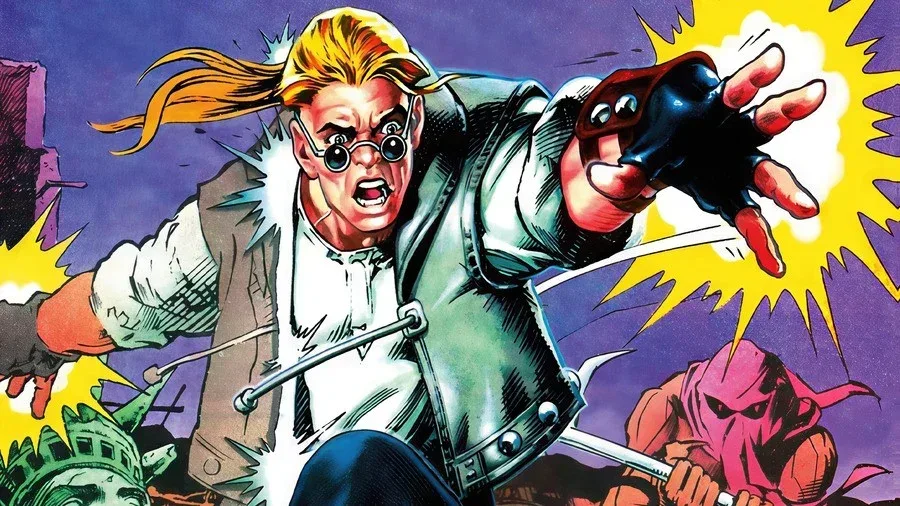
Sega's Comix Zone has received a particularly unusual new life: a playable Nintendo 64 reinterpretation called Comix Zone 64. Created by homebrew developer Frogbull, the project imagines a version of gaming history in which Sega's 16-bit comic-book beat 'em up eventually arrived on Nintendo's 64-bit console. It is more than a visual mock-up or a conceptual trailer, too. The release is designed to run on genuine Nintendo 64 hardware.
It is an odd crossover by design. Comix Zone was one of the more distinctive games in Sega's Mega Drive and Genesis library, while the Nintendo 64 stood as one of the machines associated with Sega's fiercest console-era competition. The two companies' hardware ecosystems were separate throughout the original game's period, making an official N64 version extremely unlikely at the time. Frogbull's homebrew project leans into that improbability, presenting the game as a relic from an alternate timeline rather than attempting to frame it as a lost commercial port.
The result is a project that combines retro preservation sensibilities, technical curiosity, and the playful "what if?" appeal that has increasingly defined ambitious console homebrew. For fans of either machine, Comix Zone 64 is an opportunity to see a familiar 16-bit game concept filtered through hardware that once represented its rival's next generation.
Embedded X/Twitter post
A Sega classic reimagined for Nintendo's 64-bit machine
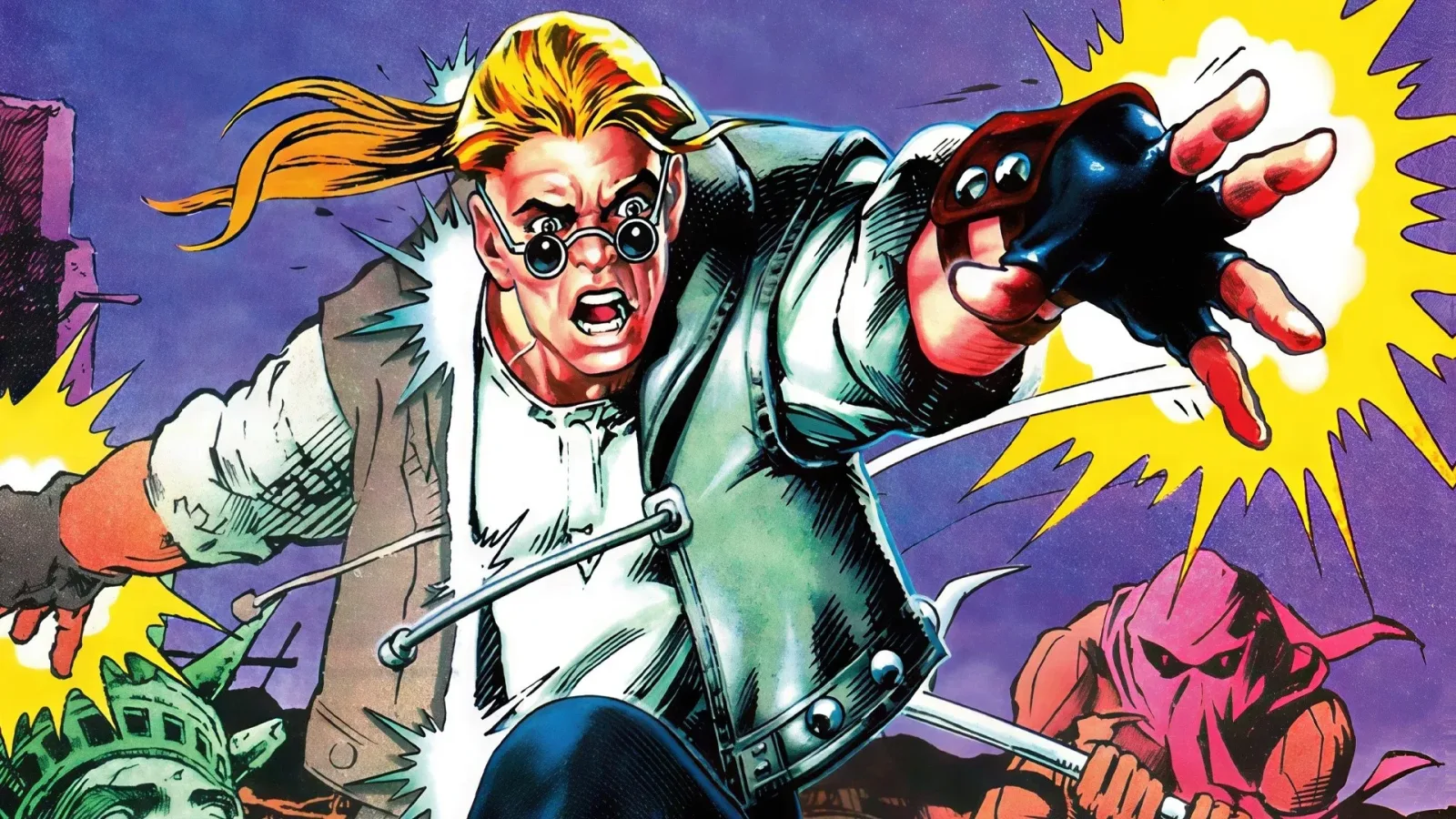
Originally developed by Sega Technical Institute and released in 1995 for the Mega Drive and Genesis, Comix Zone is a side-scrolling beat 'em up centered on Sketch Turner, a comic-book artist trapped inside his own illustrated creation. The game's biggest hook was its presentation: panels, dialogue balloons, page layouts, and hand-drawn effects were not merely decorative. They were woven into the action, with Sketch moving from panel to panel as he fought enemies created by his villainous invention, Mortus.
For useful background on this topic, read Sunlit Ends Collaboration With KandoWontu Over AI-Driven Star Fox PC Port.
That concept helped Comix Zone stand apart from the many brawlers of its era. Instead of walking through city streets or fantasy landscapes in the traditional genre format, players progressed through comic pages. Characters could burst through borders, environmental hazards could emerge from the artwork, and the game treated its illustrated setting as a physical space. It was difficult, stylish, and often remembered as much for its visual identity as for its combat.
Although Comix Zone has been reissued across several Sega collections and later platforms over the years, a Nintendo 64 edition never happened. By 1995, the N64 itself was still ahead of its eventual launch, and Sega was preparing its own Saturn-era software. More importantly, there was no realistic business route for Sega to bring one of its notable Mega Drive titles to Nintendo hardware during that period.
Comix Zone 64 deliberately turns that missing possibility into its premise. Frogbull accompanies the release with fictional backstory in which the Nintendo Ultra 64 dominates the fifth console generation, while Sega's fortunes collapse after an absurd chain of events involving an exaggerated arcade version of Daytona USA. In that imaginary scenario, Sega has no choice but to release its games elsewhere, leading to the creation of Comix Zone 64.
The joke works because it evokes the industry rivalries that defined the 1990s. Sega and Nintendo marketed their systems aggressively against one another, and the prospect of a Sega-branded game appearing on an N64 cartridge would have seemed almost impossible to players at the time. The homebrew release uses that history as part of its charm, while also demonstrating that today's hobbyist developers can make those impossible combinations technically tangible.
Built for real N64 hardware
The crucial point is that Comix Zone 64 is not simply themed around the Nintendo 64. Frogbull has presented it as a working release for actual N64 hardware. That distinction matters in retro-development circles, where projects may range from pre-rendered demonstrations to ROMs capable of running on original consoles through appropriate flash cartridges and hardware setups.
Creating software for the Nintendo 64 remains a specialized challenge. The system has an unconventional architecture, a famously distinctive controller, and graphical hardware that asks developers to make careful decisions about memory, rendering, and performance. Even games that appear simple in motion can require significant adaptation when moving from one console generation and design philosophy to another.
Comix Zone began life as a 2D side-scroller on the Mega Drive and Genesis, a machine built around a very different set of strengths. Translating a game of that kind to Nintendo 64 hardware is not just a matter of transferring artwork. It means accounting for a new display environment, altered technical constraints, controller input, asset handling, and the practical realities of producing a cartridge-era-style release decades after the console's commercial life ended.
That makes the project compelling beyond the novelty of seeing a Sega game associated with Nintendo hardware. It is an example of how homebrew can function as a form of alternate platform history. Developers can explore ports that were never commissioned, adaptations that would not have made commercial sense, or imaginary releases that answer questions enthusiasts have asked for years.
Another unexpected Frogbull project
Frogbull has built a reputation around exactly this type of alternate-reality console work. Previous projects have included playable Sega Saturn versions inspired by PlayStation-era games such as Metal Gear Solid, Final Fantasy VII, and Crash Bandicoot. The developer has also shown a Nintendo 64 edition of Spyro the Dragon, another example of a familiar title appearing on a machine it was never officially made for.
Those projects are interesting not only because of their choice of games, but because they revisit divisions that were once absolute. During the original hardware generations, platform ownership was central to a game's identity. A PlayStation game on Saturn or a Sega game on Nintendo 64 was more than an unusual port; it would have represented a major shift in business relationships. Modern homebrew removes those commercial barriers and lets creators investigate the technical and aesthetic possibilities instead.
Frogbull has also recently shared work related to reverse engineering the original Panzer Dragoon. That effort has included a tease of a possible Dreamcast port of the Sega Saturn classic. Taken together, the projects show an interest in revisiting landmark games through hardware combinations that history never provided.
Comix Zone 64 continues that approach, but it may be especially amusing because the original game is so closely tied to Sega's identity. Its cartoonish 1990s attitude, heavily stylized visuals, and aggressive action make it feel deeply at home among the Mega Drive and Genesis catalog. Putting that sensibility on the N64 creates a contrast that is immediately recognizable to retro fans.
Why alternate-history ports matter
Homebrew projects like Comix Zone 64 are easy to appreciate as curiosities, but they also highlight the enduring value of original hardware communities. Long after official support ends, developers continue learning how older consoles work, producing new software, improving tools, and building experiences that were once impossible. The N64 has received a steady stream of fan-made work in recent years, from original games to technical demonstrations and conversions shaped by the machine's particular capabilities.
There is also a preservation-adjacent aspect to this work. It does not preserve an official N64 version of Comix Zone, because no such release existed. Instead, it preserves a broader cultural idea: the way players imagined games crossing platform boundaries. In the 1990s, magazine previews, console rumors, and playground speculation often revolved around which games might come to a competing machine. Alternate-history ports turn that speculative energy into something players can actually run.
For Comix Zone specifically, the project offers a fresh way to revisit an older game that has remained notable despite its punishing difficulty. Its comic-panel format still has a strong visual hook, and its setting remains unlike the conventional stages found in many contemporary beat 'em ups. An N64 interpretation cannot change where the game began, but it can invite players to look at the concept through a new technical and historical lens.
Availability and a curious retro experiment
Comix Zone 64 is available from Frogbull through the developer's Patreon. Players interested in trying it should keep in mind that it is a homebrew project rather than an officially licensed Sega or Nintendo product. Its appeal is rooted in that status: it is a fan-driven experiment made to explore a version of the past that never happened.
For retro enthusiasts, the release is a striking reminder that classic hardware is not frozen in time. The Nintendo 64 can still receive new software, and games historically associated with competing consoles can still inspire fresh technical experiments. Comix Zone 64 may come from an imagined timeline where Sega's catalog took a very different path, but its arrival on real hardware is very much a product of the present-day homebrew scene.
Community
Discussion
Start the conversation.
No comments have been posted yet.