

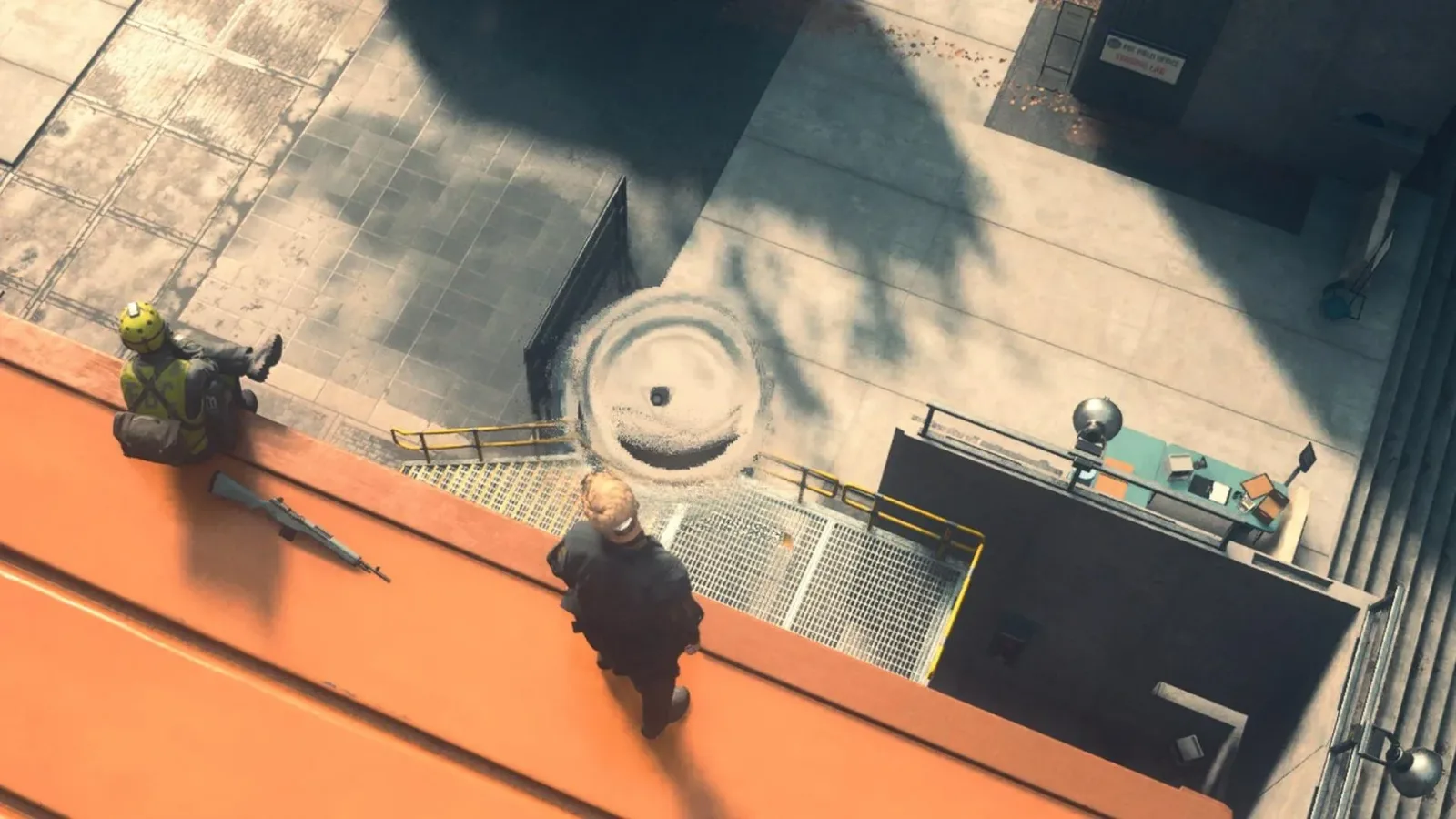
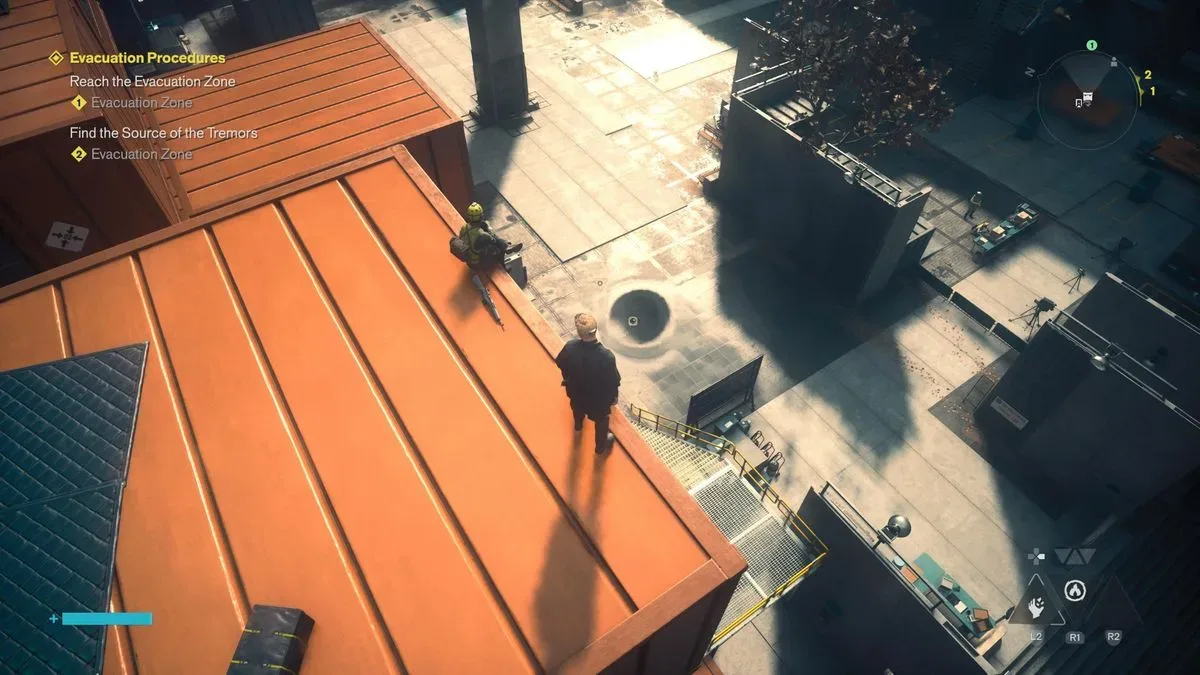
Players exploring the city in Control Resonant may spot strange, spherical tears hovering near the edges of rooftops, buildings, and high ledges. They can look like warped balls of space, small bubbles bending the world around them, or unstable distortions hanging just beyond a jumpable route. Their placement makes them immediately suspicious: they often appear exactly where a player might expect a shortcut, a hidden path, or a route to a higher platform.
The simple answer is that these orb distortions are connected to Reach, an important traversal ability unlocked later in the game. Before that point, they are visible environmental markers rather than objects Dylan can interact with. Once Reach becomes available, those same distortions become fixed destinations that Dylan can rapidly pull himself toward, functioning much like designated grappling points.
That delayed explanation is intentional. Control Resonant lets players encounter the visual language of Reach well before providing the power itself. As a result, the orbs can seem like a puzzle with no apparent solution during the opening stretch of the game. They are not currently bugged, and players do not need to find a weapon, shoot them, or solve a separate rooftop challenge to activate them early.
What the warped orbs mean in Control Resonant
The floating distortions are Reach traversal points. They mark locations that can be targeted after Dylan has acquired the Reach power. In practical terms, Reach allows him to surge toward one of these pre-placed distortions, covering gaps and reaching locations that would otherwise be inaccessible on foot.
For useful background on this topic, read Control Resonant: Every Last Taxi Location and Puzzle Answer.
Because the orbs appear in elevated and out-of-the-way places, they are also a useful clue for future exploration. If a player sees one hanging over a street, beside a rooftop, or beyond the edge of a platform, it is worth remembering that location. It may become part of a faster route once Reach is unlocked, and it may indicate an area designed to be revisited with expanded movement options.
Reach is therefore more than a one-time progression gate. It changes how players read the city. Places that initially seem separated by large drops, vertical walls, or inconvenient detours can become much easier to navigate when the ability is available. The orb distortions make that intended mobility network visible in advance.
Why the orbs cannot be used right away
Until Reach has been unlocked, the distortions have no active gameplay use. A player can see them, approach the nearby ledge, and recognize that they appear to be placed for traversal, but Dylan cannot yet latch onto or travel toward them.
This can be confusing because Control Resonant presents these objects relatively early, while the progression milestone that grants Reach may not arrive until around the middle of a playthrough. The exact timing can vary depending on the choices a player makes while progressing through the game. Someone following a different route or prioritizing other objectives may notice the orbs for a considerable period before receiving the ability that explains them.
For players who are concerned they have missed an interaction prompt, the key point is to continue the main progression. The game eventually directs Dylan toward the sequence that unlocks Reach. There is no indication that the rooftop distortions need to be individually activated beforehand.
How Reach works
Once obtained, Reach works in a manner similar to a grappling hook, though its targets are the special distortions already placed in the environment. Rather than attaching to every surface or freely choosing any point in the distance, Dylan uses the power to move toward these specific spatial anomalies.
This makes the orbs easy to identify after the fact. Their unusual appearance is not merely visual decoration: they are the anchors of the Reach system. When one is positioned across a gap, above a route, or near a higher structure, it is effectively telling the player that the location can become reachable through this power.
The ability has two major benefits:
- Access to new areas: Reach opens routes that cannot be crossed through ordinary movement alone.
- Faster travel: Existing locations become easier to move through when Dylan can use the distortions as rapid traversal points.
The second benefit matters even in places a player has already explored. Returning to a familiar district with Reach can shorten travel between buildings and reduce the need for slower ground-level routes. Players revisiting earlier spaces should keep an eye out for orbs they previously had to ignore.
Where to unlock Reach
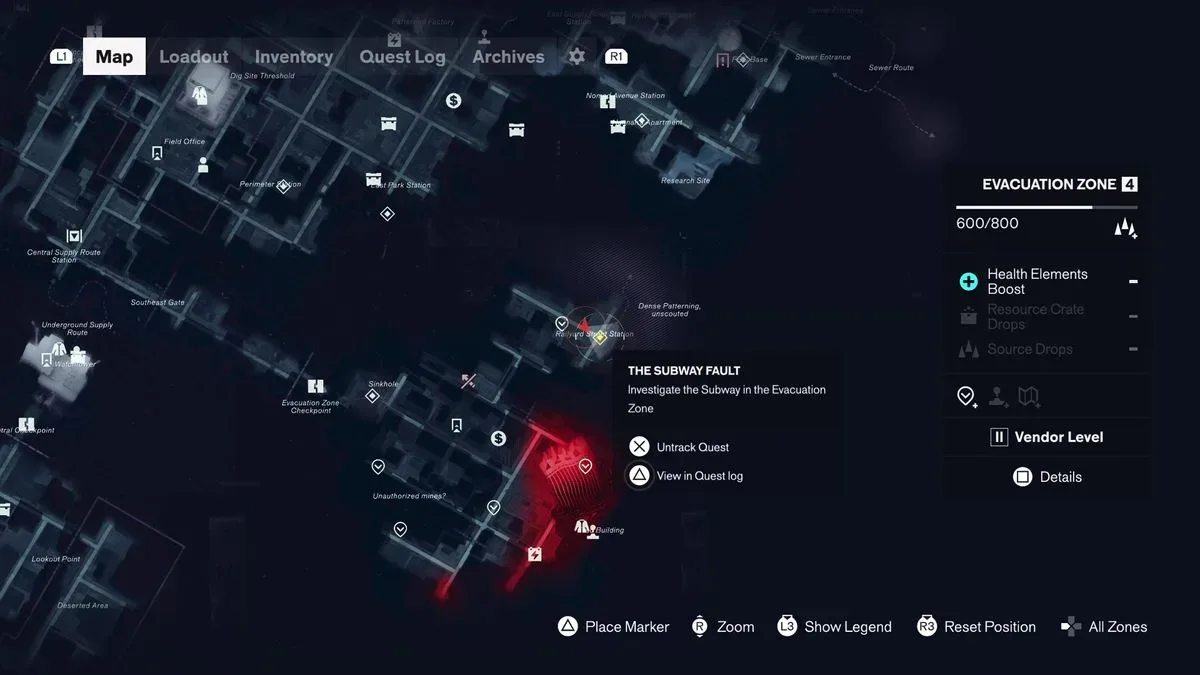
Reach is acquired through a Fault at Railyard Street Station. To begin heading in the right direction, players need to travel to the Evacuation Zone in the eastern part of the map. From there, Railyard Street Station is located to the northeast.
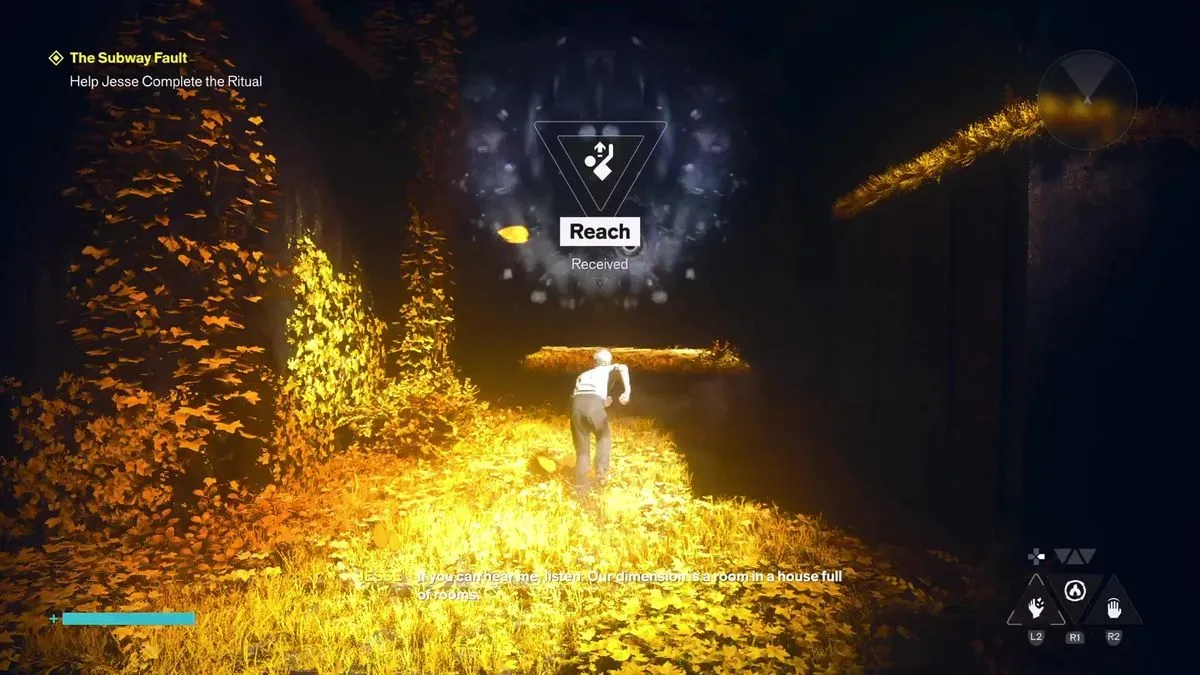
Approaching the station triggers a vision of Jesse. This automatically starts the quest called The Subway Fault, which leads into the objective chain required for the power.
The route can be summarized as follows:
- Travel to the Evacuation Zone in the east.
- Head northeast toward Railyard Street Station.
- Approach the station to trigger Jesse's vision.
- Accept the automatically started The Subway Fault quest.
- Enter the station and complete the Fault to gain Reach.
Players who have seen plenty of distortions but have not yet found the unlock should use this route as their next major objective. Reaching the station and following The Subway Fault is the direct path to turning those inaccessible environmental markers into functional traversal tools.
What to expect inside Railyard Street Station
Railyard Street Station is not simply a quick stop for a new movement skill. The interior contains a more hazardous sequence built around navigation and survival. The station functions somewhat like a maze, so it is worth slowing down and paying attention to the paths forward rather than assuming the first visible route is the correct one.
Two dangers stand out during the trip through the station. The first is the presence of Mold enemies, which can complicate movement through the enclosed areas. The second is the threat of moving trains. Players need to evade them while continuing to work through the station's layout.
That combination makes the Reach unlock feel earned. The game initially teases the ability through distant distortions, then sends Dylan into a dangerous transit environment before granting the mobility tool that changes how those earlier spaces can be traversed.
Exploration tips before and after unlocking Reach
Before acquiring Reach, the best approach is to treat every orb distortion as a note for later rather than an immediate obstacle. If one appears beyond a ledge, there is little value in repeatedly attempting difficult jumps or searching for a hidden switch solely to activate it. Continue exploring available routes, pursue the progression leading toward Railyard Street Station, and return after completing The Subway Fault.
After Reach is unlocked, revisit areas where the distortions were particularly prominent. Focus on places where an orb appeared to bridge a broad gap, connect separated rooftops, or sit near terrain that looked deliberately out of reach. Those are the locations most likely to benefit from the new traversal option.
It is also useful to distinguish Reach points from general scenery. The relevant objects are the unmistakable spherical patches of warped space positioned at traversal-friendly edges and heights. Their consistent placement is the important clue: they are not random visual effects but part of the game's fixed movement infrastructure.
The bottom line
The mysterious balls, spheres, and warped-space distortions around Control Resonant's ledges are grapple-style targets for the Reach ability. They may appear long before Dylan can use them, but they become valuable movement anchors once Reach is obtained.
To unlock the power, travel east to the Evacuation Zone, continue northeast to Railyard Street Station, trigger Jesse's vision, and follow The Subway Fault into the station's Fault. Be prepared for a maze-like route, Mold enemies, and moving trains. Completing that sequence gives Dylan the means to use the distortions for both newly accessible routes and quicker travel across the city.
Community
Discussion
Start the conversation.
No comments have been posted yet.