

Boss fights occupy a strange position in modern action games. They are often presented as milestone moments: a large health bar, a dramatic arena, a new musical cue, and an enemy designed to test everything a player has supposedly learned. Yet the reality can be less memorable. Too many bosses feel like extended damage checks or familiar combat encounters inflated with more health, more attacks, and a few unavoidable hazards. They may be functional, but they do not always leave an impression.
Control Resonant, Remedy's recently released open-world action game, offers a reminder that the format can still do much more. Its encounter with an enemy called The Dancer is not simply a contest of reflexes or an invitation to unleash the most powerful attacks as quickly as possible. It is a boss battle built around performance, pacing, and interpretation. The player is asked to recognize that what initially looks like a straightforward first phase is actually preparation for the real act.
That distinction makes a major difference. Rather than treating its boss as a static obstacle, the fight asks the player to reconsider their own habits. The solution is not merely to react faster. It is to slow down, observe, and understand the logic behind the enemy's movements. For a game set in Control's unsettling, supernatural world, that attention to both atmosphere and mechanics is especially fitting.
A Fight That Changes After Its Apparent Ending
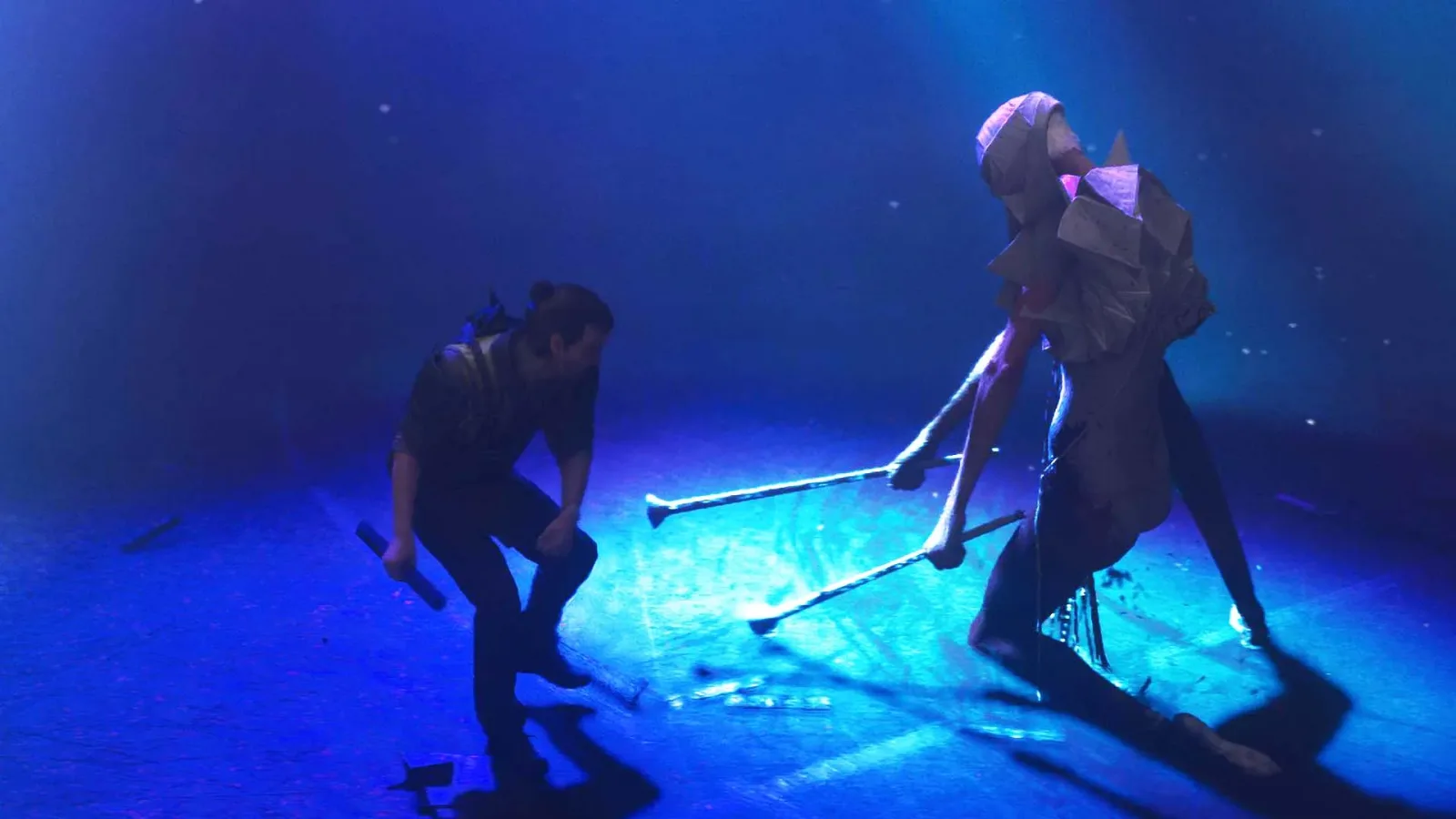
The Dancer first appears as a slender figure moving around the combat space with hops and chassés. At a glance, the encounter can seem surprisingly manageable. A player who relies on repeated aerial attacks and aggressive pressure can get through this opening exchange quickly, even while absorbing some damage. It is easy to conclude that the fight has been solved before it has truly begun.
For useful background on this topic, read Death Stranding Film Scouting in Iceland Signals Production Is Moving Closer.
Then the boss reveals a second form.
The transformed Dancer is faster, more forceful, and far less forgiving. Strategies that seemed successful during the early section no longer produce the same result. An approach based on rushing in, repeating attacks, and trying to end the fight immediately can lead to a rapid defeat. The initial assumption--that the battle is easy--becomes part of the encounter's trick.
This is a familiar structural device in games, but The Dancer's execution matters because its two phases are connected. The first phase is not disposable filler placed before the difficult version of the boss. It contains useful information. The movements that appear during the rehearsal-like opening are clues to the more dangerous choreography that follows.
That is where the setting becomes meaningful. The entire battle takes place in a theater, with paralyzed floating humans forming an unnerving audience around the arena. The space does not merely provide creepy scenery. It frames The Dancer as a performer. Once that idea clicks, the early phase reads differently: the creature is practicing its routine before presenting the full performance.
The Importance of Pausing Instead of Pushing Forward
Repeated defeats can make even a clever boss encounter feel frustrating. After several runs with the same pattern--an easy first phase followed by a loss against the second form--the temptation is naturally to change difficulty settings or simply force the issue with more aggression. Control Resonant includes options and sliders that can make the battle easier, an important accessibility consideration for players who need or prefer them.
But there is another possible response: stop trying to overpower the encounter and examine why it is going wrong.
That moment of reflection is central to what makes The Dancer effective. The problem was not a lack of damage output. Nor was it necessarily a need for a radically different build. The player had been treating the fight as a race and, in the process, missing the signals being offered by the boss. A calmer attempt, with less frantic jumping and closer attention to The Dancer's animation, produces immediate improvement.
There is something elegantly old-fashioned about that design philosophy. Before guides, clips, and instant solutions became so readily available, many memorable boss fights were solved through a process of observation. Players watched attack tells, learned safe distances, identified windows to strike, and gradually turned apparent chaos into a readable pattern. A well-designed boss did not need to be easy, but it needed to communicate enough for players to learn.
The Dancer appears to follow that principle. Its challenge is not built solely around surprise. It rewards recognition. The player can notice the boss's rhythm, anticipate its movement, and respond with deliberate positioning and dodges. Defeat becomes less about being denied progress and more about receiving feedback on an approach that is not working.
Dancing Rather Than Simply Attacking
The breakthrough in this battle comes from accepting its theatrical premise. The player does not need to treat The Dancer as an enemy to be deleted with the largest available combo. Instead, the encounter asks them to move with it--to match its pace, dodge in time with its routine, and attack thoughtfully rather than compulsively.
That does not mean the fight abandons action-game fundamentals. Damage still matters, as do positioning, survivability, and the player's command of Control Resonant's combat systems. What changes is the mindset. Aggression must be controlled. Movement is no longer just a way to escape danger; it becomes a form of participation in the boss's choreography.
This is the kind of thematic-mechanical connection that can elevate a major encounter. A boss called The Dancer should not merely have dance-inspired animations while otherwise behaving like any other hostile creature. Its identity should affect how the player understands and defeats it. By making rhythm and observation the route to victory, the fight gives its concept practical weight.
It also creates a stronger emotional arc than a conventional damage sponge. The player begins overconfident, becomes frustrated as brute force fails, pauses to reassess, and then reaches a new understanding of the battle. Winning with health remaining after adopting that new approach feels satisfying not just because the boss is gone, but because the player has learned the language of the encounter.
Why The Best Bosses Teach, Not Just Punish
Boss fights are often described as tests, but the best ones are also lessons. They can expose weak habits, introduce a new interpretation of familiar mechanics, or demand more careful use of abilities that players have been taking for granted. The Dancer seems to accomplish all three. It challenges a hyper-aggressive playstyle, pushes the player to study movement patterns, and makes timing more important than simply maximizing offense.
Crucially, the lesson is communicated through the encounter itself. The theater setting, the frozen audience, the dance-based motion, and the two-stage structure all support the same idea. The game does not need to stop and explain that the first phase is a rehearsal. Players can infer it from what they see and then prove their understanding through play.
That is one of the medium's greatest strengths. A film can show a character learning to dance; a game can make the audience learn the rhythm alongside the character they control. Control Resonant's battle gains power because its theme is not only visual or narrative decoration. It is enacted through inputs, timing, failure, and eventual mastery.
Not every boss needs this level of conceptual ambition. There is room for spectacular duels, endurance challenges, puzzle encounters, and outright chaotic set pieces. But The Dancer demonstrates why it is worth asking more of these climactic fights than a giant health bar and a sequence of attacks. When the mechanics reinforce the fiction, and when the player's path to victory involves genuine understanding, a boss can become one of the game's defining moments.
A Case for Keeping Boss Fights Interesting
Control Resonant's The Dancer is a persuasive argument that boss battles are far from obsolete. The issue is not that games have too many bosses by definition. The issue is that a boss loses impact when it has nothing new to say. If an encounter only confirms that a player can continue using the same tools in the same way, it may be competent, but it will rarely be unforgettable.
The Dancer instead reframes the player's relationship with combat. The first phase invites complacency. The second punishes it. The arena supplies the thematic context, and the boss's choreography provides the answer. By the end, success comes from doing something subtly but importantly different: paying attention.
That is a valuable achievement for any action game, especially one from a studio known for strange spaces, unsettling imagery, and worlds where appearances are rarely the whole story. In this case, the monster on stage is not asking to be beaten in a mindless slugfest. It is asking the player to learn the steps.
Community
Discussion
Start the conversation.
No comments have been posted yet.