

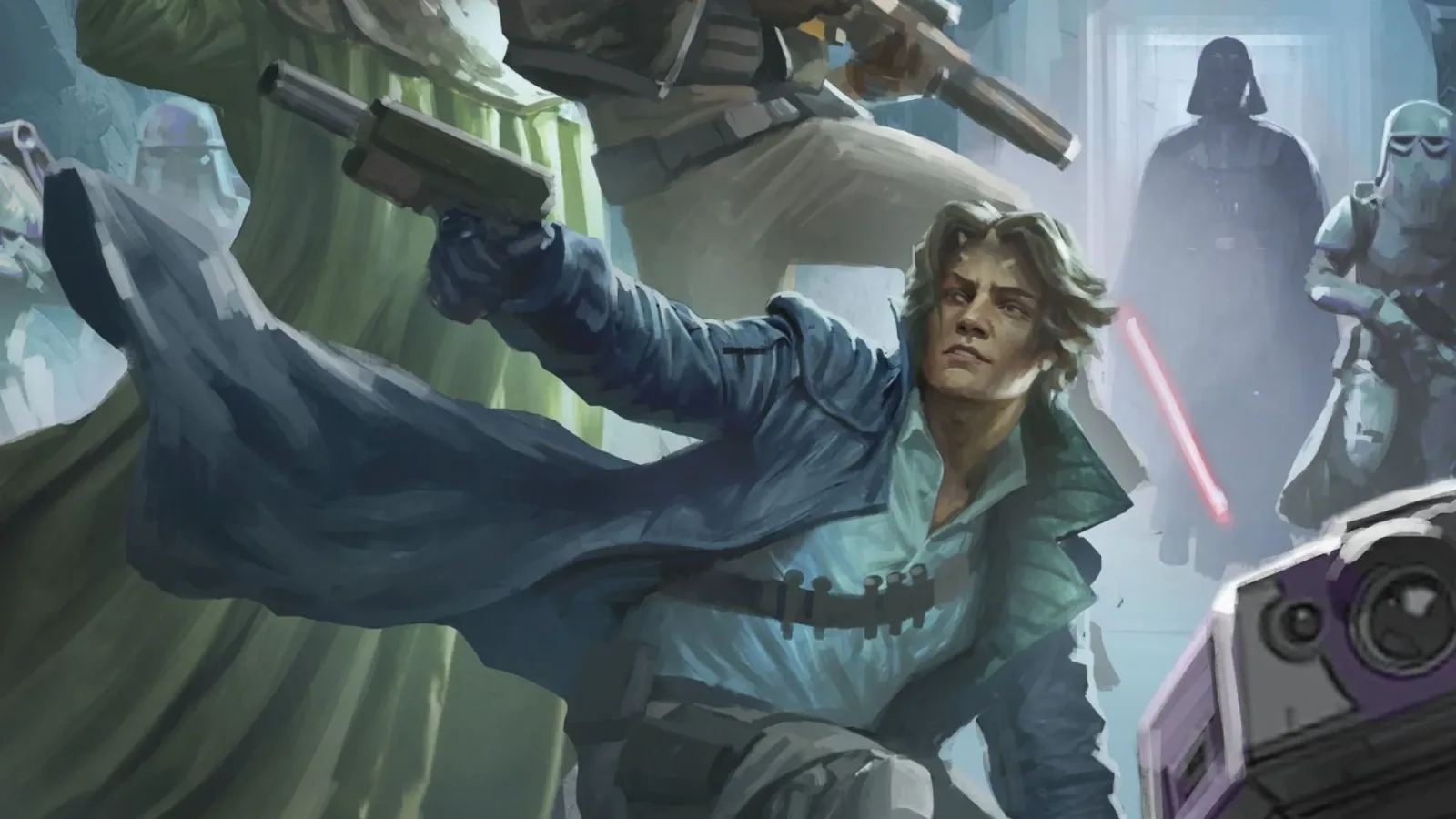
Wizards of the Coast's newly teased Dungeons & Dragons and Star Wars crossover has a difficult balancing act ahead of it. On paper, the two properties are huge fantasy-adventure pillars with devoted audiences, iconic worlds, and decades of storytelling behind them. In practice, however, they are not naturally compatible in the ways that matter most at a tabletop. D&D is fundamentally constructed around classes, escalating magical power, and player characters who can eventually become extraordinary figures. Star Wars can certainly support larger-than-life heroes, but its most compelling stories often find their power at street level: spies, deserters, pilots, smugglers, soldiers, and ordinary people making dangerous choices under an authoritarian regime.
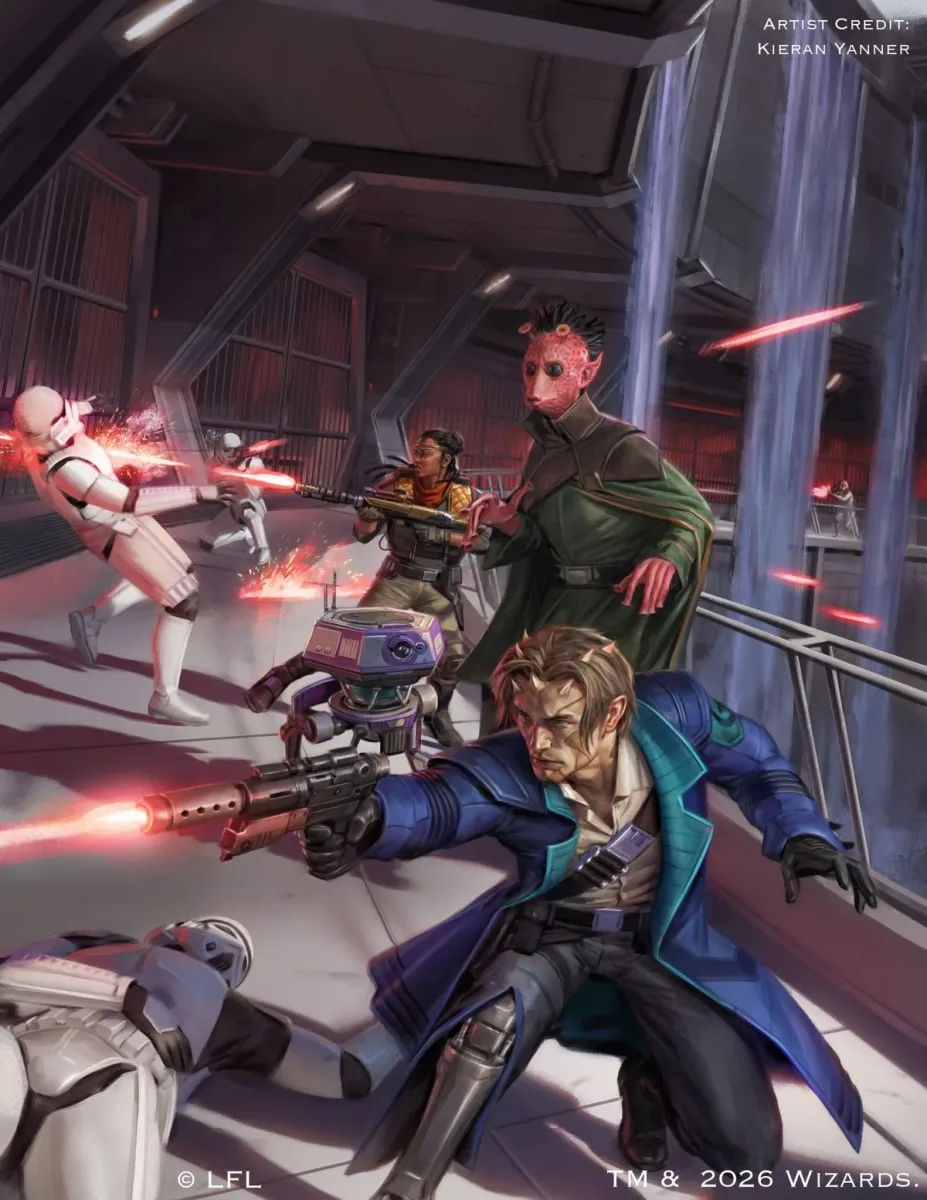
The first tease for the project suggests Wizards may understand that distinction. Rather than immediately putting lightsabers, Sith Lords, and spectacular Force powers at the center of the pitch, the artwork and setup point toward a group of rough-edged freedom fighters working as a covert Rebel crew. The promised premise is to take the fight to the Empire, and that framing gives the crossover a far more grounded identity than some may have expected.
That is encouraging because it evokes the part of Star Wars that has repeatedly proven it can thrive without making every protagonist a galactic chosen one. The mood is closer to Rogue One and Andor than to a story in which an entire party arrives armed with legendary weapons and reality-bending abilities. It can still be energetic, adventurous, and full of daring escapes. But it has room to feel personal, tense, and rooted in the lives of people who must outthink an overwhelming enemy rather than simply overpower it.
A Rebel crew is a strong starting point
A tabletop campaign lives or dies on the reasons its characters have to work together. A secret Rebel cell is an unusually useful answer to that question. It gives players a shared cause while leaving plenty of space for contrasting backgrounds and motivations. One character might be an ex-Imperial technician trying to atone for past work. Another may be a local guide protecting their community from a cruel governor. A pilot could be looking for money, while a former criminal sees the Rebellion as a chance to settle an old score with the Hutt Cartel.
For useful background on this topic, read Street Fighter's Chun-Li Actor Studied Her Moves and Overhauled Training to Honor Fans.
Those archetypes immediately create the kind of party friction and mutual dependence that role-playing games benefit from. They also make room for a broad range of adventures. The crew might steal plans from an Imperial installation, sabotage a fuel depot, sneak a dissident off a blockaded world, investigate a collaborator within a resistance network, or negotiate with an underworld figure whose help comes at a steep cost. None of these scenarios require a Jedi in the room. In many cases, they become more interesting without one.
Keeping the campaign close to the ground also makes Imperial power more meaningful. Stormtroopers are not just disposable targets for an increasingly powerful party; they are the visible enforcement arm of a system that has ships, prisons, surveillance, and immense resources behind it. A blaster fight can be exciting precisely because the crew cannot afford to turn every problem into a loud confrontation. The consequences of being identified, trapped, or separated from an extraction route can drive the drama as much as combat itself.
Why moving away from Jedi makes sense
The Force is essential to Star Wars, and a game set in the galaxy would feel incomplete if it had no way to engage with that side of the fiction. Still, making Force users the default focus of an Original Trilogy-era campaign could create considerable story problems. The Empire has spent years hunting Jedi and Force-sensitive people. A character who publicly displays unusual abilities is not merely attracting attention from nearby troops; they could draw the attention of far more dangerous Imperial forces.
That can make for a memorable campaign arc when the game is built around it. A hidden Force user, a hunted survivor of the Jedi Order, or a group trying to keep someone safe from Imperial agents all offer rich narrative material. But it is less useful when it happens as an incidental consequence of one player regularly deploying a powerful ability. A campaign intended to be about helping a world under Imperial control or pulling an ally out of Hutt space can suddenly become a story about escaping the Empire's most feared hunters.
In other words, Force powers risk becoming a narrative dead end if they are not carefully managed. Every open use may logically invite escalation, and that escalation could dominate the table's story. By centering smugglers, soldiers, operatives, mechanics, and other non-Jedi protagonists, the crossover can preserve the Force as something mysterious, dangerous, and significant. It can remain an option or a major plot hook without requiring it to define every adventure.
There is also a practical advantage. Star Wars has always had a deep bench of heroes who are not traditional mystical warriors. Han Solo, Cassian Andor, Jyn Erso, Mon Mothma, Saw Gerrera, and countless pilots, droids, spies, and civilians demonstrate that the setting has plenty to offer beyond lightsaber duels. A tabletop group should be able to find its own identity in that space, whether it wants to become a disciplined Rebel unit, a desperate band of local insurgents, or opportunists gradually pulled into a cause larger than themselves.
The mechanical question remains the biggest concern
Promising tone and evocative artwork are one thing. Building a rules framework that properly supports Star Wars is another. Dungeons & Dragons has assumptions baked into nearly every corner of its design. Its classes, spells, monsters, treasure progression, and encounter structure have grown from fantasy traditions. Translating that machinery into a galaxy of blasters, starships, droids, cybernetics, and Imperial occupation will require more than a superficial coat of paint.
The most obvious challenge is magic. If a conventional D&D spell list is simply renamed, the result may feel awkward. Technology is not automatically a satisfying substitute for every magical effect, and Star Wars technology has its own logic. Gadgets, hacking tools, medical equipment, droid companions, ship systems, and specialized weapons should ideally feel distinct from one another rather than functioning as fantasy spells with different labels.
Classes will matter just as much. The game needs roles that feel built for the setting: perhaps figures resembling scouts, pilots, infiltrators, medics, commanders, technicians, bounty hunters, or diplomats. Whatever final forms they take, they need to offer players meaningful choices without forcing everything through a fantasy lens. A blaster specialist should not feel like a bow user with science-fiction vocabulary pasted over the top, and a mechanic should have more to contribute than periodically rolling to fix equipment.
Some of the most important questions are still unanswered. Will this be a major adaptation of D&D's existing rules, a standalone game using some familiar foundations, or something between those approaches? How much attention will it give to starship travel and vehicle action? Will the game provide tools for running clandestine resistance operations, managing heat from the Empire, or building relationships with local rebel networks? Those decisions will determine whether the crossover feels like a fully realized Star Wars RPG experience or a novelty campaign setting.
Grounded does not have to mean grim
A more down-to-earth approach should not be mistaken for a joyless one. Star Wars is at its best when danger, humor, hope, and momentum coexist. A Rebel crew can bicker over a bad plan, bluff its way past a checkpoint, make an impossible jump in a battered ship, and then face the emotional cost of the mission that follows. The setting does not need to become a punishing survival game to communicate that the Empire is frightening.
That balance is particularly important for D&D players, who often come to the table expecting room for swashbuckling heroics. The goal should not be endless misery or a campaign where every decision ends in failure. It should be a world where victories feel earned. Getting a family through a blockade, exposing an Imperial official's crimes, or helping a small resistance survive one more week can be heroic precisely because the characters begin as vulnerable people rather than legendary saviors.
Andor demonstrated the strength of this approach through its focus on grassroots rebellion and the sacrifices made by people far from the center of galactic power. The Clone Wars, meanwhile, showed how much emotional weight Star Wars can find by humanizing clone troopers who might otherwise have been anonymous figures in armor. Those examples underline a useful lesson for the tabletop crossover: a campaign does not need to put the biggest names in the galaxy on screen to make players care about what is at stake.
Another crossover is already on the horizon
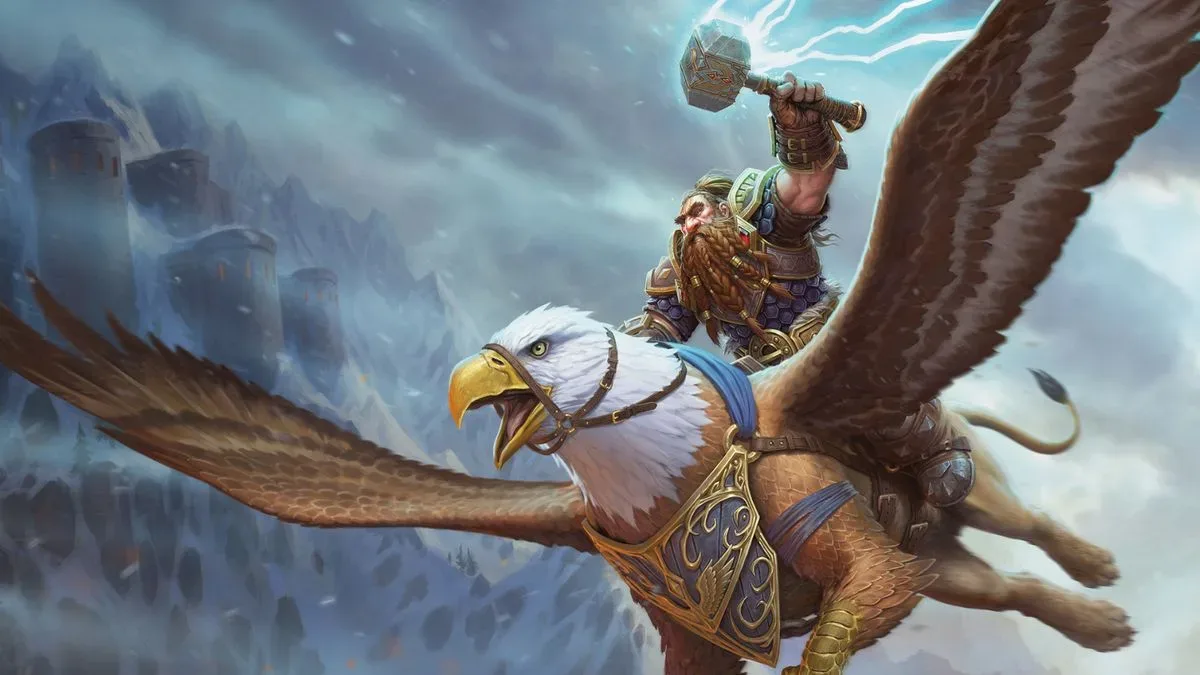
The Star Wars project is not Wizards of the Coast's only major crossover effort. A D&D take on World of Warcraft is due in November, with its core book available to pre-order. Its principal designer has described it as an opportunity to explore Azeroth in a new way, and the material shown so far has leaned toward a similarly grounded adventuring perspective rather than simply recreating the biggest moments from the video game.
That broader strategy makes the Star Wars experiment especially interesting. Crossovers can work when they understand what players actually want to inhabit, not just which famous imagery they recognize. The appeal is not merely seeing a familiar logo next to D&D's. It is gaining a tabletop structure that lets a group tell stories the original medium may not have had room to tell.
For Star Wars, the early signs suggest that story may begin with a battered ship, a secret contact, a handful of blasters, and a crew that knows the odds are against it. There is still ample reason to be cautious until the rules and full scope are revealed. But a focus on Rebel operations and everyday people resisting the Empire is a promising foundation. If Wizards can match that grounded creative direction with mechanics that truly fit the galaxy, this could become a crossover that understands why Star Wars is more than Jedi, Sith, and lightsabers.
Community
Discussion
Start the conversation.
No comments have been posted yet.