

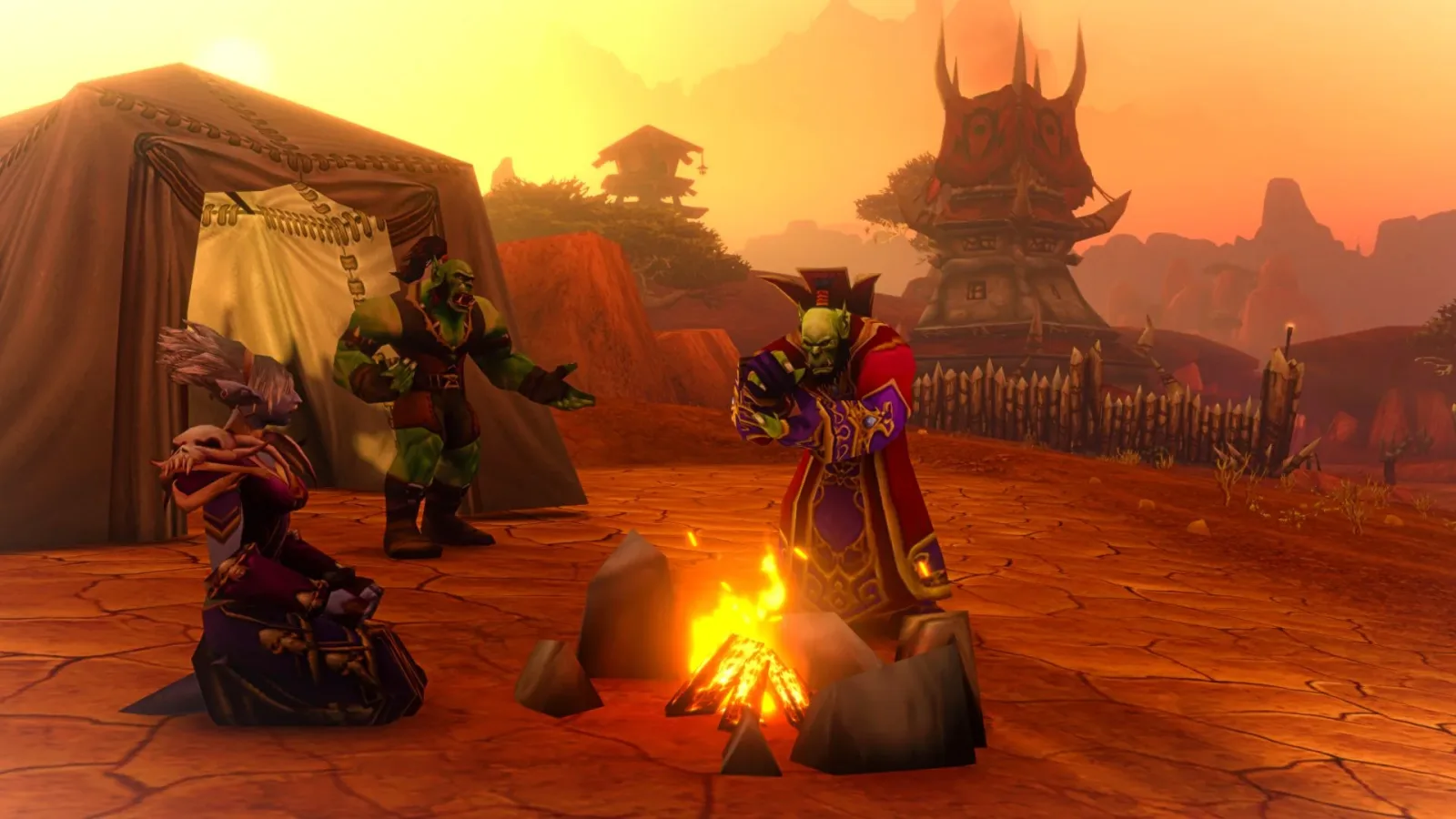
World of Warcraft: Forever may be rooted in the earliest period of Blizzard's long-running MMO, but the team is already leaving the door open to a much broader journey across Azeroth. In a recent conversation with content creator JackedIQ, World of Warcraft executive producer and vice president Holly Longdale and associate production director Clay Stone addressed the possibility of eventually visiting familiar regions beyond the project's immediate scope, including Northrend and Pandaria.
The short version is encouraging for players hoping Forever will not remain confined to a narrowly defined set of locations forever: Blizzard is not publicly ruling much out. Longdale said that, in broad terms, "nothing is off the table," while stressing that future choices will depend on the story the developers want to pursue and on how the community responds to the game.
That is not a promise that any particular expansion-era destination is scheduled, nor is it confirmation that Northrend or Pandaria will be added. Instead, it establishes the philosophy Blizzard appears to be taking with Forever. The team is building around a specific historical window in World of Warcraft's universe, but sees considerable room to develop stories, refresh locations, and potentially widen the playable world over time.
Azeroth's original continents may have plenty of life left
For now, the key creative focus is the first year of World of Warcraft. Stone described it as an especially interesting time period to work within, one with a deep pool of existing lore and opportunities for the team to reinterpret or build upon it through new ideas. That framing matters because it suggests Forever is not simply looking at old geography as a static museum piece.
For useful background on this topic, read Kaz Hirai's PlayStation Leadership Approach Put Autonomy Ahead of Sony Bureaucracy.
Longdale noted that the original continents themselves can change. Even without immediately moving players to far-flung regions associated with later chapters of World of Warcraft, the developers could continue evolving Eastern Kingdoms and Kalimdor. In her view, players could spend an enormous amount of time in those two landmasses as they develop.
That approach could give Forever a distinct identity. Rather than racing through a familiar sequence of historical destinations, the game could spend more time investigating what Azeroth looked like during its early MMO era and what other stories might plausibly emerge there. Classic World of Warcraft's launch-world zones contained countless unfinished threads, local conflicts, dangerous frontiers, and references to major events beyond the player's immediate reach. A project focused on that period has room to revisit those foundations in a different way.
It also gives Blizzard flexibility. New content does not necessarily require a jump to a continent best known for a later expansion. Existing zones can receive new pressures, fresh narrative context, or altered states that reflect Forever's ongoing story. In an MMO, changing a well-known area can be as significant as opening a new one, especially when players have strong memories of its original form.
Northrend and Pandaria remain possibilities, not announced plans
Northrend and Pandaria were raised specifically because they are among the most recognizable regions in World of Warcraft's history. Northrend became the central setting of Wrath of the Lich King, while Pandaria arrived much later as the focal point of Mists of Pandaria. Each carries a massive amount of established lore, memorable raids and dungeons, and a visual identity far removed from the forests, deserts, cities, and battlefields of the original two continents.
Still, players should separate Blizzard's openness from a concrete roadmap. Neither Longdale nor Stone presented a release window, content schedule, or specific commitment to bring either place into Forever. The comments amount to a statement that the team is not treating the boundaries of Forever as permanently closed. What it actually chooses to build will come down to narrative direction, creative priorities, and player feedback.
That uncertainty is likely intentional. Publicly locking an MMO into a distant destination before its earliest content cadence has been established can create expectations that are difficult to meet. It can also distract from the initial experience. Blizzard's current priority is making the opening period work, rather than selling players on a chain of future continents that may be years away or may take a different form than fans expect.
Longdale's comments nonetheless provide a useful signal. Forever is being discussed as something with room to grow, not merely a one-season novelty tied to a limited nostalgia exercise. The team appears interested in letting the world and its stories guide the next steps, while keeping broad options available.
Player response could shape the road ahead
Community feedback is a major part of that equation. Longdale indicated that what Blizzard learns from players will help influence where Forever goes. For a live MMO, that can mean more than simple approval or disapproval. Players may gravitate toward particular styles of questing, social play, progression, world events, class design, or zone storytelling. Those reactions can help developers understand what Forever's audience values most.
There is also a balancing act involved. World of Warcraft has nearly two decades of expansions, systems, redesigns, and lore developments behind it. A project that returns to the game's first year must decide how closely to hold to 2004's original structure and how boldly to introduce new material. Too little change could make the experience feel overly fixed for players who know the old world inside and out. Too much change could undermine the appeal of revisiting that era in the first place.
Stone's emphasis on the amount of available lore suggests Blizzard sees this tension as a creative advantage. Early World of Warcraft was full of places and characters that pointed toward larger stories, many of which were explored years later while others remained largely unresolved. Forever could potentially work in those gaps without needing to immediately repeat the exact path that the live game took through its expansions.
That does not mean every future addition must be completely new. A return to beloved locations could still happen, but it may arrive through a perspective tailored to Forever's particular period and story. If Blizzard eventually revisits a place as monumental as Northrend or as stylistically distinct as Pandaria, the challenge will be making that visit feel natural within Forever's timeline rather than simply importing an old expansion's greatest hits.
Strong beta interest gives Blizzard reason to think long term
The conversation comes as the Forever beta continues ahead of its public release. Blizzard senior game designer Josh Greenfield has described its response as extraordinary, saying the team is seeing the biggest numbers he has witnessed during his 17 years at Blizzard. Exact figures were not provided, so the scale of that response cannot be independently quantified from those remarks alone. Even so, the statement indicates substantial internal enthusiasm around the test.
A strong beta does not guarantee every ambitious possibility will happen, but it can give a live-service team important information. It helps establish whether there is an audience for the project's premise, whether the foundational gameplay is connecting, and whether continued investment in additional stories and zones makes sense. Longdale jokingly said the team first wanted to find out whether anyone would play it. The early signs, at least from Blizzard's own description, appear positive.
For fans, the most important takeaway is cautious optimism. Blizzard is focused on the beginning of Forever and is not announcing a tour through every major World of Warcraft land. Yet the developers are clearly presenting Azeroth as a place with far more potential than the initial playable boundaries might imply.
Northrend, Pandaria, and other celebrated corners of the setting remain hypothetical. The original continents, meanwhile, may be just as important to Forever's long-term future if Blizzard continues changing and expanding them. With the team prioritizing the best story it can tell within this early era, Forever's eventual map may be determined less by nostalgia alone and more by what players embrace once the adventure properly begins.
Community
Discussion
Start the conversation.
No comments have been posted yet.