

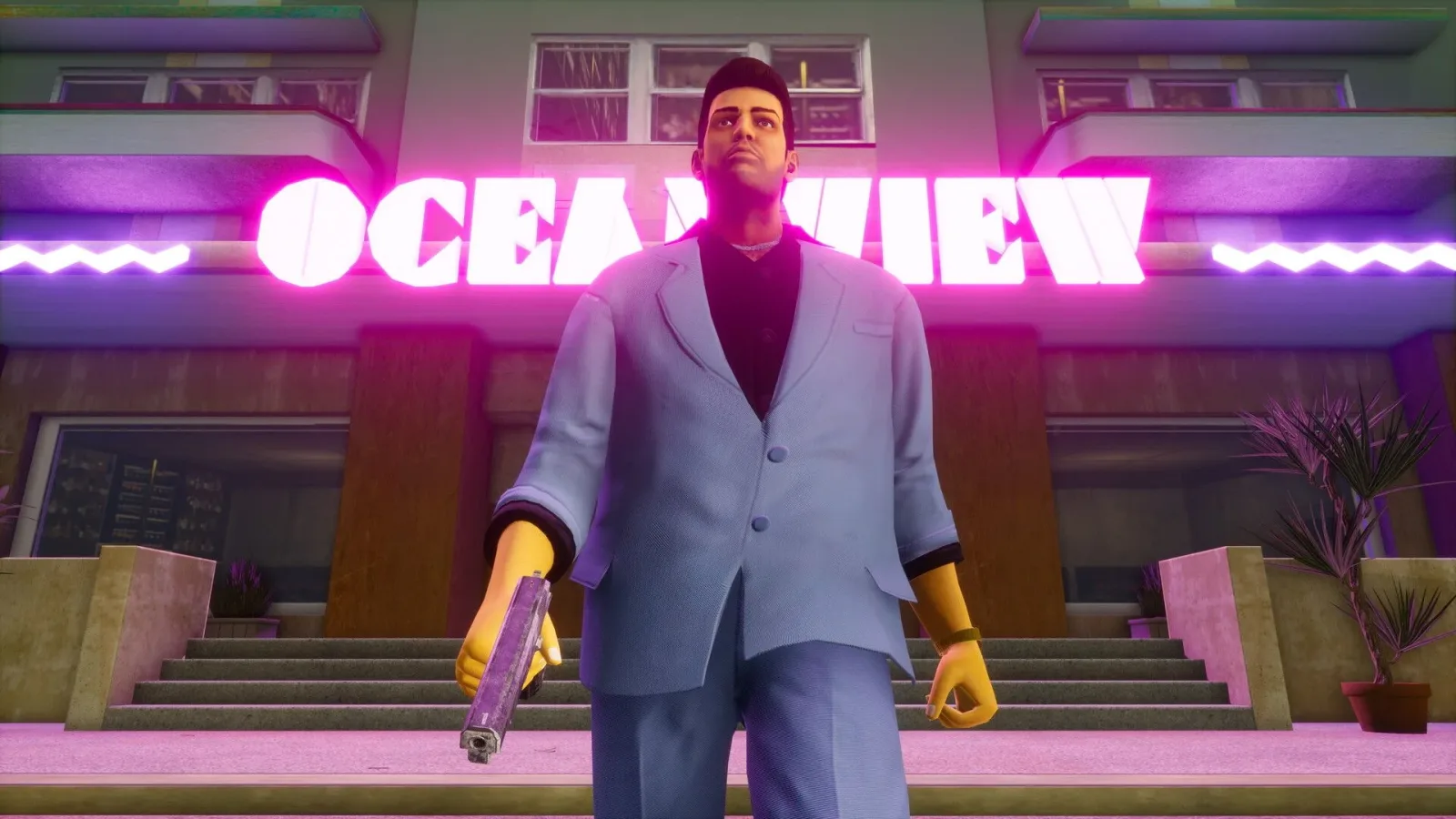
More than two decades after Grand Theft Auto: Vice City turned Tommy Vercetti into one of gaming's most recognizable antiheroes, Rockstar Games co-founder and former lead writer Dan Houser has offered a remarkably candid assessment of the game's script. Houser says he does not think his writing on the 2002 crime epic was especially strong, but believes the late Ray Liotta gave the material its power through a performance that made Tommy feel authentic.
Liotta, celebrated for roles in films including Goodfellas and Something Wild, voiced Vice City's newly released mobster protagonist. His presence was a major statement for video games at the time. Celebrity casting is now a familiar part of blockbuster game production, but a star of Liotta's stature taking the lead role in an open-world action game was far less common in the early 2000s.
Reflecting on the collaboration in an interview, Houser was blunt about the gap between written dialogue and performed dialogue. "My writing's awful, and he made it sound good," he said of Liotta's work in Vice City.
Performance can transform the words on the page
Houser's remarks were not simply self-deprecating criticism of an older project. They were also a broader acknowledgment of acting as an artistic discipline, particularly the difference between a capable performer and an exceptional one. In his view, a solid actor can understand the intention behind a character and communicate what the writer had in mind. The very best actors, however, add dimensions that were not fully present in the script.
For useful background on this topic, read Shrek 2: The Game Remastered Reportedly Leaks via Xbox Store Listing.
Liotta belonged in that latter category, Houser said. The actor found elements beyond the literal wording of Tommy's lines and took the character "a whole level above" the initial conception. For a game as dependent on tone as Vice City, that distinction mattered enormously.
Tommy Vercetti is not a subtle protagonist in the conventional sense. He arrives in the neon-colored, 1980s-inspired Vice City after 15 years in prison, gets caught in a disastrous drug deal, and immediately begins rebuilding power through a mixture of ambition, intimidation, impulsiveness, and violence. The story demands someone who can deliver aggressive one-liners and exaggerated criminal-world dialogue while still making the character feel like a person with history, pride, and dangerous volatility.
Liotta's performance gave Tommy that edge. His voice could sound controlled and businesslike one moment, then explode with wounded outrage or menace the next. It made the character's ascent through Vice City's criminal hierarchy feel more grounded than the game's stylized satire might suggest on paper.
"He brought a level of authenticity to Tommy that I think we'd have struggled with anyone else to find," Houser said.
That authenticity is a key reason Tommy remains distinct within the long-running Grand Theft Auto series. Many protagonists have followed, each shaped by a different city, era, and style of storytelling. Yet Tommy's combination of old-school mobster confidence, quick temper, and outsider ambition remains closely tied to Liotta's delivery.
A surprisingly direct path to casting Liotta
Houser also described how Rockstar secured the actor for the role. Rather than recounting an elaborate Hollywood courtship, he characterized the arrangement as relatively straightforward. Rockstar contacted Liotta's agent and made an offer for a short block of recording work, described by Houser as a "chunk of money" for roughly four days.
The team met Liotta for dinner the night before recording and then worked with him for two days in New York. Houser later returned to Los Angeles, closer to the game's release, to capture additional material. The schedule appears to have been compact by the standards of modern performance-heavy games, particularly for a role that would become so important to the identity of a massive open-world release.
The later recording sessions were not entirely uniform. Houser recalled that Liotta did not initially appear especially enthusiastic on the first day of that return visit. But when he came in the following day, the actor recorded for approximately five hours and completed the remaining work.
For Houser, the end result outweighed any unevenness in the process. He described Liotta as fantastic at the work, and his recollection underlines a recurring reality of voice production: a short session can leave a long creative shadow. Players hear the finished performance divorced from the studio schedule, the retakes, and the personalities involved. What remains is the character.
Why celebrity casting mattered in Vice City
Vice City did not rely on Liotta alone. Its radio stations, missions, cutscenes, and supporting cast were packed with performers associated with film and television, helping Rockstar create a full parody of 1980s American pop culture, crime cinema, music, politics, and consumer excess. That approach reinforced the sense that players were stepping into a living entertainment world rather than merely moving between mission markers.
Still, the protagonist is the anchor for all of it. Tommy is the player's guide through every deal, betrayal, property purchase, gang conflict, and strange side activity. Casting a performer strongly associated with gangster cinema gave the game an immediate connection to the tradition it was riffing on, while Liotta's actual work ensured the role did not feel like a superficial celebrity cameo.
That distinction remains relevant in an era when well-known actors regularly appear in games. Name recognition can attract attention, but it cannot replace a performance that understands the rhythm of interactive storytelling. Voice actors must establish a character across scenes that can be encountered hours apart, often amid action, player freedom, and tonal detours. A lead performance has to survive repeated listening, abrupt transitions, and the player's own pace.
Liotta's Tommy did. Whether players were following the central criminal saga, listening to mission briefings, or hearing one of Tommy's irritated responses during gameplay, the voice remained consistent enough to hold the larger experience together.
Vice City's enduring identity
Released in 2002, Grand Theft Auto: Vice City arrived after Grand Theft Auto III had established the series' influential 3D open-world formula. Rather than simply repeat that breakthrough, Rockstar shifted to a sun-drenched fictional city inspired by Miami and placed the action in 1986. The result traded the previous game's gray urban mood for pastel suits, neon signs, palm trees, speedboats, pop radio, and a heightened crime-drama sensibility.
Its story also gave Rockstar a more vocal central character than Grand Theft Auto III protagonist Claude, whose silence had made him a deliberately blank presence. Tommy, by contrast, had opinions about everyone and everything. He argued with associates, threatened rivals, complained about setbacks, and enjoyed his growing control over the city. The character's forcefulness was central to the game's personality, and Liotta's voice gave every confrontation a recognizable spark.
Houser's comments offer an interesting counterpoint to the game's reputation. Players often remember Vice City for its atmosphere, soundtrack, missions, jokes, visual style, and broad cultural references. But its narrative identity is inseparable from a performance that, by Houser's own estimation, surpassed the writing that initially supported it.
That is not an unusual dynamic in storytelling. Scripts provide structure, character objectives, and dialogue, but performers determine pauses, emphasis, texture, emotional temperature, and the sense of what is being withheld. In Liotta's case, those choices helped turn a stylized criminal into a figure players still quote and recognize years later.
A lasting role for a screen icon
Ray Liotta died in 2022, but his work as Tommy Vercetti remains among the most enduring video game performances of his career. The role introduced his unmistakable voice to players who may have known him primarily from film, while showing that games could make meaningful use of established dramatic talent rather than simply borrowing a famous name for marketing value.
Houser's retrospective praise makes clear that Rockstar understood what it had in Liotta. The actor did not merely read the lines for a popular game; he supplied a dramatic credibility that shaped how players interpreted Tommy and, by extension, the entire world around him.
Grand Theft Auto: Vice City has long been regarded as a landmark of the PlayStation 2 era and has also appeared across PC, Xbox, and mobile platforms. Its technical and design legacy will always be part of that status. But the game's voice is just as important. When players remember Tommy Vercetti, they are remembering Ray Liotta's performance--an example of an actor finding more in a role than the page alone could contain.
Community
Discussion
Start the conversation.
No comments have been posted yet.