

Dark Souls has spent years carrying a particular reputation: an unforgiving action RPG steeped in ruins, sorrow, cryptic mythology, and the slow collapse of an entire world. It is, undeniably, a game full of tragic figures and miserable outcomes. Its landscapes are haunted by decay, its victories frequently come with a cost, and its most memorable characters often meet bleak or absurdly undignified ends.
But treating Dark Souls as nothing but a grim exercise in suffering misses one of FromSoftware's sharpest talents. For all its ruined kingdoms and existential despair, the game can also be extraordinarily funny. Not funny because a character tells a joke or delivers a quip, but funny because a player rounds a corner, sees a skeleton fused to a wheel of bones, and has approximately half a second to understand what is happening before being launched into disaster.
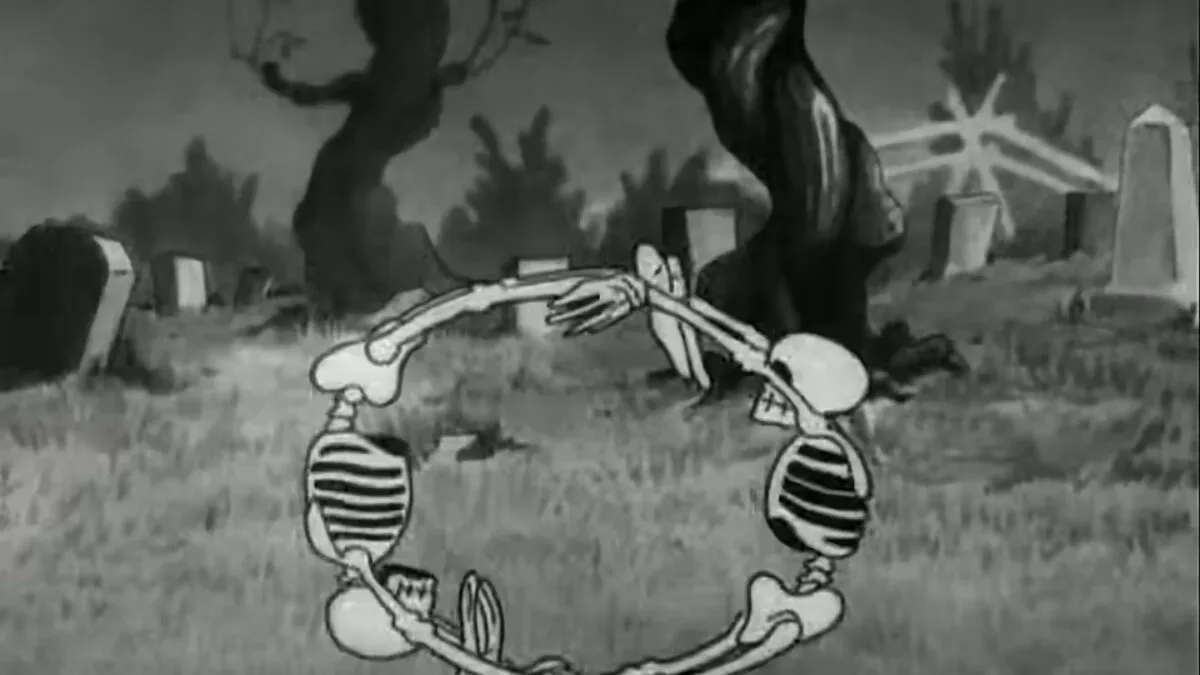
The Bonewheel is one of the clearest examples of that accidental-looking, carefully engineered comedy. It is a ludicrous enemy design on its face: a skeletal figure somehow strapped into a rolling, spiked wheel made from bones. It attacks with all the subtlety of a runaway cartoon prop. The result is frequently panic, confusion, and death. It is also difficult not to laugh at.
The Bonewheel Is a Perfect Dark Souls Joke
In a conventional fantasy game, an enemy like the Bonewheel might be presented as a terrifying execution device or a piece of especially grotesque undead lore. Dark Souls certainly gives it enough menace to be dangerous. Bonewheels can shred through a careless player, especially in cramped spaces where escape routes are limited and the camera becomes part of the struggle.
For useful background on this topic, read PSVR 2's Quiet Store Disappearance Raises Fresh Questions About PlayStation VR Support.
Yet their silhouette is so inherently ridiculous that it punctures the dread. A player might cautiously move through a dark corridor, anticipating an ambush from a knight, a demon, or some nameless horror. Instead, a spinning wheel-skeleton barrels into view like a weaponized sight gag. The terror is real, because the enemy can absolutely ruin a run. The image is still absurd, because it is a skeleton on a wheel.
That contrast is key. Dark Souls does not stop being threatening in order to become amusing. The humor exists because the threat is genuine. Being flattened, shoved off a ledge, trapped against geometry, or caught in an enemy's bizarre attack animation is frustrating in the moment. But after the initial shock wears off, the situation can become memorable precisely because it was so spectacularly undignified.
In that sense, Bonewheels are more than a notorious enemy. They represent a design philosophy that runs through much of FromSoftware's work: the player is not always defeated by a grand duel. Sometimes they are defeated by their own poor timing, a narrow walkway, a bad dodge roll, or an enemy positioned in exactly the place where panic is most likely.
Physical Comedy Is Harder Than It Looks
Many games pursue humor through dialogue. They build jokes around sarcastic heroes, knowingly silly side characters, parody, or pop-culture references. That approach can work, but it depends heavily on writing, delivery, pacing, and whether the player shares the game's sense of humor.
Dark Souls operates differently. Its funniest moments are often physical. They emerge from the interaction between player movement, enemy behavior, level architecture, collision detection, camera angles, and the basic fact that a human being under pressure will make mistakes. A joke is not simply placed in front of the player; it is created when systems collide.
That makes the comedy unusually difficult to control. If an enemy ambushes the player too early, it may feel unfair. If it arrives too late, the surprise is gone. If a ledge is too wide, the player has room to recover. If it is too narrow, the encounter may become tedious rather than funny. The best moments require an understanding of how players explore, where they look, when they hesitate, and how they react when something suddenly goes wrong.
FromSoftware's environments frequently seem built with that rhythm in mind. A seemingly safe route becomes dangerous because an enemy is tucked just beyond a turn. An encounter grows chaotic because several foes are waiting in a restricted space. A player sees an opening, commits to a dodge or sprint, then discovers that the safest-looking path ends in a drop. The game turns confidence into catastrophe with near-cartoon timing.
It is the video game equivalent of a character looking over the edge of a cliff only after they have already run beyond it. The player may be furious for a few seconds. Then comes the realization that the failure was, at least in part, incredibly silly.
Failure Has a Way of Becoming a Story
The series' infamous difficulty gives these moments extra weight. Death in Dark Souls can mean losing progress, dropping souls, and facing a tense return trip to retrieve them. A mistake is rarely completely meaningless. Losing a large pile of souls after an accidental fall can feel devastating, especially during a corpse run when the player is trying to reclaim resources from a previous death.
Still, some failures become easier to accept when the spectacle is funny enough. Accidentally dodge-rolling off a cliff is painful, but it also has a particular comic cruelty: the player performed the action themselves. No boss needed to outsmart them. No hidden trap was required. The button was pressed, the roll happened, and gravity finished the job.
That kind of self-inflicted disaster is central to Dark Souls' comedy. The games ask for concentration and discipline, but their movement can be deliberate and occasionally awkward enough that overconfidence creates its own hazards. A player can misjudge a jump, roll at the wrong moment, step backward during a fight, or simply walk off a ledge while trying to reposition the camera. The result is a death that is humiliating, but often too ridiculous to remain purely aggravating.
Those are also the failures players remember and retell. A clean victory over a standard enemy may blend into dozens of others. Being surprised by a Bonewheel and launched into an abyss becomes a story. So does losing souls because of one unnecessary dodge, or getting caught in a chaotic pileup of enemies in a passage that suddenly feels far too small.
Dark Souls turns defeat into anecdote. Its harshness supplies the stakes; its strange enemies and physical systems supply the punchline.
A Bleak World Makes the Absurdity Stronger
The humor would not land the same way in a game that was already openly comedic. Dark Souls works because its world takes itself seriously. The setting is full of loss. Friendly characters are often doomed, corrupted, or pushed toward cruel outcomes. Villains do not simply disappear after a defeat; they may leave behind evidence of obsession, decay, or suffering. Major objectives are rarely uncomplicated triumphs.
Within that atmosphere, a gigantic mosquito, a mushroom-like creature, a basilisk, or a strange gathering of spear-wielding bodies can feel both disturbing and bizarre. The enemy roster often occupies an unusual space between horror and visual nonsense. Basilisks are especially memorable because their threatening status-effect attacks are paired with a face that can look almost comically artificial and wrong. Mushroom people sound harmless until their attacks make clear that they are not. Giant skeletons and ordinary skeletons alike can turn an otherwise tense route into chaos.
This mixture makes the world feel stranger rather than less coherent. Dark Souls is not a comedy game that occasionally becomes sad, nor is it a tragedy that accidentally contains goofy designs. It is both at once. Its horror has room for absurdity, while its absurdity never entirely removes the danger.
That duality carries forward into later FromSoftware games, including Elden Ring. Their worlds can be majestic, frightening, and mournful, yet they also create situations where the player is defeated by a bizarre creature, a disastrous fall, an overcommitted attack, or a spectacular chain reaction of bad decisions. The studio understands that a serious atmosphere can survive a laugh. In fact, the laugh can make the threat feel more vivid.
Three Cheers for the Bonewheel
The Bonewheel endures because it condenses so much of what makes Dark Souls memorable. It is alarming, ugly, mechanically dangerous, and fundamentally ridiculous. It punishes inattentiveness, exploits tight environments, and transforms an encounter into a frantic scramble. It can produce rage, but it can also produce the kind of stunned laughter that follows a defeat too bizarre to believe.
That is an achievement of design, not an accident. Physical comedy in a game has to account for a player who may react in countless ways. The timing must be flexible enough to create surprise while remaining part of a playable world. The enemy placement must be cruel enough to generate pressure, but not so arbitrary that every loss feels meaningless. When it works, the player becomes both participant and punchline.
Dark Souls remains a melancholy fantasy about cycles of ruin, impossible choices, and a world that rarely rewards hope cleanly. It is also a game where a player can be jump-scared by a wheel made of skeleton parts, panic, dodge in the wrong direction, and plunge into oblivion.
That is not a contradiction. It is part of the series' peculiar brilliance. For every solemn monologue, tragic NPC, and monumental boss arena, there is the possibility of an outrageous physical gag waiting just around the corner. And among all the skeletons, monsters, traps, and environmental hazards, few deliver that joke with more commitment than the Bonewheel.
Community
Discussion
Start the conversation.
No comments have been posted yet.