

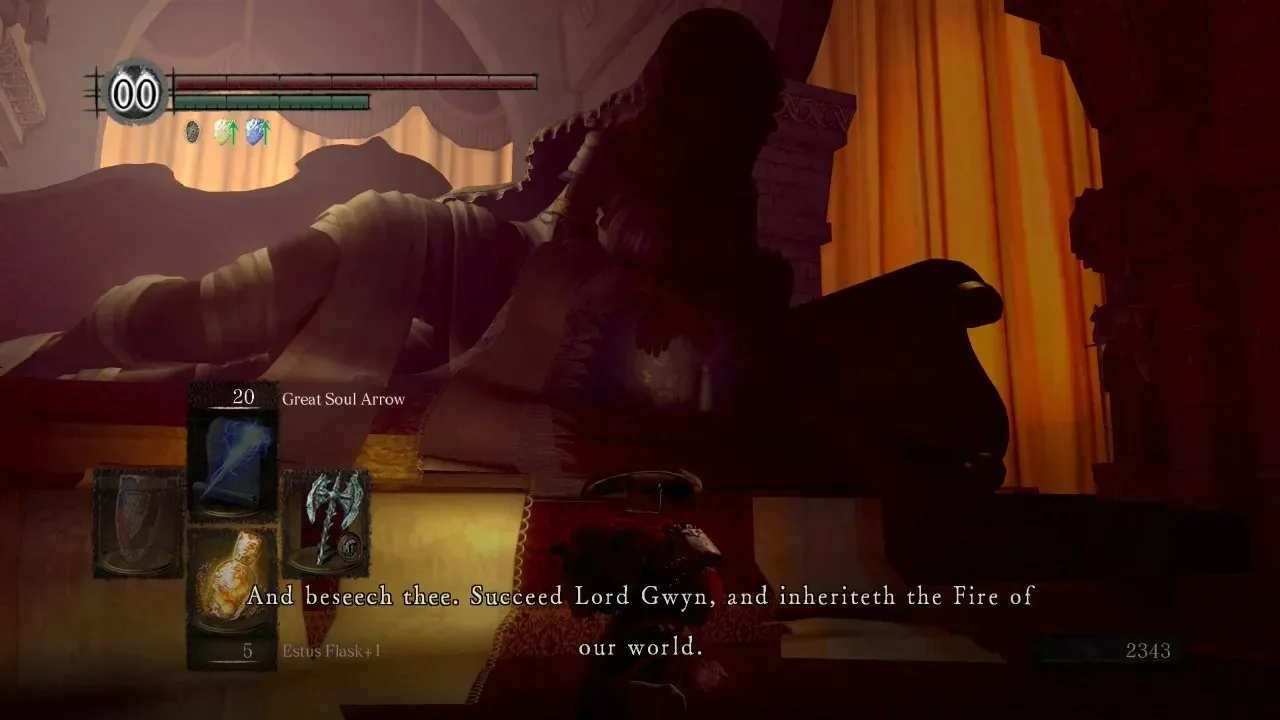
Dark Souls has a remarkable talent for making players suspicious of kindness. In most games, clearing a grueling boss encounter and arriving at a radiant throne room would be a moment of uncomplicated relief: the player has proven themselves, the music swells, a revered figure offers congratulations, and the next major objective is placed neatly in their hands. FromSoftware's first Dark Souls appears to offer exactly that after the brutal Ornstein and Smough fight.
Yet in Lordran, even a room filled with golden light can feel like a trap.
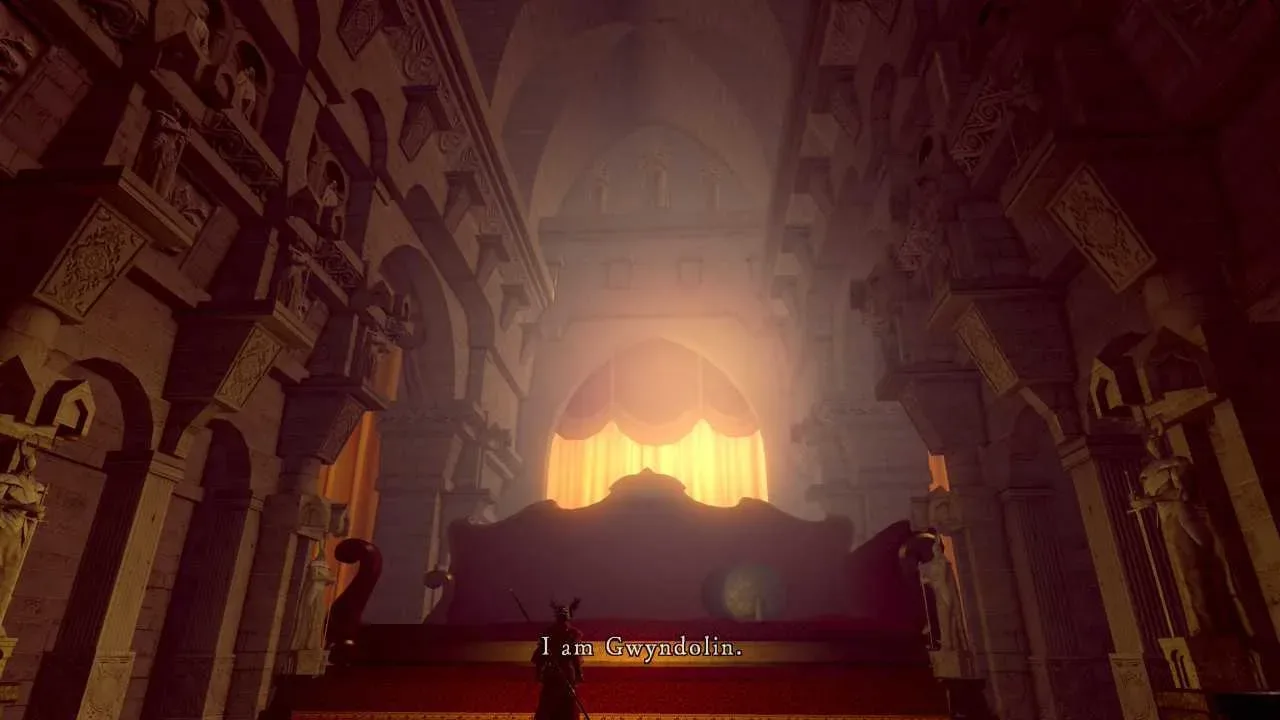
That tension reaches a particularly memorable point in Anor Londo, where the Chosen Undead meets Gwynevere, the Princess of Sunlight. The encounter arrives after one of the game's most famous walls. Ornstein and Smough demand patience, positioning, resource management, and the willingness to make the long approach through hostile guards again and again. Reaching the chamber above them should feel like the end of a chapter. Instead, it can produce a creeping sense that something is wrong.
Gwynevere is warm and complimentary in a world that usually offers cryptic warnings, blunt contempt, or silence. She gives the player the Lordvessel, praises their efforts, and sends them toward the next stage of their journey. The presentation is lavishly heroic, complete with a triumphant musical cue that sharply contrasts with much of the game's restrained atmosphere.
For useful background on this topic, read Big Walk's Deepest Hidden Puzzle Sends Players a Delightful Physical Reward.
For a first-time or mostly blind player, that abundance of reassurance is not necessarily comforting. It can be alarming.
Anor Londo's Most Suspiciously Perfect Reward
By the time a player reaches Anor Londo, Dark Souls has already taught several hard lessons. NPCs may be helpful, but their goals are not always clear. Dialogue provides fragments rather than certainty. Progress often requires acting on incomplete information. Every major location carries a sense of decay beneath its surface, whether it is the collapsing Undead Burg, the poison-choked depths of Blighttown, or Sen's Fortress and its merciless traps.
Then comes the city of the gods, gleaming under an apparently eternal sun.
It is understandable to accept the surface-level story at first. The Chosen Undead was told to ring the Bells of Awakening, and doing so opened the way forward. The player was directed toward Anor Londo to obtain the Lordvessel, and the journey ultimately leads to Gwynevere. The instructions seem to have worked. The figures giving guidance have, at least on their face, been civil. The bosses encountered along the way are rarely framed as innocent victims.
But Dark Souls is a game built around the discomfort of not knowing enough. A benevolent royal figure waiting beyond a monumental boss arena does not erase that education. If anything, the neatness of the reward can become its own warning sign.
That unease is heightened by the game's usual use of sound. Dark Souls often lets environmental noise, distant threats, and the player's own movement dominate the experience. Music tends to be reserved for Firelink Shrine and for boss encounters, where it signals heightened drama. The rich, celebratory music in Gwynevere's room feels exceptional. Rather than simply selling the majesty of the moment, it can make the player ask why the game is suddenly trying so hard to assure them that everything is fine.
One Message, One Impossible Suggestion
The online message system is one of Dark Souls' most elegant tools. Its short, prewritten phrases can offer sincere help, absurd comedy, outright deception, or a mix of all three. A warning may save someone from falling into a pit. A joke may send them looking at a wall for treasure. In Gwynevere's chamber, players will also find the predictable comments inspired by the room's presentation.
But amid the jokes, a message such as "Try attacking" has an entirely different effect.
It is not a walkthrough. It does not explain what will happen. It does not say whether attacking Gwynevere is wise, cruel, necessary, or even meaningful. It simply introduces a possibility that some players may not have considered. Suddenly, the safe-looking conclusion to Anor Londo is no longer safe at all. The player is no longer merely deciding where to travel next; they are deciding whether to violate the apparent rules of a peaceful encounter.
For players who avoid harming non-hostile NPCs, this can become a surprisingly serious internal debate. Many role-playing games encourage experimentation through quick saves, obvious morality systems, or consequences that are cleanly telegraphed. Dark Souls offers far less comfort. It does not generally pause to explain that a choice is permanent, morally weighty, or tied to a hidden world state. It expects players to act, or refrain from acting, and accept whatever follows.
That design puts curiosity into direct conflict with instinct. A player may strongly suspect the scene is false while still feeling unwilling to strike someone who appears defenseless and benevolent. They may worry about missing a secret, but also fear ruining an important quest line. They may know FromSoftware games delight in secrets, illusions, and consequences, while refusing to consult guides because discovering the answer firsthand matters more than achieving an ideal outcome.
The Shot That Changes Anor Londo
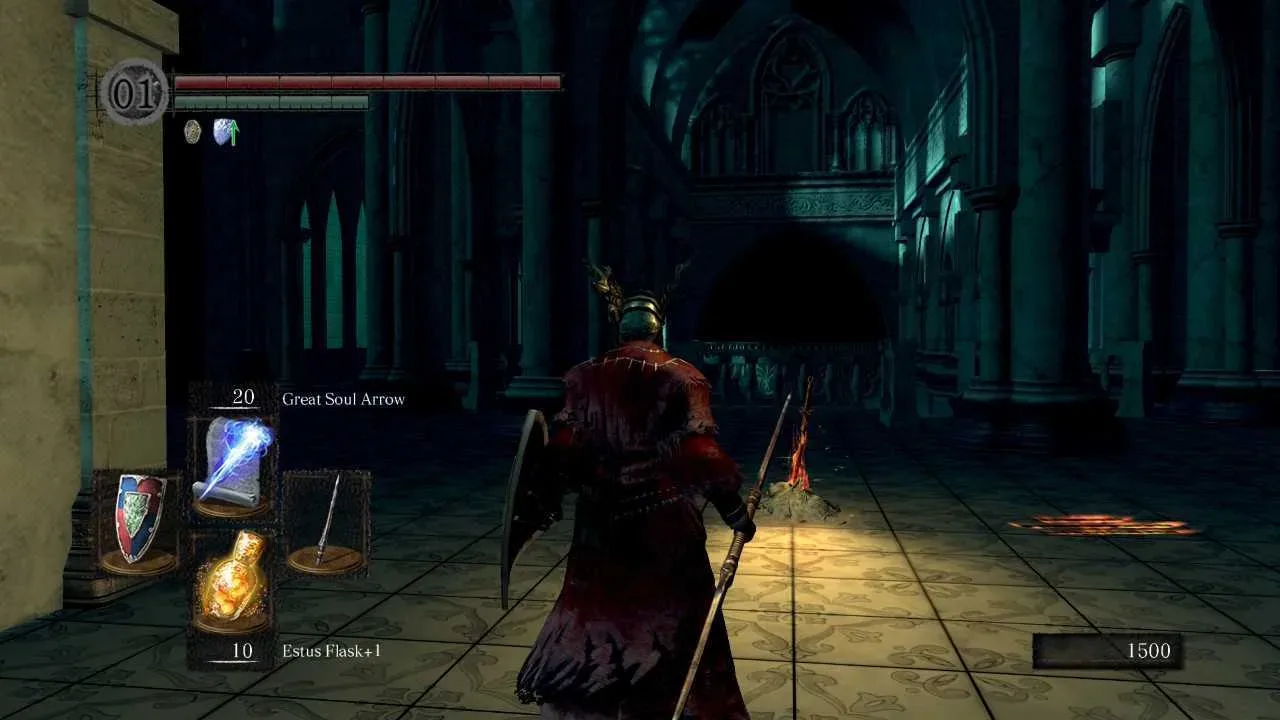
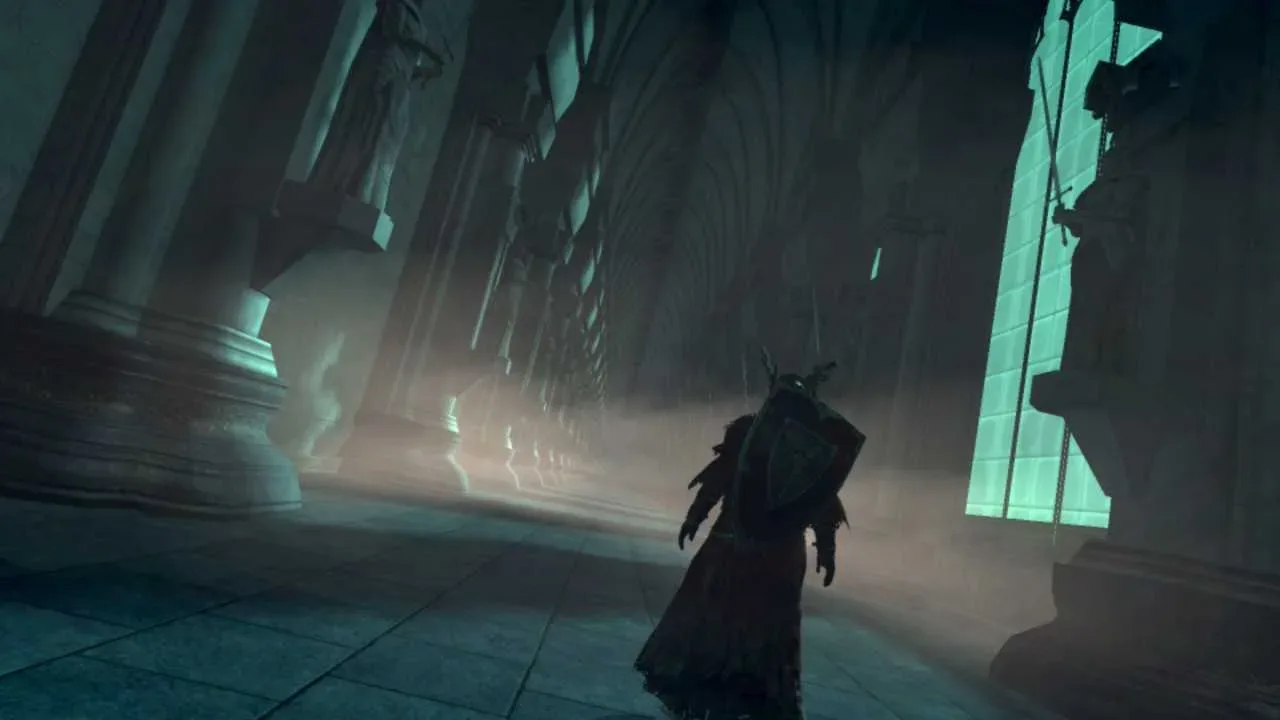
Attacking Gwynevere resolves the mystery with one of Dark Souls' most memorable environmental reversals. The serene figure disappears, revealing the encounter to be an illusion. More dramatically, the warm daylight that had defined Anor Londo gives way to darkness. The city's bright splendor is stripped away, and the player is left to confront a far more ominous version of the place they thought they understood.
The reveal is effective because it does not merely provide lore. It changes the emotional meaning of everything that came before it. The apparently sacred reward room becomes evidence that the player has been guided through a carefully maintained fiction. The sunlight, the praise, and the grand image of divine authority are suddenly inseparable from doubt.
Dark Anor Londo also gives the choice mechanical weight. Hostile enemies appear in an area that may previously have felt comparatively settled after the Ornstein and Smough victory. The mood changes from ceremonial to threatening. A player who attacks out of suspicion does not receive a tidy confirmation that they made the correct moral choice; they receive a world altered by their decision.
That is crucial to why the moment endures. Dark Souls is not interested in handing over a gold star for seeing through a trick. The game allows the player to expose the illusion, but it does not convert that act into simple heroism. The revelation can feel empowering, troubling, or both. It proves that the perfect scene was false, but it also leaves the player alone with the consequences of shattering it.
Playing Blind Means Living With the Results
Dark Souls has been examined so thoroughly over the years that it is easy to forget how disorienting its mysteries can be without outside knowledge. Players now have access to exhaustive quest guides, item-description breakdowns, route planners, and videos explaining every major branch. That information is valuable, especially for people hoping to save specific characters or see content that can be missed through obscure conditions.
Still, there is a special power in refusing that safety net.
A mostly blind playthrough means accepting that some NPC stories will end poorly, some paths will remain unseen, and some decisions will be made with only intuition to guide them. Solaire's fate, Siegmeyer's wandering storyline, and the game's larger questions surrounding the Age of Fire all gain extra weight when the player does not know the optimal sequence of actions. The uncertainty is not an inconvenience around the intended experience. It is part of the experience.
This approach also changes what failure means. Missing a character, choosing the wrong response, or discovering a consequence too late can be disappointing, but it makes Lordran feel less like a checklist and more like a place that continues beyond the player's control. Perfection is not guaranteed. The game goes on anyway.
Gwynevere's chamber encapsulates that philosophy in miniature. The player can leave peacefully, carrying the Lordvessel and maintaining the illusion. They can attack, uncover the deception, and step into a darker Anor Londo. Neither option arrives with a giant prompt identifying it as good or evil. Dark Souls trusts players to supply their own hesitation.
Why This Moment Still Defines Dark Souls
The Gwynevere reveal remains powerful because it shows how little Dark Souls needs to create a major decision. There is no elaborate dialogue tree. There is no lengthy cutscene explaining competing philosophies. There is only an unusually cheerful room, an NPC who seems almost too welcoming, a player message, and the possibility of pressing the attack button.
From that small setup comes suspicion, guilt, excitement, and a lasting question: was it right to break the illusion?
Dark Souls does not make that question easy, and it does not need to. Its greatest trick is making players feel responsible for seeking answers in a world that rarely provides clean ones. In Anor Londo, the lights can go out because a curious Undead decided that something beautiful seemed just a little too perfect.
Community
Discussion
Start the conversation.
No comments have been posted yet.