

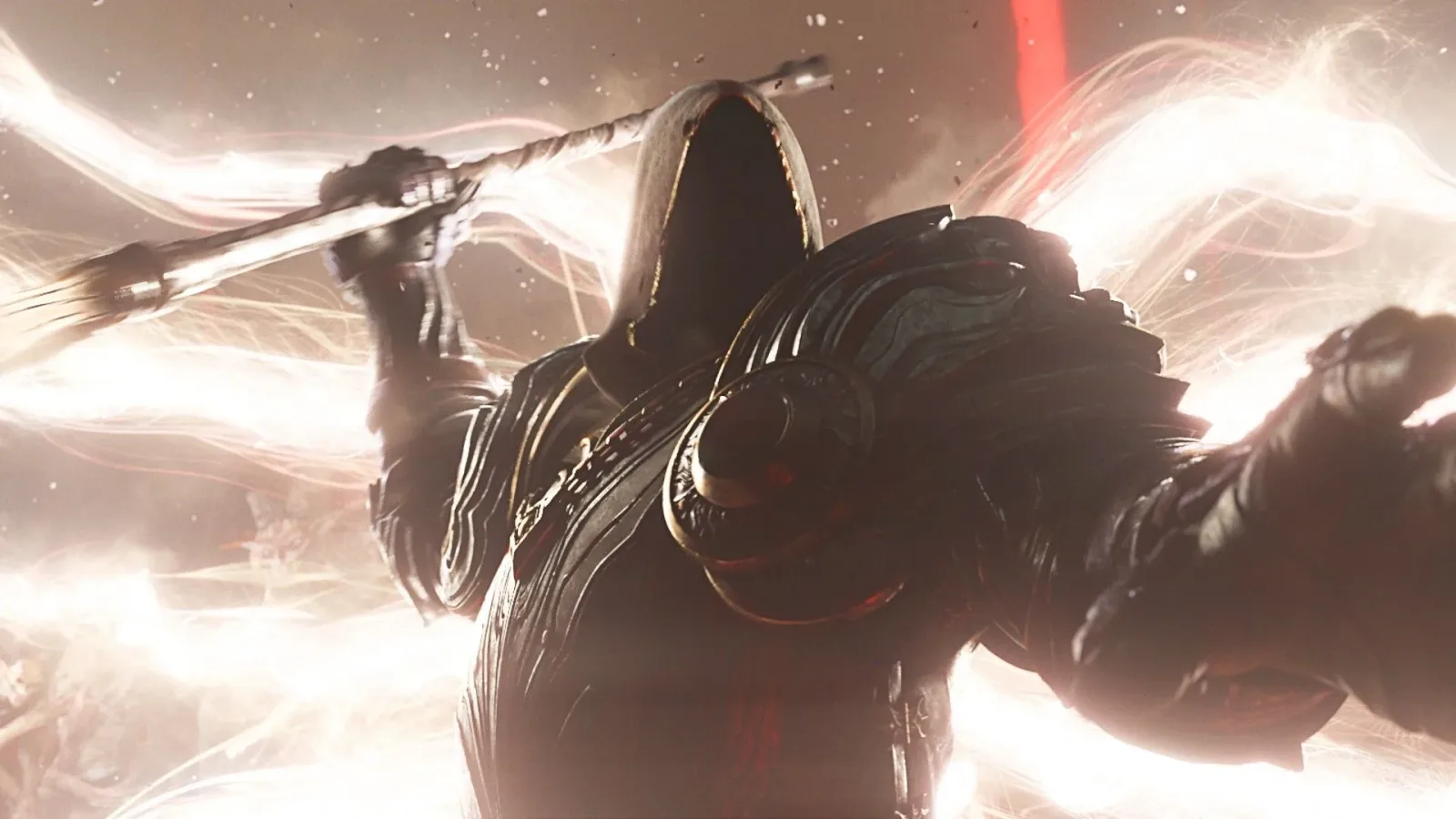
Diablo 4: Lord of Hatred is intended to be the action RPG's final expansion for the foreseeable future. Blizzard Entertainment is shifting its attention toward continued seasonal updates for Diablo 4 while preparing the next mainline entry, Diablo 5, which is currently expected in 2029.
The news puts a clearer endpoint on Diablo 4's major expansion storyline after the game's return to Sanctuary and its conflict with Mephisto. It does not mean support for the current game is ending. Instead, the plan is to keep Diablo 4 active through seasons, with those updates potentially helping chart the path from the present state of Sanctuary to the far darker setting promised for Diablo 5.
Game director Brent Gibson described the team's present priorities as supporting Diablo 4 through its seasonal model and moving ahead with the sequel. In his view, Lord of Hatred delivers a conclusion to the game's "Story of Hatred," centered on what the team has built with Mephisto. The franchise is now preparing to move into a new chapter: the "Story of Terror," with Diablo himself once again taking center stage.
Lord of Hatred closes Diablo 4's expansion chapter
For players who have expected Diablo 4 to follow an extended chain of large paid expansions, the shift is significant. The series has often been defined by major additions that reshape the experience, whether through new acts, classes, enemy types, systems, and endgame changes. Lord of Hatred now stands as the capstone Blizzard is planning for Diablo 4's expansion-scale narrative.
For useful background on this topic, read World of Warcraft Will Remix Wrath of the Lich King Ahead of The Last Titan.
The focus on Mephisto makes thematic sense. Hatred has been one of the dominant forces hanging over Diablo 4's version of Sanctuary, and Lord of Hatred is designed to bring that arc to a substantial conclusion. That conclusion also gives Blizzard room to position the next game around a different central threat. Diablo 5 is expected to turn directly toward Diablo, the Lord of Terror, rather than continuing to escalate Diablo 4's Mephisto storyline through another expansion.
That does not necessarily make Lord of Hatred a permanent, absolute final word on all possible Diablo 4 add-ons. Gibson left the door open to the idea that circumstances could change far in the future, especially if the player community remains engaged. Diablo's history shows that the franchise can revisit older games in unexpected ways. Diablo 2, for example, received a new class and a paid expansion after a 25-year gap.
Still, the practical message for the near term is straightforward: there are no plans for another Diablo 4 expansion. Players should expect the game's ongoing evolution to come from its seasons rather than from a newly announced full-scale expansion campaign.
Seasons will carry Diablo 4 toward a grim future
Diablo 5 is set 100 years after Diablo 4, creating an unusually large chronological gap between two consecutive mainline Diablo games. Blizzard has described that future as a nightmare scenario in which Sanctuary has fallen and Diablo has won. It is a bleak premise even by the standards of a series built on demonic invasions, broken civilizations, and recurring battles over humanity's survival.
That century-long leap means Blizzard does not need to force every major consequence of Diablo 4 into an immediate conclusion. The studio can use future seasons to develop remaining threads, show how the world changes, and explore the consequences of Lord of Hatred without needing to reach the exact starting point of Diablo 5 overnight.
Gibson has said the time jump gives the developers considerable room to follow the narrative alongside community interest. Continuity is an area the team is enthusiastic about, but the full route from Diablo 4's seasonal era to Diablo 5's devastated world has not been locked down in every detail. Blizzard wants to observe player responses from one season to the next as it shapes where the story goes.
That approach suggests Diablo 4's live-service structure could have an unusually important role over the next several years. Seasons have traditionally been a place for fresh mechanics, temporary themes, loot pursuits, balance adjustments, and new activity loops. Now they may also be the primary medium through which Diablo 4 continues its broader narrative after Lord of Hatred.
For lore-focused players, that could make seasonal stories more consequential than they have been in previous Diablo games. The events of those seasons may not merely be side stories between bigger expansion releases. They could become the connective tissue between the resolution of Mephisto's arc and the eventual fall of Sanctuary.
Diablo 5 is planned for 2029
Blizzard has placed Diablo 5 on the calendar for 2029, giving the studio several years to maintain Diablo 4 while developing a new foundation for the series. The sequel's setting already establishes an enormous escalation: the conflict has gone badly wrong, Sanctuary has fallen, and Diablo has emerged victorious.
A century of separation also gives Diablo 5 freedom to present a changed world without requiring players to know the outcome of every individual Diablo 4 season. Nations, factions, settlements, and even the meaning of resistance may look very different after 100 years under the shadow of Diablo's victory. At the same time, Blizzard's emphasis on continuity indicates that long-term fans may find echoes and consequences of Diablo 4's events throughout the sequel.
It is too early to know precisely how Diablo 4's cast, regions, and unresolved threats will be remembered in that setting. The planned time jump allows for legends, ruins, inherited conflicts, and corrupted institutions shaped by what happens in the current game. It also creates space for new heroes to rise in a Sanctuary that is no longer simply threatened by defeat, but defined by it.
The franchise's move from Hatred to Terror is therefore more than a change in villain branding. It signals a structural handoff. Diablo 4's major expansion narrative is ending with Mephisto, while Diablo 5 is being positioned as a new era built around the return and triumph of Diablo.
Three classes are already confirmed for the sequel
Although Diablo 5 remains years away, Blizzard has confirmed three of its playable classes: the Demon Hunter, the Monk, and the new Plague Knight. The first two will be familiar to longtime players, while the Plague Knight is a new addition to the franchise's playable roster.
The Demon Hunter's return brings back one of Diablo's most recognizable ranged archetypes, typically associated with agile combat and relentless monster hunting. The Monk likewise restores a fast, martial option with spiritual and elemental flavor. The Plague Knight, by contrast, introduces an unknown new identity, and Blizzard has not yet detailed how its weapons, abilities, summons, ailments, or class mechanics will work.
Blizzard has also said Diablo 5 will feature more classes than any previous entry in the series. The statement establishes an ambitious target for the sequel's launch roster or broader class offering, though the full lineup has not been revealed. For now, the three confirmed classes offer only an early look at the combat roles players may have available when the game arrives.
What Diablo 4 players should expect next
The immediate outlook is not one of abandonment. Diablo 4 is expected to continue receiving seasons, and those seasons will be where Blizzard concentrates its support while it works toward Diablo 5. The distinction is that players should not presently anticipate another expansion beyond Lord of Hatred.
That may be disappointing for fans hoping for another major campaign-sized addition, particularly because large expansions can provide the most dramatic changes to Diablo's worlds and systems. On the other hand, a clear direction can help set expectations. Lord of Hatred is meant to finish Diablo 4's central expansion story, while future seasons can focus on keeping the game responsive, evolving, and narratively useful in the years before the sequel.
The possibility of future support beyond those plans remains, but it should be treated as a possibility rather than a promise. Diablo's long history proves that old games can receive surprising second lives, yet Blizzard's current priority is firmly split between Diablo 4 seasons and the long road to Diablo 5.
For now, Sanctuary's next steps are defined by two looming outcomes: the conclusion of Mephisto's story in Lord of Hatred, and a future 100 years later where Diablo has already won. The road between those points will be told season by season.
Community
Discussion
Start the conversation.
No comments have been posted yet.