

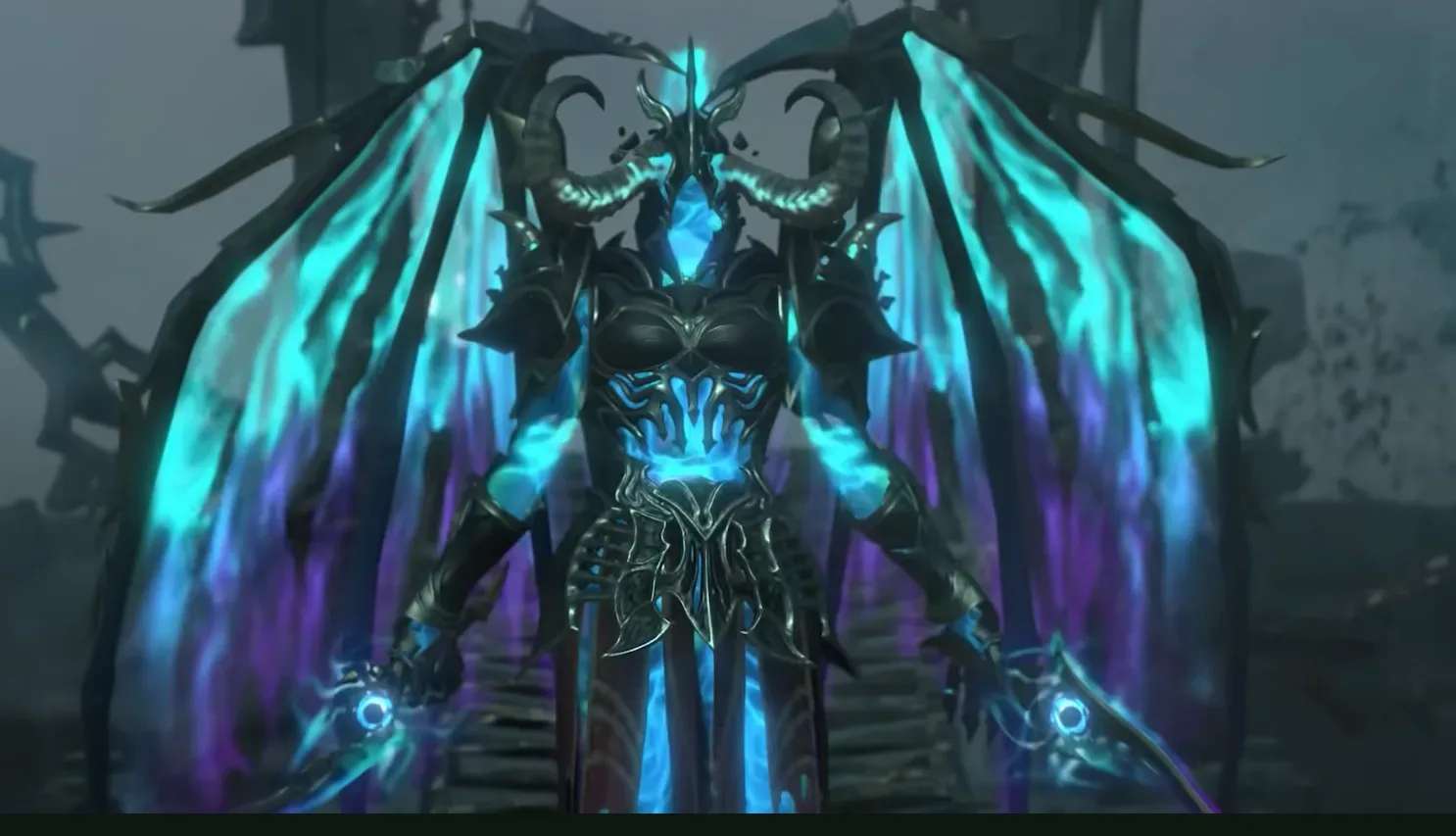
Diablo 4 will not be left behind when Diablo 5 arrives. Blizzard has confirmed that seasonal support for the current action RPG is planned to continue beyond the launch of the newly announced sequel, with the duration of that support ultimately depending on whether players continue to spend time in Sanctuary.
The news offers an important reassurance for Diablo 4 players following the surprise Diablo 5 reveal at BlizzCon 2026. A new numbered entry naturally puts attention on the future, particularly when the new game is being positioned as a darker return for the franchise. But it has also raised a direct question for the game that preceded it: what happens to Diablo 4 now that Blizzard has confirmed there will not be any further expansions for it?
The answer, at least where seasons are concerned, is that Diablo 4 is expected to remain active. Game director Brent Gibson said Blizzard intends to support seasonal play for as long as the community continues to show up for Diablo 4. He compared that approach to Diablo 2 and Diablo 3, both of which remain playable and retain seasonal structures years after their successors arrived.
"We are planning on supporting seasons as long as the community continues to show up for D4," Gibson said. "Similar to what we have in D2 and D3. There are still people who play those games, and as long as you're showing up, we're going to continue to be making content."
For useful background on this topic, read Cyberpunk 2077 Designer Says Phantom Liberty Cannot Erase the Game's Troubled Launch.
Seasonal support is separate from Diablo 4 expansions
There is a meaningful distinction in Blizzard's plans. Diablo 4's expansion roadmap has reached its end, while its season model is expected to continue. That means players should not interpret the lack of more expansions as an immediate shutdown of the game's ongoing progression, rotating mechanics, rewards, character building opportunities, and seasonal events.
For a live-service action RPG, seasons are a major part of the experience rather than a minor side activity. They create recurring starting points for returning players, introduce temporary gameplay systems, shift the value of builds and items, and typically provide a reason to create a new seasonal character. Diablo 4's model has also become increasingly substantial over time, with recent seasons carrying a larger scope than simple balance updates or reward-track refreshes.
Season 15, for example, has included miniature reworkings of legacy Diablo campaigns. That is the kind of seasonal ambition that makes the question of long-term support especially relevant. If Diablo 4 can revisit and reinterpret major pieces of the series' past within a season, then each new update has the potential to be more involved than the limited maintenance patches associated with an aging game.
However, Blizzard's comparison to Diablo 2 and Diablo 3 also suggests that players should be careful not to assume every future Diablo 4 season will maintain its present scale indefinitely. Those earlier games still have seasonal frameworks, but their later support has largely taken the form of rotations through previous seasonal themes rather than a steady stream of entirely new systems, campaigns, regions, and item pools.
What Diablo 2 and Diablo 3 may indicate
Diablo 2 and Diablo 3 provide the clearest precedent for Blizzard's stated approach. Neither game was simply abandoned when a newer Diablo project became the franchise's main priority. Their communities have remained able to return for ladder or seasonal play, preserving a familiar rhythm for players who prefer those games' styles, mechanics, or endgame loops.
Diablo 2 has even received notable attention comparatively recently, including a new class this year. That example demonstrates that older Diablo games can still receive meaningful surprises when Blizzard sees an opportunity and player interest remains. At the same time, it does not establish that Diablo 4 will keep receiving large, wholly original seasonal packages at the same cadence once Diablo 5 is launched.
The more likely long-term path, based on Gibson's comments and the series' history, is a transition rather than an abrupt ending. Diablo 4 may continue to get active seasonal support while Diablo 5 is new, then potentially move toward a more sustainable cadence or reuse of successful past themes as development resources increasingly center on the sequel. Blizzard has not detailed such a timetable, and it has not said when, or whether, Diablo 4's seasons would shift to a rotation-focused model.
That uncertainty matters. "Support" can cover a broad range of possibilities, from regularly developed new gameplay ideas to curated reruns of earlier content. Gibson's statement confirms Blizzard's intention to keep Diablo 4's seasonal ecosystem alive, but it does not promise a fixed number of seasons, an unchanged update schedule, or expansion-sized additions after Diablo 5's release.
Community participation will determine the game's future
Blizzard's threshold for continued Diablo 4 seasons is straightforward in principle: people need to keep playing. That places the game's future in an unusually direct relationship with its audience. A healthy population gives Blizzard a reason to preserve seasons, maintain the game's infrastructure, and continue building content for those who remain invested in its version of Sanctuary.
It also makes the period surrounding Diablo 5's eventual launch especially interesting. Some players will inevitably move to the new game, particularly if it delivers on the promise of a much darker Diablo experience. Others may choose to stay with Diablo 4 because they enjoy its combat, class design, existing characters, gear chase, social groups, or seasonal format. Many fans may divide their time between both games.
That split does not have to be a problem. Diablo has long been a series where different entries retain dedicated audiences. Diablo 2, Diablo 3, Diablo Immortal, and Diablo 4 each appeal to players for different reasons, whether that is a particular loot system, pacing, visual tone, endgame philosophy, or preferred approach to character progression. Continued Diablo 4 seasons would give Blizzard a way to serve that audience without requiring the game to compete directly with Diablo 5 for the same role.
- Diablo 4 expansions: Blizzard has said no more are planned.
- Diablo 4 seasons: Planned to continue while the community remains active.
- Long-term format: Not yet defined, and it may evolve over time.
- Diablo 2 and Diablo 3 comparison: Older games show that Diablo titles can retain seasonal support after a successor launches.
Diablo 5 is changing the franchise's direction
The Diablo 5 announcement has made clear that Blizzard is preparing to move the franchise's mainline focus forward. The project is being described as the darkest Diablo game since the original, a direction that has immediately attracted attention from fans eager for a harsher, more horror-driven take on the series.
Blizzard has also explained that Diablo himself is central to the decision to make Diablo 5 rather than continue adding expansions to Diablo 4. Project leadership said the character needed a game of his own. That framing suggests the sequel is not simply being treated as another content package or an incremental extension of Diablo 4's story; it is intended to be a distinct new chapter built around the franchise's defining antagonist.
Even so, Diablo 5's arrival does not erase Diablo 4's place in the lineup. The promise of continued seasons gives existing players a reason not to view their time, characters, and knowledge of the current game as immediately obsolete. It also allows Blizzard to preserve a live Diablo option for players who are not ready to move on, or who simply prefer what Diablo 4 offers.
For now, the clearest takeaway is that Diablo 4 is entering a new phase rather than approaching an immediate endpoint. Its expansion era may be over, but its seasonal era is not. How ambitious those future seasons remain, how often they arrive, and whether they eventually resemble the rotating structures of Diablo 2 and Diablo 3 are questions Blizzard has yet to answer. What is confirmed is the core commitment: as long as the Diablo 4 community continues to play, Blizzard intends to keep giving it seasons to return to.
Community
Discussion
Start the conversation.
No comments have been posted yet.