

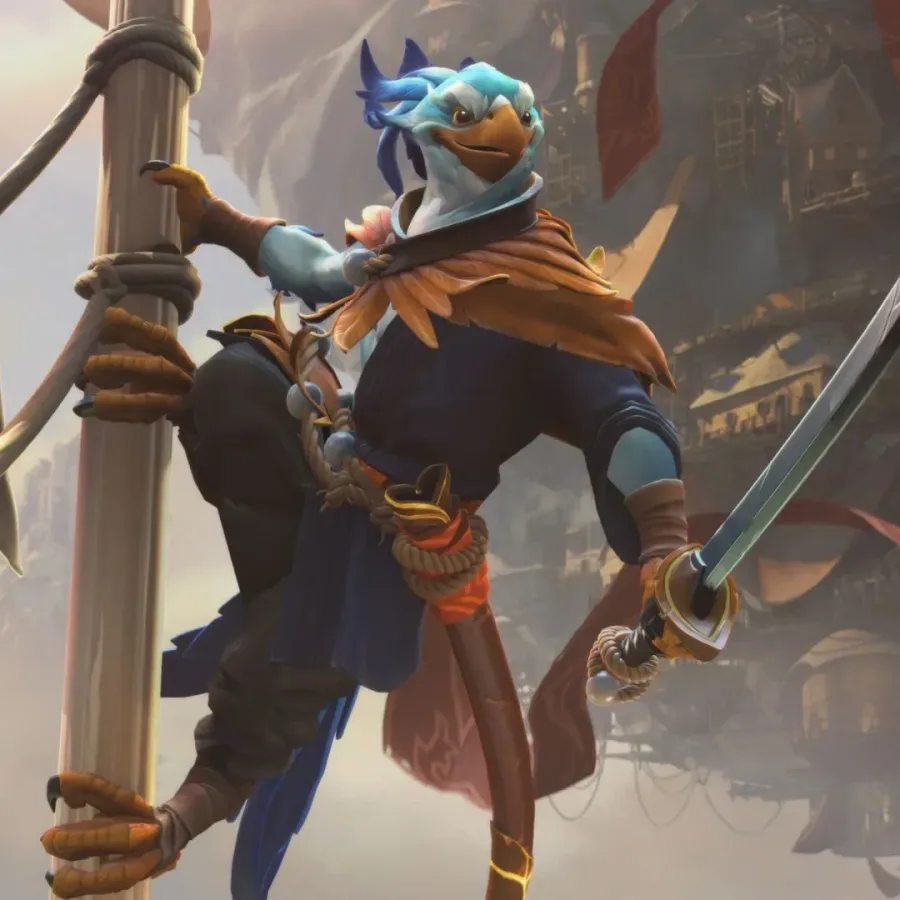
Professional Dota 2 player Nuengnara "23savage" Teeramahanon has shared an extraordinary account from Xipto eSports' boot camp in Kuala Lumpur, Malaysia. The hard carry says police officers raided the team's accommodation, handcuffed players, took their belongings, and questioned why they were in the city. Then, in the part of the story that has drawn both laughter and skepticism from the Dota community, 23savage says he was asked to play an entire Dota 2 match in front of officers to demonstrate that he really was a professional player.
The incident, as described by 23savage in a Facebook post published Tuesday, has become a strange intersection of esports verification, immigration-style questioning, and the uniquely absurd logic of proving one's career by immediately queuing for a competitive game. It is an unusual claim and one that many fans have questioned online, but 23savage has continued to defend his version of events in replies.
If the account is accurate, it is hard to imagine a more Dota-specific way for a player to establish his credentials. A passport, team contract, social media history, tournament record, and roster listing might ordinarily be expected to settle the matter. In this case, 23savage says his most convincing evidence was not paperwork but performance: a 32-kill game while playing Kez from the hard carry position.
A boot camp interruption turns into an identity test
23savage currently plays carry for Xipto eSports, a Southeast Asian Dota 2 squad that has been building momentum in regional competition. The team had been using a Kuala Lumpur boot camp ahead of continued competitive play when, 23savage claims, police arrived and detained the players.
For useful background on this topic, read Street Fighter Movie Opens to a 41% Rotten Tomatoes Score as Reviews Split on Arcade Nostalgia.
His post says officers put members of the team in handcuffs and confiscated personal items while asking why they were in Kuala Lumpur and whether they were genuinely professional Dota players. Such team boot camps are a familiar part of esports preparation, particularly in regions with large travel distances and international rosters. Players often live and practice together for extended stretches, building communication and preparing for qualifiers or league matches.
Still, the situation described by 23savage is far from the normal challenges of a boot camp. Rather than being interrupted by network trouble, a schedule change, or a difficult scrim block, he says Xipto had to explain the basic reality of its members' profession to authorities.
One officer was reportedly familiar enough with Dota to recognize that the game could potentially provide a way to verify the player's claims. 23savage says the officer looked through his Instagram account for evidence of his career. A recently shared picture featuring 23savage and Malaysian influencer Ms. Puiyi was, in his telling, treated as at least partially persuasive.
That apparent social-media check did not end the questioning. According to 23savage, his handcuffs were removed and he was given the chance to demonstrate his ability in Dota 2 directly.
32 kills on Kez, with an audience of police officers
23savage says he launched into a full Dota 2 match while the officers watched. He played Kez, one of the game's more recent heroes, in the hard carry role and recorded 32 kills. He says that result was enough to convince the officers that he was, in fact, a professional Dota player, after which the team was allowed to go.
For players outside the Dota 2 community, the significance of that claim may need some context. A hard carry is generally expected to grow stronger as a match progresses, collecting resources and eventually becoming a central damage threat for the team. Scoring 32 kills is not a formal certification of professional status, of course, and Dota's outcome always depends on teammates, opponents, match conditions, and hero drafts. But it is unquestionably the kind of scoreline that attracts attention.
It also makes the tale especially memorable because it sounds like an improvised skills test designed by someone who understands the game's culture. There is a huge difference between saying that one plays Dota and showing a strong in-game performance under pressure, especially with police officers standing nearby.
23savage's account presents the match as the decisive moment: after the social-media review and questioning, he says his play on Kez convinced the officers to release the group.
He further alleges that two jars of Nutella were missing when the officers departed. That detail has added to the surreal tone of the story and, along with the game demonstration itself, has helped fuel disbelief and jokes across social platforms.
Community reaction ranges from disbelief to memes
Not everyone has accepted the story at face value. Responses to 23savage's post quickly included people who assumed it was a joke, an exaggeration, or an elaborate piece of Dota community humor. That skepticism has continued in discussion threads, where readers have questioned whether a police raid could truly unfold in the manner described.
However, 23savage has reportedly remained active in the replies and has defended the account rather than presenting it as a gag. At present, the available details are based on his own description of the alleged encounter. The unusual nature of the claim makes that distinction important: the sequence of detention, Instagram review, gameplay test, and the reported missing Nutella is being recounted by the player himself.
Dota fans have nevertheless embraced the comic potential. Some responses have framed the incident as a bizarre promotional win for Valve's long-running multiplayer online battle arena, joking that the story has done more to demonstrate Dota's intensity than a conventional marketing campaign ever could. Others have focused on the idea that an officer recognized Dota well enough to regard a live match as meaningful evidence.
There is also a distinctly esports-specific appeal to the anecdote. Competitive players are accustomed to their work being misunderstood by people outside gaming, whether that means relatives questioning esports as a career, officials needing documentation, or audiences minimizing the skill required to reach the top level. The image of a veteran carry player having to prove himself through a match compresses that larger tension into one highly unusual scenario.
Xipto's competitive momentum continues
Whatever impact the reported incident had on the players personally, it does not appear to have derailed Xipto's recent results. The team has been rising within Southeast Asian Dota and recently won the EPL SEA tournament without dropping a series. That run produced a 10-match winning streak, a notable statement for a roster seeking to establish itself among the region's most reliable contenders.
Xipto's current lineup consists of 23savage at carry, inYourdreaM in the mid lane, Fbz in the offlane, and Q and Oli as the team's support players. The group is now competing for a place in DreamLeague Season 30, giving the roster a clear competitive target beyond its regional tournament success.
For 23savage, the story also arrives in a period when every performance can matter. Carry players are often evaluated heavily through visible statistics such as kills, farm, late-game execution, and their ability to close games. A 32-kill Kez match may not count toward Xipto's official tournament record, but it has certainly become an unconventional addition to the player's growing collection of memorable career moments.
Dota 2 remains active amid Valve's broader multiplayer ambitions
The incident has attracted attention at a time when Dota 2 has seen a notable uptick in player activity. In 2026, the game recently reached its highest player count since 2022, an encouraging sign for a title that has remained one of PC gaming's defining competitive experiences for more than a decade.
Valve continues to support Dota 2 with patches and content updates, even as much of the company's attention has also turned toward Deadlock, its newer multiplayer project with MOBA elements. Dota's enormous roster, constant strategic evolution, and entrenched global competitive scene have helped it retain a dedicated audience through shifting trends in the genre.
That enduring culture is part of why 23savage's claim has spread so quickly. Dota is a game where players readily understand the drama of a carry being told to prove himself, the pressure of playing under observation, and the comedy of treating a strong public match as evidence of employment.
For now, the raid story remains an unusual player account rather than a conventional esports result. Yet whether fans see it as unbelievable, hilarious, or both, its central image is difficult to forget: a professional Dota 2 carry sitting down in front of police officers, selecting Kez, and apparently securing his release with 32 kills.
Community
Discussion
Start the conversation.
No comments have been posted yet.