

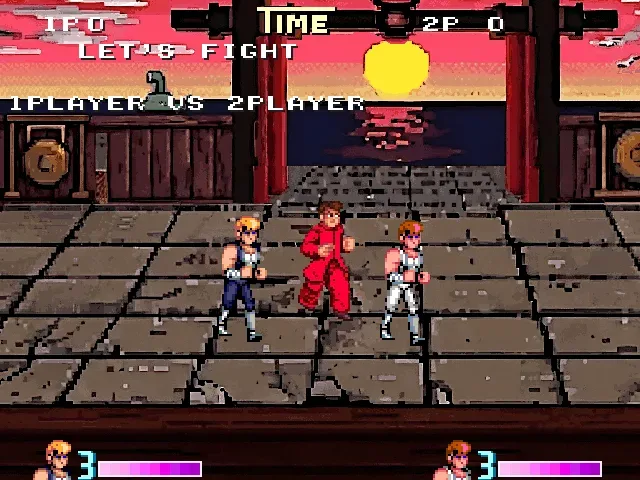
Double Dragons is positioning itself as a substantial new spin on one of the defining beat 'em up series of the 1980s. Built for PC, the project is framed as an alternate-history continuation following the first two core entries, taking the rough-and-ready street fighting formula associated with the original games and expanding it into a much larger package.
Rather than simply revisiting familiar stages and villains, Double Dragons imagines a different path for the franchise. Its premise asks what might have happened if Technosoft, a Japanese developer with a long history in action games, had entered the arcade-brawler rivalry at a time when Capcom's Final Fight was becoming a genre benchmark. The result is described as a "championship edition" built as an affectionate tribute to original Double Dragon creator Yoshihisa Kishimoto, while also pursuing a distinctly more elaborate vision of the series' early world.
That means the game is not being presented as a straightforward remake. It is intended as a sequel with its own full storyline, one that treats the events of the early Double Dragon games as the kind of post-apocalyptic folklore that has grown around a devastated New York. The campaign reportedly delivers an untold continuation to that story, including a proper conclusion and a twist at the end.
An expanded take on old-school street fighting
The original Double Dragon helped define the side-scrolling brawler: walk into a hostile street, deal with gangs using fists, kicks, grabs and whatever weapon happens to be nearby, then push onward to the next dangerous district. Its influence is difficult to overstate, and its design language remains instantly recognizable even after decades of genre evolution.
For useful background on this topic, read U.S. Physical Game Spending Rises in 2026 as Switch 2 Game-Key Cards Surge.
Double Dragons aims to preserve that core appeal while scaling it up considerably. The campaign is said to contain six major missions and 14 individual levels. That is a notable amount of territory for a game that draws so heavily from an era when arcade-style brawlers were often concise, replayable experiences built around a handful of memorable stages.
The level count suggests that players will be moving beyond a simple sequence of familiar city streets. More weapons, more boss encounters and a broader variety of enemies are all promised, with the game attempting to make each run feel fuller than a conventional retro homage. Exactly how those missions are structured, whether they branch, and how long a complete playthrough will take have not been detailed. Still, the stated scope points to a project interested in delivering both nostalgic immediacy and a more extensive campaign than the genre's early arcade roots typically allowed.
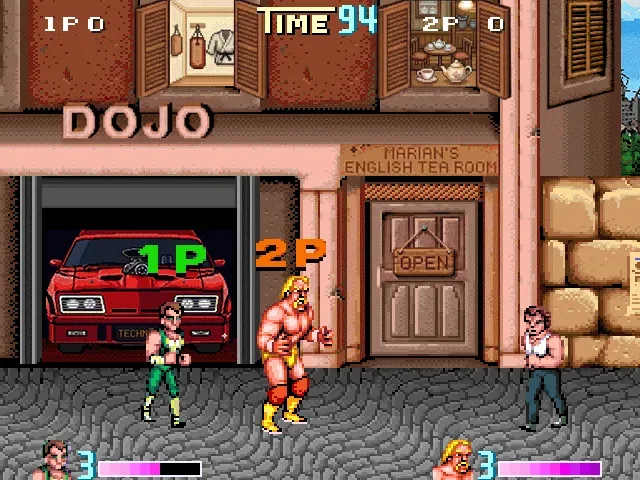
Visuals are also receiving attention through upgraded pixel art. That is an important detail for a game drawing from 1980s sprites, where the challenge is not merely reproducing low-resolution character art but making it feel expressive, readable and energetic on modern PC displays. Alongside the new art, Double Dragons includes quality-of-life gameplay changes, though the specific features have not been outlined. Such additions could be particularly valuable in a difficult brawler, where responsive controls, clear feedback and convenient options can make the difference between a satisfying retry and a frustrating one.
Twenty playable fighters, including Jeff
One of Double Dragons' biggest departures from its inspiration is its announced roster of 20 playable characters. Classic beat 'em ups often reserve most enemy types for the opposition, allowing players to control only one or two heroic leads. A lineup of this size opens the door to a much more replayable format, especially if the fighters are differentiated by movement, damage, reach, grapples or special techniques.
Every playable fighter is also set to receive an individual ending sequence. That is a major commitment for a project rooted in a series whose early stories were famously direct: rescue Marian, defeat the gang and survive the streets. Character-specific conclusions give the expanded cast greater reason to exist beyond novelty, and they could encourage players to revisit the campaign with different combatants to see how the alternate-history narrative changes at its conclusion.
Among the confirmed inclusions is Jeff, the palette-swapped rival character long associated with the series' identity-swapping tradition. The character has been a frequent point of interest for fans because of that unusual place in Double Dragon lore, and Double Dragons answers that demand by making Jeff playable. The game's 20-character roster should allow heroes, rivals and other familiar archetypes to take part in the central campaign, although a complete list of fighters has not been provided.
For a brawler, roster size alone does not guarantee variety. The key question will be whether each combatant feels genuinely distinct in action. If the project can give players meaningful reasons to choose a different fighter--perhaps a stronger grappler, a fast striker, a weapon specialist or a balanced all-rounder--it could turn a story-driven campaign into a game designed for repeated runs.
Blood Mode adds fatality-style finishers
Double Dragons also includes an optional feature called Blood Mode. When activated, it gives each fighter their own fatality-style finishing moves. This is a deliberately harsher tonal choice than the mostly cartoonish violence of the earliest Double Dragon releases, and it underlines the game's willingness to push its imagined sequel into territory the original arcade games did not explore.
The mode is optional, which is significant. Players looking for a more traditional brawler presentation can presumably avoid the graphic finishing moves, while those interested in a more exaggerated and violent arcade spectacle can enable them. Individual finishers for every combatant also reinforce the roster's central importance: the characters are not simply alternate sprites, but are meant to have their own personality and style.
Blood Mode may prove to be one of the game's most divisive features. Double Dragon has appeared in many forms over the years, from arcade action to console adaptations and later reinterpretations, so there is room for different tones within the wider legacy. Even so, a fatality system clearly makes this entry feel more confrontational and less restrained than the games it is drawing from.
Three mini-games broaden the retro tribute
Beyond the main campaign, Double Dragons includes three separate retro-inspired mini-games. Each looks to a different strand of classic gaming culture, making the release more than a single scrolling brawler.
- WWF King of the Ring is described as a wrestling-style brawl. Its title and concept evoke the theatrical, larger-than-life wrestling games and events that became fixtures of late-1980s and early-1990s pop culture.
- Player Vs Player + is a three-way fighting game inspired heavily by International Karate +. That reference points toward quick martial-arts bouts with multiple combatants sharing the same arena, adding a competitive mode that differs sharply from cooperative street clearing.
- A Fistful of Yen pays tribute to Bruce Lee on Commodore 64. That classic combined martial arts action with environmental hazards and enemy evasion, so this homage may provide a different pace from the central brawler action.
These additions fit the game's alternate-history premise particularly well. Rather than limiting its nostalgia to Double Dragon itself, the package reaches across several styles of vintage action design: wrestling, competitive karate and home-computer martial arts. The approach makes Double Dragons sound like a compact museum of influential combat-game ideas, filtered through a single pixel-art project.
A bold proposition for Double Dragon fans
Double Dragons is ambitious because it is trying to satisfy two audiences at once. Long-time fans may be drawn by its direct engagement with the first two games, its inclusion of Jeff and its dedication to pixel-art brawling. At the same time, its large cast, character endings, extra modes and Blood Mode are designed to offer more than a reverent replay of familiar material.
The alternate-history framing gives the project freedom to tell a story that can acknowledge the series' foundations without being trapped by them. By presenting early Double Dragon events as mythologized stories from post-apocalyptic New York, the game can lean into the strange, heightened logic that made arcade brawlers memorable in the first place. The promised final twist and proper conclusion suggest that narrative is being treated as more than a thin excuse for the next fight.
For now, the most compelling elements are the scale of the campaign and the breadth of its playable cast. Fourteen levels, 20 fighters and three mini-games represent a packed proposition for a PC release so closely inspired by 1980s action design. Whether all of those pieces come together with the responsiveness and replayability expected from a great beat 'em up remains the key question. But Double Dragons is clearly aiming high: not just to revisit an arcade legend, but to imagine an entire lost sequel built around it.
Community
Discussion
Start the conversation.
No comments have been posted yet.