

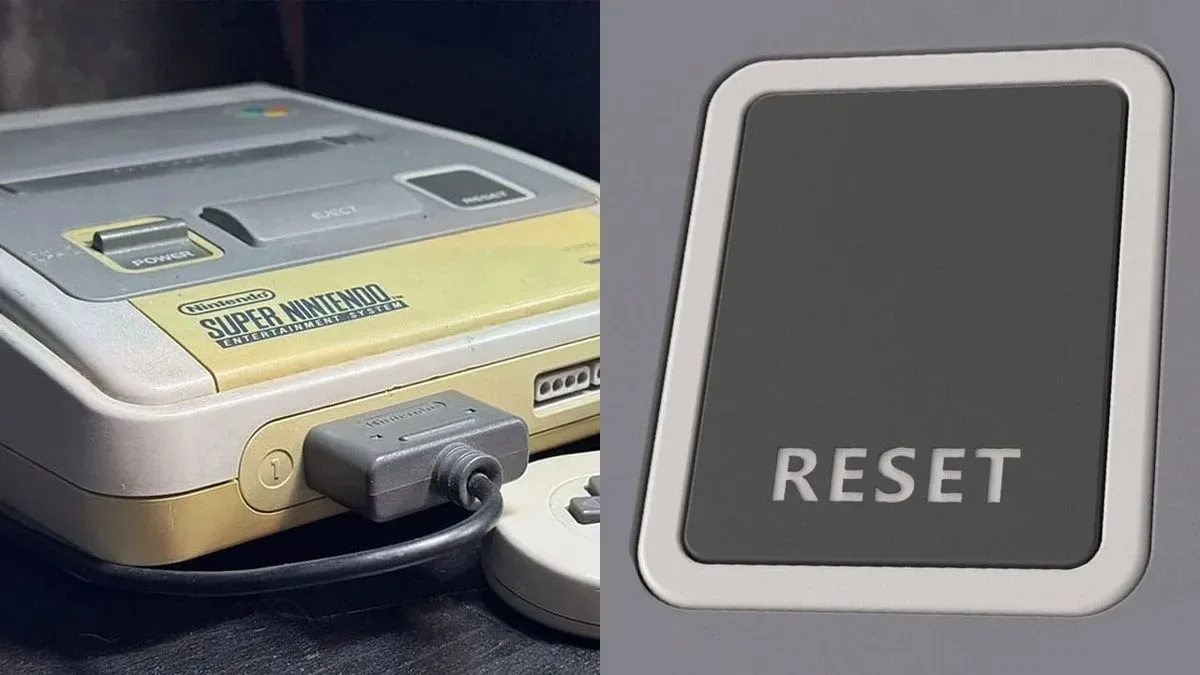
Taki Udon appears to be preparing a new FPGA hardware project with strong ties to the Super Nintendo. A pair of social posts shared on October 8, 2026 used the codename SSNT/SuperFPGA alongside close-up images of reset buttons from Super NES hardware, including a PAL variant. The posts do not provide specifications, a release window, pricing, or a full product reveal, but the visual clues make an SNES-oriented system the leading interpretation.
The tease arrives after the success of SuperStation, Taki Udon's FPGA-based PlayStation-focused device. That earlier hardware established a clear design direction: a modern unit built around classic console expectations, while also embracing capabilities that original machines never had. If SuperFPGA follows that model, it could become a major new option for players who want to use Super Nintendo software on contemporary displays without giving up the character and timing associated with older hardware.
For now, however, the important qualifier is simple: SuperFPGA has been teased, not formally detailed. The name, the Super NES button imagery, and the timing provide a compelling indication of the target platform, but many of the details retro players care about most are still unconfirmed.
Embedded Instagram post
Embedded Instagram post
What the SSNT/SuperFPGA tease actually shows
The central message attached to the teaser reads, "It's time to run it back. Codename SSNT/SuperFPGA." While SSNT has not been expanded publicly, pairing that label with the SuperFPGA name naturally suggests a project connected to the Super Nintendo era.
For useful background on this topic, read Double Dragons Reimagines the Arcade Brawler as an Alternate-History PC Sequel.
The imagery does much of the remaining work. One post highlights the reset button of a Super NES, while another shows the equivalent detail from the PAL model. Those are highly specific visual references rather than generic retro-console nostalgia. They also suggest that the project may be drawing inspiration from the original machine's physical identity, not merely its game library.
That distinction matters. There are many ways to make old games accessible, from software emulation to original-hardware modifications. A dedicated FPGA system modeled around a particular console can appeal to people who want a more focused device: something designed around the behavior, controls, media, and presentation of one beloved platform family.
Still, the teaser does not confirm the final form of the hardware. There is no full chassis shot, no ports, no controller reveal, and no announcement of supported media. It is also not yet known whether the SuperFPGA name refers to a self-contained console, a modular platform, or a device with broader core support beyond its apparent SNES emphasis.
Why an FPGA approach is significant
FPGA stands for field-programmable gate array. In the retro-gaming space, FPGA-based hardware is often valued because it can be configured to replicate the logic of classic systems at a hardware level. That differs from conventional software emulation, which uses a modern processor to imitate the operation of older hardware through code.
Neither approach automatically makes a product better for every player. Software emulation is widespread, flexible, and often inexpensive. FPGA devices, meanwhile, tend to attract enthusiasts looking for behavior that more closely tracks the original machine, particularly in areas such as timing, video output, controller response, and compatibility. The exact result depends on a device's implementation and features, so an FPGA label alone should not be treated as a guarantee of perfection. Even so, it is a meaningful signal about the type of audience SuperFPGA may be intended to serve.
The Super Nintendo is an especially interesting candidate for this treatment. Its library includes games that remain central to the 16-bit era, spanning platformers, role-playing games, racing titles, fighting games, shooters, and experimental uses of enhancement chips. It is also a console with a distinct visual identity, from sharp pixel art and Mode 7 effects to the softer look many players associate with games running on CRT televisions.
A modern FPGA device could potentially make it easier to connect that experience to a current television through digital output while offering display options aimed at recreating older presentation styles. But it is important to separate likely expectations from confirmed features: HDMI output, CRT-style filters, multiple video modes, overclocking, cartridge functionality, and region options have not been announced for SuperFPGA.
SuperStation provides the clearest context
Although SuperFPGA itself remains largely under wraps, SuperStation offers useful context for what Taki Udon has previously pursued. SuperStation is an FPGA PlayStation device that can play PS1 games and load cores for other retro systems. It also has a separate dock intended for using physical discs.
That combination positioned SuperStation as more than a simple lookalike or a generic emulation box. Its appeal came from presenting a modernized interpretation of PlayStation-era hardware while retaining a connection to the original physical format. The device's design language made it feel like a possible successor to the original PlayStation rather than a purely utilitarian piece of retro equipment.
If that philosophy carries into SuperFPGA, the new project could aim for a similarly recognizable relationship with the Super Nintendo. The reset-button teasers certainly support the possibility of a design that references the original console's industrial styling. A dedicated system could also occupy a different role from multifunction retro devices by placing the SNES experience at the center of the product.
There is no confirmation that SuperFPGA will mirror SuperStation's disc-dock approach with a cartridge solution. Super Nintendo cartridges and PlayStation discs create very different engineering and compatibility considerations. Nonetheless, the earlier project shows that physical-media support is part of the broader conversation around Taki Udon's hardware efforts, making it one of the biggest questions surrounding this new codename.
A crowded market, but a clear SNES opportunity
The FPGA retro-hardware market is no longer a niche with only one type of buyer. Several companies and projects have demonstrated that there is sustained demand for systems that bring classic games to modern setups, whether through console-specific recreations, multi-system platforms, or premium hardware with original-media support.
In the Nintendo 64 space, the competition is already especially visible, with both ModRetro and Analogue associated with FPGA-focused hardware for that generation. That makes a direct move toward the Super Nintendo potentially strategic. Rather than entering the same immediate contest over N64 hardware, a Super Nintendo-focused system could address another of Nintendo's most enduring console libraries.
The SNES also has an advantage in recognition. It is a system closely tied to games that players revisit decades later, and its original consoles remain common enough to inspire a large modification community. At the same time, aging hardware, differences between regional models, the desire for clean modern video output, and the increasing cost of well-kept retro equipment all create room for new alternatives.
Any eventual SuperFPGA will need to distinguish itself beyond the basic promise of playing old games. Build quality, controller support, latency, video options, compatibility with unusual cartridges and enhancement-chip titles, firmware support, physical-media handling, and price will all matter. None of those points can be judged from the teaser alone, but they will shape the response once the machine is shown in full.
The questions that remain unanswered
The early reveal is effective precisely because it is so limited. It establishes a direction while leaving almost everything else open. Before retro players can assess SuperFPGA properly, several major questions need answers.
- Is it exclusively SNES-focused? The SuperFPGA name and imagery point toward Super Nintendo hardware, but do not define the full scope of the system.
- Will it accept original cartridges? Physical cartridge compatibility is one of the most important unknowns, and no cartridge slot or adapter has been shown.
- Which regions will it support? The inclusion of both Super NES and PAL Super NES reset-button imagery may be meaningful, but it does not confirm regional support or compatibility behavior.
- What video outputs and display features will be included? Modern digital output is a common expectation for new FPGA hardware, but no output options have been confirmed.
- Will it have overclocking or advanced configuration tools? These features are often discussed around enthusiast FPGA devices, yet there is no announcement that they are part of this project.
- What controllers will work with it? There is no information on original controller ports, wireless options, adapters, or bundled controllers.
- When will it be revealed or released? No timeline has been announced.
What to watch for next
The next meaningful update will likely be a look at the complete hardware rather than another isolated design detail. A full reveal would clarify whether the Super NES references are mainly aesthetic or whether the system is being built as a practical replacement for original SNES hardware. The distinction will be especially important for collectors with physical libraries and for players who want a straightforward HDMI-ready console for regular use.
Potential buyers should also watch for specifics rather than assumptions. FPGA technology is exciting to many retro enthusiasts, but implementation details are what determine whether a machine fits a particular setup. A player with original cartridges, a CRT television, a modern OLED display, specialty controllers, or a preference for PAL software may have very different requirements.
For the moment, SSNT/SuperFPGA is an intriguing codename attached to an unmistakable piece of Super Nintendo iconography. Taki Udon's previous work on SuperStation gives the tease added weight, suggesting that this may be more than a passing concept. Yet until a complete announcement arrives, the sensible conclusion is limited: a new FPGA project appears to be in development, and the Super Nintendo is very likely at its heart.
Community
Discussion
Start the conversation.
No comments have been posted yet.