

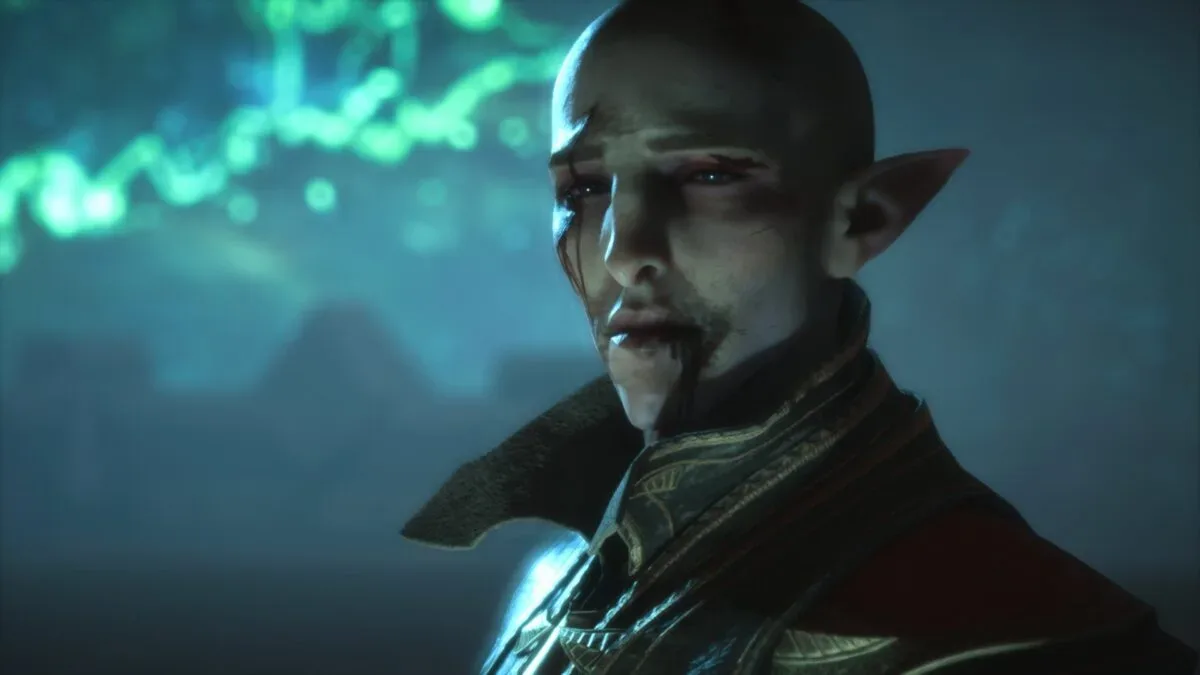
The history of Dragon Age is not a straight line. Across 15 years and four main games, BioWare's fantasy RPG series repeatedly reinvented its combat, protagonists, structure, and even its preferred kind of fantasy story. Origins was a sprawling dark-fantasy campaign built around tactical party management. Dragon Age II narrowed its focus to one troubled city over a decade. Inquisition expanded into a continent-spanning political epic, while The Veilguard turned toward a more cinematic action RPG structure and sought to close the book on long-running mysteries.
That inconsistency is also the series' strength. Thedas feels like a place shaped by history because players have seen it from so many angles: a Grey Warden facing a Blight, a refugee trying to survive Kirkwall's mounting unrest, an accidental religious symbol leading an international force, and finally Rook, a reluctant leader asked to confront gods. With BioWare's closure and the cancellation of a fifth Mass Effect game putting renewed attention on the studio's work, it is worth remembering how many individual scenes made Dragon Age endure.
Origins established choice as character
Dragon Age: Origins made its ambitions clear before its main plot truly began. Its six origin stories gave the Hero of Ferelden a past that could be experienced rather than merely selected in a dialogue menu. A human noble, Circle mage, casteless dwarf, Dalish elf, or one of the other available backgrounds entered the larger story carrying a different relationship to Thedas' hierarchies and institutions. Later games would revisit the idea of distinct backgrounds, but never with this much playable specificity.
The opening also quickly demonstrated that the world would not protect its heroes. Loghain Mac Tir's retreat at Ostagar, abandoning King Cailan and the Grey Wardens to the darkspawn, is the moment the story's political rot becomes undeniable. It turns what first appears to be a straightforward war against monsters into a conflict about ambition, paranoia, and national identity.
For useful background on this topic, read Overwatch's 2026 Story Reset Sets Up a More Connected 2027.
Then there is Morrigan, whose arrival immediately gives the adventure an unpredictable center. Claudia Black's performance made the Witch of the Wilds feel sharp, guarded, and far more knowledgeable than the player. Her relationship to Flemeth, the Old God Baby ritual, and her eventual appearances throughout the series ensured that a companion introduced in a forest hut became one of Thedas' most important figures.
Origins could be grim, but it also knew the value of warmth. The party's interactions with the Mabari war hound remain a small, charming reminder that the fearsome Ferelden combat dog is, fundamentally, a very good dog. Those exchanges helped establish a formula the series would refine: the greatest stakes matter more when heroes have enough personality to tease one another between disasters.
The game's willingness to let conviction collide with companionship was equally memorable. Defiling the Urn of Sacred Ashes can cause Leliana and Wynne to turn against the player, regardless of prior friendship or romance. It is an unusually severe consequence, especially because both characters are otherwise capable of such empathy. Their faith has a limit, and the game refuses to treat the protagonist's decisions as automatically acceptable.
That commitment peaks at the Landsmeet. Years before later RPGs would make political endgames commonplace, Origins assembled its major relationships, evidence, alliances, and grudges in a decisive struggle over Ferelden's future. It is the kind of quest that makes dozens of previous hours feel relevant. The final decision surrounding Morrigan's ritual is just as effective for a different reason: it asks the player to trust a person who has always been hard to read, while offering survival at a price no one can fully understand.
Dragon Age II found intensity in one city
Dragon Age II remains the most divisive mainline entry, but its best ideas are among the series' boldest. Hawke's story confines the action largely to Kirkwall, allowing its tensions to simmer over years rather than leap across a continent. The Friendship and Rivalry system was particularly smart. Instead of suggesting that companions only open up if Hawke constantly agrees with them, it let relationships develop through support or sustained opposition. A rival could still be close, even romantic; the emotional tone was simply more volatile.
This made characters such as Fenris, Anders, Merrill, and Isabela feel less like approval meters and more like people with firm beliefs. Merrill's final quest is especially devastating because it places her desire to restore an elven artifact beside Marethari's tragic attempt to save her. Depending on Hawke's choices, the outcome can leave an entire clan dead. The scene offers no clean emotional victory.
Isabela's return during the Qunari crisis provides a very different kind of payoff. Her decision to come back, if the relationship has been developed far enough, is an act of growth for someone who has spent much of her life running. Defending her can lead to Hawke's duel with the Arishok, one of the game's finest combat encounters and an appropriately dramatic route to becoming Kirkwall's Champion.
Anders destroying the Chantry is the game's defining eruption. The Mage-Templar conflict is often messy in its handling, but the act forces every major character to stop avoiding a choice. Kirkwall's years of cruelty, fear, oppression, and radicalization finally become open war. It is shocking precisely because the game has spent so long making the player live with the conditions that produced it.
Inquisition made leadership feel uneasy
Dragon Age: Inquisition opens with an unforgettable piece of misdirection: mages and templars appear to march toward peace talks, only for disaster to create the Breach and launch a new crisis. The Inquisitor is thereafter burdened with a religious role they may not want or believe in. That tension gives "The Dawn Will Come" its lasting power. For a faithful Inquisitor, the hymn can feel hopeful; for a skeptic, it can be an unsettling demonstration of how little control someone has over the meaning others assign to them.
The game also excelled when it gathered its companions in ordinary spaces. The Wicked Grace card game lets the entire ensemble bounce off one another, briefly removing the pressure of saving the world. It is funny, revealing, and a perfect example of why these parties mattered.
Several personal quests delivered the same care on a more serious scale. Dorian Pavus confronting his father examines the consequences of a blood-magic attempt to force him into an arranged heterosexual marriage for the sake of Tevinter status and bloodline. The scene is a powerful fictional expression of queer trauma, and it understands why Dorian's political anger is inseparable from his life as a gay man. Blackwall's quest works in another register: the presumed Grey Warden is exposed as an impostor seeking escape from responsibility for past war crimes. Players can pardon him, leave him to execution, or send him to the Wardens, but none of the choices erase what he did.
Wicked Eyes and Wicked Hearts remains perhaps the franchise's strongest standalone mission. The Winter Palace turns social standing, surveillance, blackmail, romance, and courtly performance into actual game mechanics. The player is not simply told that Orlesian politics are dangerous; they must navigate the room, preserve appearances, and decide who benefits when the night ends.
Then Trespasser transformed an excellent expansion into the effective conclusion of Inquisition. Solas' revelation as the Dread Wolf reframed a trusted companion as an ancient revolutionary prepared to destroy the present world in pursuit of an elven restoration. His plan to tear down the Veil left a ten-year question hanging over Thedas, and the Inquisitor's final stance toward him--redeemable friend or enemy to oppose--felt like a proper declaration of who that hero had become.
The Veilguard brought old secrets to a final confrontation
Dragon Age: The Veilguard embraced a companion-driven structure while tying many of its largest revelations to the series' oldest mythology. Rook can explicitly be transgender, with that identity able to inform dialogue and backstory rather than functioning solely as appearance customization. It is a meaningful extension of the inclusive character work the series had long pursued.
The optional Solas memories are among the game's most consequential lore material. Revealed through wolf statues, the murals uncover his regrets and reshape the creation history of the setting. That this material can be missed is surprising given its importance, but for players who find it, the revelations lend enormous weight to Solas' guilt and Mythal's legacy.
The decision between saving Minrathous and Treviso is Rook's first truly crushing leadership test. The choice has personal, strategic, and factional stakes, and it arrives before Rook has had much time to feel qualified for the role Varric placed on them. Later, Emmrich's choice between Lichdom and restoring Manfred provides a more intimate dilemma: immortality demands acceptance of death, but can someone devoted to preserving the dead accept losing a loved one?
Weisshaupt finally pays off years of anticipation around the Grey Wardens' fortress with a large-scale siege, major revelations, party conflict, and a punishing boss battle. Yet the emotional heart of the endgame is Rook's discovery that Varric died near the beginning of the story and that Solas had used an image of him to manipulate events. The twist works because Varric has been positioned naturally throughout the adventure, even though no one else truly interacts with him. Rook's grief becomes the player's grief, but it also confirms Varric's central belief: Rook had already become capable of leading without him.
The final conversation with Solas completes a conflict that began in Trespasser. He must ultimately bind himself to the Veil, but the player can force him, trick him, or--after uncovering Mythal's essence--help release him from the service and regret that have defined his life. For a series so concerned with the scars of history, that final possibility of understanding is a fitting conclusion. There may be hints of stories beyond it, but Dragon Age leaves behind something more valuable than a cliffhanger: a world full of choices that still inspire arguments, affection, and mourning long after the credits.
Community
Discussion
Start the conversation.
No comments have been posted yet.