

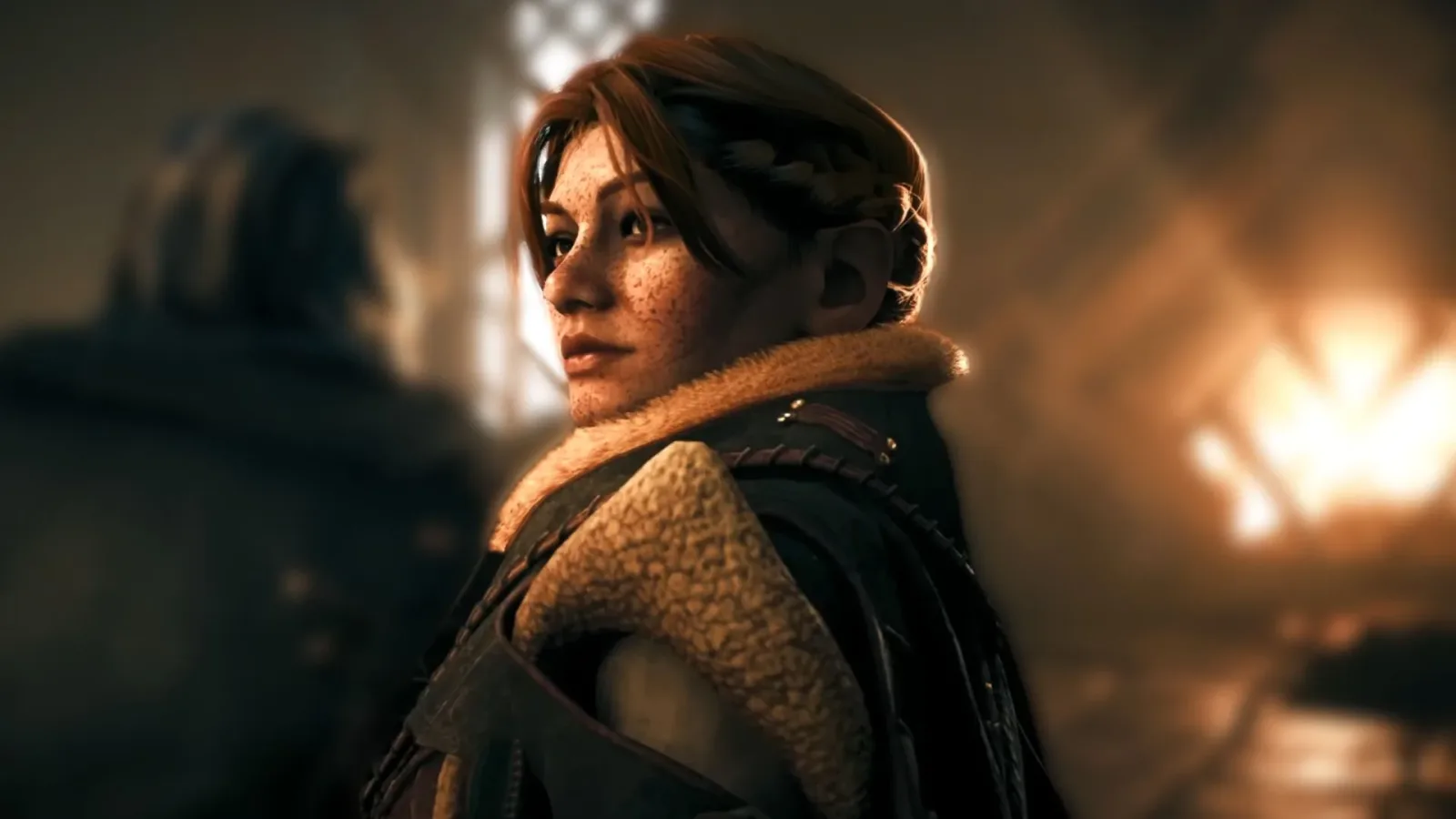
Dragon Age has always carried the weight of possibility. Its setting is expansive, its factions are volatile, its companions have become landmarks of modern RPG storytelling, and its first entry arrived with the kind of tactical, choice-driven design that invited players to imagine a long future for the series. Yet that future did not move in a straight line. Each sequel reinterpreted what Dragon Age was supposed to be, changing combat, structure, presentation, and the balance between accessibility and role-playing complexity.
Former Dragon Age lead Mark Darrah has now offered a particularly pointed view of that journey. In a discussion about the enormous success of Baldur's Gate 3, Darrah said it is possible to picture an alternate path where BioWare built outward from Dragon Age: Origins and eventually arrived at a game resembling Larian Studios' modern fantasy phenomenon. Instead, he argued, the series was pushed toward simpler and more broadly accessible RPG design, leading through Dragon Age 2 and Dragon Age: Inquisition rather than toward a more systems-heavy continuation of Origins.
It is an observation that will resonate with many longtime fans, not because it reduces the later games to failures, but because it puts a name to a debate that has followed Dragon Age for more than a decade: how much complexity can a blockbuster RPG retain while still reaching the largest possible audience?
A Different Future for Thedas
Darrah's central point is not that Dragon Age could literally have become Baldur's Gate 3. The games were built in different eras, under different conditions, with different technology, teams, budgets, and creative histories. Nor does the comparison erase the distinct identity Dragon Age developed through its own world, characters, and political conflicts. Rather, the argument is about creative direction.
For useful background on this topic, read LEGO's November 2026 Lineup Brings Venice, Dragon Ball and Its Biggest Set Yet.
Dragon Age: Origins was a party-based fantasy RPG deeply connected to older computer role-playing traditions. It used tactical combat, a broad selection of origin stories, companion approval, consequential dialogue choices, and multiple routes through its central conflict. Its visual presentation was not as polished as some contemporary action games, but its appeal was rooted in player agency and in the sense that decisions, character builds, alliances, and party relationships could meaningfully reshape an adventure.
That foundation made it easy for players to imagine a sequel path that doubled down on reactive storytelling, tactical systems, and the many unusual outcomes that arise when a game is willing to account for player experimentation. Baldur's Gate 3, with its vast set of choices, turn-based encounters, cooperative possibilities, companion stories, and willingness to accommodate unexpected solutions, has demonstrated that there remains an enormous audience for that kind of ambitious RPG.
Darrah said players can imagine a version of history in which Dragon Age moved from Origins toward something that looked much more like Baldur's Gate 3.
That imagined history is especially striking because BioWare itself has a foundational connection to the Baldur's Gate name. The studio developed the first two games in the series, helping establish a benchmark for party-driven fantasy adventures and narrative choice. Larian's later success therefore invites an unavoidable comparison: if a deeply reactive fantasy RPG can achieve critical acclaim, major awards recognition, and major commercial success today, why did Dragon Age not continue farther in that direction?
The Accessibility Question
Darrah's answer centers on the pressure to become simpler, more accessible, and more appealing to a wider audience. Those goals are not automatically negative. Better onboarding, clearer interfaces, more flexible difficulty options, and less intimidating systems can welcome players who might otherwise never try an RPG. Accessibility in the broad sense can be vital, especially for a series that wants to grow beyond a dedicated core audience.
But there is a difference between making a complicated game approachable and reducing the complexity that gives it its identity. That distinction sits at the heart of the Dragon Age conversation. A game can explain its systems more effectively without eliminating them. It can offer optional tactical depth, scalable difficulty, and thoughtful interface design while preserving the role-playing freedom that draws fans to the genre in the first place.
In Darrah's view, the danger of trying to serve every possible player is that a game can lose the force of its own perspective. He characterized the result as an attempt to make something for everyone that, in practice, risks becoming something for no one. It is a sharp criticism, but it speaks to a broader problem facing large-scale game development: publishers often seek the broadest possible market while players increasingly reward games with confident, specific identities.
Baldur's Gate 3 is a prominent example of that apparent contradiction. It is dense, lengthy, mechanically demanding in places, and full of scenarios that require players to read, experiment, fail, and improvise. Yet it found an audience far beyond the traditional niche for computer RPGs. Its popularity suggests that depth itself does not prevent mainstream success when a game makes that depth compelling, legible, and rewarding.
Dragon Age's Changing Identity
The series' evolution helps explain why this issue has remained so contentious. Dragon Age 2 adopted a faster pace, narrowed much of its story to the city of Kirkwall, and placed a stronger emphasis on a central protagonist, Hawke. It retained important character writing and difficult choices, but it represented a major structural change from the sprawling journey of Origins. For some players, its focus created an intimate, distinctive tale. For others, it felt like a departure from the first game's broader tactical scope and open-ended role-playing promise.
Dragon Age: Inquisition then expanded outward again, introducing large regions to explore and a more spectacular presentation. It became a huge game in a different way: bigger maps, more environmental discovery, a major political premise, and a more action-oriented feel. It also earned substantial praise and attracted a wide audience. Still, its open-area structure and changing combat approach continued the discussion about whether Dragon Age was moving closer to the genre's deepest strengths or away from them.
Dragon Age: The Veilguard, the most recent entry, arrived after a long and difficult development history. Reviews found elements to admire, including its characters and high-stakes fantasy drama, but it did not produce the commercial performance necessary to preserve BioWare after Electronic Arts was acquired by a group that includes the Saudi Arabia Public Investment Fund. With the studio shut down before Mass Effect 5 could ship, The Veilguard now stands as BioWare's final release.
That reality gives Darrah's reflection a more melancholy edge. It is no longer merely a discussion of how the next Dragon Age might change course. It has become a consideration of an unrealized creative lineage--and of what may happen to Thedas now that its original studio is gone.
What Happens to Dragon Age Now?
Electronic Arts retains the Dragon Age and Mass Effect intellectual property, but their immediate futures are uncertain. Either series could someday return under a different developer, receive a new interpretation, or remain dormant for years. Darrah has acknowledged both possibilities: these worlds may be picked up again, or they may be left unused.
For fans, that uncertainty makes the question of direction more than academic. Any future Dragon Age would have to decide what parts of the series are essential. Is it the tactical party management of Origins? The personal, city-centered drama of Dragon Age 2? The scale and political spectacle of Inquisition? The streamlined action and companion focus of The Veilguard? Or is the answer not to choose one era, but to build a new game that learns from the strengths and compromises of all of them?
The success of Baldur's Gate 3 does not offer a turnkey solution. Recreating its scope, reactivity, production values, and development process would be an enormous undertaking. Nor should every fantasy RPG attempt to copy it. But it does provide evidence that publishers should be cautious about assuming broad appeal requires shaving away difficult decisions, intricate systems, or unusual player freedom.
Dragon Age remains a beloved universe precisely because it has inspired players to care about difficult alliances, fractured nations, ancient gods, betrayals, romances, and the consequences of power. The series has never lacked material worthy of a grand role-playing epic. The question, as Darrah's comments underline, was whether its design path would consistently trust players to meet that ambition.
Now, with BioWare closed and no announced next chapter, the answer is suspended. Dragon Age's future may eventually belong to another studio. If it does, the enduring debate around Origins, its sequels, and Baldur's Gate 3 will likely be impossible to ignore. The road toward a more accessible RPG brought Dragon Age through several memorable forms. But the road that might have led to an even deeper, more reactive successor remains one of modern gaming's most compelling what-ifs.
Community
Discussion
Start the conversation.
No comments have been posted yet.