

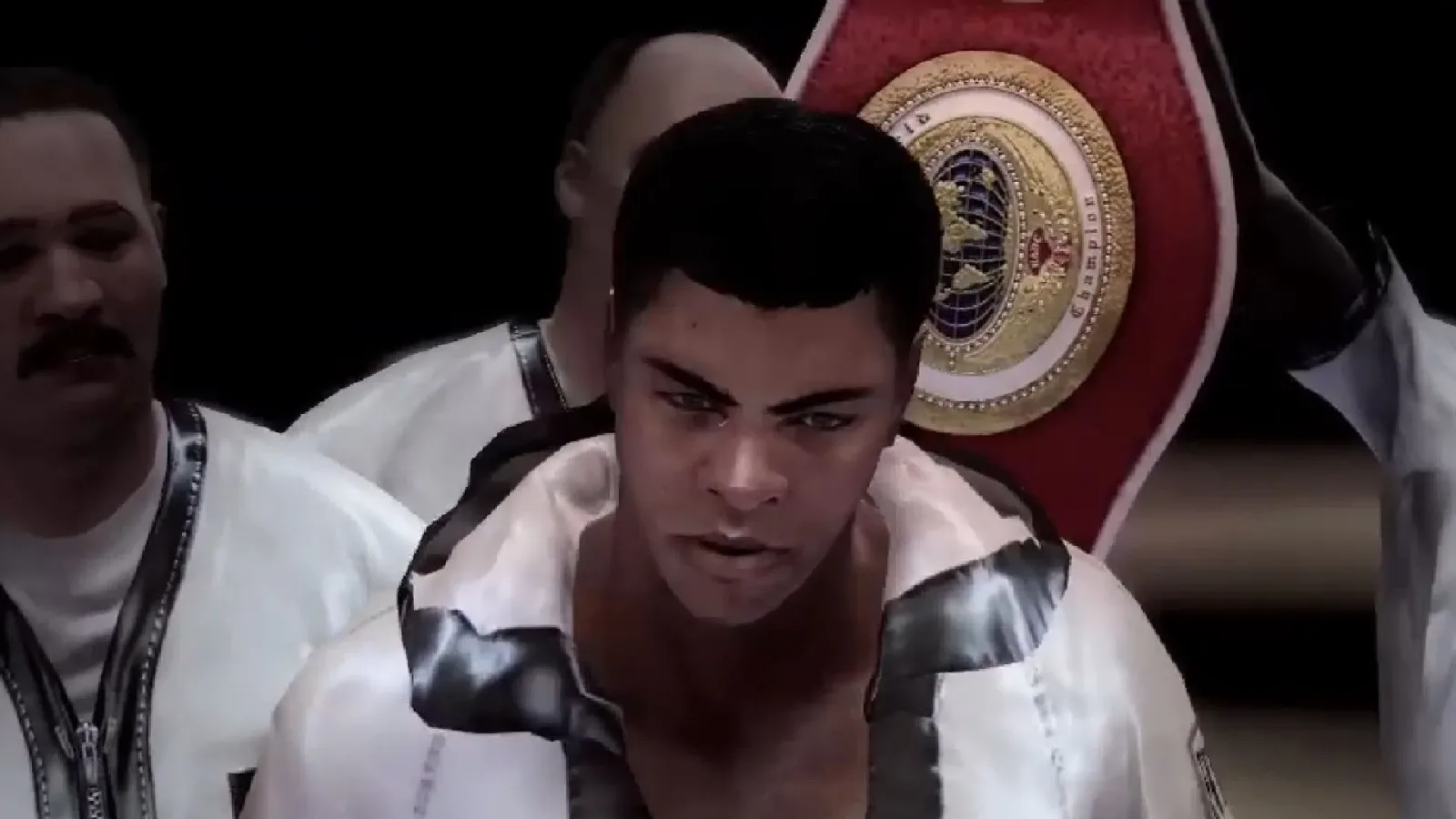
Fight Night is coming back. EA has publicly teased the return of its long-dormant boxing franchise, ending years of fan requests for a follow-up to Fight Night Champion. The announcement is deliberately brief, offering no game footage, subtitle, release date, developer details, or confirmed platforms. Still, the message is unambiguous: the publisher intends to bring the series back.
The tease appeared through a newly created official social media account for the franchise. Its statement addresses longtime players directly: "To everyone who stayed in our corner: Fight Night is coming back." Accompanying artwork shows a pair of boxing gloves hanging above an empty ring canvas, alongside the tagline, "the fight is never over."
For a property that has been absent since 2011, that simple image carries considerable weight. The last entry, Fight Night Champion, arrived during the PlayStation 3 and Xbox 360 generation. Its return has been requested by fans ever since, particularly as boxing games have remained a relatively underserved part of the broader sports-game market.
A clear promise, but very few concrete details
EA's announcement confirms a revival in principle, not the shape that revival will take. It does not identify a release year, game engine, development studio, business model, roster, licensing agreements, or modes. The company has also not announced whether the new Fight Night will be a direct sequel, a full reboot, a live-service-focused sports game, or something positioned between those approaches.
For useful background on this topic, read Nintendo's Physical Media Messaging Draws Attention as PlayStation Plans Disc Production Exit.
Platform information is similarly absent. Because the series' most celebrated recent releases were associated with PlayStation and Xbox consoles, those are the most obvious historical homes for the franchise, but no current-generation console versions have been formally confirmed. A PC edition, handheld release, mobile adaptation, or any other version should not be assumed from this initial teaser.
That lack of specifics will likely be familiar to anyone following modern game announcements. A return announcement can mark the beginning of a long development and marketing cycle rather than a near-term launch. For now, the most reliable conclusion is also the simplest one: EA has revived the Fight Night brand publicly, while keeping the actual project largely under wraps.
Why Fight Night still has such a devoted audience
The original series earned its following by treating boxing as more than a collection of punches and licensed athletes. It emphasized spacing, stamina, timing, defense, and the gradual damage that accumulates across a bout. Successful players needed to read opponents, manage distance, choose when to attack the body, and avoid turning every match into an exhausting exchange of wild swings.
Fight Night Round 4 remains especially important to the franchise's reputation. It was among the strongest-reviewed sports games of the PS3 and Xbox 360 era, praised for the quality of its presentation, convincing character models, detailed combat systems, and career-oriented content. At the time, its visual technology helped sell the physical impact of boxing: sweat, swelling, cuts, fatigue, and the changing rhythm of a fight all helped distinguish it from more arcade-focused sports games.
Then Fight Night Champion took the formula in a more dramatic direction. Released in 2011, it introduced a notably darker story-driven mode while retaining the core ring action that fans expected. Whether players prefer the broader career appeal of Round 4 or the more stylized presentation of Champion, both games became lasting reference points for what a major boxing simulation could be.
The long silence that followed made the series feel increasingly unusual. Major publishers have continued to produce annual or regularly updated games around football, racing, basketball, hockey, wrestling, and mixed martial arts, while boxing has not enjoyed the same dependable blockbuster presence. That created an opening for nostalgia, but it also reflected a genuine demand for a polished, high-budget game built around the sport's particular tactical pace.
EA's third prominent sports-franchise comeback
The Fight Night tease fits a wider pattern at EA. In recent years, the publisher has brought back previously dormant sports properties including College Football and Skate. Those returns demonstrate that old names can still command enormous attention, but they also show that reviving a beloved franchise brings high expectations and difficult decisions.
College Football 25 was met with broad acclaim and exceptional sales, illustrating the commercial power of a series returning after a long break. However, the mood around that franchise has become less uniformly positive after three games, particularly following a controversial microtransaction rollout connected to College Football 27. Its trajectory is a reminder that a successful comeback announcement is only the first step; players will judge the revival on the systems, content, value, and post-launch support that follow.
Skate, meanwhile, has received a more mixed response while remaining in early access. Its situation highlights another challenge: a returning series must appeal to longtime fans without becoming trapped by every expectation attached to its older games. A new Fight Night will face a similar balancing act. Players will want recognizable ring mechanics and a meaningful career experience, but they will also expect advances in animation, online play, accessibility, and visual fidelity.
There is no indication yet of which lessons from those projects will inform Fight Night. Still, the franchise's history gives EA a relatively clear blueprint for the elements people value most. Credible boxing fundamentals, responsive controls, tactical defense, strong presentation, and an engaging single-player path will likely matter more to the series' core audience than a superficial use of the name alone.
The questions a modern Fight Night needs to answer
Boxing is uniquely suited to a game built around momentum and individual expression. Unlike many team sports titles, each contest depends on a constant series of small personal decisions: slipping one punch, setting up another with a feint, preserving energy for later rounds, or changing a strategy after an injury. A modern Fight Night has an opportunity to deepen those ideas with improved animation blending, smarter opponent behavior, more distinct fighter styles, and a career mode that reflects the business and training side of the sport.
At the same time, the genre has pitfalls. Players are likely to scrutinize online responsiveness, matchmaking, balancing, and any systems connected to in-game spending. The reaction to monetization in other sports titles means EA will be watched closely on how it handles optional purchases, competitive modes, and progression. Nothing in the announcement explains those plans, so it would be premature to draw conclusions about the eventual model.
Licensing will be another major point of interest. A boxing game's authenticity can be strengthened by famous athletes, venues, championship organizations, commentators, and recognizable presentation, but licenses can be complex and change over time. The teaser names no fighters and confirms no partnerships. Until EA says otherwise, even seemingly obvious roster assumptions remain speculation.
Corporate context adds another layer to the announcement
The timing of the revival is also likely to invite scrutiny because of EA's ownership context. A significant portion of the company is now owned by Saudi Arabia, a country that has become increasingly visible in combat sports and regularly promotes boxing events through its Riyadh Season program. That overlap makes it easy to see why observers may look for a potential connection between the renewed focus on Fight Night and the country's broader interest in high-profile sporting entertainment.
However, EA has not stated that Saudi ownership or Riyadh Season activity is the reason for the Fight Night revival, and no such direct link has been announced. The idea remains an inference rather than a confirmed explanation for the project.
Saudi Arabia's expanding role in sports and entertainment has also generated sustained criticism. Watchdog groups have accused the country of using prominent events and investments to improve its public image while deflecting attention from what they describe as a deeply troubling human-rights record. Reports have additionally indicated that, a month after acquiring EA, Saudi Arabia was exploring a plan to merge the company into a new mega-corporation. Those developments place the Fight Night announcement within a larger corporate and political conversation that extends well beyond a single game teaser.
A return worth watching, not yet a game to judge
For now, Fight Night's comeback is news because EA has finally acknowledged what fans have wanted to hear for years. The franchise is no longer merely a frequent topic of wish lists and social media speculation. It has an official future, even if nearly every practical question about that future remains unanswered.
The next announcement will matter far more than the first. A title, gameplay reveal, studio confirmation, and platform list would begin to show whether EA is aiming to recapture the tactical, polished boxing experience associated with the series' strongest entries. Until then, the gloves hanging over that empty ring serve as a promise rather than proof.
After a 15-year absence from the ring, though, the promise itself is enough to put Fight Night back on the sports-game conversation's main card.
Community
Discussion
Start the conversation.
No comments have been posted yet.