

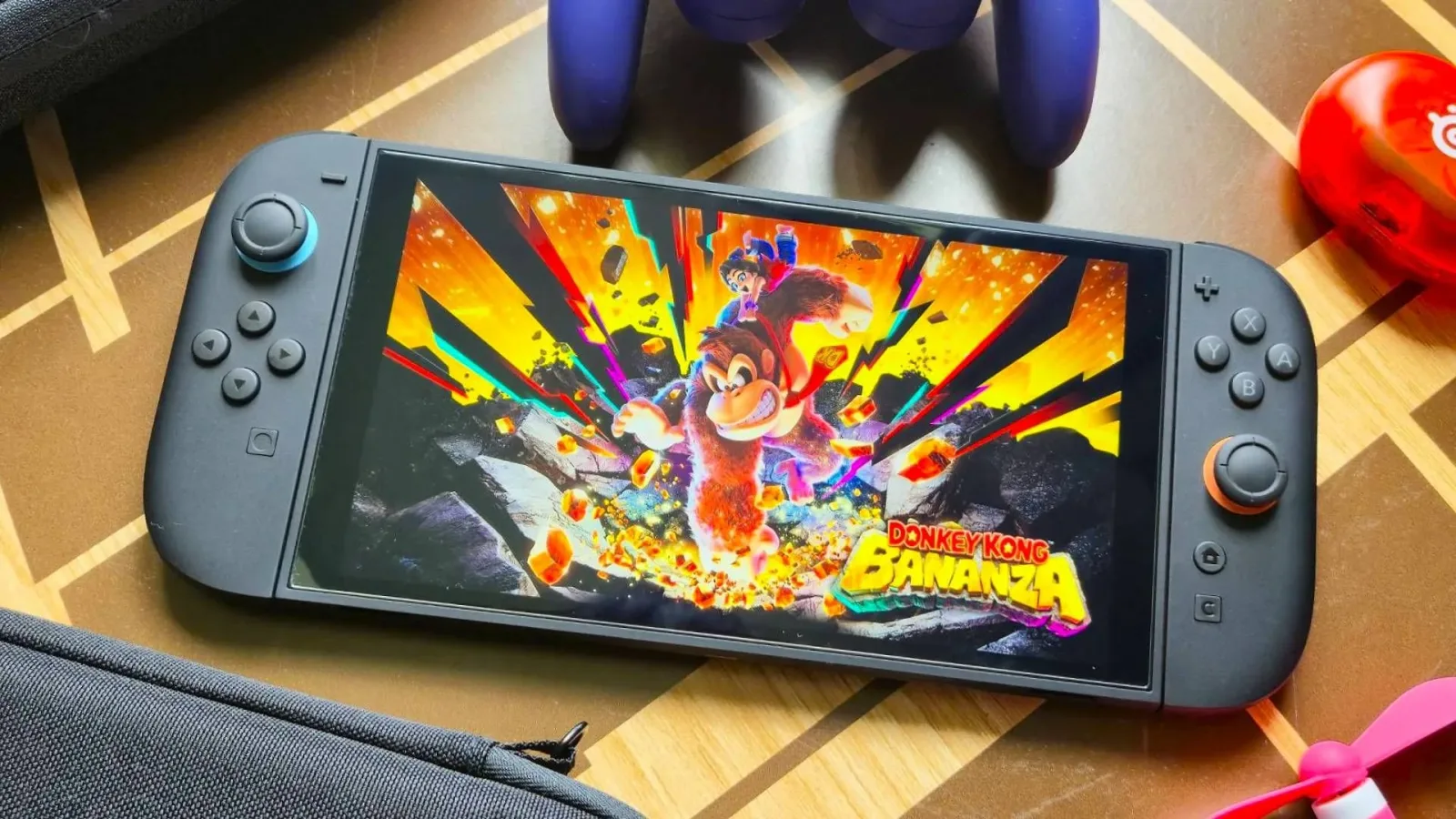
Nintendo's public commitment to physical games is receiving fresh scrutiny after PlayStation's announcement that physical disc production will end in 2028. Former Nintendo marketing lead Kit Ellis has argued that the company's recent language around cartridges and boxed games appears carefully calibrated, presenting Nintendo as an alternative for players who still value tangible game ownership.
The discussion centers on comments from Bill van Zyll, who oversees Nintendo's operations in Latin America. Van Zyll said Nintendo has no intention of abandoning physical media, adding that the company recognizes how much its fans enjoy it. On its face, the statement is a straightforward reassurance for collectors and retail customers. Ellis, however, sees it as part of a wider and highly intentional communications strategy.
That interpretation matters because the console market is in a period of visible transition. Digital storefronts, downloadable games, subscriptions, cloud technology, and consoles without disc drives have all made digital purchasing central to the business. Yet physical games continue to carry importance for many players, whether because of resale value, lending, collecting, limited internet access, preservation concerns, or simply a preference for owning something they can put on a shelf.
A Deliberate Nintendo Message
Ellis, who previously worked in Nintendo marketing, discussed van Zyll's remarks in a short-form video analysis. He characterized the language as approved corporate messaging rather than an off-the-cuff answer from an executive. In Ellis's view, Nintendo representatives speaking publicly are trained to deliver a consistent position, particularly on topics that can influence consumer confidence.
For useful background on this topic, read ID@Xbox October 2026 Showcase: Every Game Announcement and Release Window.
"This is definitely not Bill firing from the hip," Ellis said, describing the comments as messaging that Nintendo personnel would be expected to use in interviews.
Ellis's central argument is that Nintendo may have adjusted or sharpened its physical-media messaging in light of Sony's current situation. The key phrase, as he sees it, is the emphasis on fans liking physical games. Saying Nintendo understands that demand does more than explain why cartridges remain available; it implies that Nintendo is listening to an audience that may feel underserved as other hardware makers move further toward all-digital distribution.
That does not necessarily mean Nintendo has announced a fundamental change in its business plan. The company has supported cartridge-based software for its modern handheld and hybrid systems for years, and boxed games remain a normal part of its retail ecosystem. Instead, the significance is in the framing. At a moment when PlayStation's future disc-production plans have sparked discussion among consumers, Nintendo can reinforce an existing strength without making an aggressive direct comparison.
For a company known for controlled public communications, even a short statement can be meaningful. Nintendo often takes a cautious approach to revealing long-term plans, technology roadmaps, and future product changes. Its wording around physical media therefore stands out not because it promises a permanent guarantee, but because it speaks directly to a growing concern among players: whether the industry's digital future will leave room for conventional game ownership.
Physical Support Is a Competitive Talking Point
Nintendo is already in a distinctive position among major console manufacturers. Its 2025 console launch arrived with full support for physical games and without a digital-only hardware model. By comparison, the current PlayStation and Xbox families include systems designed without disc drives. Those digital-only options can lower hardware costs and appeal to players who buy every game online, but they also make a user entirely dependent on digital storefront access for new purchases.
Physical editions do not remove every modern ownership complication. Games can require patches, updates, online features, account connections, or downloadable content. Even so, a disc or cartridge can provide a degree of flexibility that a purely digital purchase does not. A physical copy can often be sold, loaned, traded, displayed, or played on another compatible console without going through the same store-account process.
That distinction has become especially relevant for players worried about the long-term availability of games. Digital storefronts can be delisted, servers can be retired, and licensing agreements can expire. Physical media is not a complete answer to preservation, particularly when a release is unfinished or dependent on online verification, but it remains an important part of the conversation.
Ellis believes Nintendo's wording takes advantage of this contrast. He said the company is positioning itself as having a better answer than its competitors by openly acknowledging fan interest in physical releases. The implication is subtle: Nintendo does not need to criticize PlayStation directly to benefit from a public debate about discs. It only needs to make clear that boxed games still have a place in its own ecosystem.
Game-Key Cards Complicate the Picture
Still, Nintendo's physical strategy is not free from controversy. Its current hardware supports traditional game cartridges, but it also uses game-key cards. These are physical cards sold in standard retail packaging, yet they do not contain the full game data in the usual sense. Instead, the card prompts the system to download access to the game over the internet.
The format creates a hybrid model between a conventional cartridge release and a digital download. Players receive a physical item, and that item can function as the access key for the title, but the game itself must be downloaded. For consumers who want to avoid large downloads, retain all game data locally on a cartridge, or preserve a complete playable release offline, that is a major difference.
Critics have argued that a game-key card weakens some of the principal benefits associated with physical media. If the full title is not present on the card, then an internet connection and continued download availability remain necessary. That can be difficult for players with limited broadband, storage constraints, data caps, or an interest in archival collecting. It can also make the physical package feel closer to a durable license token than a self-contained copy of the game.
Nintendo has nevertheless continued to ship many Switch 2 releases on conventional cartridges. The concern is more pronounced with certain major third-party games, where game-key cards have become increasingly common. High-profile examples include Assassin's Creed Shadows, 007: First Light, and Borderlands 4. Their use illustrates the practical pressures behind the format, which may include game size, manufacturing decisions, production costs, and publisher priorities.
For players, the result is that "physical" no longer means exactly the same thing in every case. A boxed game may include the complete software on its cartridge, a partial installation requiring further downloads, or a key card that needs the entire game downloaded. Reading the packaging and understanding the specific release is increasingly important for anyone buying games based on ownership or preservation expectations.
Why Nintendo's Position Still Resonates
Despite those caveats, Nintendo's willingness to continue selling standard cartridges gives it a clear advantage in perception among physical-media supporters. Its systems have long been associated with portable play, family use, gifting, and retail browsing--areas where tangible products still carry strong appeal. Cartridges are also smaller and generally more resilient than optical discs, fitting naturally with Nintendo's hybrid hardware approach.
The company's approach may be especially reassuring for collectors who have watched digital storefronts become more dominant across the industry. There is no suggestion that Nintendo is rejecting digital sales; its own eShop remains essential to its business, and digital purchases are a major part of modern game distribution. Rather, its current messaging argues for parallel options: a player can download a game or buy a physical release, depending on what works best for them.
That flexibility is likely the heart of Nintendo's pitch. The company can support digital convenience while telling customers that the physical option they enjoy has not been forgotten. In a market where other platform holders are exploring hardware and distribution models that reduce reliance on discs, that promise has clear public-relations value.
Whether Nintendo's rhetoric translates into a lasting commitment beyond the current generation remains an open question. Technology, retail economics, storage requirements, and publisher decisions will continue to shape physical releases. The spread of game-key cards also shows that Nintendo's own version of physical support has limits and trade-offs.
For now, though, the company has a relatively simple message to deliver: physical games remain part of Nintendo's plans because fans value them. As the debate over PlayStation's 2028 disc-production exit continues, that message gives Nintendo an opportunity to speak directly to consumers who want a choice beyond an all-digital future.
Community
Discussion
Start the conversation.
No comments have been posted yet.