

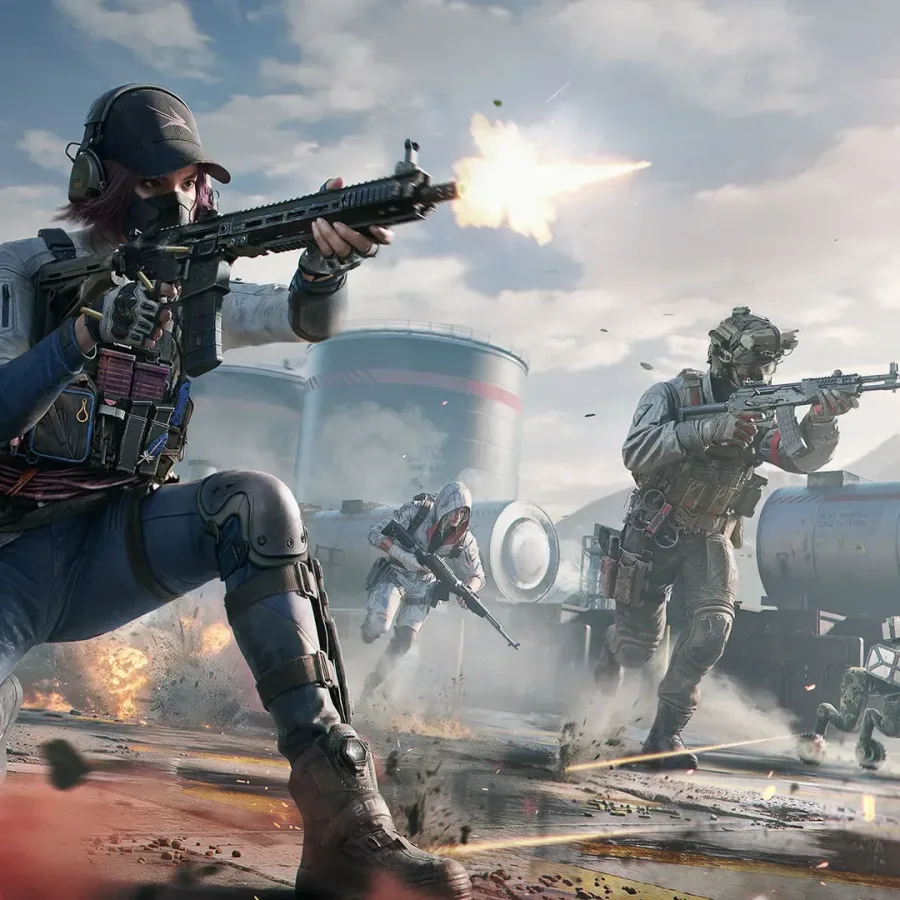
NetEase Games' newly revealed shooter ECC: Redline has rapidly become a talking point among Call of Duty players, and not simply because of its fast-paced gunfights. The upcoming free-to-play game is being positioned as a self-developed "extreme-sports tactical shooter" for PC through Steam and mobile devices, but early footage has led to an immediate wave of comparisons with Call of Duty: Warzone.
For some viewers, the resemblance appears much closer than a broad genre influence. Online discussion has focused on the game's weapon handling, movement, visual presentation, menu elements, sound design, and even camera effects. Critics have described the project as an unusually direct imitation of Activision's battle royale shooter. At the same time, a separate group of frustrated Call of Duty fans sees an opportunity: if ECC: Redline can deliver reliable technical performance and respond well to players, they believe it could provide the sort of experience they have been missing from Warzone.
That divide is at the center of the response to ECC: Redline. The game has no announced release date, and there is still much to learn about its full structure, content plans, monetization beyond its free-to-play label, and long-term support. Nevertheless, its reveal has already tapped into a larger conversation about Warzone's evolution, the enduring pull of its early years, and the appetite for another major competitor in the online FPS space.
Embedded X/Twitter post
Embedded X/Twitter post
Embedded X/Twitter post
Why the Warzone comparisons arrived so quickly
Modern online shooters inevitably share some visual language. Military weapons, first-person aiming, tactical gear, streamlined interfaces, high-speed traversal, and gritty sound effects are common elements across the genre. ECC: Redline, however, has been singled out because many players feel its similarities extend beyond those familiar building blocks.
For useful background on this topic, read EU Action Targets Activision, Riot, Ubisoft and Others Over In-Game Currency Practices.
Commentators examining the reveal footage have pointed to the way firearms appear to move and recoil, as well as the overall feel of motion during combat. Others have focused on interface details and emblem-like design choices. Small touches have become part of the comparison, too, including the way the first-person view seems to blur when a character drops from a height. Taken individually, any one of these elements may not settle a question of originality. Together, they have created a strong impression among critics that the game is deliberately evoking Warzone.
"Warzone + Delta Force + Blood Strike = ECC: Redline," read one reaction posted beneath the official reveal.
Other reactions were less measured, with players characterizing the title as a near one-to-one recreation of Warzone's presentation. Some online posts argued that the developers had copied Call of Duty's style down to the UI and iconography. The intensity of that criticism reflects how recognizable Warzone remains even after years of updates, changing seasons, and shifts in the wider battle royale market.
ECC: Redline does appear to bring some ideas of its own to the table, at least in its character design. Its roster includes characters with distinct abilities and gadgets, which gives it a layer of hero-shooter influence not traditionally central to Warzone. But that feature has not been enough to prevent the broader comparison from dominating the game's first public discussion.
A possible answer to Warzone fatigue
Not everyone criticizing the similarities is dismissing ECC: Redline outright. In fact, some of the conversation has come from people who openly acknowledge that the new game may be borrowing heavily while also hoping it succeeds. Their reasoning is rooted in a long-running dissatisfaction among parts of the Call of Duty community.
Warzone arrived alongside the 2019 Call of Duty: Modern Warfare reboot and quickly became one of the most prominent battle royale games in the world. Many players still look back especially fondly on its original era and its first major map, Verdansk. For those fans, that period represents a particular mix of map design, pacing, weapons, social play, and moment-to-moment unpredictability that later iterations have struggled to reproduce.
Activision has brought Verdansk back in an effort to reconnect with that enthusiasm, but the return has not resolved every complaint from players nostalgic for the original launch experience. Like other large live-service shooters, Warzone has changed repeatedly over time. New integrations, evolving movement systems, seasonal updates, balancing concerns, technical frustrations, and shifting design priorities have all influenced how different segments of its audience view the game.
That history helps explain why footage that reminds some people of older Warzone can produce a positive response as well as a negative one. One player said ECC: Redline looked close enough to feel like a return to "OG Warzone," while another noted that they initially assumed the footage was Warzone before reading the title. For a portion of the audience, resemblance is not automatically a deal-breaker. It is the very reason the game caught their attention.
Several optimistic reactions have set a straightforward standard for NetEase's shooter: solid servers, satisfying movement, and developers who actively listen to community feedback. If ECC: Redline can meet those expectations, supporters argue, it could put meaningful pressure on Call of Duty to improve. That is a substantial if, particularly for a game that has not yet launched, but it illustrates the degree to which some players want viable alternatives.
Competition matters, but execution will decide the outcome
ECC: Redline faces a challenge beyond the debate over visual influence. Online FPS games live or die on factors that trailers cannot fully demonstrate. Netcode, matchmaking, anti-cheat measures, server stability, performance across PC and mobile hardware, progression, balance, content cadence, and the fairness of free-to-play systems all matter once players have the game in their hands.
There is also the question of identity. A familiar feel may attract players initially, especially those who want a Warzone-like experience. Yet a lasting audience generally needs more than familiarity. ECC: Redline will need to show what makes its extreme-sports tactical framing, character gadgets, and overall gameplay loop feel distinct rather than merely recognizable.
The PC-and-mobile approach could be important to its prospects. Releasing on Steam gives the game a route to a large PC shooter audience, while mobile support opens it to a different and potentially vast player base. That combination may help NetEase build scale, but it also raises practical questions about how the game will feel across control methods and whether feature parity will be maintained. No further details have been announced on those points.
Its free-to-play model likewise lowers the barrier for curious players who want to test it for themselves. But that model also brings scrutiny. Players will want to know how cosmetic items, battle passes, unlocks, and any competitive advantages are handled before deciding whether the game deserves a long-term place alongside established shooters.
NetEase's history adds context to the reaction
The company is no stranger to comparisons between its games and major genre leaders. Marvel Rivals, which launched in 2024, quickly gained a large audience while drawing frequent comparisons to Blizzard Entertainment's Overwatch. Those discussions were not necessarily as severe as the current reaction to ECC: Redline, but they showed how quickly a successful hero shooter can be measured against the game that helped define its category.
There is also a more contentious precedent in Hyper Front, NetEase's 5v5 tactical shooter that attracted comparisons to Riot Games' Valorant. Riot subsequently filed a lawsuit connected to those similarities. That history gives added weight to the current discussion, even though ECC: Redline's situation, its exact design, and any potential legal implications cannot be determined from reveal footage and online reactions alone.
For now, the conversation remains centered on player perception. Some see a game with little hesitation about drawing from Warzone's visual and mechanical playbook. Others see a polished-looking challenger that could satisfy fans who feel Call of Duty has moved away from what they enjoyed most. Both reactions can coexist, and both have helped put ECC: Redline on the FPS community's radar well before its release.
Warzone has more updates on the way
The timing of ECC: Redline's announcement is notable because Warzone is not standing still. The battle royale is expected to receive a range of new updates when Call of Duty: Modern Warfare 4 launches later in October. Those changes could influence the mood of the community and shape how urgently players look for alternatives.
Until then, ECC: Redline remains an unreleased project with an attention-grabbing reveal and an unresolved identity debate. NetEase has confirmed the game as free-to-play and named PC via Steam and mobile as its platforms, but has not provided a launch date. Whether the Warzone comparisons become a lasting liability, a marketing boost, or simply the first stage of a larger conversation will depend on what players find when they can finally try it themselves.
Community
Discussion
Start the conversation.
No comments have been posted yet.