

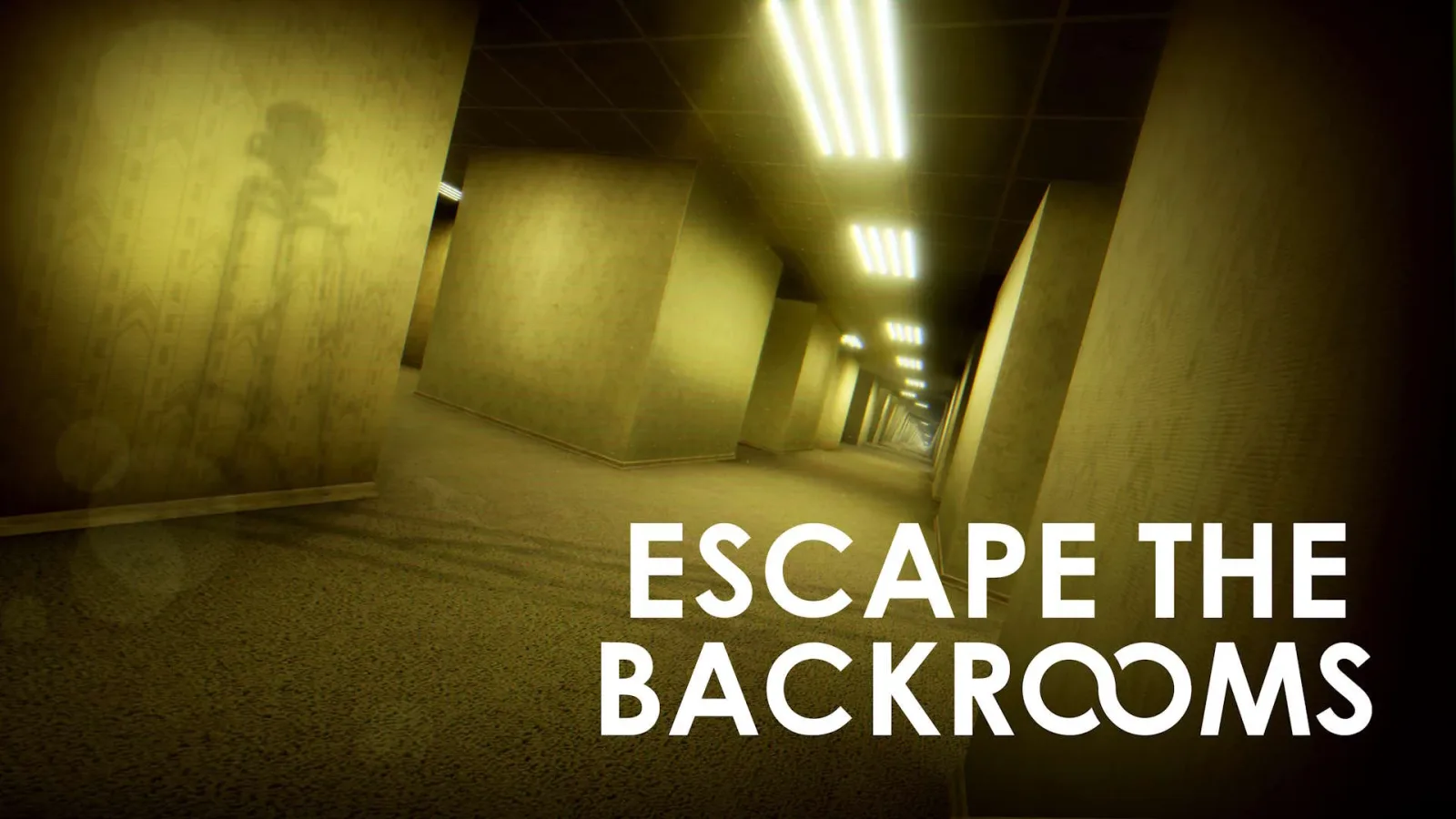
Escape the Backrooms has entered a new phase of its unsettling journey through liminal spaces with the arrival of its Lost & Found update. The update introduces new character cosmetics for players venturing into the game's maze-like nightmare, splitting its additions between two items given to all players and a separate premium cosmetic pack containing five more looks.
Developed by Fancy Games and published by Secret Mode, Escape the Backrooms is built around the eerie internet-fiction concept of accidentally no-clipping out of reality and awakening in an endless collection of unnerving, often hostile spaces. Its latest update does not add a newly announced level or alter the central survival rules, but it gives players more ways to personalise their appearance while searching for a route out.
The two complimentary cosmetics are called Lost in Transit and Entity 67. They are included for the entire player base, meaning anyone returning to the game after the update can add them to their available cosmetic options without buying the accompanying paid bundle.
Alongside those freebies is the Lost & Found Cosmetic Pack, which includes five premium cosmetics: Remodelling Co. Employee, The Actor, Party Crasher, Misprint, and Black Knight. The pack is priced at £4.99 / $5.99 / EUR5.99.
For useful background on this topic, read Planet Coaster 2: Spooktacular Pack Launches With Walkthrough Attractions and Seven Rides.
A cosmetic update for an already unnerving escape attempt
The focus on outfits may sound light-hearted compared with the game's oppressive setting, but cosmetics can be particularly visible in a cooperative horror game. Escape the Backrooms supports solo play as well as teams of up to four players, so each run can involve watching friends disappear around corners, become separated in a darkened corridor, or race past an unseen threat. New looks give groups a little more visual identity amid environments that are intentionally repetitive, disorienting, and difficult to navigate.
The free pair also provides a straightforward reason for existing players to check in. Cosmetic updates are often most useful when they balance optional paid additions with something that every player can immediately claim, and Lost in Transit and Entity 67 make sure the update has content beyond the premium pack.
The names of the paid items fit the strange, loosely connected worlds that make up the Backrooms mythology. Remodelling Co. Employee suggests the anonymous workplace imagery that has long been associated with the setting's decaying offices and industrial passages. Party Crasher, meanwhile, naturally calls to mind the disturbing birthday-party imagery found within the game's broader catalogue of locations. The remaining cosmetics continue that mix of mundane and surreal themes: an Actor, a Misprint, and a Black Knight all sound like figures who could be encountered somewhere beyond a flickering doorway.
For another perspective on this story, read Escape the Backrooms Lost & Found Update Adds Two Free Cosmetics and a Paid Pack.
Importantly, the announced additions are cosmetic. Players should not expect the Lost & Found Cosmetic Pack to change how quickly they can escape, reveal exits, reduce danger, or offer an advantage over the game's hostile entities. The core experience remains about awareness, teamwork, route-finding, and surviving long enough to reach the next threshold.
What players face in Escape the Backrooms
The Backrooms premise begins with a simple but evocative idea: someone slips through the boundaries of ordinary reality and lands in a seemingly endless, artificial world. In Escape the Backrooms, that world is not limited to the familiar yellow-carpeted office maze. The game offers more than 30 eerie settings, each presenting another variation on the disconcerting architecture and hostile atmosphere associated with the concept.
Players can pass through iconic yellow hallways, echoing pool areas, unnerving hotels, and locations that twist cheerful imagery into something threatening. These spaces are designed to feel empty at first glance, but the absence of ordinary life is part of the danger. The goal is to locate an exit and keep moving deeper, while hazards and entities turn every wrong turn into a potential disaster.
Rather than presenting horror as a sequence of scripted scares alone, the game leans into uncertainty. A room that seems safe may be a dead end. A teammate's voice may be audible nearby, but reaching them might require passing through an exposed route. Even familiar-looking environments can become tense when players do not know whether the next door leads forward, back to a prior area, or directly into trouble.
That structure gives the cosmetic additions an unusual setting. A new character appearance is not merely seen in a lobby; it can become part of the group's visual language during a stressful run. In darkness, at a distance, or when everyone is frantically trying to regroup, a distinctive look can help make a co-op session feel more personal--even if the environment is doing everything possible to erase any feeling of comfort.
Co-op, proximity voice chat, and the pressure to keep moving
Cooperative play is one of the central pillars of Escape the Backrooms. Up to four people can tackle its levels together, searching for clues, monitoring threats, and helping one another find a way through. The game also uses in-game proximity voice chat, which means communication is tied to where players are in the world rather than being treated as a constant, all-encompassing team channel.
That feature can make separation especially tense. A companion who wanders too far may become faint or impossible to hear, turning a moment of confusion into a genuine rescue problem. It also makes close calls more immediate: warnings, shouted directions, and panicked reactions belong to the environment instead of sitting outside it.
Of course, staying together does not guarantee safety. The game asks players to run from and hide from terrifying entities, and different spaces can demand different approaches. Speed may be essential in one situation, while patience and concealment matter more in another. The uncertainty of what waits ahead is a major part of the game's appeal, particularly for groups who enjoy learning dangerous layouts through repeat attempts.
Players must also manage sanity. Fast progress toward exits is important, but nourishment is another key part of staying alive. This adds an additional layer to exploration: lingering to search may be necessary, but wasting time can carry consequences. In a game founded on getting lost in enormous, confusing spaces, the tension between investigating and escaping is always present.
Reasons to return after an unsuccessful run
The game's progression extends beyond simply seeing how far a single attempt can go. Its meta-progression system enables players to return, discover secret levels, and unlock additional endings. That gives repeat runs a sense of purpose beyond mastering an individual escape route, rewarding continued exploration of the Backrooms' stranger corners.
For players who want a harsher challenge, Nightmare Mode raises the stakes dramatically. In that mode, one death means a full restart. The option turns every encounter and every wrong decision into a much larger commitment, making coordination and knowledge of the game's systems even more valuable.
This range of modes and progression goals helps explain why a cosmetics update can still be meaningful for the game's community. Whether players are revisiting a secret path, introducing newcomers to the yellow halls, trying to finish a difficult section with friends, or risking a full reset in Nightmare Mode, they now have seven additional cosmetic looks in the broader Lost & Found offering. Two of those are available free of charge, while the other five sit in the optional paid pack.
Lost & Found at a glance
- Free cosmetics for all players: Lost in Transit and Entity 67.
- Lost & Found Cosmetic Pack contents: Remodelling Co. Employee, The Actor, Party Crasher, Misprint, and Black Knight.
- Pack price: £4.99 / $5.99 / EUR5.99.
- Game structure: solo play or co-op for up to four players.
- Core features: more than 30 Backrooms settings, proximity voice chat, entity encounters, sanity management, meta-progression, secret levels, multiple endings, and Nightmare Mode.
The Lost & Found update is a smaller-scale addition compared with an expansion of the game's labyrinth of locations, but it offers something for both returning players and those interested in optional extras. The free Lost in Transit and Entity 67 cosmetics are immediately relevant to everyone, while the paid bundle provides five more themed appearances for teams preparing to no-clip beyond reality once again.
Community
Discussion
Start the conversation.
No comments have been posted yet.