

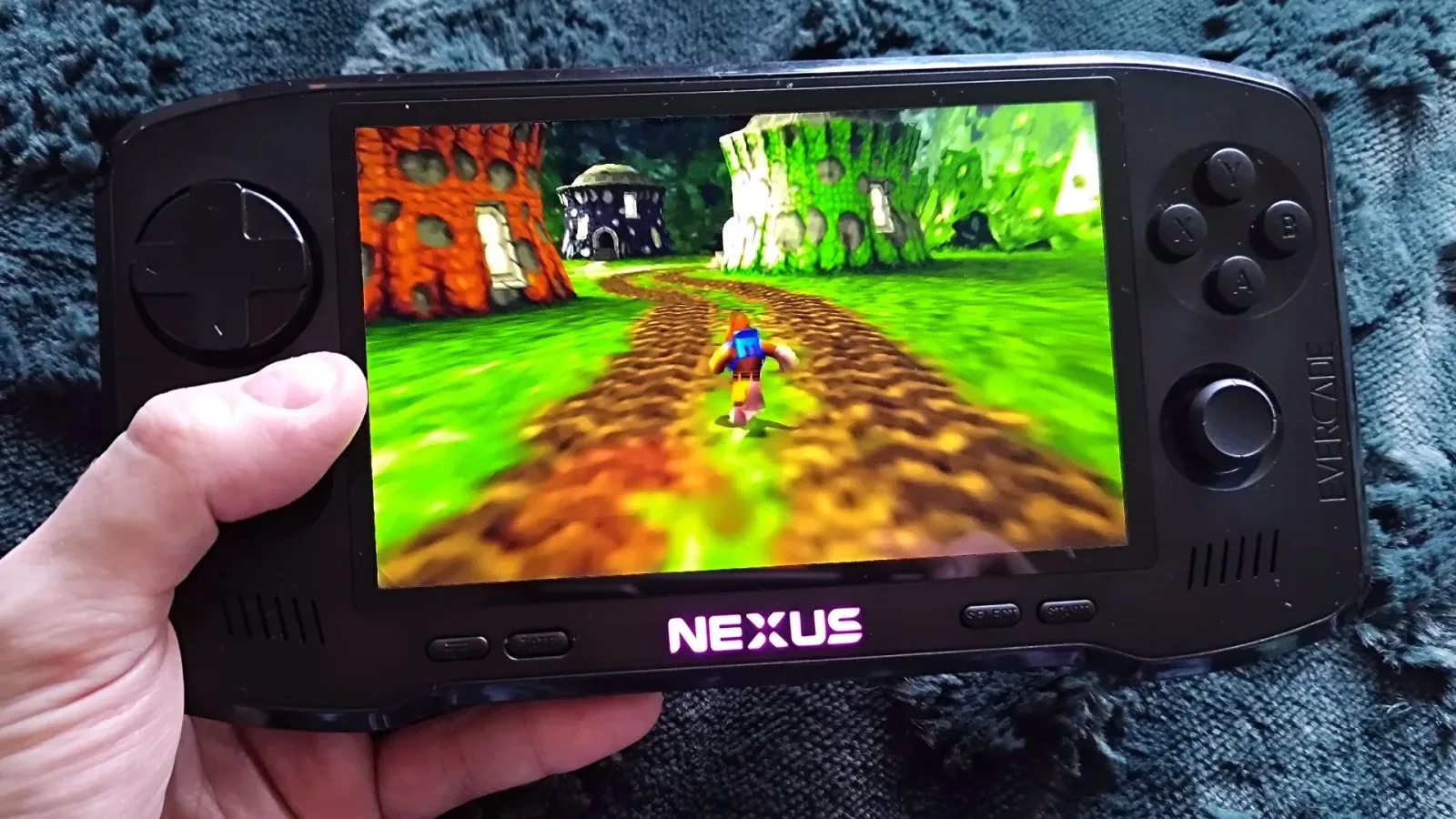
Blaze has officially launched the Evercade Nexus, a new handheld built around one idea that has become increasingly unusual in modern gaming: buying games on physical cartridges. Priced at $199.99, the Nexus arrives as the latest and most ambitious entry in the Evercade family, which has previously included portable systems, the Super Pocket line, home hardware, and even full-sized arcade cabinets.
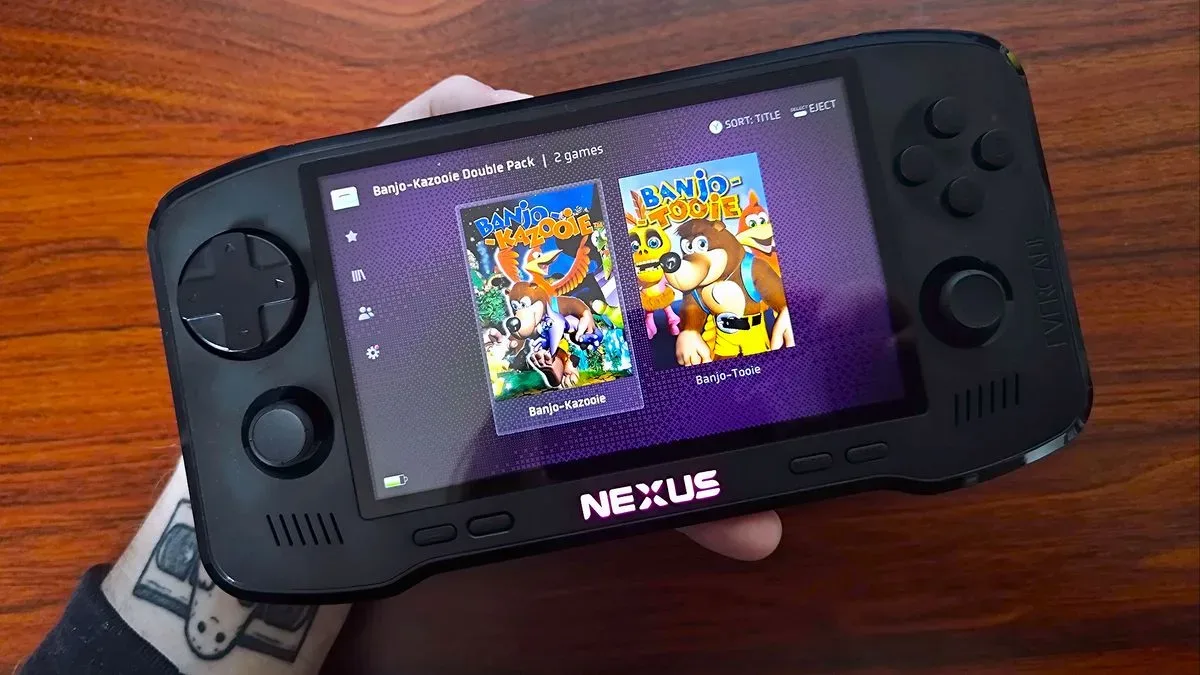
Its headline attraction is easy to understand. The handheld includes Banjo-Kazooie and Banjo-Tooie, offering an officially licensed way to play Rare's celebrated Nintendo 64-era platformers on a dedicated modern portable. But the Nexus is aiming for more than a nostalgia hit. It is meant to advance Evercade's broader cartridge ecosystem, one based on curated collections, manuals, clamshell cases, and hardware that works without requiring players to be permanently connected to online services.
That positioning makes the Nexus a curious product in 2026. It is not designed to win a raw specification contest against every Android emulation handheld or Linux-based portable on the market. Rather, it is a console platform with its own retail software library, one where physical ownership and official licensing are central to the proposition.
A handheld designed for a physical-first library
Evercade has consistently distinguished itself from the huge number of retro devices that rely on users supplying their own ROM files. The Nexus continues that model. Instead of asking buyers to configure emulators, transfer game backups, manage files, or navigate the murky legal questions around downloading old games, it uses Evercade cartridges containing officially licensed titles.
For useful background on this topic, read Logitech MX Anywhere 3S Falls to $70 in Pre-Black Friday Mouse Deal.
That distinction will matter more to some players than others. Experienced enthusiasts who have already dumped their own game libraries, built elaborate front ends, and tuned emulators may not see much need for a separate cartridge-based device. A flexible Android or Linux handheld can potentially cover more systems, offer more configuration options, and work with games a player already owns in digital form.
However, that route is not equally accessible to everyone. Properly creating personal ROM backups takes time, suitable hardware, and a willingness to learn a few technical processes. It also assumes a player owns the original games in the first place. The Nexus instead presents a familiar retail model: buy a cartridge, insert it, and play. That simplicity is a meaningful part of the appeal, particularly for people who want legal, ready-to-use retro collections without turning the hobby into a maintenance project.
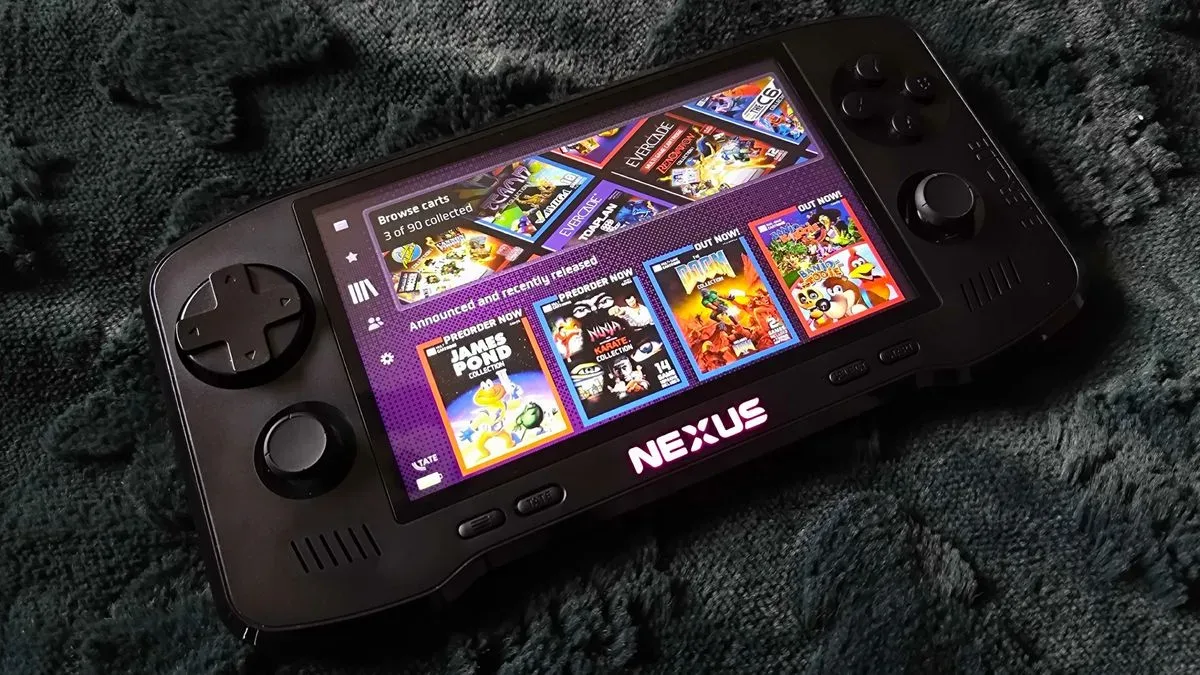
The system can play a library of more than 700 games, making it far more than a two-game Banjo machine. Evercade releases are also designed as collectible products. Cartridges come in numbered clamshell cases and include full-color manuals, giving buyers a physical object to display and revisit rather than a license represented by an account page or download list.
For collectors, that approach offers a modern alternative to hunting original releases on the second-hand market. Vintage game collecting can be expensive, inconsistent, and filled with concerns about cartridge condition, missing manuals, reproduction copies, and escalating prices. Evercade's releases do not replace the historical originals, but they provide a newly manufactured, standardized way to build a tangible library.
Banjo-Kazooie and Banjo-Tooie are the major draw
The inclusion of Banjo-Kazooie and Banjo-Tooie gives the Evercade Nexus a particularly strong launch identity. Both games remain defining examples of the 3D collectathon era, with the first following Banjo and Kazooie through a series of colorful worlds as they pursue the witch Gruntilda. Its sequel expands that formula with larger environments, additional moves, and more intricate character and world interactions.
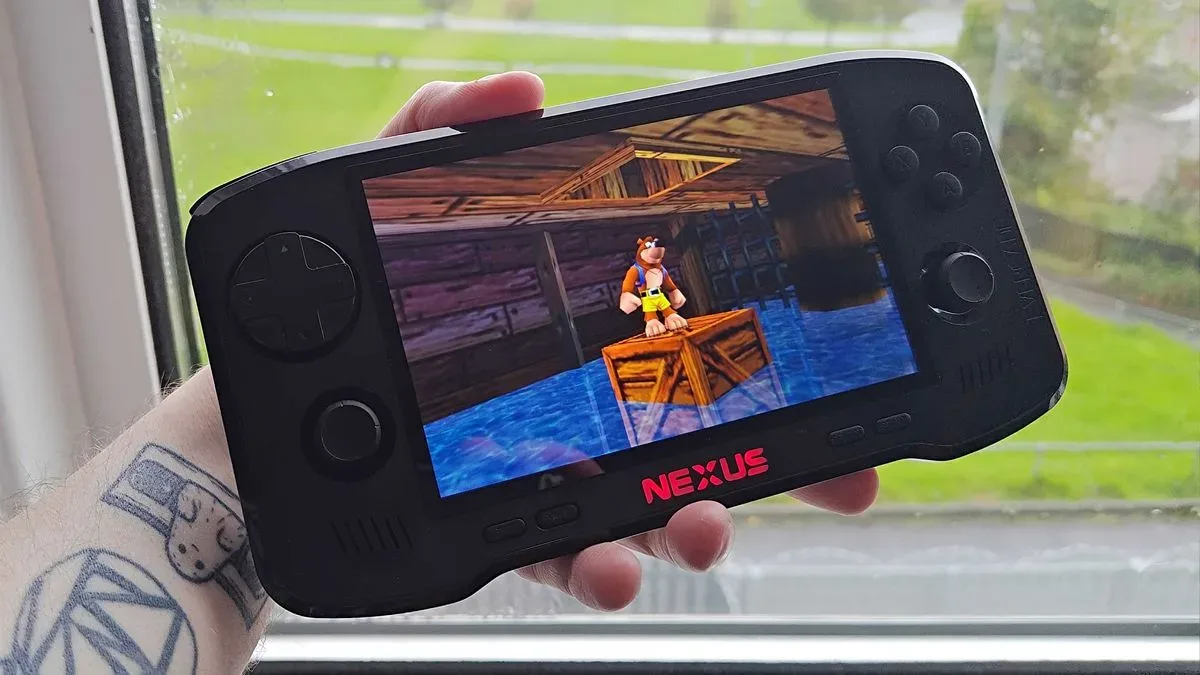
On Nexus, the pair are presented as ground-up ports made specifically for the handheld rather than as games that require owners to supply original Nintendo 64 files. The system's new dual-thumbstick layout also means the games can use a more modern control arrangement than players may associate with their original releases.
Performance is one of the device's clearer strengths for these titles. Banjo-Kazooie is described as running at 60 frames per second at 840 x 512 resolution without users needing to install modifications or spend time adjusting settings. For anyone whose interest begins and ends with revisiting Spiral Mountain, Treasure Trove Cove, or the larger worlds of Banjo-Tooie, that straightforward experience may be enough to justify close attention.
It is also worth emphasizing what the official ports avoid. A player does not need to locate game files, experiment with different emulator cores, remap controls, or troubleshoot performance. There is value in a handheld that treats a classic 3D game as a console release rather than a project to be configured.
The compromises behind the $199.99 price
The Evercade Nexus is not without weaknesses, especially when judged against handhelds in its price range. At $199.99, buyers may reasonably expect features that are now common on competing devices. The Nexus does not include an AMOLED display, and its thumbsticks are not Hall-effect models. Hall-effect sticks are often favored because they can better resist the drifting problems associated with conventional stick mechanisms.
The handheld's custom operating system is another area where its current feature set is limited. Most notably, it does not presently have a sleep function. Blaze has said that an upcoming patch will address that omission, but prospective buyers should consider the feature as pending rather than assume it is available on day one.
There are other absences that may prove frustrating for retro-focused players. The Nexus lacks HDMI output, preventing easy play on a television or monitor. It also does not lean heavily into advanced CRT display options, such as detailed scanline customization, and it does not offer conveniences such as save states. These are features that many emulation handheld users have come to treat as standard.
None of those criticisms are insignificant. A $200 handheld without a premium screen, drift-resistant sticks, video output, sleep functionality at launch, or deep emulation options will not be an automatic recommendation for every retro fan. Players seeking maximum versatility per dollar will likely find machines that better fit their needs.
Yet the Nexus is making a different argument. Its purpose is not merely to be another device capable of running old software. It is to support a living physical release ecosystem, including licensed reissues and native ports, at a time when more of the industry is pushing players toward downloads, subscriptions, and cloud-tied access.
Ownership is the central selling point
The broader appeal of the Evercade Nexus is rooted in preservation and ownership. Digital storefronts can close. Subscription catalogs rotate. Licensing agreements can change, occasionally causing purchased or previously available games to disappear from a service. Physical media is not immune to every problem--hardware can fail and rights holders can stop production--but a cartridge on a shelf remains a far more direct form of access than a cloud license.
For that reason, the Nexus may appeal to three broad groups. First are players who love older games but do not own the original hardware or software, and do not want to deal with emulation setup. Second are collectors who enjoy cases, manuals, and a library they can physically organize. Third are players attracted by a particular game, especially Banjo-Kazooie and Banjo-Tooie, who want a polished portable route back to those adventures.
The Evercade format will not eliminate the appeal of open handheld platforms. Linux and Android devices remain attractive because they can serve as flexible all-in-one machines for existing collections. They may also offer stronger displays, more powerful chips, broader compatibility, and extensive software customization. The Nexus does not beat them at everything, and it does not need to.
Instead, Blaze's new handheld represents an attempt to make physical retro gaming feel current rather than archival. It combines a cartridge slot with a portable form factor, supports a sizeable licensed catalog, and reaches further into 3D gaming than previous Evercade hardware. The Banjo games give that ambition a recognizable face, but the more important question is whether players will embrace a newly made physical ecosystem in a marketplace dominated by digital access.
A niche device with a clear purpose
The Evercade Nexus is likely to be polarizing in the best and worst ways. Its omissions make it hard to call the definitive retro handheld for every buyer. Those wanting OLED-class image quality, extensive emulator tools, HDMI, save states, and support for personal ROM libraries should carefully compare alternatives before spending $199.99.
But for a player who wants curated physical releases, licensed games, and an offline machine that asks little more than inserting a cartridge, its limitations may be easier to accept. The ability to carry a growing shelf of modern retro cartridges--and to play Banjo-Kazooie and Banjo-Tooie through dedicated handheld ports--gives the Nexus an identity few competitors can replicate.
In an increasingly all-digital industry, the Nexus is not simply selling nostalgia. It is selling the continued relevance of owning a game as an object. Whether that is worth the trade-offs will depend on the player, but Blaze has made a notably direct case for physical gaming's future.
Community
Discussion
Start the conversation.
No comments have been posted yet.