

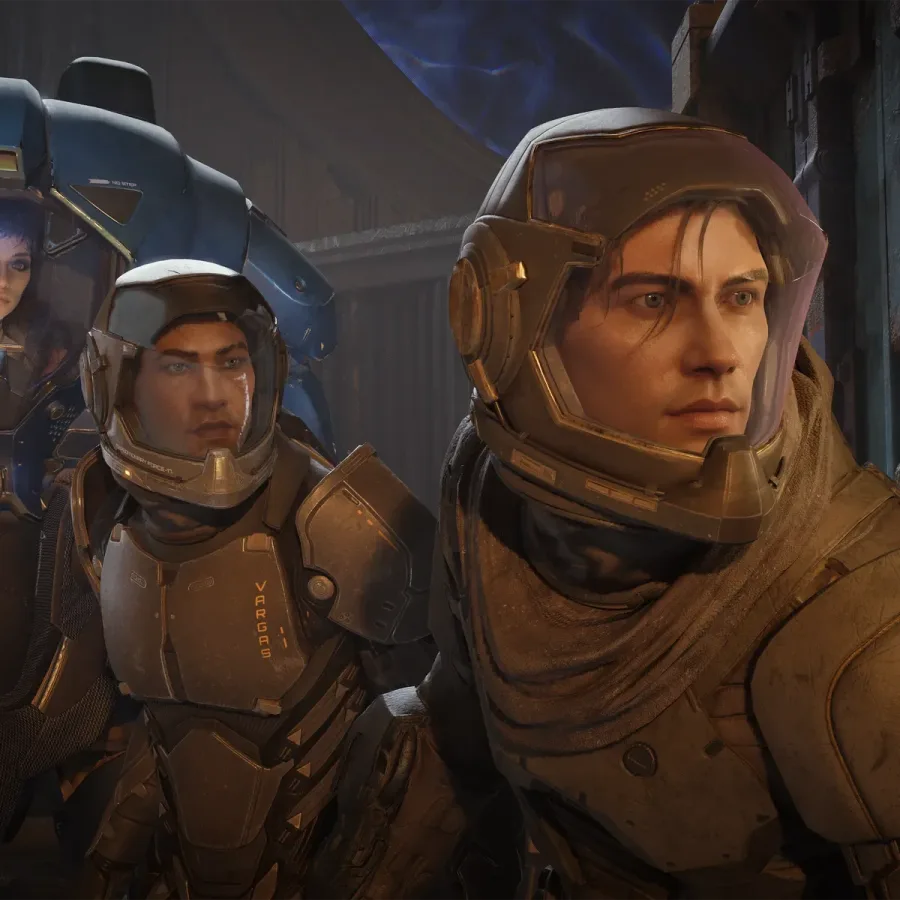
Exodus has offered players a new look at Jun Aslan, the central playable character of Archetype Entertainment's upcoming science-fiction role-playing game. The reveal focuses on a redesigned character model for the male version of Jun, following a period of criticism from fans who felt the previously shown face did not match the heroic, cinematic tone the game is aiming for.
The response to the revised model has been notably warmer. Players have particularly highlighted changes to Jun's facial structure, with many saying the new version better fits their idea of a capable spacefaring protagonist. While character-model discussions can be a small part of a much larger game, the update has arrived at a moment when attention around big-budget, choice-driven space RPGs is especially intense.
Exodus is one of several projects being watched by players seeking a successor in spirit to the kind of squad-based, decision-heavy adventures associated with Mass Effect. With former Mass Effect talent involved in the project, a premise built around traveling between worlds, and a stated emphasis on relationships and player choice, Archetype's game has naturally become a focal point for that audience.
The new Jun footage therefore does more than refresh a face model. It gives the studio another opportunity to explain what Exodus wants to be: a new science-fiction universe with consequential choices, a customizable protagonist, a crew to know, and the enormous consequences that can emerge when time, distance, and interstellar travel reshape every decision.
For useful background on this topic, read Diablo 4 PTR 3.3.0 Will Test Deeper War Plans and Major Druid Tag Changes.
A More Polished Look for Jun Aslan
Before this update, discussion around the male Jun model was blunt. Some players thought the character's face appeared too elongated, while others took issue with the eyes, cheeks, and overall expression. The criticism was often exaggerated in the way online reactions tend to be, but the underlying message was straightforward: fans wanted a protagonist whose appearance felt more natural and more suited to the game's dramatic, character-focused presentation.
The updated version appears to directly address those concerns. Jun's face has been reshaped with a younger-looking and more conventionally heroic design, particularly around the cheekbones and jawline. The result is a cleaner, softer presentation that players have compared favorably with familiar action-game leads and polished sci-fi ensemble casts.
Initial community reactions suggest that the changes have landed. Players who were unhappy with the earlier design have said the revised facial structure is a significant improvement, even if some still prefer to alter elements such as the default hairstyle. That distinction matters because Exodus is not presenting Jun as a completely fixed, untouchable protagonist. The game gives players room to make the character their own.
As currently detailed, players choosing Jun will be able to select whether the character is male or female and then adjust a number of visual options. Hairstyles, hair color, facial hair, and tattoos are among the customization categories confirmed so far. That means the newly shown model establishes a stronger starting point, while still leaving room for individuals to create a version of Jun that better reflects their preferences.
The Female Jun Reveal Is Still to Come
Archetype has not yet publicly shown the female version of Jun Aslan, sometimes referred to by fans as "FemJun." The studio has indicated that her introduction is being held for a separate reveal and has suggested that it has something distinctive planned for that moment.
That leaves an important part of Exodus's character presentation still under wraps. In games with a customizable lead, players often want to see whether the same level of care has been applied across the available protagonist options, not merely whether a single default design has improved. The male Jun redesign has set a new reference point for expectations, and the eventual female Jun reveal will likely receive similarly close scrutiny.
For now, the update does at least reinforce that Archetype is continuing to refine visible aspects of the game as development progresses. Character models are especially prominent in a story-driven RPG where dialogue, companions, and interpersonal choices appear to be central pillars. If players are expected to spend dozens of hours watching their protagonist make decisions in close-up conversations, visual appeal and expressive animation become part of the role-playing experience rather than a superficial afterthought.
Why the Timing Has Drawn So Much Attention
The Jun reveal arrived amid a difficult week for fans of BioWare's long-running science-fiction franchise. EA announced the closure of BioWare and the cancellation of Mass Effect 5, ending plans for the next installment. The news followed discussion around a leaked trailer that appeared to point toward a "Mass Effect Universe" branding direction for the canceled project.
That context has made the Exodus update feel more significant than a typical character-art revision. Fans have openly connected the timing of the new Jun footage to the disappointment surrounding BioWare's closure and the end of Mass Effect 5. Some have said they watched Exodus material after the leaked Mass Effect trailer in search of reassurance that large-scale, narrative-led space RPGs have not vanished from the industry.
It is important not to treat Exodus as a replacement for a series with its own established history, characters, and setting. Archetype is building a separate world with its own ideas. Still, the comparison is understandable. Exodus is openly positioned around a ship captain navigating alien worlds, managing difficult situations, and forming relationships with a crew. It is also being made with participation from developers whose prior work includes Mass Effect.
Lead writer Drew Karpyshyn is among the former Mass Effect developers working on Exodus. His involvement gives the project a direct creative connection to one of the best-known choice-based RPG series, though a familiar name alone cannot define the final game. What will matter most is whether Exodus can turn its promising ingredients into meaningful player agency, memorable companions, and a universe worth revisiting.
A Space RPG Built Around Consequences
Archetype has described Exodus as a dark science-fiction story in which player actions carry major consequences. The studio has promised branching dialogue and decisions that materially affect the world around the player. That is familiar territory for the genre, but Exodus has another concept intended to push those consequences beyond a single immediate scene: the effects of time across vast distances.
The game's premise includes the idea that a decision on one planet can echo far away and much later. The developer has used a butterfly-effect style comparison to convey this structure: a small event in one location may eventually have consequences for someone light-years away. In a galaxy-spanning RPG, that kind of design could create an unusually personal tension. Leaving a place behind may not mean leaving its problems behind, especially if time changes the stakes before the player returns.
Exactly how those systems will function in play remains to be seen. The concept could influence mission outcomes, relationships, political situations, settlements, and the broader state of the game world. It could also become an important differentiator if the time-related consequences are visible, understandable, and genuinely shaped by player choices rather than confined to a few scripted endings.
Exodus also places a clear emphasis on crew relationships. Players will travel with companions and can pursue romantic connections with members of the crew. This is another area where fans of character-driven space adventures will be paying close attention. Strong companion writing can make difficult moral choices feel more immediate, while weak relationships can leave even ambitious galaxy-level stakes feeling distant.
The redesigned Jun is relevant here, too. A protagonist is not simply an avatar standing between combat encounters. In a game built around dialogue trees, romance, loyalty, and branching outcomes, that character needs to carry scenes alongside an ensemble cast. The warmer reception to the revised male model suggests fans are now more confident that Jun can occupy that role visually.
Exodus Has an Opportunity to Define Its Own Identity
There is an understandable temptation to frame every new cinematic space RPG through the lens of Mass Effect. The genre has not lacked science-fiction games, but fewer major projects have combined third-person action, a highly authored protagonist, romance options, squad dynamics, and a galaxy-scale choice structure in quite the same way. That creates a gap in the market, but it also creates enormous expectations.
Exodus has the chance to benefit from that demand without being trapped by it. Its strongest pitch may be the time-dilation-inspired consequence system, which has the potential to give its choices a different emotional rhythm from other RPGs. A player may make a pragmatic decision in one location only to discover much later that the people, cultures, or conditions affected by it have changed beyond recognition.
For that premise to work, the game will need to make its universe legible and its consequences compelling. Players need enough information to make decisions with intention, even if they cannot predict every eventual result. They also need characters and places worth caring about. Archetype's focus on a dark story, a customizable captain, and relationships within the crew indicates that it understands those priorities.
The Jun redesign is a comparatively modest update beside those larger design ambitions, but it has helped restore focus to the game at a highly charged moment for the genre. It is also a reminder that studios can respond to feedback during development, particularly when criticism concerns an element players will see throughout an entire campaign.
Release Plans
Exodus is scheduled to launch on April 7, 2027. It is planned for PlayStation 5, Xbox Series X|S, and PC.
There is still plenty that Archetype has not revealed, including a full look at the female Jun option and deeper demonstrations of how its branching choices and long-range consequences will play out. But the updated male protagonist has given fans a more favorable first impression, and the timing has placed Exodus firmly in the conversation around the future of story-rich space RPGs.
For players disappointed by the loss of another major galactic adventure, Exodus cannot erase that disappointment. What it can do is offer a separate possibility: a new crew, a new captain, and a new universe where decisions may travel farther than anyone expects.
Community
Discussion
Start the conversation.
No comments have been posted yet.