

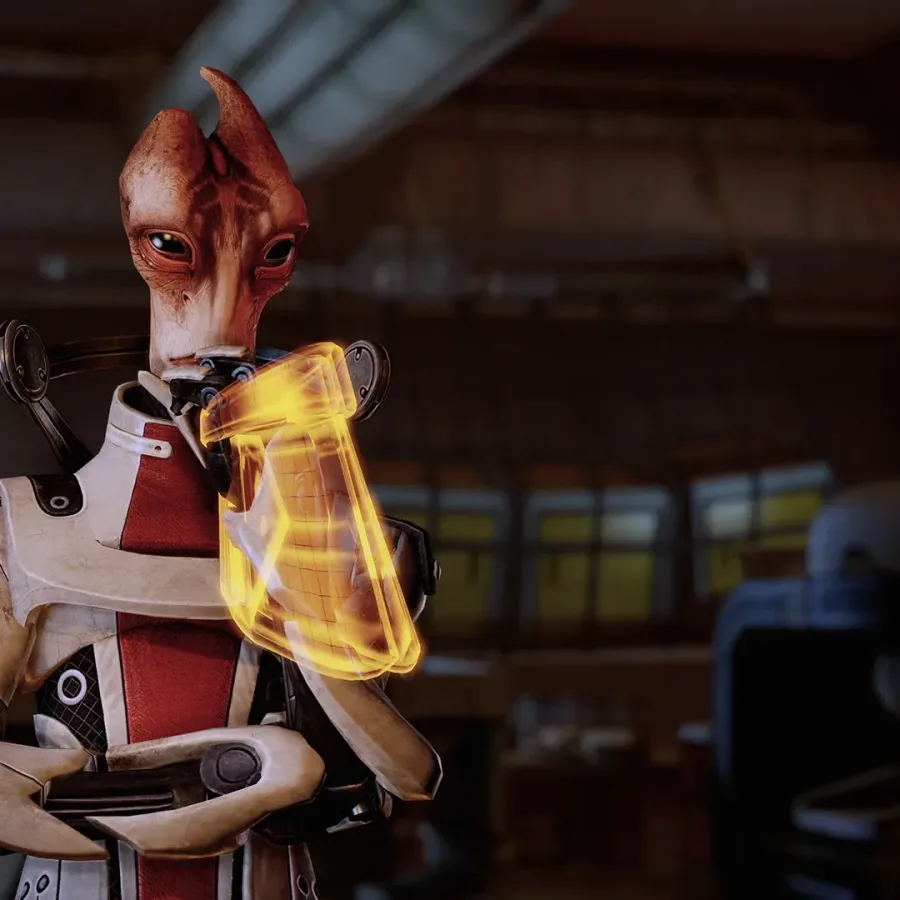
BioWare's closure marks one of the most emotionally charged moments in modern game-industry history. For more than three decades, the Canadian developer built a reputation around expansive role-playing games, player-driven storytelling, memorable companions, and worlds that invited fans to return again and again. From the early Baldur's Gate titles and Neverwinter Nights to Star Wars: Knights of the Old Republic, Dragon Age, and Mass Effect, the studio's catalogue helped define what many players expect from narrative-focused RPGs.
On October 21, EA announced a substantial strategic shift and internal restructuring. The plan includes cancelled projects, BioWare's closure, and a reported 400 job losses. The announcement has left fans asking not only what happens to the people affected, but also whether major franchises such as Mass Effect and Dragon Age have a future at all.
For Mass Effect fans, the news is especially difficult. A new entry was publicly announced at The Game Awards in 2020, and former Mass Effect executive producer Mike Gamble said during N7 Day last year that development was continuing. At that time, he also said EA and BioWare remained committed to telling more stories in the universe. A leaked internal trailer for Mass Effect Universe had further fueled hopes for the series. Now, with BioWare shut down and its projects cancelled, those expectations have been replaced by uncertainty.
An Amazon television adaptation of Mass Effect is understood to still be in development, but the status of the game franchise itself is much less clear. EA has not indicated that it plans to sell the series, revive the cancelled project elsewhere, or place another studio in charge of a new game.
For useful background on this topic, read Exodus Reveals a Redesigned Jun Aslan as Fans Look to a New Era of Space RPGs.
Why analysts consider the decision predictable
Several industry analysts believe the closure needs to be viewed through the larger financial structure surrounding EA rather than through BioWare's legacy alone. EA's acquisition by the Public Investment Fund and its partners has left the company carrying significant debt. Analyst Joost van Dreunen estimated that EA now has roughly $18 billion in debt, with annual interest costs of approximately $1.8 billion. That figure is higher than the company's estimated annual EBITDA of around $1.5 billion.
In that context, EA has told lenders that it intends to remove $700 million in annual costs. Van Dreunen argued that a relatively small team working for years on a game that remains far from release can become an obvious target for cuts, regardless of the value of its brand or the goodwill surrounding its history.
"In that context, a 50-person team working on a game that is years from launch is the easiest line to cut, regardless of its legacy," van Dreunen said.
That assessment is harsh, but it explains why a beloved franchise can be vulnerable even when it still has a dedicated global audience. The commercial logic of a heavily leveraged company is different from the logic that drives fan enthusiasm. A future Mass Effect could potentially be a critical success, retain immense cultural importance, and still be judged internally as too costly, too slow to produce, or too unpredictable compared with projects tied to recurring spending.
Van Dreunen characterized major legacy properties such as Mass Effect as "prestige projects" in EA's current environment. The label does not necessarily mean the franchises lack value. Instead, it suggests that they may be viewed as high-profile, expensive undertakings whose returns are less dependable than sports games, live-service businesses, and other products built around recurring revenue.
EA had already been pursuing recurring revenue streams before the buyout. Its new ownership's priorities reportedly include sports, live service, and new markets including Asia. Those priorities create a difficult environment for a huge single-player RPG, particularly one that might require many years of development before it can generate revenue.
BioWare's recent releases added to the pressure
BioWare's history is remarkable, but its recent commercial record made the studio more exposed during a period of cost cutting. Piers Harding-Rolls of Ampere pointed to the performance of Dragon Age: The Veilguard, which launched at the end of 2024. Ampere data estimates that the game sold about 1.9 million units worldwide across PlayStation, Xbox, and Steam through the end of September. That total was said to be well below internal expectations.
The Veilguard was not BioWare's only recent project to fall short of EA's goals. Mass Effect: Andromeda, released in 2017, did not meet expectations, while 2019's Anthem also struggled to deliver the long-term success EA had hoped for. None of those games erase the studio's creative achievements, but they matter when executives are evaluating where to reduce costs and which development bets to retain.
Harding-Rolls said BioWare's future was likely being considered before the acquisition closed, given the changing economics of high-end game development and the studio's recent results. His view is that the closure is significant not merely because of a single cancelled game, but because it removes a developer whose work had an unusually large cultural footprint.
That footprint stretches across generations. The original Baldur's Gate games, Neverwinter Nights, and Knights of the Old Republic were formative releases for the RPG genre. Later, the Mass Effect trilogy reached a vast audience with its space-opera setting, branching decisions, and character relationships. For many players, BioWare games were not simply products they enjoyed; they were defining parts of how they experienced games as a storytelling medium.
Could EA sell Mass Effect or Dragon Age?
One possibility raised by disappointed fans is that EA could sell BioWare's intellectual property to another publisher or developer. On the surface, the idea is appealing. A studio with a smaller structure, a focused creative plan, and a willingness to take risks could potentially reintroduce Mass Effect or Dragon Age in a new form.
However, analysts are skeptical that a sale is likely. Van Dreunen noted that BioWare's franchises are well known, but potentially too expensive and demanding for most interested buyers. Acquiring the rights would be only the first cost. Any purchaser would also need to fund a large development team, support years of production, manage immense audience expectations, and compete in a crowded AAA market.
Even major RPG publishers may not be positioned to take on that responsibility. CD Projekt Red, for example, is already developing The Witcher 4 and Cyberpunk 2. Other companies capable of buying a name as large as Mass Effect may likewise have their own long-term projects and internal technology investments consuming resources.
David Gibson of MST Financial similarly linked the decision to several overlapping forces: the need to improve margins and returns under a large debt burden, the relatively high cost of AAA development in Western markets, and the challenge for role-playing games such as Mass Effect to reach sales levels high enough to satisfy corporate profitability targets. Gibson expressed hope that a smaller, agile studio could one day acquire and reinvent some of the properties, but that remains speculation rather than an announced plan.
Former BioWare executive producer Mark Darrah has said he is more optimistic than he once was that the IP could be sold, while remaining doubtful. His concern is that EA may simply retain the properties and leave them dormant in its vault.
A troubling signal for long-form RPG development
The BioWare closure is about more than one studio or one sequel. It highlights a broader tension in AAA development: ambitious narrative RPGs are expensive, slow to make, and difficult to fit into financial models that prioritize reliable yearly revenue. They can still be hugely influential and commercially successful, but their development risk is substantial.
That does not mean there is no market for single-player RPGs. The continued popularity of story-rich games proves otherwise. But the business case can look very different inside a large publisher managing debt, shareholders or lenders, rising labor costs, and competing demands for investment.
For now, EA's plans for Mass Effect, Dragon Age, and other BioWare properties remain unconfirmed. The franchises have not been formally declared dead, and their names still carry considerable recognition. Yet without BioWare, without a confirmed replacement developer, and without a stated plan for the cancelled work, fans are left facing a difficult possibility: some of gaming's most important RPG worlds may be preserved as legacy brands rather than active series.
BioWare's closure will therefore be remembered not only as a business decision, but as a reminder that cultural influence and corporate viability do not always align. Its games shaped the RPG genre and connected deeply with millions of players. Whether those worlds are ever allowed to grow again is now one of the industry's biggest unanswered questions.
Community
Discussion
Start the conversation.
No comments have been posted yet.