

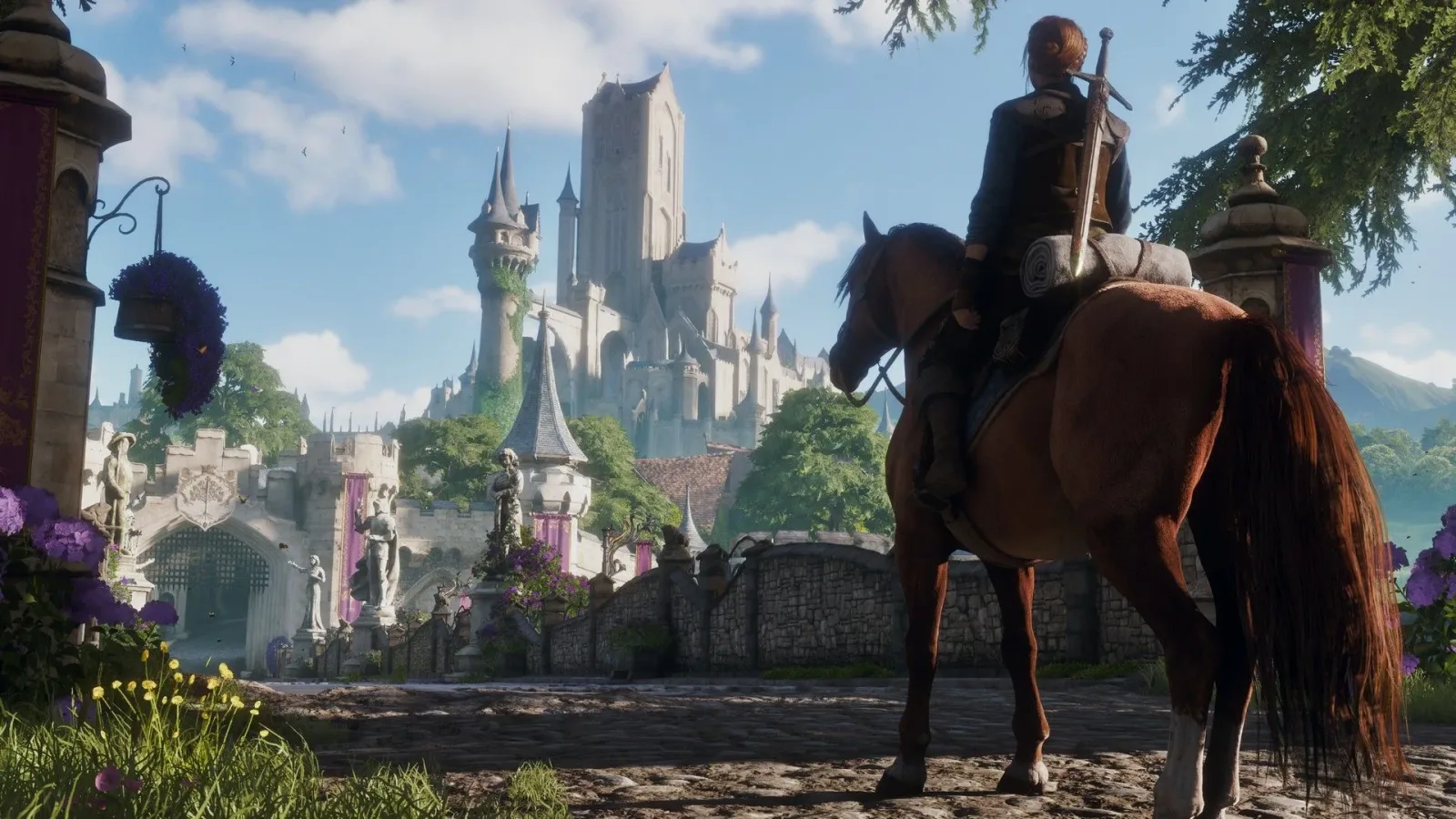
Fable has endured an unusually long road back to the spotlight, but Playground Games co-founder and game director Ralph Fulton believes the series' importance to Xbox has helped it remain standing through years of upheaval. In comments reflecting on the game's extended production, Fulton described Fable as a project that many people within Xbox regard as fundamental to the platform's identity.
That internal belief matters because the new Fable has been in development through a period of dramatic change at Microsoft and Xbox. The project's production reportedly began as far back as 2016, well before Playground Games publicly revealed its take on the fantasy RPG in 2020. Since then, the industry has experienced repeated rounds of job cuts, shifting strategies, studio closures, and cancelled projects. Xbox has been especially visible in those conversations, with thousands of positions affected over recent years.
Despite that environment, Fable remains on track for release next year. It is currently planned for Xbox Series X|S, PC, and PlayStation 5, with a February 23 launch date following a recent delay. Fulton's comments offer a clearer sense of why the project has continued its long journey while other high-profile efforts inside the broader Xbox organization have not made it to release.
Fable's place in Xbox history
"Fable is an important game," Fulton said, explaining that the RPG's perceived value inside Xbox was a major factor over its lengthy development cycle. In his view, many people at the company see the franchise as "vital to the DNA of the platform."
For useful background on this topic, read Grand Blue Codes for September 2026: Active Rerolls and Fruit Chests.
It is a significant description for a series that has been absent for a long time. The original Fable helped establish a distinct kind of console role-playing game, one built around British storybook humor, moral choices, personal progression, and a world that reacted to the player's conduct. Its blend of fantasy adventure and life-simulation systems gave it an identity separate from more traditional western RPGs.
Fulton went further than simply calling the franchise important to Xbox. He argued that Fable has a wider role within games because of the particular mix of ideas it brings together. That combination, he suggested, is not readily available elsewhere. The statement points toward the challenge facing Playground Games: the studio is not merely reviving a recognizable name, but attempting to preserve the qualities that made Fable feel different while introducing it to a new generation of players.
That task is especially notable because Playground Games is best known for the Forza Horizon series. Its work on open-world racing games has earned it a reputation for detailed environments, accessible design, and large-scale sandbox play, but Fable represents a different genre and a different set of player expectations. The studio's upcoming RPG therefore carries both the legacy of an established Xbox property and the pressure of demonstrating how its own strengths translate into fantasy role-playing.
A project shaped by a decade of change
Fable's reported 2016 production start puts the scale of its development into perspective. The public did not see the game until its reveal trailer in 2020, and the years afterward brought substantial changes across Microsoft, Xbox, and the game business more broadly. The long wait has naturally created anticipation, but it has also made the game a marker of how much the platform holder's strategy has evolved.
Xbox has faced several waves of layoffs in recent years. In July, a further 1,600 roles were eliminated, with another 1,600 roles expected to be removed across the 2027 fiscal year as part of a restructuring described by CEO Asha Sharma as the most significant in Xbox history. For developers and players alike, such changes can create uncertainty around teams, projects, and the long-term direction of a publisher's portfolio.
Some prominent games have already been caught up in that instability. The Perfect Dark reboot was cancelled last year when The Initiative was shut down during another round of layoffs. ZeniMax Online Studios' unannounced MMO, known as Project Blackbird, was also cancelled during that period. The loss of Project Blackbird was followed by the departure of Matt Firor, the former head of The Elder Scrolls Online.
Against that backdrop, Fable's continued progress is not a trivial detail. Long development cycles can invite questions about scope, leadership, technology, and whether a project will survive changing corporate priorities. Fulton's explanation does not erase the uncertainty that has surrounded Xbox's recent business decisions, but it does suggest the franchise has had influential support within the company. In practical terms, Fable appears to have been considered too meaningful to Xbox's catalogue and heritage to abandon.
A broader audience than past Fable games
The new game is also arriving at a moment when Xbox is reassessing what exclusivity means for its biggest releases. Fable will launch on Xbox Series X|S and PC, but it is also confirmed for PlayStation 5. That multiplatform approach remains in place following Xbox's stated intention to reevaluate its approach to exclusivity and its earlier moves to bring more games to rival hardware.
For a franchise historically associated with Xbox, the PS5 version is an important signal. It means Playground's revival will be introduced not just to longtime Xbox players and PC audiences, but to an additional console community that may have little or no familiarity with Albion. The larger potential audience could be particularly valuable for a series returning after such a lengthy absence.
There is an understandable tension in that shift. Fable's identity is closely tied to Xbox, which makes Fulton's emphasis on its importance to the platform feel especially resonant. At the same time, releasing on PlayStation 5 expands the game beyond the traditional boundaries of that identity. Rather than weakening the franchise's Xbox roots, the current strategy could place those roots in front of more players than ever before.
It also gives Fable a larger role in demonstrating how Xbox plans to handle major first-party games going forward. The company's strategy is no longer defined solely by keeping every marquee release on its own console ecosystem. Fable's release across Xbox, PC, and PS5 makes it one of the clearest examples yet of a historically Xbox-associated series operating under that changing model.
An RPG with room to settle into Albion
While the full scope of the new Fable is still to be explored by players, Xbox has described the main experience as taking roughly 15 to 20 hours. That is a useful indication for those expecting a tightly paced RPG rather than a massive campaign demanding hundreds of hours before its central story concludes.
However, the game is not being framed as a strictly finite adventure. Xbox has also said players can effectively keep playing indefinitely if they choose to approach it more like a life simulation than a conventional RPG. That promise aligns naturally with the franchise's history. Fable has long leaned into the idea that a character's life can extend beyond combat quests and story milestones, with personal choices, relationships, careers, property, and the consequences of behavior contributing to the broader experience.
The 15-to-20-hour estimate and the potentially open-ended life-sim angle are not necessarily in conflict. Instead, they suggest a game with a main path that can be completed at a manageable pace, alongside systems designed to support players who want to spend longer inhabiting its world. For a revival of Fable, that distinction could be crucial. The series has always invited players to treat Albion as more than a backdrop for missions.
It may also help explain Fulton's confidence in the franchise's distinctiveness. Plenty of modern RPGs offer large maps, combat progression, choice systems, and long campaigns. Fable's enduring appeal has rested more on the way those ideas connect to the everyday texture of a character's existence. The new entry has an opportunity to revisit that personality-driven approach at a much larger technical scale.
The wait continues, but the direction is clearer
Fable was recently delayed, moving its launch to February 23 and avoiding a direct clash with Grand Theft Auto 6. Delays are rarely welcome for players who have already waited years, but the decision also underlines the unusually crowded and consequential landscape into which the RPG will arrive. For Playground Games, extra time could be important when delivering a project carrying this much historical and strategic weight.
The game now represents several things at once: a return for one of Xbox's defining RPG brands, a major genre shift for Playground Games, a multiplatform release that includes PS5, and a test of whether a long-dormant series can preserve its identity without being trapped by nostalgia. Fulton's comments make clear that there is a strong belief inside Xbox that Fable deserves that chance.
After a development cycle stretching back roughly a decade, that belief may be the most meaningful context for the revival. Xbox has changed substantially since Fable began production, and so has the industry around it. Yet the project remains alive, supported by the idea that Albion still has a place in the future of the platform--and perhaps, as Fulton argues, a place in the RPG landscape that few other games can fill.
Community
Discussion
Start the conversation.
No comments have been posted yet.