

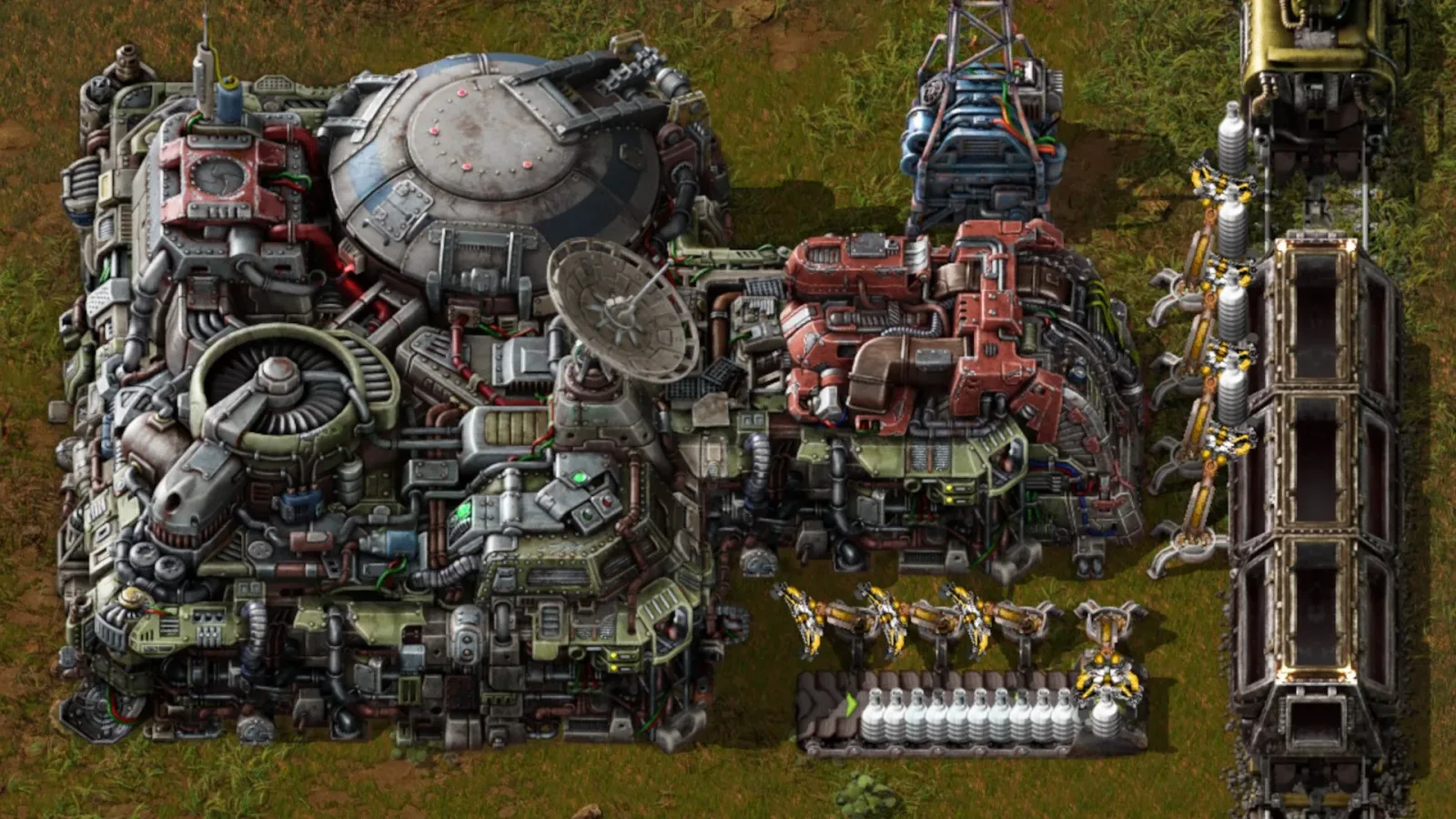
Factorio 2.1 is officially available, bringing a substantial collection of refinements, smaller additions, and long-requested conveniences to one of PC gaming's most celebrated automation simulations. The patch follows months of testing and is positioned as a meaningful closing chapter for the game's long-running development journey: Wube Software has previously described version 2.1 as the final major update it intends to make for Factorio.
That does not necessarily mean the game will never change again. Smaller maintenance patches, fixes, and other cleanup work could still follow when needed. But 2.1 represents the end of the era of large, feature-focused updates, giving players a final major set of tools and improvements for their ever-expanding factories, rail networks, defensive perimeters, and interplanetary logistics operations.
For a game whose central appeal lies in endlessly optimizing production lines, even seemingly modest changes can have huge consequences. Factorio players are famously inventive with conveyors, inserters, circuit systems, trains, and resource flows, and the new release includes several additions that could inspire fresh designs or make established builds easier to manage. Wube characterizes the patch as a broad package of quality-of-life changes, polish, small features, and ideas that the team wanted to include in the 2.0 era but could not finish in time.
A final toolbox upgrade for factory architects
The full 2.1 patch notes are extensive, aimed squarely at players who understand just how much difference a tiny logistical adjustment can make. Among the examples highlighted in the update are rockets that can carry multiple kinds of items in a single launch. That changes the flexibility of space-bound supply chains, potentially reducing the need to dedicate launches to narrowly defined cargo loads and allowing players to respond more efficiently to varied demand.
For useful background on this topic, read Netflix Reportedly Considered $500 Million Xbox Adaptation Deal Before Talks Stalled.
Rail builders also receive another option for increasingly elaborate transportation designs. Elevated rails can now be constructed over cargo bays, a change that should help dense bases make better use of vertical overlap and limited space. Factorio has always rewarded players who can see a factory not simply as a collection of structures, but as a living network with competing demands for every available tile. The ability to route trains over cargo-related infrastructure gives builders another way to untangle busy production areas.
Defenses get an unusual new utility as well. Land mines can now serve as tripwires and enemy detectors, expanding their role beyond a straightforward explosive deterrent. In a game where hostile creatures can pressure a growing industrial empire, early warning and automated response systems are as valuable as raw firepower. Players who enjoy building intelligent perimeter defenses may find plenty to experiment with in this revised behavior.
Those individual adjustments convey the character of Factorio 2.1. This is not framed as a reinvention of the core game, nor as a replacement for the systems that made the simulation so enduring. Instead, it is a dense and carefully targeted update for a community that has spent years discovering edge cases, creating colossal factories, and turning logistical friction into a puzzle worth solving.
The close of a remarkably long development story
Factorio first entered early access in 2016 and built its reputation through a particularly compelling mix of base building, management, survival pressure, and automation. Its premise is easy to describe: gather materials, build machines, automate production, and keep scaling. In practice, that loop becomes an enormous web of interdependent systems. Ore must become plates, plates must become components, components must feed machines, machines must be supplied with power, and every new goal exposes another bottleneck that demands attention.
That escalating complexity became a defining strength. A player can begin with a handful of drills and furnaces, only to eventually oversee a sprawling industrial operation filled with trains, robotics, refineries, artillery, and production lines that stretch across the map. Factorio gives players a clear reason to continue expanding while leaving the method almost entirely open-ended. A compact, highly efficient design and a giant, gloriously chaotic factory can both be satisfying--at least until the next shortage reveals itself.
The game has continued to develop well beyond its original full release. Version 2.0 was a major milestone, while a significant DLC expansion further broadened the experience. With 2.1 now live, Wube is drawing a line beneath that period of large-scale post-launch evolution. It is a notable moment for a game that has become a fixture in discussions of the finest automation and management games on PC.
Calling this the last major update also emphasizes just how complete Factorio's long-term arc has been. It is rare for a game with such a dedicated audience to arrive at a point where its creators can step back from major additions, especially when that audience is still deeply engaged in finding new efficiencies and pushing systems in unexpected directions. Yet there is a certain logic to the decision: Factorio's design has been iterated on for years, and 2.1 acts as a final pass intended to make the experience smoother, more flexible, and more polished.
An enduring Steam success without discounts
Factorio's standing on Steam remains extraordinary. It has accumulated more than 234,000 positive user reviews and holds a 98% overwhelmingly positive rating. That level of sustained approval says a great deal about the trust players have placed in the game over time, particularly for a systems-heavy title that can be demanding, intricate, and intimidating to newcomers.
Its placement on Steam250 also underlines its broad esteem. Factorio is listed as the 35th best-rated game on Valve's platform, sitting immediately behind Elden Ring in that ranking. Lists inevitably shift as review totals and ratings change, but the placement highlights the unusual reach of a game that does not depend on cinematic spectacle or a conventional campaign structure. Its appeal comes from the satisfaction of understanding a process, improving it, and then discovering that the improved version has opened the door to an even more ambitious problem.
Another part of Factorio's story is its longstanding approach to pricing. Wube has consistently avoided putting the game on sale, a policy it committed to years ago. The studio's stated philosophy was centered on treating customers consistently rather than encouraging prospective buyers to wait for a discount. In 2023, it even increased the game's price to account for inflation.
Wube's earlier explanation of its policy was that the decision was not about sales or visibility, but about respecting players who had already purchased the game at its established price.
That stance remains highly unusual on a storefront where seasonal promotions and deep discounts are standard practice. Yet Factorio's reception suggests the approach has not prevented it from reaching an enormous audience. The game's reputation has largely traveled through player enthusiasm, screenshots of bewilderingly large production lines, shared blueprints, community challenges, and the familiar warning that a person can sit down to fix one small issue only to look up hours later.
Console players are part of the story too
Although Factorio's identity is closely tied to PC, its audience has expanded through releases on Nintendo Switch and Switch 2. Bringing an automation game with deep interface demands to consoles is no small task, but the additional versions have introduced the experience to players beyond its original keyboard-and-mouse home.
That broader reach matters as the game enters this new stage. Factorio 2.1 is not only a farewell to major feature development for veteran PC engineers; it is also a polished foundation for players discovering the game through Nintendo hardware. The central hook remains as powerful as ever: build a system, observe where it fails, solve the failure, and repeat until the solution becomes something almost absurdly vast.
For longtime players, the update is likely to be both exciting and slightly bittersweet. New possibilities are arriving, but they arrive with the knowledge that they are part of the final major official expansion of the game's toolbox. That does not diminish the scale of what already exists. If anything, it reinforces how much Factorio has grown since 2016, from an early-access automation experiment into a genre-defining simulation with an unusually devoted following.
What comes after Factorio?
Wube has not been standing still. In 2025, the developer said it had already begun laying groundwork for what its next project could become. Details remain limited, so there is no reason to assume exactly what form that project will take, how closely it may resemble Factorio, or when players might see it. Still, the prospect is naturally intriguing given the studio's track record.
For now, Factorio 2.1 is the focus. It is a final major update built not around a dramatic farewell event, but around the practical, thoughtful improvements that suit the game best. More cargo flexibility, denser rail construction, expanded defensive behavior, and a long list of refinements may sound like details to outsiders. For Factorio players, details are where entire factories are won or lost.
And that makes 2.1 a fitting milestone. Factorio has always found drama in the smallest inefficiency: one missing resource, one jammed train intersection, one production line running just below the required rate. Its final major update gives players more ways to solve those problems--and, inevitably, more reasons to build something even bigger afterward.
Community
Discussion
Start the conversation.
No comments have been posted yet.