

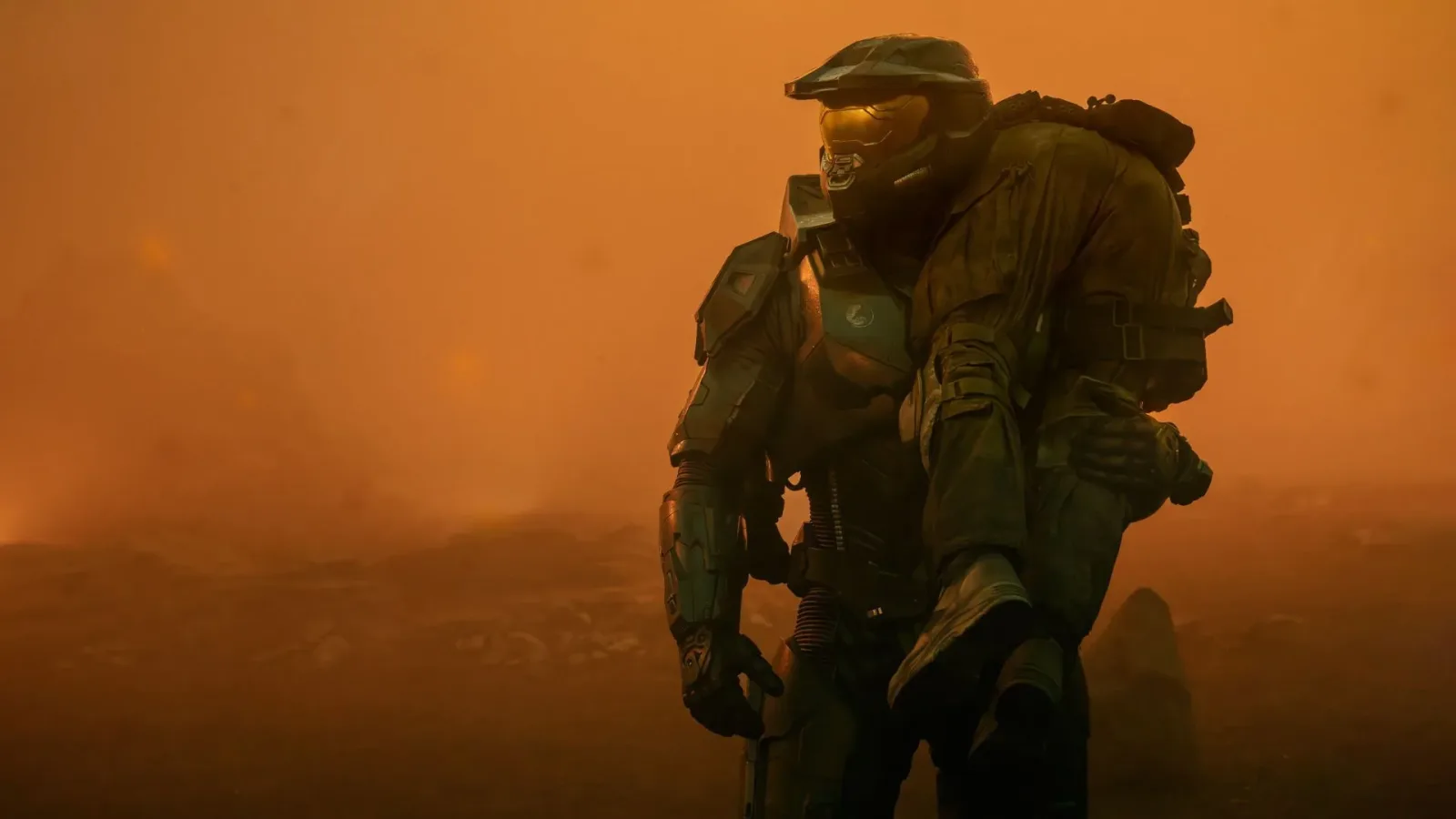
Netflix reportedly explored a major agreement with Microsoft that could have given the streaming company exclusive rights to adapt Xbox properties for film and television, but the proposed arrangement is said to have stalled over price and changing leadership at Netflix.
The reported proposal would have seen Netflix pay $500 million for a seven-year licence covering Xbox intellectual property. Microsoft's Xbox leadership and business affairs team allegedly responded with an $800 million counteroffer. With former Netflix chief content officer Bela Bajaria no longer in her position, the proposed deal is now said to be off the table.
Neither company has publicly confirmed the reported financial figures or the full scope of the negotiations. Netflix did not comment on the report describing the talks. Microsoft, however, stressed that interest in its game franchises remains exceptionally strong and pointed to the companies' existing work together, including animated Minecraft and Diablo projects.
"We have received record-breaking interest in our I.P.; Netflix is a valued partner and we are excited for the forthcoming release of our Minecraft and Diablo animated series together, among other adaptations," Xbox said in a statement.
For useful background on this topic, read Battlefield 6 at One: A Strong Recovery Shadowed by Familiar Problems.
That response leaves room for an important distinction: a giant exclusive umbrella deal may not be happening, but the relationship between Xbox and Netflix appears to remain active. The reported direction for Microsoft is instead to pursue smaller arrangements with a wider range of partners. For a company with a deep catalogue of games, studios, and recognizable worlds, that strategy could provide more flexibility than putting a broad package of rights in one place.
A Huge Reported Price for Xbox's Screen Rights
A $500 million offer for seven years would already have represented an enormous commitment to video game adaptations. The reported $800 million counteroffer suggests Microsoft sees its entertainment portfolio as even more valuable, particularly in a market where game-based films and television have become a central priority for studios and streaming services.
Xbox owns or controls a substantial collection of brands with potential beyond games. The most obvious commercial giant is Minecraft, which has global recognition across platforms and age groups. But Microsoft's broader portfolio also includes properties such as Halo, Gears of War, Fallout, The Elder Scrolls, DOOM, Call of Duty, Overwatch, Diablo, and many more following its major acquisitions.
Not every property would necessarily be part of the same licensing conversation, and rights can be complicated by prior agreements, separate production partners, regional arrangements, and the individual needs of each project. Still, the value of an exclusive deal is easy to understand. It could potentially secure a pipeline of recognizable franchises for one service while preventing rivals from turning those worlds into competing series or films.
For Microsoft, however, exclusivity also carries a cost. A single partner may offer certainty and a large upfront payment, but working with multiple studios, broadcasters, and streamers can spread risk, create more projects at once, and let each franchise find a home suited to its audience. A prestige drama, an adult animated show, a family adventure film, and a blockbuster action feature may not all benefit from the same distributor or creative approach.
Leadership Changes Appear to Have Shifted the Conversation
The timing of the reported impasse matters. The proposal is associated with Bajaria, Netflix's former chief content officer, who has since been fired and replaced by former Disney executive Peter Rice. Netflix also recently parted ways with film boss Dan Lin, and a replacement had not been named at the time of the report.
Major licensing plans often depend on the executives championing them. When leadership changes, expensive projects and long-term strategic commitments can be revisited, delayed, reshaped, or abandoned. That does not necessarily mean Netflix has lost interest in gaming adaptations, especially with existing Xbox-related productions still moving forward. It does mean that a massive, all-encompassing agreement may no longer align with the company's immediate priorities.
Netflix has increasingly treated games and adjacent entertainment as part of a wider audience strategy. Adaptations can bring established fan communities to the service, while a streaming show or movie can introduce a game brand to viewers who have never picked up a controller. The challenge is that this relationship only works over the long term if the adaptations are good enough to stand on their own rather than functioning solely as marketing.
Microsoft faces a similar balancing act. The company has reason to make its franchises more visible across film and television, but it also has to protect the perception of its brands. A poorly received adaptation can become a distraction; a successful one can greatly expand interest in the games, their subscription ecosystem, and future sequels.
Xbox Is Already Building an Adaptation Pipeline
Even without the reported Netflix package, Xbox's properties are already active in the screen business. The forthcoming animated Minecraft and Diablo series represent a continuing collaboration with Netflix. Their existence makes clear that the end of a potential broad licence would not automatically affect individual projects already in development.
Minecraft is especially well positioned for animation. Its simple visual language is instantly identifiable, its creative sandbox structure offers a broad foundation for original stories, and its audience ranges from younger players to adults who have spent years building and exploring within its blocky worlds. The key question will be whether the series finds a tone that serves the game's vast community without limiting itself to familiar visual references.
Diablo, meanwhile, offers a markedly different opportunity. Its gothic fantasy setting, demons, angels, ruined kingdoms, and long-running conflict provide material that could support darker animation aimed at an older audience. Pairing those franchises under the same streaming banner would demonstrate the breadth of the Xbox catalogue, even if the projects themselves target very different viewers.
Microsoft's entertainment ambitions also extend beyond Netflix. Its franchises have repeatedly been linked to various film and TV initiatives over the years, and the company's enlarged games business gives it a much bigger reservoir of worlds to develop. The reported preference for smaller deals with more partners could allow Microsoft to choose creators and distributors on a project-by-project basis instead of committing to a single exclusive destination.
The Uneven but Valuable Video Game Adaptation Market
The report arrives during a year that has underlined both the opportunity and unpredictability of game adaptations. Resident Evil earned strong reviews, while The Super Mario Galaxy Movie, Street Fighter, and Mortal Kombat 2 received a more mixed response. Yet critical reaction is only one part of the picture. The Super Mario Galaxy Movie still surpassed $1 billion at the box office, showing how powerful a recognizable game property can be when it reaches a broad audience.
That mixed landscape helps explain why a deal of this scale would be difficult to complete. A $500 million or $800 million agreement is not simply a bet on one show. It is a bet that multiple franchises can become reliable entertainment brands over several years, that the partners can make them quickly enough to maintain momentum, and that audiences will remain interested even as the adaptation market becomes increasingly crowded.
There is also a creative consideration. The most successful game adaptations usually do not treat the original game as a script that must be copied scene for scene. They identify the characters, atmosphere, themes, and audience expectations that made the game compelling, then build a screen story around those elements. Different Xbox properties would need radically different approaches, making a one-size-fits-all production strategy unlikely to work.
What Happens Next
For now, the reported Netflix-Xbox mega-deal appears to have fallen apart before it could be finalized. The financial terms remain unconfirmed, and it is not clear which specific Xbox franchises would have been included in the proposed seven-year licence. What is clearer is that Microsoft continues to receive significant interest in adapting its games, while Netflix remains involved with at least two announced Xbox-related animated projects.
If Microsoft is indeed pursuing smaller agreements across multiple partners, viewers may ultimately see Xbox franchises distributed more broadly rather than concentrated on one service. That could make the company's screen strategy less tidy, but potentially more ambitious. One property could thrive as animation, another as a streaming drama, and another as a theatrical event.
For fans, the immediate takeaway is not that Xbox adaptations have slowed down. It is that the business model behind them may be changing. The reported $500 million proposal and $800 million counteroffer indicate just how highly major entertainment companies may value gaming's biggest worlds. Whether those valuations produce better films and shows will depend less on the headline numbers than on the talent, time, and care each adaptation receives.
Community
Discussion
Start the conversation.
No comments have been posted yet.