

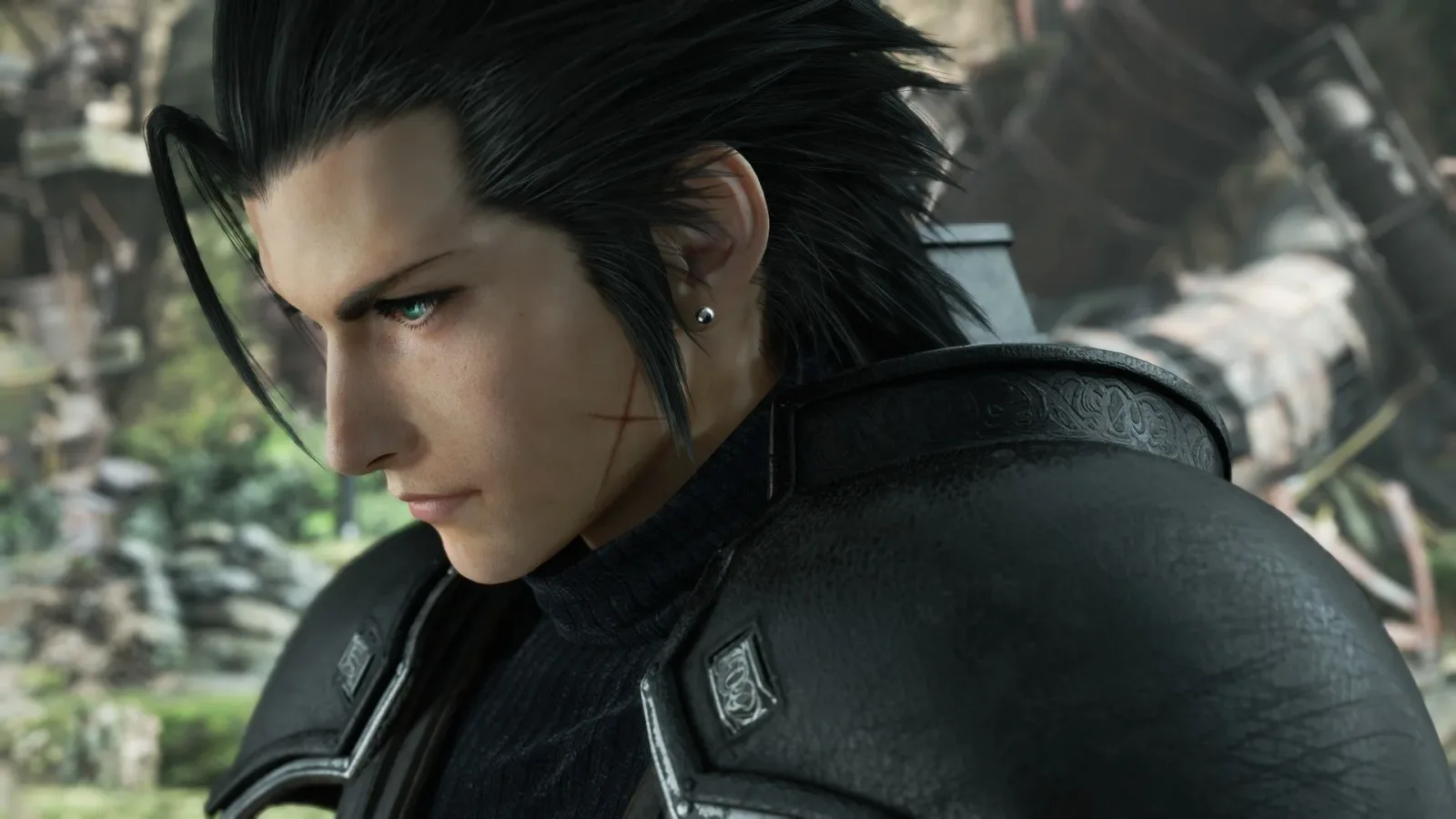
Final Fantasy 7 Revelation is approaching as the concluding chapter of the Final Fantasy 7 Remake trilogy, and its battle team is still grappling with one of the project's defining creative questions: how should real-time action and menu-based, turn-influenced strategy coexist?
For battle director Teruki Endo, there is no settled formula. After work across three major installments, he says he has continued to adjust that relationship through experimentation rather than arriving at one permanent answer. Far from making the long-running project feel repetitive, that uncertainty has helped sustain his interest in it.
The remake series has never been a straightforward return to the combat of the 1997 original. Instead, it has built a hybrid system in which players directly move, attack, guard, and evade in real time while also slowing the action to choose abilities, spells, items, and tactical commands. It is a structure intended to preserve the party management and decision-making associated with Final Fantasy 7 while giving battles a more immediate, action-oriented rhythm.
That combination has evolved from game to game, and Revelation is set to represent the latest attempt to refine it. Endo's comments suggest that the final entry will not treat the mechanics used in its predecessors as untouchable simply because they are familiar.
For useful background on this topic, read Dead by Daylight Haunted by Daylight 2026: Start Time, Void Changes and Free Rewards.
A trilogy built around iteration
Endo explained that sequels present a persistent design dilemma. A follow-up can become overly complicated if it keeps adding systems without restraint. On the other hand, an experience that only makes tiny revisions risks feeling insufficiently new to players returning for another entry.
That tension is especially significant for the Final Fantasy 7 Remake trilogy. Each chapter must carry forward the recognizable foundations of its predecessor while also justifying why it is a distinct game rather than an expansion-sized continuation. Combat is one of the clearest places where that balance has to be felt minute by minute.
Rather than beginning with the assumption that a feature must return, Endo said his approach is to reconsider the purpose and function of individual elements, then reconstruct them for the next game. It is an outlook that frames refinement as more than numerical tuning. The team is not merely adjusting damage values or speeding up animations; it is reconsidering what systems are meant to contribute to player choice, pacing, and character identity.
That philosophy fits the larger nature of the trilogy. The games reinterpret a beloved RPG with a modern scale and presentation, but they also introduce new combat options, expanded character interactions, and systems that could not have existed in the original version in the same form. Maintaining a connection to the past without simply reproducing it is therefore central to both the narrative and mechanical sides of the project.
Endo said he has repeatedly fine-tuned the split between turn-based and real-time play across all three titles, but has not personally found a single definitive solution.
For a battle director, that may sound like an uncomfortable admission. Yet Endo sees a benefit in it. He believes the unresolved nature of the problem may be part of why he has been able to remain engaged throughout the trilogy without becoming tired of the work. Every game creates another opportunity to ask whether the mix should be more responsive, more tactical, more accessible, or more demanding.
Action combat with command-based roots
The divide Endo describes is not simply between two audiences. It is also about two different kinds of attention during battle. Real-time combat asks players to react continuously: positioning matters, incoming attacks must be read, and momentum can change in seconds. Command selection, by contrast, gives players room to assess resources, elemental weaknesses, cooldowns, party roles, and the consequences of a carefully selected action.
Final Fantasy 7 Remake and Final Fantasy 7 Rebirth have attempted to let those priorities overlap. Building ATB through direct combat is tied to accessing many of the strongest tools in a character's kit, which means active engagement feeds tactical decision-making. Switching among party members also makes combat feel less like controlling one action hero and more like coordinating an RPG party.
The series has also included Classic mode in both Remake and Rebirth. In that mode, party members can handle basic combat automatically, allowing players to focus more heavily on selecting commands. Square Enix previously described the option as a way to appeal to fans who favor the original game's turn-based battle style over real-time action.
Classic mode does not turn the remake trilogy into a direct copy of the 1997 system, but its inclusion illustrates the developers' interest in making room for players with different comfort levels and expectations. Some players enjoy precise control and reactive defense. Others prefer to spend their concentration on spells, abilities, Materia combinations, and party decisions. A hybrid battle system has to account for both without making either side feel like an afterthought.
Revelation's exact final combat details have not been outlined here, but Endo's remarks make clear that the team has continued to revisit this issue rather than treating the framework from prior games as finalized. That does not necessarily mean a wholesale replacement of what players know. It does mean that familiar mechanics are likely being judged by whether they serve the finale's particular needs.
FITS and the role of Materia
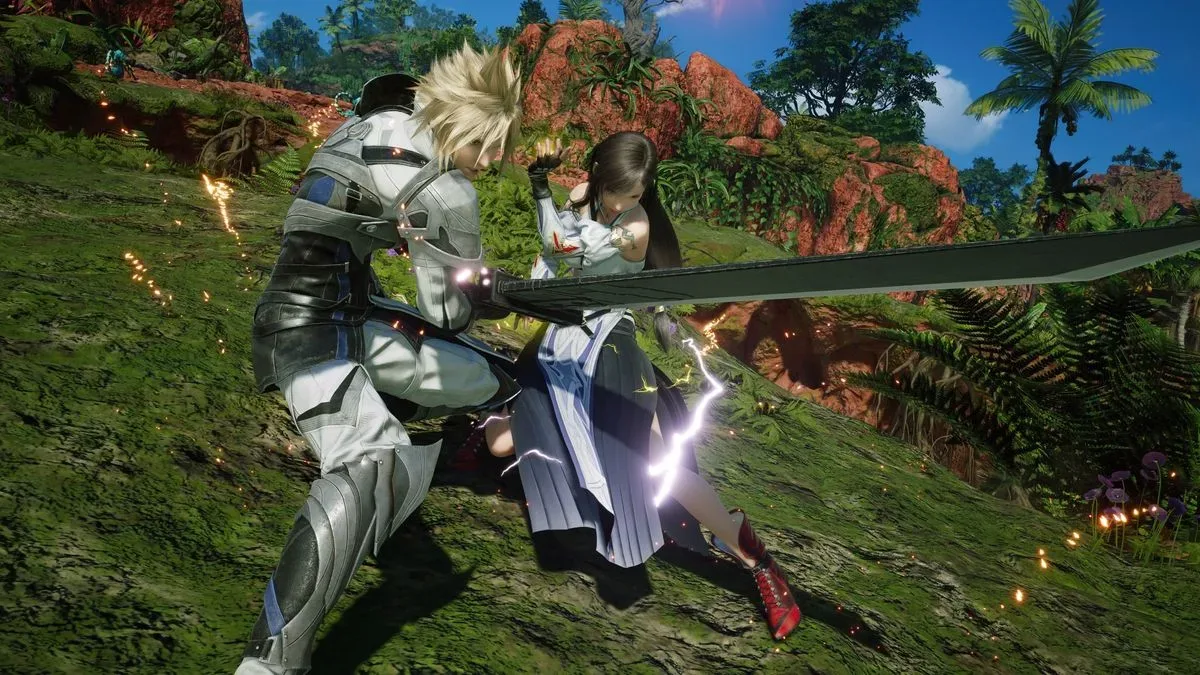
One major addition discussed by Endo is the FITS system, described as a job-system-like feature that changes party-member abilities and can alter how players approach combat with each character. Systems of that sort can be powerful because they provide clearer roles and specialization, but they also carry a risk in a Final Fantasy 7 game: they could seem to narrow the freedom traditionally offered by Materia.
Materia has long been a central pillar of Final Fantasy 7 customization. It allows players to shape characters through magic, commands, support effects, summons, and combinations that can alter an entire battle plan. The appeal is not only the range of tools available, but the ability to move those tools between party members and experiment with different builds.
Endo emphasized that the team has kept Materia at the center of customization. FITS is intended to complement that system rather than override it. In practical terms, the new feature is meant to help players push a Materia-based direction further, sharpening a chosen specialty instead of locking characters into a rigid role that disregards the player's preferred setup.
That distinction matters for the trilogy's design identity. A conventional job system often asks a player to commit to a predefined class and its associated strengths. Materia, meanwhile, has historically encouraged more fluid experimentation. Positioning FITS as an extension of Materia rather than a replacement could allow Revelation to offer stronger specialization while retaining the flexibility many players associate with Final Fantasy 7.
It also reflects Endo's broader concern about sequel design. A new feature needs a reason to exist beyond novelty. If FITS simply duplicated what Materia already accomplishes, it would add complexity without adding meaningful choice. By making it a way to deepen particular Materia builds, the system can potentially create new tactical possibilities while remaining connected to the series' established foundations.
Keeping the original game's playful spirit
Endo has also pointed to the celebratory, festive feeling he experienced when first playing the original Final Fantasy 7. Over time, he said that feeling has made him want to explore bolder and more playful additions to the remake trilogy.
That observation is useful context for the project's approach. Final Fantasy 7 is remembered for dramatic story beats and a monumental scale, but it has also always contained odd humor, unusual minigames, eccentric characters, and moments of tonal contrast. A remake that focused only on solemn spectacle would miss an important part of what made the original memorable.
For Revelation, the challenge is especially large because it is positioned as a finale. The final chapter must deliver resolution while maintaining room for surprise, player expression, and the lighter energy Endo associates with the original's spirit. The battle system is one place where that ambition can surface: a flexible build system, expressive character kits, and fresh mechanical twists can make combat feel like more than a march toward an ending.
A continuing conversation about Final Fantasy combat
The question raised by Endo's comments extends beyond one remake trilogy. Final Fantasy has repeatedly reinvented its battle systems across decades, moving among traditional command menus, active-time structures, online combat, action-driven encounters, and hybrid approaches. There is no single format that defines every entry, which makes each new direction a subject of debate among players.
Interest in turn-based RPGs has also been prominent recently. Clair Obscur: Expedition 33, for example, uses a fundamentally turn-based structure but incorporates timed inputs for stronger actions alongside reactive parries and dodges. Its success demonstrates that turn-based design and real-time responsiveness do not have to be mutually exclusive concepts.
Meanwhile, Final Fantasy Resonance is due this month and is expected to appeal to players who have wanted a more fully turn-based direction from the wider series. Together, those projects underline how varied the RPG audience can be: some players want complete menu-led deliberation, some prefer uninterrupted action, and many enjoy systems that borrow from both.
Final Fantasy 7 Revelation will arrive in that ongoing conversation as the end of a very particular experiment. Endo's willingness to acknowledge that there is no universally correct ratio of action to commands is perhaps the most revealing part of his perspective. The goal is not to declare one approach the winner. It is to make the combat fit the game, its characters, its customization, and the expectations of players reaching the trilogy's final chapter.
For Endo, the search itself appears to be the creative engine. Revelation may close the Remake trilogy, but the battle director's comments suggest its combat was shaped by the same willingness to question, rebuild, and experiment that has defined the project from the beginning.
Community
Discussion
Start the conversation.
No comments have been posted yet.