

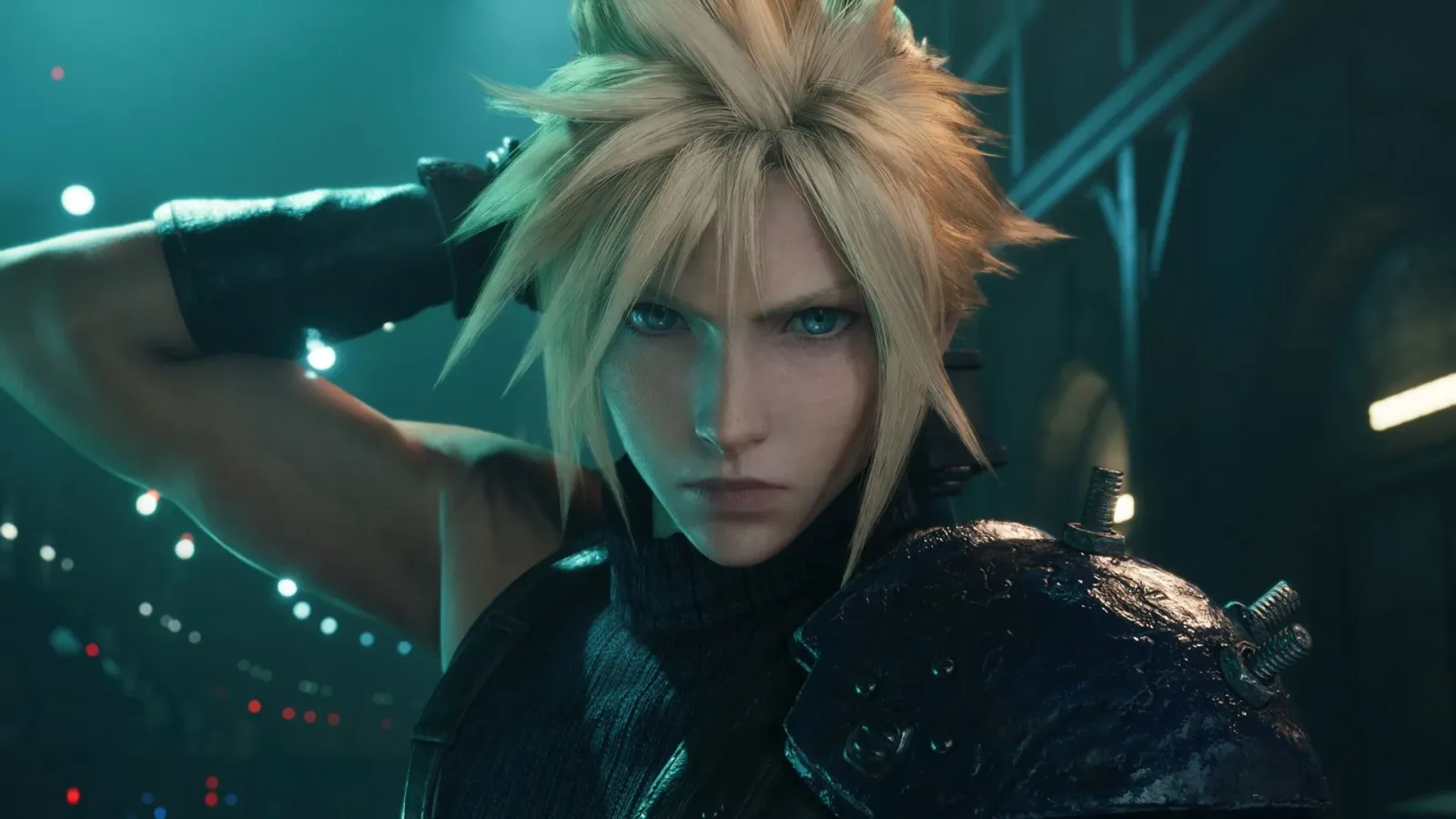
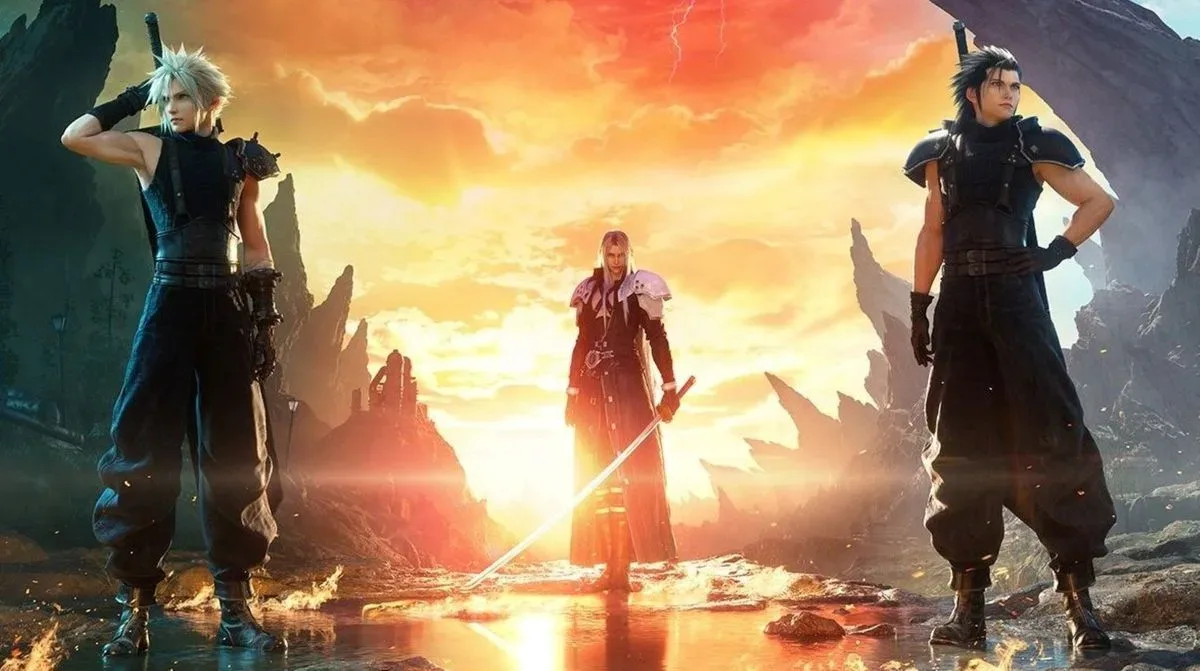
The Final Fantasy 7 Remake trilogy has always been an audacious proposition. Rebuilding one of the most treasured RPGs ever made was difficult enough; turning that recreation into three enormous, visually lavish games with new story material, expanded locations, and a modern action-driven combat system was something else entirely. Yet, barring a late delay, Final Fantasy 7 Revelation is expected to arrive next April and bring that undertaking to a close.
That timing would mean the complete trilogy has arrived across seven years. In a period where blockbuster productions routinely spend most of a decade in development, studios have shut down, jobs have been lost, and high-profile projects have been cancelled before players ever see them, that is a significant achievement. It is not simply that three games are being finished. It is that they are three large, dense productions intended to make a familiar world feel newly explorable on a scale that would have sounded implausible when the remake was first announced.
There is a real possibility that this particular combination of ambition, continuity, budget, and cultural confidence will be difficult to reproduce. The trilogy is not proof that modern AAA development has solved its biggest problems. Rather, it may be an example of what can happen when a major publisher commits to a clear plan, retains the people shaping that plan, and works with material that has already earned generations of goodwill.
A promise that once felt almost impossible
When Final Fantasy 7 Remake was unveiled in 2015, it landed during an unusually optimistic moment for PlayStation. The presentation that introduced it is still remembered for a run of seemingly impossible announcements, including Shenmue 3 and The Last Guardian. PlayStation had a strong identity built around major exclusives, unexpected reveals, and visible support for independent developers. Even in that context, though, Final Fantasy 7 Remake felt exceptional.
For useful background on this topic, read Fortnite's Five Nights at Freddy's Reveal Becomes Its Most-Liked Post Ever.
For years, fans had imagined what a full modern return to the 1997 RPG might look like. A PlayStation 3 technical demonstration had kept that desire alive, while several spin-offs and related projects offered glimpses of the wider Compilation of Final Fantasy 7. None of those projects, however, represented a full remake of the original adventure.
The eventual plan was more ambitious than a straightforward recreation. The first game would focus entirely on Midgar, a section that occupied only the opening portion of the original release. The later entries would broaden the journey far beyond the city and reinterpret events, characters, and environments with much more room to breathe. That structure naturally raised concerns. Could a story once told in a single RPG support three contemporary blockbusters without feeling stretched?
Remake and Final Fantasy 7 Rebirth gave the project a persuasive answer. Remake turned Midgar into an extended 40-hour experience, while Rebirth opened up familiar parts of the world across a much larger journey that can take roughly 80 hours. The games have not treated nostalgia as a static museum piece. They have used it as a starting point for surprise, elaboration, and sometimes dramatic recontextualization.
Why Revelation's arrival matters
Revelation has a difficult task. It must satisfy players who know the original Final Fantasy 7 intimately, welcome those who began with the remake series, and conclude a story that has actively invited debate over where its changes will lead. It also carries the pressure of being the final chapter in a trilogy whose previous entries have made a point of elevating small memories into substantial locations, scenes, and character moments.
But its projected release next April is meaningful before anyone has finished the game. If it arrives as planned, the trilogy will represent a rare instance of a major studio completing a connected run of exceptionally large games without the gap between entries expanding into something close to a generation-long wait.
That contrast is especially sharp when considering how development has changed. There was a time when a studio could release several major games in a relatively compact span. Naughty Dog, for example, delivered three Uncharted games and The Last of Us within six years. The current generation has looked very different: a comparable amount of time can now be consumed by a single new release. The studio's next title, Intergalactic: The Heretic Prophet, is highly anticipated, but its development also reflects the wider reality that top-tier game production is slower, costlier, and more complicated than it was in earlier console eras.
AAA publishers are caught between competing pressures. Live-service games can promise recurring engagement and revenue, even though many fail to establish a lasting audience. Premium single-player projects can win acclaim and sell extremely well, but they require huge investment and years of work before any return is guaranteed. A three-part, story-focused remake series with blockbuster production values is therefore a substantial gamble, even when it is built around one of gaming's most recognizable names.
Continuity behind the scenes
Game director Naoki Hamaguchi has identified a key reason Revelation has been able to move on a three-year development cycle: the trilogy's core development team has stayed together, and its overall vision has remained consistent. That may sound simple, but it is a major advantage in an industry where teams can be restructured, projects can change direction, and knowledge is often lost between productions.
A stable team does not eliminate every challenge. Rebirth in particular has prompted discussion around some of its more traditional open-world elements. Activities and checklists can occasionally feel old-fashioned beside the spectacle and character work surrounding them. Yet those imperfections are tied to a broader desire to make the world of Final Fantasy 7 feel vast and inhabitable. Places that were once brief stops on a world map are now destinations with texture, personalities, and stories of their own.
That is the central strength of the remake trilogy. It takes the mental picture many players have held for decades--the machinery, neon, rust, deserts, coastlines, monsters, and larger-than-life party members--and gives it physical presence. The result is not merely higher-fidelity nostalgia. It is an attempt to translate the scale players imagined from stylized 1997 visuals into a world that can be walked through, heard, and examined in detail.
The trilogy's unusual achievement is not that it avoids every compromise of modern AAA design. It is that it has sustained a huge creative project long enough to give its world and characters the space its creators clearly believe they deserve.
The advantage no new property can easily claim
It would be tempting to conclude that publishers should simply make more trilogies like Final Fantasy 7 Remake. The harder truth is that few projects begin with the same level of security. Final Fantasy 7 is an established landmark, supported by decades of affection, familiarity, and commercial history. It has a built-in audience that can appreciate a new version while still arguing passionately over every alteration.
New worlds do not receive that benefit. Original characters, settings, and mechanics need time to earn trust, while current financial conditions make that patience harder to find. When budgets climb, safer bets become more appealing. That can create a cycle in which publishers lean ever more heavily on proven brands while the next enduring series struggles to get the investment required to become one.
The risk is not that Final Fantasy 7 receives too much care. Its remake project has plainly benefited from a team that understands why the original remains important. The risk is that the industry learns the wrong lesson and treats familiar intellectual property as the only place where grand creative bets are acceptable.
At a recent PAX West panel, Hamaguchi said one of the trilogy's goals is to introduce Final Fantasy 7 to another generation, with an intention to build on that relationship in the future. That goal makes sense. The universe has always had room for additional stories and viewpoints. Still, there is a balance to strike between honoring a beloved world and turning it into a permanent stream of content.
Closing one chapter, making room for another
There is value in letting a major story end. Final Fantasy has survived for decades partly because it continually reinvents itself: new worlds, new casts, new battle systems, and new creative teams get opportunities to define what the series can be. Final Fantasy 7 is monumental, but it should not be the only model for the future.
If Revelation delivers a satisfying conclusion, the strongest next move may be to let the trilogy stand as a finished statement rather than endlessly extending it. Square Enix can celebrate what this project achieved while giving new talent the chance to build the next unforgettable Final Fantasy world.
For now, the remake saga remains a striking exception to the modern AAA rule. It has taken a classic, expanded it into an estimated 200-hour journey across three games, and maintained enough momentum to reach its finale in seven years. In an era increasingly defined by caution, consolidation, and lengthy waits, that is worth recognizing. The hope is not merely that Final Fantasy 7 Revelation succeeds. It is that its success helps prove ambitious, character-driven projects can still make room for the new stories that have not yet had their own 1997 moment.
Community
Discussion
Start the conversation.
No comments have been posted yet.