

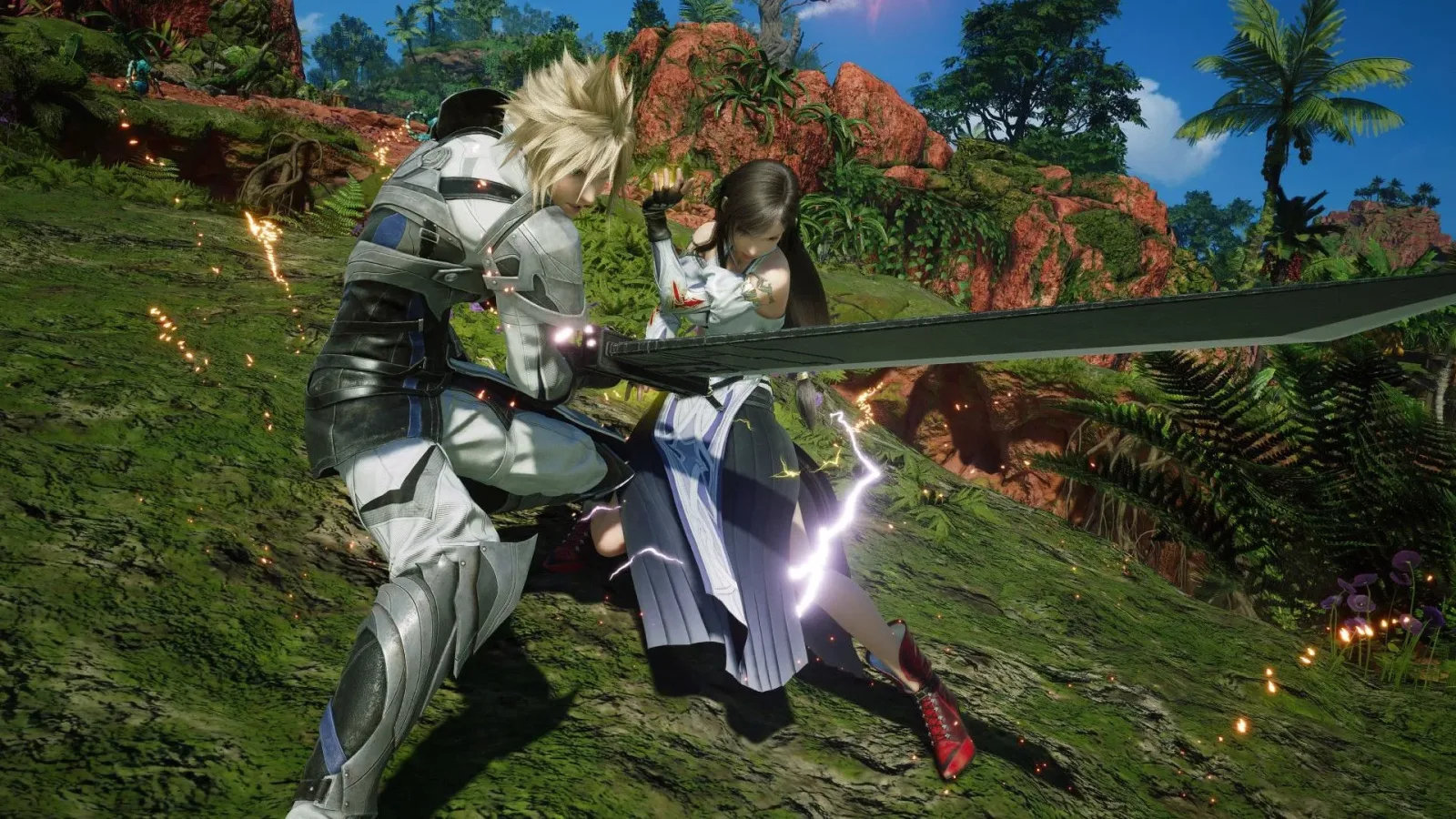
Final Fantasy 7 Revelation, the planned final chapter in Square Enix's Final Fantasy 7 Remake trilogy, could be a very large game by modern console standards. Director Naoki Hamaguchi has said the RPG is probably going to land at roughly 200GB, while stressing that its final size is still being worked out.
That estimate arrives as discussion continues around the game's physical release and the confirmation that players will need an online download to access the full experience. Hamaguchi has made clear that the development team did not want to reduce the quality of the trilogy finale simply to ensure every part of the game could be contained entirely on the physical media.
"Things are still getting worked out, but it's probably going to be around 200 GB of game," Hamaguchi said.
A 200GB installation would place Revelation above the already considerable storage requirements of its predecessors. It would also make hard-drive and SSD management an immediate concern for players, particularly for anyone who keeps several large games installed at the same time. The figure is not confirmed as a final requirement, and it may yet change before release, but it offers the clearest indication so far of the scale Square Enix is targeting for the finale.
For useful background on this topic, read Palworld's Unused Pal 'Graveyard' Holds Hundreds of Scrapped Designs.
A download requirement despite the physical release
The central issue is not whether Final Fantasy 7 Revelation will have a physical product. Hamaguchi emphasized that offering one was important to the team. Instead, the point of debate is that the physical edition will not contain the complete game without an additional online download.
That distinction matters to players who buy boxed games for convenience, resale, collecting, or preservation. Final Fantasy 7 Remake and Final Fantasy 7 Rebirth both shipped across multiple discs, letting purchasers access their full contents without needing to retrieve essential game data online. Beyond echoing the multi-disc presentation of the original PlayStation Final Fantasy 7, that approach meant the games were usable from their physical releases without depending on a digital storefront or download service.
Revelation will take a different route. Hamaguchi's explanation is that fitting everything onto the disc-based release without a download would require compromises the team does not want to make for the final installment. In his view, the production has to push past hardware limitations to a degree rather than reshape the game around them.
"I understand there are a lot of opinions about this topic, but at the end of the day, the fact is we need to overcome the hardware to a certain extent," Hamaguchi said.
It is a familiar tension in the current console generation. Physical releases remain meaningful to a large audience, but increasingly complex games can exceed the practical capacity available through packaged media or create difficult trade-offs around asset quality, languages, cinematics, and the amount of content developers can include. A disc can still function as part of a retail release, but it does not necessarily guarantee that every required file is preserved on that disc.
Why 200GB would be a major storage commitment
For PlayStation 5 players, a 200GB game would be a conspicuous but not unprecedented use of storage. Modern blockbuster games can consume large portions of an internal SSD once high-resolution assets, voice work, expansive environments, cinematics, and updates are considered. Even so, installing Revelation could force players to make decisions about what else stays on their console, especially if they have not expanded their storage.
The potential impact is even more striking on Nintendo Switch 2. A 200GB installation would come close to consuming the system's storage capacity by itself. The final file size on Nintendo hardware has not been announced, however, and there is a reason to avoid treating Hamaguchi's broad estimate as a guaranteed Switch 2 requirement.
Final Fantasy 7 Rebirth provides a useful comparison. On PlayStation 5, Rebirth is nearly 150GB, while its Switch 2 version is listed at 102.5GB. That gap suggests platform-specific optimization can substantially affect the final footprint. It remains possible that Revelation will also require less space on Switch 2 than on PlayStation 5, but Square Enix has not confirmed any number for the finale on either platform.
Players should therefore read the 200GB figure as an early overall target rather than a completed platform-by-platform storage chart. Storage demands could differ between versions, and a game's install size may also shift during late development as files are optimized, compressed, added, or removed. Hamaguchi's wording leaves room for all of that, even as it signals that the project will be enormous.
The trilogy's size has grown with its ambition
The Final Fantasy 7 Remake project has steadily expanded the scope of the original game's story. The first entry focused on Midgar, while Rebirth broadened the journey considerably. Revelation is expected to conclude the trilogy, placing added pressure on the development team to deliver a finale that can accommodate its narrative resolutions, major locations, combat systems, cinematic moments, and the scale audiences now associate with this version of Final Fantasy 7.
Hamaguchi's comments indicate that Square Enix sees the larger storage requirement as connected to that ambition. The studio's decision is not being framed as an attempt to abandon physical releases; rather, it is presented as an effort to keep a physical option available while accepting that a download will be necessary to achieve the intended result.
That will not settle every concern. For collectors, the difference between a complete game on disc and a disc that requires a major download is substantial. Internet access can be limited, costly, or unreliable. Long-term preservation questions also become more complicated when essential data lives outside the retail package. Those concerns are especially understandable given that the earlier two entries used multiple discs to avoid that situation.
At the same time, Hamaguchi's insistence that a physical product was "really important" suggests Square Enix recognizes that the boxed edition itself still has value. The eventual format may not satisfy every preference, but the company is not simply moving Revelation to a download-only model.
What players can take from the estimate now
There is no announced final install size, no confirmed breakdown between PlayStation 5 and Nintendo Switch 2, and no indication of how much data will be placed on the physical release compared with what must be downloaded. Those details will be important before launch, particularly for Switch 2 owners and for anyone choosing whether to purchase physical or digital.
For now, the key takeaway is straightforward: Final Fantasy 7 Revelation is being built as a storage-heavy finale, and Square Enix expects players to need a significant amount of free space. Hamaguchi's estimate of around 200GB should encourage prospective players to plan ahead, while his qualification that the team is still working out the details means the number should not yet be treated as final.
The conversation around Revelation's size also reflects a broader shift in how blockbuster games are delivered. Multi-disc packages can still exist, but the size of contemporary games is increasingly testing the limits of physical distribution. Square Enix's approach with the Final Fantasy 7 finale appears to be a compromise: preserve a retail edition, but use an online download to avoid scaling back the game itself.
Whether that balance feels acceptable will vary from player to player. What is clear is that Revelation may be one of the trilogy's most demanding installs, and its eventual storage requirements will be nearly as important as its story and gameplay details for players preparing to make room for the closing chapter.
Community
Discussion
Start the conversation.
No comments have been posted yet.