

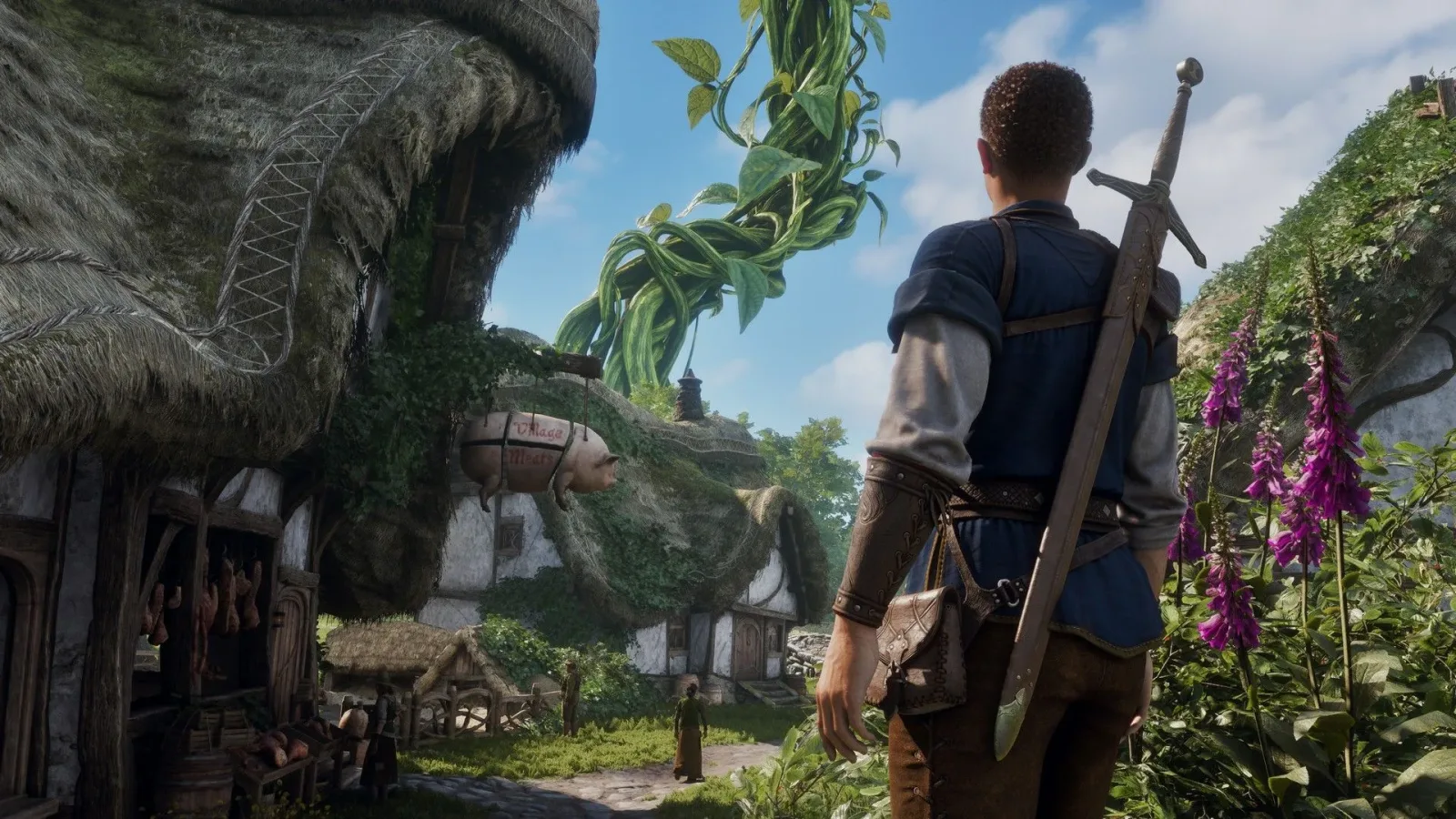
Fable game director Ralph Fulton says the team reviving the long-dormant RPG series is united by a direct attachment to the original trilogy. In comments made during the Future Games Show, Fulton described a development group made up entirely of people who arrived at Playground Games with the specific goal of working on Fable--not merely to join the Warwickshire studio behind the project.
That distinction matters for a game carrying as much history, personality, and expectation as Fable. The series has been largely absent since 2010, and its return places Playground in the challenging position of taking on a beloved fantasy world created elsewhere. It is also a major creative shift for a studio best known for racing games. Fulton's comments frame the reboot as a project driven by people with personal familiarity with Albion, its strange humor, its moral choices, and the particular tone fans associate with the earlier games.
"Every single member" of the team is, in Fulton's words, first and foremost a Fable fan. He said many--if not most--of the developers traveled from around the world to the small town in Warwickshire where Playground Games is based. Their reason for making that move, he explained, was not simply the opportunity to work at Playground. It was the chance to help restore Fable.
A comeback shaped by series loyalty
Reboots often have to answer a deceptively difficult question: how closely should they follow what came before? A new Fable needs to welcome players who may have never played the original games, while also satisfying an audience that remembers the franchise's choices, eccentric British comedy, fairytale atmosphere, and willingness to let its world react to the player.
For useful background on this topic, read Palworld's Unused Pal 'Graveyard' Holds Hundreds of Scrapped Designs.
Having a staff full of fans does not automatically solve every design problem, but it can give a team a clear starting point. Developers who know why a series resonated can better identify the elements worth preserving and the areas that need reconsideration. In Fable's case, that includes more than broad fantasy imagery. The earlier games developed a distinct identity through exaggerated characters, mischievous storytelling, player morality systems, social interactions, and a version of Albion that could be charming, absurd, and occasionally dark in the same moment.
Fulton said that the shared connection to Fable was something every new team member had in common from their first day. The goal, he said, was to make a great Fable game. His suggestion is that this commitment should be visible in the project itself, rather than existing only as a statement about the studio's internal culture.
For longtime followers, that is likely the central promise of the reboot. The concern around any revival is not just whether it will be technically impressive or visually modern. It is whether it will still feel like the series people remember. Playground's task is therefore larger than building an RPG set in a fantasy kingdom. It has to capture an identity established across three games while giving the franchise a reason to exist again after such a long break.
Playground Games faces a major change of direction
Playground Games has a substantial reputation, but Fable represents a different kind of challenge from its prior work. The studio is strongly associated with racing games, making this reboot its first move outside that genre. Building an open-ended role-playing experience requires a different collection of priorities: character progression, narrative choices, world reactivity, quest design, combat, pacing, and the many small systems that help a player feel connected to a fictional place.
That transition has also unfolded under a long period of public anticipation. Fable was announced more than six years ago, following even earlier speculation about the franchise's return. Extended development cycles can amplify expectations, especially when the game in question is reviving a name that has been quiet for more than a decade.
The length of that wait makes Fulton's emphasis on the team's enthusiasm particularly notable. He is presenting the project not as a detached corporate revival of an old brand, but as something being made by developers who actively wanted to work with this world. It is a useful message for a series whose appeal was always unusually personal. Fable asked players to make decisions, shape their hero, build relationships, acquire property, and leave marks on Albion. Fans often remember the stories that emerged from those systems as much as they remember individual plot points.
Of course, reverence can be a balancing act. A reboot that repeats old ideas without adapting them risks feeling dated. One that changes too much can lose the qualities that made the name meaningful. The strongest possible result would be a game that understands the original trilogy's foundation while applying modern design sensibilities where they can make Albion richer, stranger, and more reactive.
Confidence in the ending raises the stakes
Fulton's latest remarks also follow his confidence that the team has successfully landed the upcoming RPG's ending. Endings are a particularly sensitive topic for games built around player agency and long-term investment. Players can spend dozens of hours exploring, making choices, and forming an idea of who their character is; the conclusion has to provide a satisfying payoff for that journey.
The original Fable games remain fondly remembered overall, but not every aspect of the trilogy has aged equally well in fan discussion. Fable 2's conclusion, in particular, has been a frequent subject of criticism. Its final confrontation and resolution have often been viewed as underwhelming compared with the buildup that precedes them. A team full of players who know the series intimately will be well aware of that reputation.
That history does not reveal anything concrete about the reboot's final act, and Fulton did not detail its story or structure. Still, his confidence suggests that Playground recognizes how important a conclusion can be for this kind of RPG. If Fable is intended to re-establish the series for a modern audience, it will need to deliver not just a compelling opening and entertaining middle, but a finish that validates the player's investment.
There is also a broader lesson in the criticism of Fable 2's ending. A memorable role-playing game is rarely judged only on one mission, mechanic, or cinematic. Players tend to assess the whole journey: the freedom they were given, the consequences they saw, the emotional weight of their choices, and whether the ending reflects the adventure they believed they were having. For a reboot of Fable, that means the final stretch will inevitably be examined closely.
Fable's place within Xbox remains important
Fulton has also previously said that many people within Xbox view Fable as vital to the platform's DNA. He indicated that this sentiment helped protect the project through its lengthy development period, even as Xbox has faced relentless layoffs.
That observation adds another layer to the reboot's importance. Fable is not simply another new RPG. It is one of the recognizable names linked to Xbox's history, alongside franchises that helped define the platform's earlier identity. Bringing it back carries symbolic value as well as commercial and creative pressure.
For Xbox, an effective Fable return could help fill a role that has long suited the brand: a characterful, accessible fantasy RPG with a tone distinct from more severe or purely action-focused adventures. The franchise has traditionally occupied an unusual space, mixing broad comedy and storybook aesthetics with systems that invite players to experiment with morality, reputation, romance, family, wealth, and heroism. That individuality is difficult to reproduce with generic fantasy conventions alone.
It is also why Fulton's insistence on the developers' fandom is more than a simple morale statement. It points to a team that understands the series cannot be reduced to a setting or logo. The hope is that the people making the new game appreciate the details: the humor, the sense of consequence, the theatrical villains, the oddball citizens, and the feeling that Albion should respond to the player in surprising ways.
The real test will be Albion itself
Ultimately, fans will judge the reboot by what it feels like to live in its version of Albion. The project's developers may have deep affection for the trilogy, but the game will need to demonstrate that affection through its quests, systems, characters, choices, and ending. A convincing revival has to make players feel that the series has returned with purpose rather than simply returned in name.
Fulton's comments provide a reassuring glimpse into Playground Games' approach. The studio has assembled a team whose members, he says, came from around the world because they wanted to make Fable. After years of silence for the franchise and years of waiting since the reboot's announcement, that shared motivation may be one of the most valuable foundations the project can have.
It does not remove the uncertainty surrounding such an ambitious comeback, nor does it guarantee that every decision will satisfy every veteran player. But it does establish the standard Playground appears to be setting for itself: make a game worthy of Fable's legacy, with people who understand exactly why that legacy matters.
Community
Discussion
Start the conversation.
No comments have been posted yet.