

Final Fantasy VII Revelation is positioned as the final chapter in Square Enix's ambitious remake project, arriving during the year of the original game's 30th anniversary. The series has already expanded one PlayStation-era role-playing game into multiple large-scale releases, and Revelation appears ready to make the most dramatic changes yet as it approaches Final Fantasy VII's endgame.
That does not necessarily mean the landmark moments from the 1997 game are being discarded. Far from it. Revelation is still expected to cover the stretch involving the Highwind, Icicle Inn, Wutai, Mideel, the hunt for powerful summon Materia, and the climactic conflict surrounding Sephiroth. But hands-on impressions and developer comments indicate that the order, structure, mechanics, and importance of several of those elements will be substantially different.
Some adjustments come naturally from moving a turn-based RPG into a modern real-time action framework. Others reflect the remake project's much broader focus on characters who were once easy to miss, as well as its desire to give side content more dedicated stories. Here are eight of the biggest ways Revelation appears to be changing Final Fantasy VII's original PS1 blueprint.
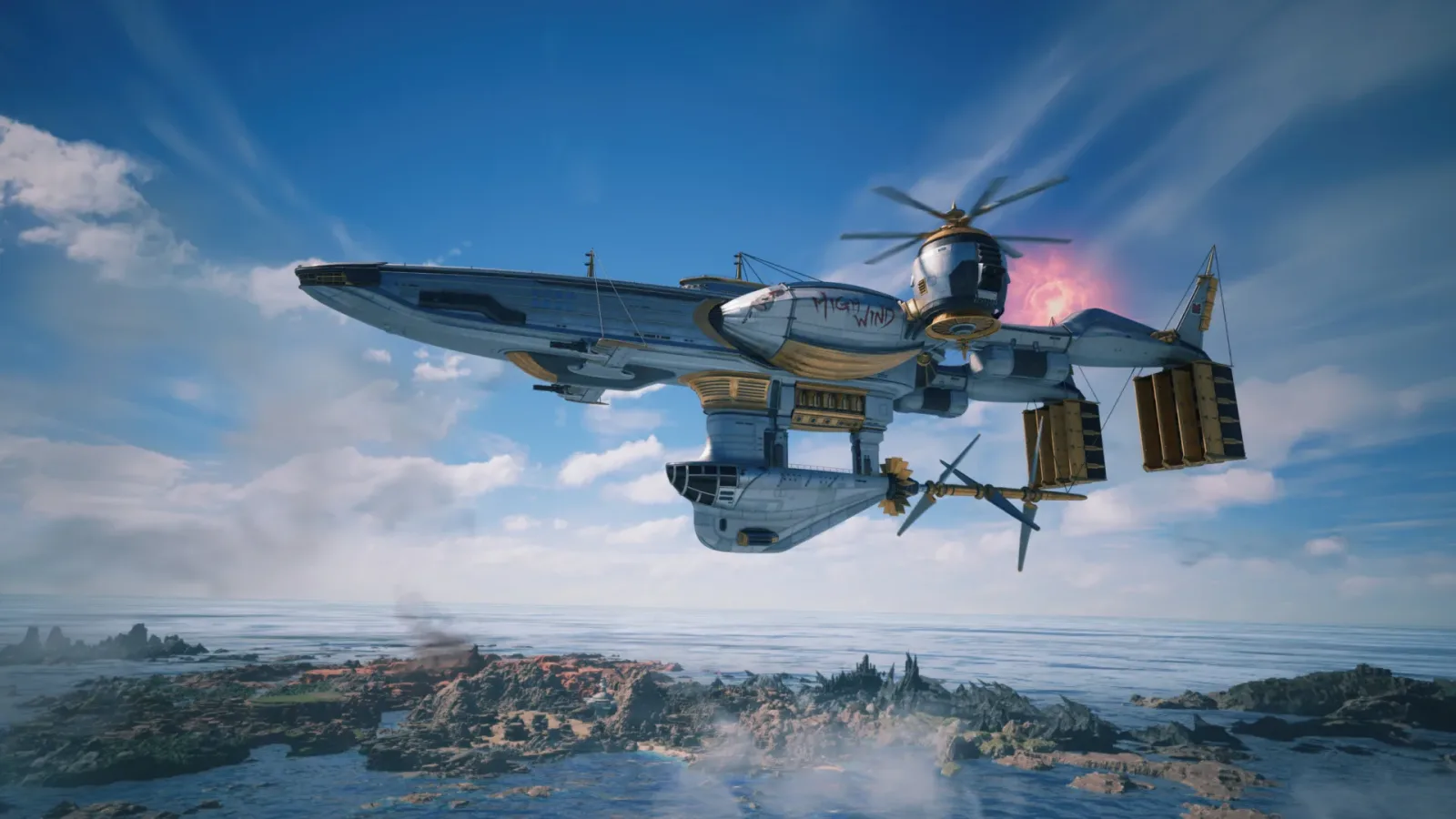
1. The Highwind opens the world, but not all at once
In the original Final Fantasy VII, acquiring the Highwind marked a major liberation point. Once players had the airship, much of the world became available to explore, allowing them to chase optional bosses, hidden Materia, side quests, and endgame upgrades at their own pace.
For useful background on this topic, read Miami Heat Plan Vice City Takeover Night Ahead of GTA 6 Launch.
Revelation is expected to retain the freedom and excitement of piloting the Highwind through a fully explorable world. However, its open-world structure will apparently place more restrictions on where the party can go at particular points in the story. Weather conditions and closed airspace are among the methods that may stop players from visiting every destination immediately.
That approach sounds like a compromise between the original's late-game freedom and the carefully paced regional progression established in the previous remake entries. The Highwind should still be a defining vehicle and a key symbol of the party's expanding reach, but exploration may be shaped around narrative timing rather than being entirely unlocked in one moment.
2. Snowboarding may no longer be mandatory
Final Fantasy VII's snowboarding sequence is one of the original game's most memorable diversions. Following the events at the Forgotten City, Cloud's pursuit of Sephiroth leads through the Corel Valley Cave and toward Icicle Town, where players must take part in a snowboarding minigame before advancing to the next area.
For another perspective on this story, read Final Fantasy VII Revelation Is Reworking the PS1 Game's Endgame, Party and World Access.
Revelation appears to be keeping snowboarding, along with Icicle Inn and the cold-weather survival elements associated with the region. Yet previews suggest these components may not happen in the same sequence as they did in 1997. More importantly, the snowboarding activity may no longer be a required story gate.
If that is the case, it would fit the remake project's broader tendency to turn old diversions into fuller optional activities. The shift could give players more control over when they engage with the minigame while letting the main narrative move through the northern regions in a different rhythm.
3. Yuffie and Vincent are no longer optional discoveries
The original Final Fantasy VII had a core group of standard party members, plus two characters players could entirely miss: Yuffie Kisaragi and Vincent Valentine. Finding Yuffie required a particular encounter and a specific conversation sequence, while Vincent was hidden behind a separate optional path in Shinra Mansion. Neither was necessary to finish the game.
That distinction is gone in Revelation. Yuffie has already taken on a much larger role in the remake continuity, and Vincent is set to become a full-time member of the active party. Their stories are also being worked directly into the central narrative.
As a result, a trip to Wutai and a deeper exploration of Vincent's history with the Turks are no longer pieces of lore reserved for the curious player. This is a meaningful change to the original's structure. What used to be secret character content is becoming foundational material, allowing Revelation to give both characters more sustained development and stronger connections to the larger conflict.
4. Vincent's Galian Beast form is part of his standard combat style
Vincent's distinctive combat identity in the 1997 game was closely tied to his Limit Breaks, which transformed him into monstrous forms. One of the most recognizable was Galian Beast. In Revelation, that transformation is expected to operate differently: it will be included as part of Vincent's regular battle kit rather than being limited to a traditional Limit Break role.
Battle director Teruki Endo has pointed to this feature as a favorite aspect of Vincent's design, emphasizing how it helps him stand apart from the rest of the cast. The change makes sense for a fast-paced action system built around individual character abilities, temporary modes, and tactical party switching.
There is also room for Vincent's other transformations to appear in some form, potentially as part of his Limit Break options. That has not been fully detailed, so players should not assume every original form will return unchanged. Still, using Galian Beast as an ordinary combat tool signals that Revelation intends to make Vincent feel mechanically unusual from the moment he joins.
5. Master Materia will not return
One of the most powerful rewards in the original game was Master Materia. These special Materia pieces could provide access to every spell, command, or summon in their respective categories. They were ultimate progression items, ideal for a late-game party with enormous customization options.
Revelation will not include Master Materia. Director Naoki Hamaguchi has given a direct explanation: in this version of the combat system, Master Materia would be too disruptive to balance. That is understandable when considering how much more immediate and ability-driven modern Final Fantasy VII combat has become.
In the original turn-based design, broad access to magic and commands could be powerful without instantly trivializing every encounter. Revelation's real-time battles have different pressures, with character-specific moves, cooldown-like systems, ATB usage, stagger windows, and active positioning all playing a role. A single item that grants unrestricted access to an entire Materia category could undermine those carefully built distinctions.
The absence of Master Materia does not mean endgame character building will be simple. It instead suggests that powerful customization will remain more controlled, preserving reasons to choose particular setups and party compositions.
6. Several summons have new homes and new narrative roles
Summons were scattered across the original Final Fantasy VII's world, often hidden behind optional exploration. Revelation is changing the placement of at least some of them, and those moves appear to come with larger story implications.
Typhoon, the wind-focused summon previously connected to the Ancient Forest, is now associated with Mideel. Hades has undergone an even bigger shift. Rather than being found in an underwater location reached through submarine exploration, Hades is expected to serve as Wutai's patron deity, taking a role that had been associated with Leviathan.
These are not merely map-marker changes. Reassigning summons to regions and their histories gives them a more prominent place in the worldbuilding. It may also make optional summon hunts feel more like regional questlines than isolated rewards hidden in far-off corners of the map.
7. Leviathan may receive an upgraded counterpart
Final Fantasy VII famously featured several versions of Bahamut, each escalating the summon's spectacle and power. Revelation may be giving Leviathan a comparable treatment. A hands-on look at the game's quest menu reportedly showed an Icicle Inn regional summon entry represented by a silhouette resembling a more formidable version of the aquatic summon.
That observation is not the same as a complete official breakdown, so the exact nature of this possible enhanced Leviathan remains uncertain. It is not yet clear whether it will be an upgraded form, a separate summon, or a reward with a different name and role.
Still, the possibility is notable in light of Hades becoming Wutai's patron deity. If Leviathan is no longer occupying the same Wutai-centric position, an upgraded version tied to the northern areas could provide a new reason for the summon to matter in Revelation's progression.
8. Knights of the Round could become the ultimate multi-part challenge
Knights of the Round was the original game's legendary ultimate summon, known as much for its overpowering effect as for its famously long animation. Obtaining its Materia required players to breed and race a special chocobo capable of reaching a remote island. It was an elaborate reward for players willing to commit to one of Final Fantasy VII's most involved side activities.
Revelation will not use chocobo breeding in the same way, meaning the old route to Knights of the Round is off the table. Instead, the summon is expected to have its own dedicated storyline, structured across multiple segments in a manner comparable to Rebirth's Gilgamesh questline.
The encounter itself also sounds designed to be a true endgame test. The development team reportedly reconsidered and rebuilt the battle after deciding an earlier version was not difficult enough. That suggests Knights of the Round may function as Revelation's premier superboss-style challenge, asking players to master the game's expanded systems rather than simply locating an inaccessible island.
Final Fantasy VII Revelation is therefore not just recreating the final portion of a classic RPG with sharper visuals and larger zones. It is rethinking how players reach famous places, recruit beloved characters, develop combat builds, and earn the series' most coveted summons. The familiar landmarks are still there, but the path through them is set to look very different.
Community
Discussion
Start the conversation.
No comments have been posted yet.