

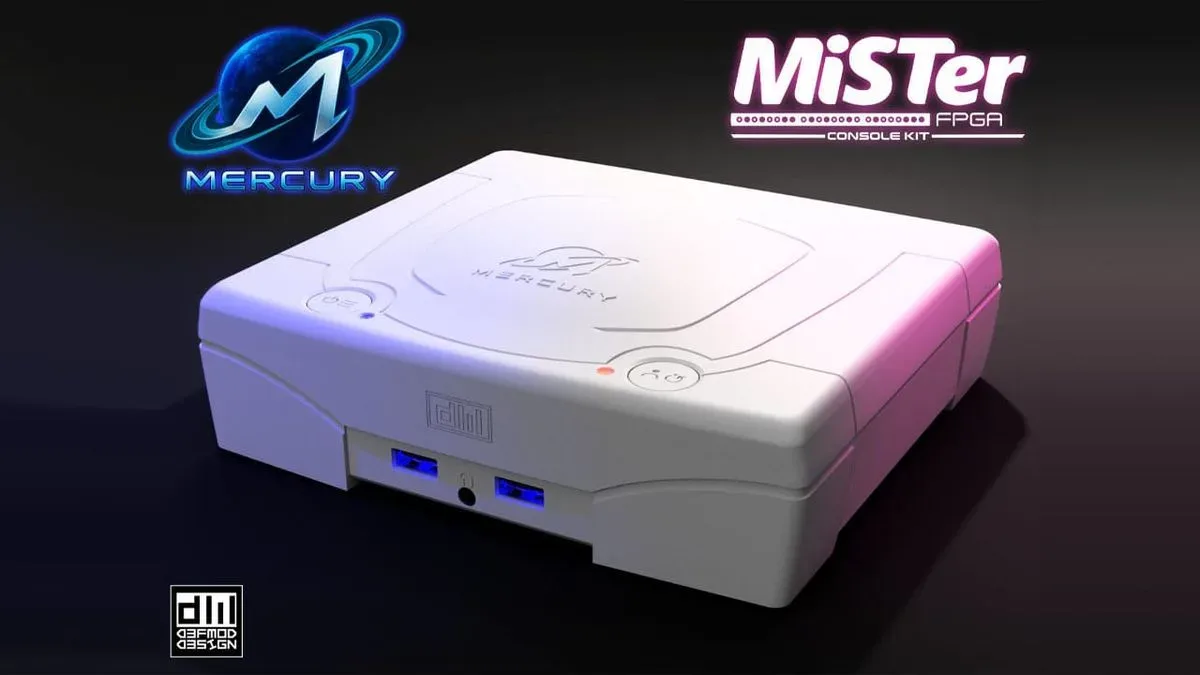
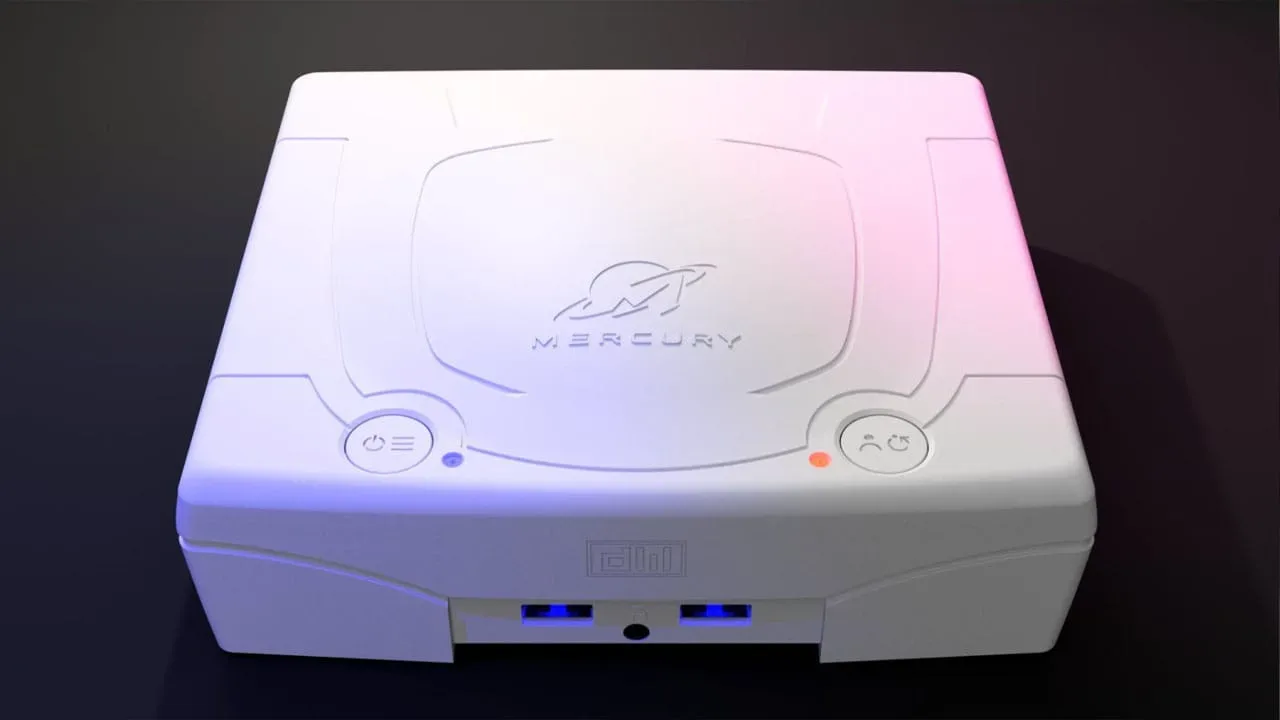
MiSTer FPGA owners looking to give their multi-system retro setup a more distinctive identity have a new option on the way. Df3mod has opened pre-orders for the Mercury, a configurable MiSTer-focused kit built around a case design that deliberately evokes Sega's Saturn hardware.
The name is an especially fitting touch for Sega enthusiasts. Mercury was an early codename associated with the Sega Saturn, and the finished kit leans into that historical connection without attempting to be a literal Saturn console reproduction. Instead, it is intended to house and support a MiSTer FPGA configuration, allowing users to bring a broad selection of FPGA cores into a single machine that has a recognizably 1990s Sega-inspired look.
Prices for the Mercury begin at EUR229. That entry price is only the starting point, however: Df3mod is offering a substantial collection of optional components, adapters, memory choices, controller-interface hardware, and video accessories. Prospective buyers will need to consider exactly how they intend to use a MiSTer before placing an order, particularly because the configuration can have a major impact on both capability and final cost.
A custom enclosure for a flexible FPGA platform
MiSTer has become a prominent project in the retro gaming community because its FPGA-based approach can recreate the behavior of supported original hardware through configurable logic. Rather than centering its identity on one historic console, MiSTer supports a growing range of computer, arcade, and console cores. That versatility makes it attractive to players who want one setup for numerous older platforms.
For useful background on this topic, read Final Fantasy VII Revelation: 8 Major Changes From the PS1 Original.
The Mercury package is designed around that broad MiSTer use case. Its Saturn-inspired styling gives builders a more cohesive, console-like result than a bare board or a generic enclosure, while its long options list aims to accommodate different display types, storage preferences, controller setups, and memory requirements.
Importantly, the Mercury is not presented as a complete all-in-one route into MiSTer on its own. Buyers will still need a DE-10 Nano, which is not included in the kit described by Df3mod. For newcomers, that is a crucial detail: the DE-10 Nano is a core part of a traditional MiSTer setup, so the stated Mercury starting price should not be mistaken for the total cost of entering the ecosystem.
There is also a MiSTer Pi compatibility adapter available as an optional extra for EUR5. That choice may be useful for builders planning a different compatible hardware direction, but it remains another decision to make during the ordering process rather than something automatically included with every Mercury configuration.
Base price and cooling choices
The Mercury begins at EUR229, with a massive heatsink available for an additional EUR10. Cooling can be a practical consideration for anyone assembling a compact FPGA system intended for extended play sessions, and the option gives buyers a way to tailor the build rather than requiring every purchaser to pay for the same thermal hardware.
Control options are also listed separately. A basic remote control costs an additional EUR9, while an MX3 air-mouse remote is offered for EUR19. These accessories may appeal to users who expect to navigate menus from a sofa or integrate the Mercury into a living-room setup. They are optional, so a buyer focused exclusively on wired controllers and close-range access does not necessarily need to include either one.
Connectivity and storage additions are available as well. A combined Wi-Fi and Bluetooth adapter is priced at EUR15, while a SATA SSD-to-USB adapter adds EUR12. The latter could be relevant to users who want to organize substantial game libraries or other MiSTer files on SSD storage, though each buyer will need to decide whether that approach suits their intended build and existing hardware.
Memory options for different MiSTer needs
Df3mod offers the Mercury with several SDRAM selections. Buyers can choose no SDRAM module at no extra charge, add one 128MB SDRAM module for EUR55, or select dual SDRAM modules for EUR75.
That flexibility is significant because MiSTer configurations are not necessarily identical. The cores and features a user plans to prioritize can influence which memory setup makes sense. Someone upgrading existing hardware may already have compatible memory on hand, while a first-time builder may prefer to order a module alongside the case package. A dual-module selection adds further flexibility, but also raises the cost, so it is worth reviewing the requirements of the intended MiSTer cores before committing.
In other words, the Mercury is best approached as a build platform rather than a fixed-spec consumer console. Its appeal lies partly in the ability to select the parts that fit a particular setup, but that same freedom means buyers should avoid treating the least expensive listed configuration as representative of every practical installation.
SNAC and controller-focused additions
For players who place a high value on original-style controller support, the Mercury listing includes multiple SNAC-related choices. SNAC hardware is used in MiSTer setups to support direct controller connections for compatible use cases, making these options especially relevant to enthusiasts who want period-appropriate pads and peripherals involved in their retro arrangements.
The available choices include a full SNAC adapter set for EUR99.99, the IRONSNAC-N for EUR49, the IRONSNAC-S for EUR46, and a DB15/NG/Arcade 2P SNAC adapter for EUR18. There is also a 0.4-metre USB3 male-to-male extension cable for USB3 SNACs, priced at EUR9.
These accessories illustrate how far the Mercury can be customized beyond its Saturn-like exterior. A buyer interested primarily in a tidy enclosure and standard USB control may not need any of them. Conversely, an arcade enthusiast or a collector with specific legacy controllers could regard the relevant adapters as central to the project. Since the full set alone adds nearly EUR100, the selection has a meaningful impact on the final build total.
Video output details to understand before ordering
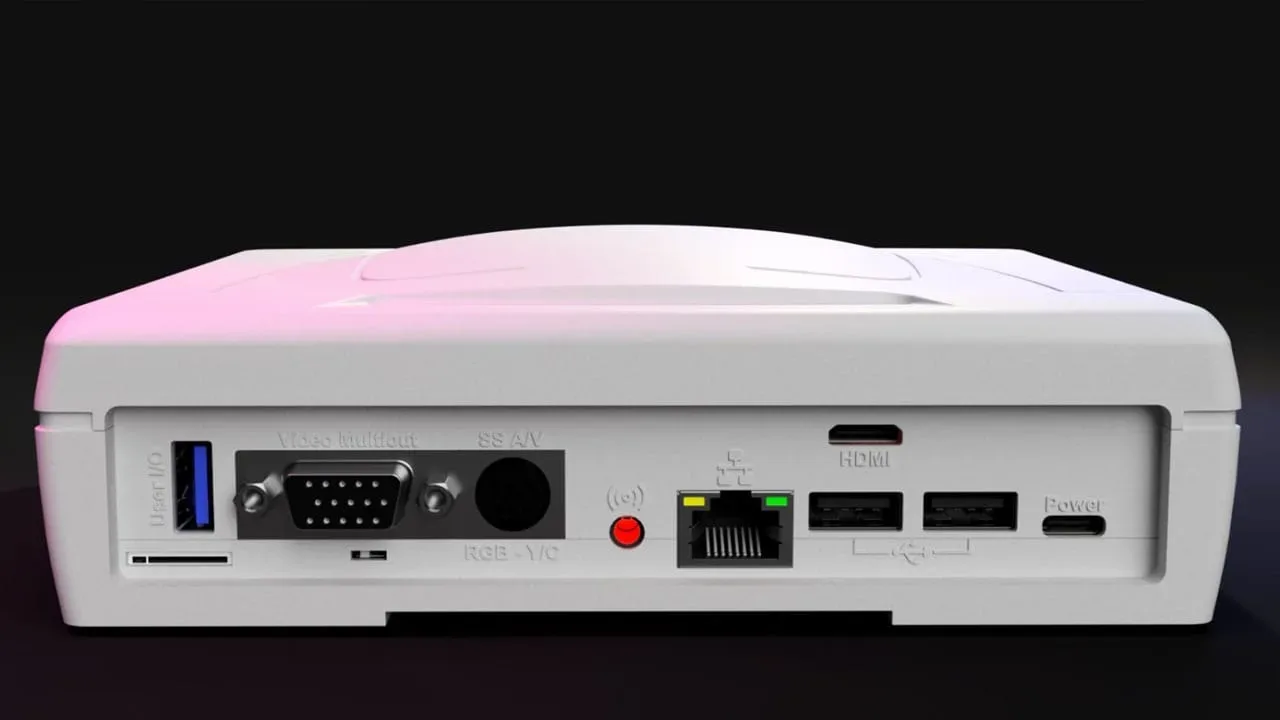
Video support is another area where prospective Mercury owners should pay close attention. The kit does not support composite video. That limitation matters for anyone planning to connect the system to displays that rely on a composite input.
However, the Mercury includes VGA, a Sega Saturn-style MiniDIN connection, and a 24-bit DAC. It also incorporates a passive internal luma trap in its circuitry, enabling the use of S-Video Saturn cables. For retro display enthusiasts, that combination may be one of the kit's most notable qualities, particularly for builds intended to sit alongside CRTs and other older display hardware with more specialized connection expectations.
Additional video accessories can be selected during configuration. A component YPbPr adapter costs EUR18, while an RGB-to-composite/S-Video converter is listed at EUR35. The availability of a converter does not change the Mercury's native composite limitation, but it offers a potential route for users whose setup requires composite or S-Video output through the appropriate conversion hardware.
As with the memory and controller choices, the correct option will depend heavily on the display already in use. Buyers with a VGA-compatible screen, a component-equipped CRT, or Saturn-style cable plans may arrive at very different configurations. Checking connectors before purchasing is likely to save considerable frustration once the kit arrives.
Pre-orders require careful planning
Df3mod emphasizes that customers should read the full product information before ordering. That warning deserves attention because pre-orders cannot be cancelled after they have been made. With so many modular selections available, this is not a kit that rewards rushing through a configuration screen.
Before committing, it makes sense to confirm whether a DE-10 Nano or alternative compatible hardware is already available, establish the desired SDRAM arrangement, identify the display connection that will be used, and decide whether original-controller or SNAC support is truly needed. Storage, wireless connectivity, remote control, and heatsink preferences can then be added around those core decisions.
The Mercury's Saturn-inspired presentation will likely be its immediate draw, especially for fans of Sega's underappreciated 32-bit machine. Yet the more important story is its configurable approach to building a polished MiSTer system. Starting at EUR229 and expanding through a wide range of extras, it gives FPGA enthusiasts the opportunity to create a setup shaped around their own hardware priorities--provided they take the time to plan before locking in a non-cancellable pre-order.
Community
Discussion
Start the conversation.
No comments have been posted yet.