

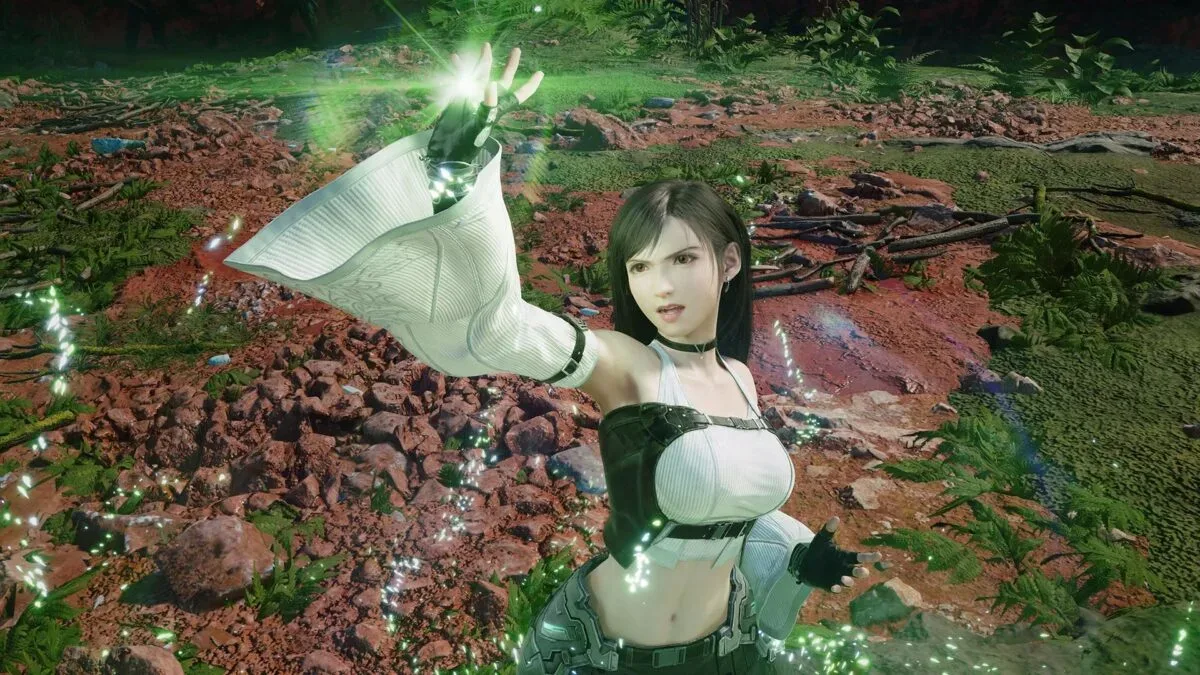
Final Fantasy VII Revelation is approaching its role as the final chapter of the Final Fantasy VII Remake trilogy with a delicate challenge: it must speak to players who know the 1997 game intimately while still giving them reasons to question where the modern version is headed.
Producer Yoshinori Kitase discussed that balancing act during a lecture at the G-Star gaming event in South Korea. His central ambition for the project is not simply to recreate familiar scenes with sharper visuals and larger environments. Instead, the development team wants players to remain curious about the next turn in the story, even when they carry decades of knowledge about its destination.
That goal helps explain the sometimes heated discussion surrounding the remake trilogy since the first installment arrived. Final Fantasy VII is not merely an old game being updated; it is a defining role-playing game with an enormous legacy, enduring fan interpretations, and story events that have become embedded in gaming culture. Changing any part of that framework brings risk. Leaving it entirely untouched, meanwhile, could make a large-scale remake feel like an exercise in repetition.
Kitase, who worked on the original Final Fantasy VII, framed the team's problem around a straightforward but difficult question: what should remain, and what should change?
For useful background on this topic, read GTA 6's Strip Club Scenes Inspire Real-World Requests at Spearmint Rhino.
A Return to a Story With Three Decades of History
The new trilogy has had to account for more than the creative intentions held by the people who made the original game. Over the roughly three decades since Final Fantasy VII first launched, players have built their own readings of its characters, themes, locations, and unresolved details. A modern adaptation therefore has to navigate between the original creators' perspective and the audience's long-established relationship with the material.
Kitase said that, while his involvement with the original gave him confidence to consider changes, he still felt an obligation to weigh them against fan expectations. The team's guiding line was that no changes should undermine Final Fantasy VII's fundamental themes. The objective is to expand and reframe the experience, not discard what has made the story resonate for so long.
That process was made harder by a practical problem: much of the original project documentation no longer exists. Kitase attributed that loss to the studio's transition from paper materials to digital archiving during that era. Without comprehensive records to consult, developers revisiting the world had to make judgment calls about how locations and concepts should be reinterpreted at a much larger scale.
Midgar is perhaps the clearest example. The city was already one of the most memorable settings in the original game, but the remake project had to define its dimensions, structures, and visual identity for an era capable of presenting it as a much more detailed place. Kitase recalled that he initially wanted to make a more dramatic alteration to the design of Midgar's central Mako reactor. He and director Naoki Hamaguchi debated the idea intensely before the team decided to retain the recognizable design and enhance it rather than replace it.
It is a useful illustration of the trilogy's wider philosophy. Iconic imagery can be elaborated on, given more context, or seen from a new angle. But recognizability and thematic continuity still matter.
Modern Technology Changes More Than Visual Detail
The leap from the original game's low-polygon character models to contemporary presentation has enabled more than prettier environments. It has changed how the developers can communicate emotion. In 1997, characters often needed conspicuous gestures and broad body movement to convey feelings. Modern character acting can use subtler animation, voice performance, camera placement, and facial expression to make a scene land differently.
Kitase highlighted Barret's history with Dyne as an example of how that extra expressive range can reshape a familiar event. In the original version of the flashback, the scene centers largely on Barret. He attempts to keep Dyne from falling, grabbing his friend's arm in an effort to save him, only for a gunshot to cost Barret his arm and leave him unable to prevent Dyne's fall.
For the remake-era telling, the developers chose to use dialogue and cinematography that give greater attention to Dyne's perspective. That does not erase Barret's experience. Rather, it is intended to communicate Barret's pain and guilt with more weight by allowing the audience to understand the tragedy from a different emotional position.
This kind of change is central to the distinction Kitase drew between preserving plot foundations and finding new ways to tell them. Players can know the broad outline of an event but still be moved by newly emphasized details, altered framing, or a stronger understanding of the people involved.
The Burden of Aerith's Most Famous Moment
No Final Fantasy VII scene carries more history than Aerith's death, and Kitase also addressed the challenge of revisiting it. He remembered the reaction to the original release, when the event's placement at the end of the first disc left some players hesitant to put in the next one. The grief and sense of finality were overwhelming enough that continuing immediately could feel difficult.
With the new trilogy, the team's intentions for this sequence are different in emphasis. Rather than relying only on the immediate devastation and loss that defined the original reaction, the developers wanted to create feelings of disbelief, denial, and intrigue. The idea is to leave room for players to ask questions and to remain invested in what the story might reveal afterward.
That is not necessarily a promise that Final Fantasy VII Revelation will abandon the original narrative's essential direction. If anything, Kitase's comments point toward a conclusion determined to avoid betraying longtime fans. But the trilogy has repeatedly treated the audience's familiarity as something to engage with, not simply accept as an obstacle. Knowledge of an iconic scene can become part of the tension when players are encouraged to wonder whether its meaning, context, or consequences may be more complicated than expected.
For some fans, that approach may be reassuring. The team is openly prioritizing the original story's themes and recognizably important elements. For others, it may signal that hopes for a radically different final outcome should be kept in check. Kitase acknowledged the reality facing any remake of this stature: satisfying every player is probably impossible.
A New Sidequest Shows Different Character Perspectives
The G-Star presentation also included a look at a new sequence from Final Fantasy VII Revelation, which is due next year. The footage was used to demonstrate another important part of the final chapter's approach: expanding character portrayals and offering different perspectives inside the familiar structure of the adventure.
The showcased sidequest involves tracking down a runaway chocobo. Players can undertake the task as either Red XIII or Cid, and the choice affects how the situation unfolds. Red XIII's method involves locating vegetables to lure the chocobo back, fitting a more patient and indirect approach. Cid's route is more focused on combat.
On its own, a missing-chocobo assignment may sound like a small addition. Yet it reflects how Revelation can add personality and variety without needing to rewrite the trilogy's overarching purpose. Letting two party members approach the same problem differently creates an opportunity to express their individual traits while giving players a new viewpoint on the world.
It also suggests that the finale will continue the remake project's broader interest in taking elements that were brief, implied, or mechanically simple in the original and developing them into fuller dramatic or playable moments. That expansion can serve the world, but it can also serve the people traveling through it.
Surprise, Familiarity, and the Final Chapter
Final Fantasy VII Revelation has an enormous task ahead of it. It must bring a three-part retelling to a close, handle expectations around a famously emotional narrative, and offer enough uncertainty to make a decades-old story feel alive again. Kitase's lecture indicates that the team sees those goals as compatible, provided the work never loses sight of Final Fantasy VII's central themes.
The result may not be the kind of conclusion sought by players hoping for the most drastic possible departure from the original. The stated direction is less about rejecting the past than about making audiences reassess it. New scenes, revised points of view, richer acting, and room for intrigue are the tools being used to create that effect.
For the developers, the desired response is not simply recognition. They want a player to see a familiar road ahead and still feel compelled to ask what waits around the next corner. Whether Revelation can deliver that mixture of loyalty and surprise will determine how the remake trilogy is remembered when its final chapter arrives next year.
Community
Discussion
Start the conversation.
No comments have been posted yet.