

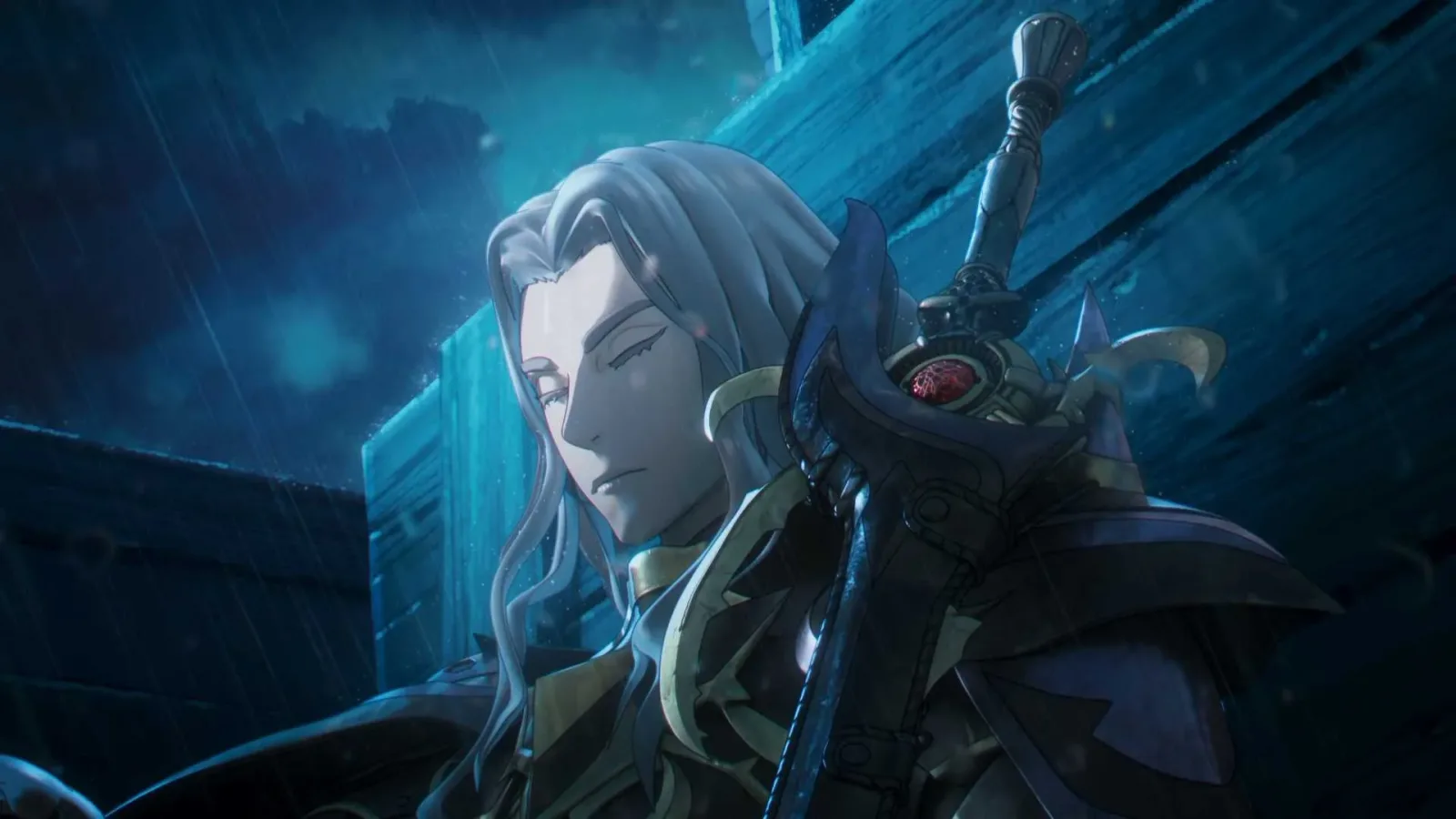
Fire Emblem: Fortune's Weave appears to have found an early fault line in its opening structure. Its major tactical encounters, setting, and cast-building systems have left a positive impression, but the time spent between those key story battles is proving far less compelling for at least some players. The central complaint is not that the game lacks things to do. Rather, it may have too many low-pressure activities packed into its first major phase, creating a rhythm that can make progression feel sluggish.
That criticism is particularly notable because it comes alongside clear enthusiasm for Fortune's Weave overall. The worldbuilding has been described as engaging, its assortment of potential allies has personality, and the large-scale grid-based battles remain the main attraction. The concern is instead focused on the connective tissue: training sessions, dungeon excursions, resource gathering, and smaller combat encounters that fill the calendar before the next consequential mission arrives.
For a series built on balancing strategic combat, relationship management, narrative decisions, and army development, that is a meaningful distinction. Fire Emblem players often expect downtime between maps. Those intervals can be where supports develop, units improve, gear gets upgraded, and the next tactical challenge is prepared for. But when those systems offer little tension or demand too much repetition, they can begin to feel like obstacles standing between the player and the game's strongest material.
A slow start with a potentially large time commitment
Fortune's Weave reportedly uses an early structure that can keep players in its first part for a substantial amount of time. Depending on how thoroughly someone approaches each route and whether they want to advance all four lords at a relatively even pace, that opening segment may last roughly 15 to 30 hours. That is a broad range, but it highlights why pacing matters so much. A slow introductory chapter can be easier to overlook when it lasts a few hours; it is harder to ignore when it occupies a large portion of the overall experience.
For useful background on this topic, read Sony to Skip CES 2027, Ending a 60-Year Presence at the Technology Show.
There is reason to believe the opening is intended to function as an extended onboarding period. The game has numerous systems to establish, a new setting to introduce, and four central paths to put in motion. Players are asked to learn not only how each lord's story operates, but also how the game's progression loops feed into battle readiness and character growth. That ambition can be valuable, particularly in a strategy RPG where long-term planning is part of the appeal.
Still, an onboarding period has to maintain momentum. Early impressions suggest that Fortune's Weave sometimes stretches its quieter systems too far before escalating the stakes. Discussion among players indicates that the game becomes more focused and action-oriented in its second part, though that does not completely solve the issue for those who find the initial stretch tiring. If the route to the more demanding content requires dozens of hours of routine encounters, some players may struggle to reach the point where the game fully comes into its own.
Clashes are the biggest source of frustration
The feature receiving the sharpest criticism is the clash system. Clashes are smaller turn-based RPG-style fights separate from Fire Emblem's traditional map-based strategy battles. On paper, they are an understandable addition. They can provide combat in shorter bursts, offer another venue for party interaction, and avoid turning every encounter into a full tactical map that lasts several minutes or more.
In practice, the early clashes are said to lack the strategic demands that would justify their frequency. The basic structure involves the player's group trading attacks with an opposing group until one side is defeated. Allies can link attacks, producing flashier sequences and building support-related progress, but standard enemies are reportedly so fragile and non-threatening that the system often feels automatic rather than tactical.
That difference is crucial. A simple combat system is not inherently a problem, especially early in a lengthy RPG. Simple fights can establish mechanics, create a sense of growth, or offer a brief break from more demanding maps. The issue arises when the game repeatedly asks players to engage with those fights after the lesson has already been learned. When opponents do not pressure party composition, resource use, target selection, or timing, the player's involvement can feel perfunctory.
Some early players have described clashes as encounters where auto-battle is sufficient for much of the work. That is a damaging impression for a Fire Emblem-adjacent combat loop, because the franchise's identity is so closely tied to meaningful decision-making. Even when players choose a less punishing difficulty setting, they generally expect positioning, unit roles, weapon matchups, and turn order to matter. If a supplemental battle system mostly becomes a button pressed on the way to a reward, it risks feeling less like an expansion of the strategy formula and more like a mandatory interruption.
There are signs of what the system could be
The criticism is not that clashes have no place in Fortune's Weave. In certain story moments, they appear to work well as compact narrative encounters. A smaller battle can effectively punctuate a scene without requiring the game to deploy a full map, particularly when the goal is to convey an ambush, a duel, or a sudden threat during a lord's journey.
Dietrich's storyline also offers an example of a more promising use. His route includes bounties that pit the party against foes stronger than the ordinary monsters and soldiers commonly seen in clashes. Those encounters suggest that the underlying format can become more interesting when enemies are given enough durability, damage potential, or distinctiveness to require actual attention from the player.
The problem is one of distribution. More specialized clashes and story-focused variants appear to be exceptions rather than the norm in the early game. Most are encountered while exploring dungeons, collecting materials such as forge shards, or spending the available turns between significant missions. As a result, the activities intended to support progression can come across as a repetitive tax on the player's time.
That may be especially frustrating for completion-minded players. Someone concentrating on a single lord could move through the structure differently from someone trying to develop all four leaders, see more events, strengthen a wide roster, and keep resources flowing. Fortune's Weave seems designed to accommodate that breadth of engagement, but early pacing may punish players for embracing it too enthusiastically.
Strong fundamentals could make the later game worthwhile
Despite the concerns, there is a substantial positive foundation beneath them. Fortune's Weave's setting has been praised for being interesting enough to encourage continued play, while the process of recruiting and getting to know its cast remains a major draw. Fire Emblem has long excelled when its strategic layer and social layer reinforce one another: players care more about a battle because they know the units involved, and they care more about character scenes because they have built those characters into a fighting force.
If the second part of the game increases challenge, shortens the distance between major missions, and gives clashes more demanding enemy designs, it could address much of the early dissatisfaction. A clash system does not need to replicate full tactical maps to be worthwhile. It simply needs to ask something meaningful of the player, whether that means choosing an effective link-attack pairing, managing a dangerous enemy ability, making a resource tradeoff, or responding to a battle-specific objective.
Likewise, dungeon delving and training can feel rewarding when their outcomes are visible and their demands are restrained. Gathering upgrade materials becomes satisfying when it feeds directly into a difficult upcoming mission. Character-building activities feel useful when the game does not require excessive repetition before allowing the story to move forward. The issue is less about removing downtime than about making every kind of downtime serve a clearer purpose.
What players should expect from the opening hours
Players entering Fire Emblem: Fortune's Weave may want to prepare for an opening that prioritizes systems, routes, and gradual development over a constant run of major battles. Those who enjoy optimizing parties, exploring dungeons, pursuing support progress, and taking a measured approach to multiple storylines may find plenty to appreciate. Players looking primarily for dense tactical action, however, may encounter a lengthy period where the game's smaller activities do not offer enough resistance.
The encouraging part is that the criticism is not rooted in a lack of affection for the game's ideas. The major battles remain the high point, the setting appears to have real appeal, and the four-lord structure gives the campaign an ambitious framework. Fortune's Weave may simply need more confidence in those strengths. If later chapters make its optional-feeling routines more purposeful and its clashes more tactical, the early slog could become a caveat rather than the defining memory of the game.
Community
Discussion
Start the conversation.
No comments have been posted yet.