

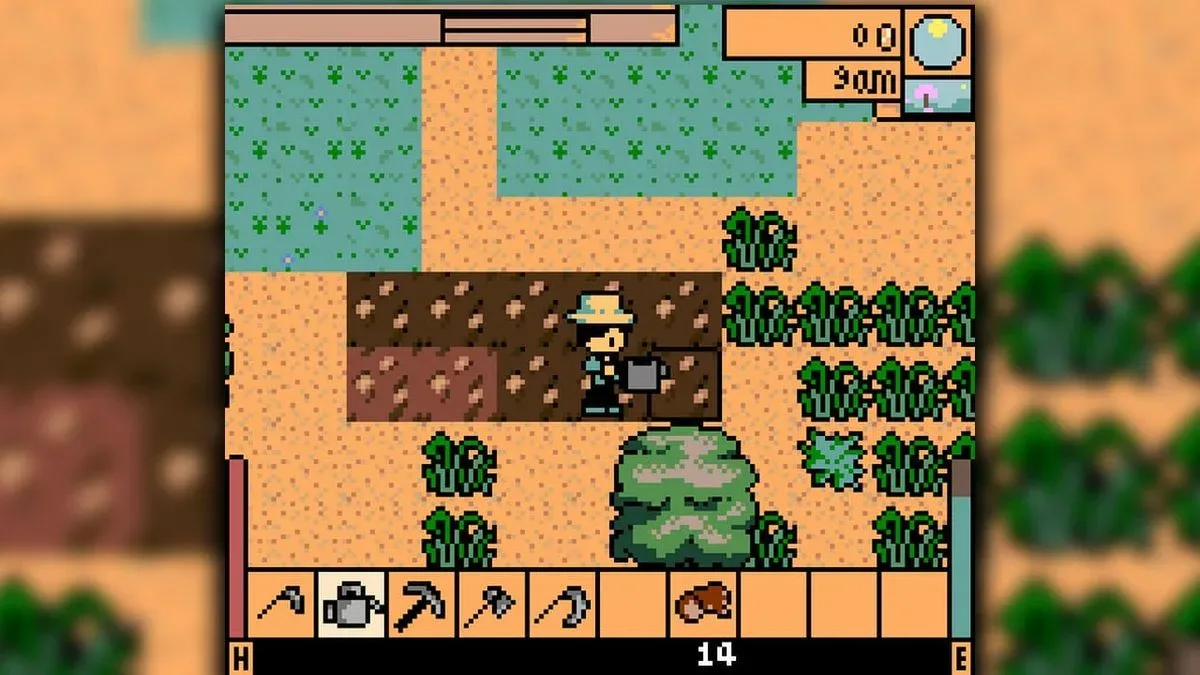
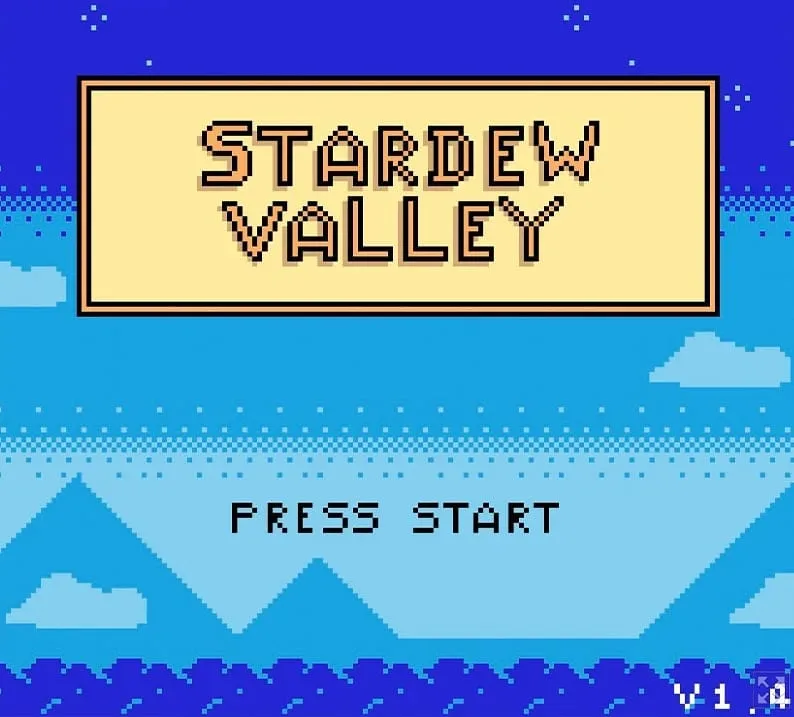
Stardew Valley has received an unofficial Game Boy Color-style demake that can be played directly in a web browser. Created by AEProjects, the small-scale project reimagines the enormously popular farming and life simulation as an 8-bit adventure, distilling several of its most recognisable activities into a format that looks at home on Nintendo's late-1990s handheld.
The project is not a full recreation of ConcernedApe's game, but it aims to preserve the comforting rhythm that has made Stardew Valley such a lasting favourite. Players can farm, fish, forage and interact with characters while exploring a deliberately compact pixel-art world. Its visual style, interface and controls all lean into the limitations and charm associated with Game Boy Color games.
For players who have spent years tending crops in Pelican Town, the idea makes immediate sense. Stardew Valley has always carried a strong retro sensibility despite launching in 2016. Its colourful pixel work, village routines and simple-looking tools evoke an earlier era of handheld and console role-playing games, even as the complete release offers far more systems and scope than most games of that period could contain.
A smaller Stardew Valley built around its essential routines
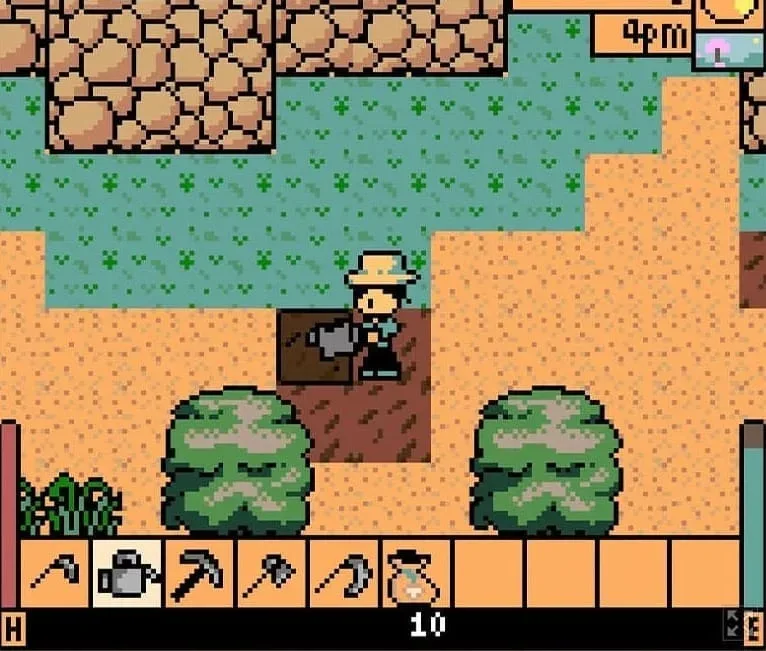
AEProjects' demake focuses on activities that define the day-to-day appeal of Stardew Valley. Farming is at the centre of the experience: players can prepare soil, plant seeds, water their crops and harvest what they grow. A highlighted square appears ahead of the player character to indicate the tile that will be affected, providing a clear visual guide for working the land with the limited precision of an 8-bit control scheme.
For useful background on this topic, read Xbox Game Pass Ultimate in 2026: Who It Suits and How to Get More From It.
That tile-based approach is especially fitting for the Game Boy Color concept. Classic handheld games often depended on readable grids, concise menus and carefully organised spaces. The demake turns those constraints into part of its appeal, making each plot of farmland and each tool action feel purposeful without attempting to reproduce every mechanic from the much larger original game.
Fishing and foraging are also included, giving the project more variety than a simple crop-growing prototype. Together with character interaction, those features capture the core loop that keeps Stardew Valley players moving through its in-game days: leave the farm, gather or earn useful resources, meet the townsfolk, then return to build toward the next day's plans.
The result is a condensed interpretation rather than a replacement for the full game. That distinction is important. Stardew Valley's official release contains years of additions, extensive locations, relationships, progression paths, seasonal events and many different ways to structure a farm. The Game Boy Color-style version instead presents an affectionate snapshot of the larger experience, choosing a handful of familiar actions and putting them in a new retro frame.
Why the Game Boy Color presentation fits so naturally
Stardew Valley's farming fantasy has often felt compatible with portable play. Its activities are easy to understand at a glance, but they reward steady attention over long sessions. A player can water a few crops, check on an objective, talk to a villager or squeeze in a fishing trip without needing to relearn a complicated control layout every time they return.
That makes the Game Boy Color inspiration more than just a visual novelty. The demake imagines a version of Stardew Valley that might have been played in shorter bursts on a handheld, with a small screen, a directional pad and a limited number of buttons. Its 8-bit presentation has the same kind of immediate readability associated with classic portable adventures.
There is also a pleasing overlap between the two aesthetics. Stardew Valley already embraces pixel art, so translating its broad idea into a lower-fidelity palette does not require abandoning its identity. Fields, crops, tools and villagers remain understandable, while the reduced detail gives the project a distinct nostalgic character. It feels less like an attempt to modernise an old title and more like an alternate-history version of a modern classic.
ConcernedApe's original game arrived in 2016 and has become one of the most successful games ever made, with 50 million copies sold worldwide. Its continued popularity has encouraged an enormous amount of community creativity, from elaborate farms and mods to fan art and projects that explore how its systems might look in other styles. A Game Boy Color demake is a particularly natural experiment because the original's visual language already shares so much DNA with classic games.
Browser controls for keyboard and controller players
The demake is designed to run in a browser and supports both keyboard input and controllers. On keyboard, movement uses the WASD keys. The Z key handles interaction and tool use, while Esc or I opens the pause function. Players can cycle through the hotbar with X and C, moving left and right through their currently available selections.
Controller support follows a setup that should be familiar to anyone accustomed to retro-styled games. The D-pad handles movement, B is used for tools, and Start pauses the game. The left and right triggers move through the hotbar, allowing players to change tools or items without relying on the keyboard.
- WASD: Move the character when using a keyboard.
- Z: Interact with objects and use tools.
- Esc or I: Pause the game.
- X and C: Cycle left and right through the hotbar.
- Controller D-pad: Move the character.
- Controller B: Use a tool.
- Controller Start: Pause the game.
- Controller triggers: Change hotbar selections.
Those controls underline the project's handheld ambitions. Even when played on a computer, its inputs are simple enough to suggest the kind of compact layout required for a portable system. A controller can make that connection even clearer, although the browser version remains accessible to anyone using a standard keyboard.
Demakes remain a creative way to revisit modern games
Demakes occupy a distinctive corner of game culture. Rather than adding visual detail or expanding a game's technical ambitions, they ask what would happen if a familiar idea had to exist under older hardware conventions. The best examples do not simply reduce resolution. They rethink menus, movement, scope and priorities so that a modern concept feels believable within a retro framework.
That is the appeal of AEProjects' Stardew Valley experiment. The game's full breadth would be difficult to represent in a small 8-bit project, so the demake chooses the aspects that communicate its identity most quickly: caring for crops, using tools, finding resources, fishing and meeting people. Those are the actions that make even a brief visit to Stardew Valley feel like Stardew Valley.
The browser format also makes the concept easy to sample. There is no suggestion that it replaces the official game or reproduces its complete content, and its smaller scale is part of the point. It is a chance to see how one of the defining cosy games of the past decade reads through the visual and mechanical vocabulary of the Game Boy Color.
For retro fans, the project offers a playful answer to a familiar question: what if this beloved modern game had appeared on a favourite childhood handheld? For Stardew Valley players, it offers a compact and nostalgic way to revisit the routines that made the original so enduring. And for anyone who simply likes pixel-art farming games, it is a reminder that a well-chosen handful of mechanics can convey a great deal of warmth.
The Stardew Valley Game Boy Color-style demake by AEProjects is available to play in a browser through its Itch.io page.
Community
Discussion
Start the conversation.
No comments have been posted yet.